Sakkuth and Kaiwanare ancient names for the planet Saturn and scholars believe that this pagan worship was a custom taken from the Assyrians. Israel turns away from the God who created her and turns toward little gods who have no power to save. Israel enters into cultic practices and leaves God’s love behind. Israel forfeits all that makes her special and chooses immediate and fleeting gratification.
God says: Even when you forget me for long years I will never forget who or where you are. Even when you put obstacles in my way I still accompany you. I continue to call you, I persist in waiting for you. You speak of disappointment and woe but I will turn these into dancing. You believe that you are alone and abandoned but I will never leave you. Despite of, or even because of, all that plagues and gnaws at you, turn and return to me.
The prophet Amos warns us today of the subtle ways in which we begin our journey away from all that converts our sorrow into joy.
O LORD, you brought me up from the grave you spared me from going down into the pit . . . weeping may remain for a night, but rejoicing comes in the morning. You turned my wailing into dancing; you removed my sack cloth and clothed me with joy, that my heart may sing to you and not be silent. O LORD my God, I will give you thanks forever. (Psalm 30)
“A series of seven rhetorically effective antitheses, contrasting negative external impressions with positive inner reality. Paul perceives his existence as a reflection of Jesus’ own and affirms an inner reversal that escapes outward observation. The final two members illustrate two distinct kinds of paradox or apparent contradiction that are characteristic of apostolic experience”. (Senior cf. 283)
We are treated as deceivers and yet are truthful . . . and so as disciples of Christ we must become accustomed to the world’s unbelief.
As unrecognized and yet acknowledged . . .and so as followers of Christ we must become comfortable with rejection.
As dying and behold we live . . .and so as members of the remnant we find that dying so that we might live a normal daily act.
As chastised and yet not put to death . . .and so as apostles of the Living God we become accustomed to the scorn of others.
As sorrowful yet always rejoicing . . .and so as sisters and brothers of Christ who take up our cross daily we are assured that our mourning is turned into dancing.
As poor yet enriching many . . .and so as disciples sent into the world in twos we know that we need not take a purse or sandals for the journey.
As having nothing and yet possessing all things . . .and so as children of God we are gladdened by the knowledge that we lack for nothing when we hold only Christ, that we rise in new life when we forfeit the old, and that we are loved beyond imagining by the One who rescues us in an acceptable time.
But as for me, my prayer is to you, O Lord. At an acceptable time, O God, in the abundance of your steadfast love answer me in your saving faithfulness. (Psalm 69:13)
For this and for all God’s goodness we give thanks as we sing of God’s loving fidelity, justice and mercy. Amen.
Senior, Donald, ed. THE CATHOLIC STUDY BIBLE. New York, Oxford University Press, 1990.283. Print.
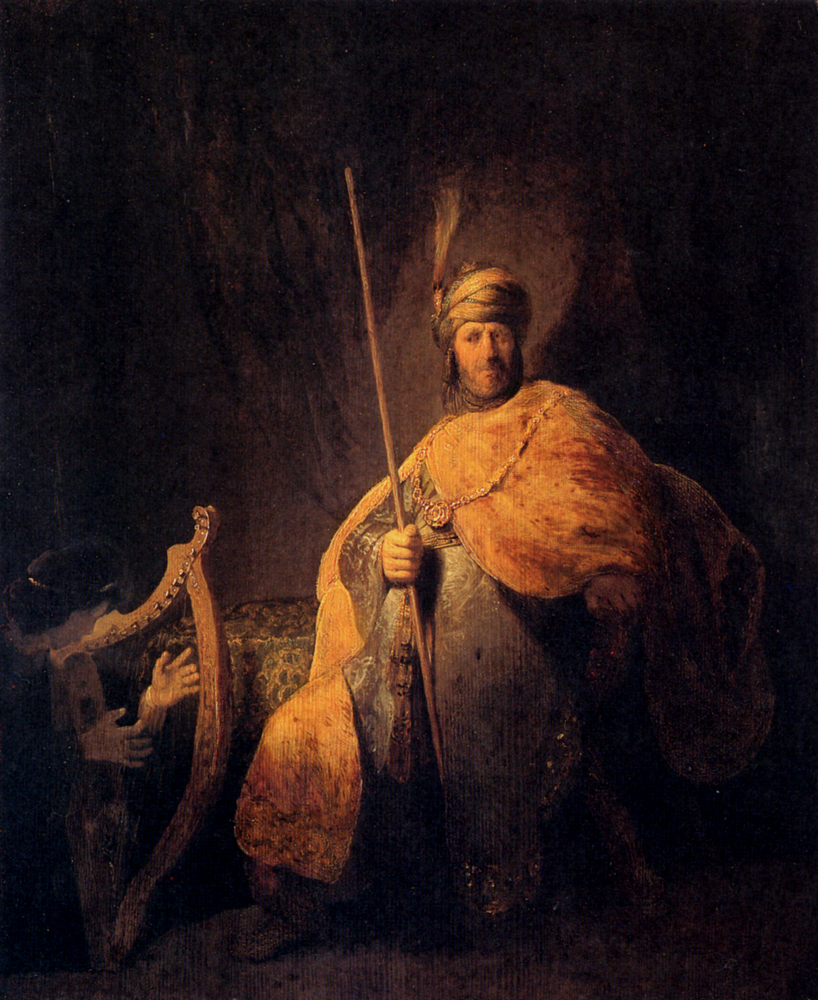
Today as we continue to live in this extraordinary shelter-in-place, we need dialog with God more than ever, and so we continue to consider the story of David.
What I like most about the story of David – amid the ups and downs, the triumphs and failures – is the fact that we see this man in constant dialog with God. Today’s reading is no exception. David has brought the Ark from Shiloh to Jerusalem, has been established as king, and now wants to build a house for Yahweh. Nathan, the prophet, brings him word that Yahweh will have a permanent temple at another time – once the lineage has been established through an heir and son. David acquiesces and gives thanks for the blessings he and his house have already received . . . and will receive in the future.
Turn my Mourning into Dancing: Finding Hope in Hard Times is a small but valuable book published from the works of Henri Nouwen by his estate after his death. It teaches us to be grateful at all times . . . even and especially when days are dark. “I am gradually learning”, Nouwen writes, “that the call to gratitude asks us to say, ‘Everything is grace’ . . . We can learn to see our remembered experience of our past as an ongoing conversion of the heart. We let what we remember remind us of whose we are – not our own, but God’s. If we are not truly ready for a new life in the service of God, truly joyful at the prospect of God’s unfolding vocation for our lives, truly free to be sent wherever God guides, our entire past, gathered into spaciousness of a converted heart, must become the source of energy that moves us onward”. (Pages 19 and 20) Nouwen calls us to let go and to leave our compulsions behind, to move out of the house of fear, to convert our illusions through prayer and to open ourselves to a surprising God. He cautions us about being lured in by fatalism or our craving for approval. He reminds us that God is in all people and all things, even in suffering. “There is no human suffering that has not in some way been a part of God’s experience. That is the great and powerful mystery of God becoming flesh to live among us. God becomes a part of our mourning, and invites us to learn to dance – not alone, but with others, sharing in God’s compassion, as we both give it and receive it”. (Pages 69 and 70) Nouwen tells us that “In the most significant relationships of our lives, God is not an afterthought. We discover one another as living reminders of God’s presence”. (Page 72) And this is what David knows . . . he knows that only though God is his mourning turned into joy. And he knows that he must thank God for all that he has and will have.
David is not a perfect human; yet through his humility and his constant dialog with his creator, he sees life through God’s plan rather than his own. David does not treat God as an afterthought and for that reason we see him in constant communication – asking advice, petitioning help . . . and thanking God for the blessings he and his house enjoy. Despite the downturns and the missteps, David keeps his body, mind and soul centered on God, his heart in open readiness for the surprises of his maker.
Tomorrow, all our works belong to God and are a sign of our constancy . . .
![mourning_into_dancing_wide_t[1]](https://thenoontimes.com/wp-content/uploads/2014/03/mourning_into_dancing_wide_t1.jpg?w=400&h=268) Second Woe
Second Woe![955165_60482143-610x250[1]](https://thenoontimes.com/wp-content/uploads/2013/06/955165_60482143-610x2501.jpg?w=300&h=120)
 The Noontimes