Although Christmastide has come to a close, we continue to carry the message of hope and rescue with us beyond our celebration the true arrival of the Christ in our lives.
We might best prepare ourselves for the discovery and acceptance of this amazing gift by remembering Aaron’s blessing to the tribes. With this reception of God’s grace, and with all that we have encountered in this season of Christmas, we are hopeful that we will remember . . . we have nothing to fear.
May theLordbless you and take care of you;
And may we remember that the Christmas gift of Jesus lives and breathes and moves in each of us . . . even our enemies.
May theLordbe kind and gracious to you;
And may we remember that the Christmas grace of the Christ moves and acts and witnesses to each of us . . . even when we have separated ourselves from God.
May theLordlook on you with favor and give you peace;
And may we remember that despite what we se, despite what we hear, despite what we feel . . . we have nothing to fear.
Amen.
Wishing each of you Christmas peace and joy throughout the year.
To compare other translations of this blessing, use the scripture link and the drop-down menus to explore.
John brings us his Patmos vision in the first chapter of Revelation.
I, John, your brother and fellow partaker in the tribulation and kingdom and perseverance which are in Jesus, was on the island called Patmos because of the word of God and the testimony of Jesus. (verse 1:9)
John tells us why he writes his apocalyptic prophecy.
I heard behind me a loud voicelikethe soundof a trumpet,saying,“Write in abook what you see, and senditto theseven churches”. (verses 1:10-11)
John describes the Living God’s response to his fear.
When I saw Him, Ifell at His feet like a dead man. And Heplaced His right hand on me, saying,“Do not be afraid;I am the first and the last, and theliving One; and Iwas dead, and behold, I am alive forevermore, and I havethe keys of death and of Hades”. (verse 1:17-18)
The Cave of St. John on the Island of Patmos
Today, as we reflect on John’s words, we might ask ourselves, “In this new year, how do we open ourselves to the promise of peace God offers to us with the gift of his entry into the world as a small, vulnerable child?”
Although Christmastide has closed, we continue to reflect on the meaning of the prophetic description of the Living God as the Alpha and Omega, the first and the last.
When we explore other translations of these verses, we begin to understand how our fears disconnect us from the one who is the beginning and end of all.
Jean Baptiste Marie Pierre: The Adoration of the Shepherds
John reminds us that the one sure antidote against fear is love.
There is no fear in love; but perfect love casts out fear, because fear involves punishment, and the one who fears is not perfected in love. (NASB)
John tells us that the power of love overcomes the power of evil, always.
There is no fear in love; perfect love drives out all fear. So then, love has not been made perfect in anyone who is afraid, because fear has to do with punishment. (GNT)
John reminds us that all love that emanates from God has the power to heal and transform.
God is love. When we take up permanent residence in a life of love, we live in God and God lives in us. This way, love has the run of the house, becomes at home and mature in us, so that we’re free of worry on Judgment Day—our standing in the world is identical with Christ’s.There is no room in love for fear.Well-formed love banishes fear. Since fear is crippling, a fearful life—fear of death, fear of judgment—is one not yet fully formed in love. (MSG)
John tells us that as we grow in love and in Christ, we no longer are a harbor of fear.
Today, as we reflect on our fears, we might ask ourselves, “In this new year, how might we make ourselves ready to grow in love?”
Although Christmastide has closed, we continue to reflect on the confidence God’s words bring to us, “There is no room in love for fear”.
Peter knows that the newness of the kingdom is more than the world can bear. Peter also knows that the faithful in this kingdom will experience trials. And so Peter animates Jesus’ followers, both his contemporaries and those of every age.
But even if you should suffer for the sake of righteousness, you are blessed. And do not fear theirintimidation, and do not be troubled,butsanctify Christ as Lord in your hearts, always being ready to make a defense to everyone who asks you to give an account for the hope that is in you, yet with gentleness and reverence;and keep a good conscience so that in the thing in which you are slandered, those who revile your good behavior in Christ will be put to shame. (NASB)
Peter tells us that the terror of persecution becomes joy when we remember that the power of Christ.
But even if you should suffer for doing what is right, how happy you are!Do not be afraid of anyone, and do not worry.But have reverence for Christ in your hearts, and honor him as Lord. Be ready at all times to answer anyone who asks you to explain the hope you have in you,but do it with gentleness and respect. Keep your conscience clear, so that when you are insulted, those who speak evil of your good conduct as followers of Christ will become ashamed of what they say. (GNT)
Peter reminds us that we are not alone, and that we need not seek revenge.
If with heart and soul you’re doing good, do you think you can be stopped? Even if you suffer for it, you’re still better off.Don’t give the opposition a second thought.Through thick and thin, keep your hearts at attention, in adoration before Christ, your Master. Be ready to speak up and tell anyone who asks why you’re living the way you are, and always with the utmost courtesy. Keep a clear conscience before God so that when people throw mud at you, none of it will stick. They’ll end up realizing that they’re the ones who need a bath. It’s better to suffer for doing good, if that’s what God wants, than to be punished for doing bad. That’s what Christ did definitively: suffered because of others’ sins, the Righteous One for the unrighteous ones. He went through it all—was put to death and then made alive—to bring us to God. (MSG)
Peter tells us that when we follow Christ, we are assured of redemption, healing and transformation.
Today, as we remember the gift that Jesus is to the world, we might ask ourselves, “Are we willing to live in such a way that the world knows we place our hope in Christ?”
Although Christmastide has closed, we continue to reflect on the hope God’s words bring to us, “Do not fear, do not be troubled, do not give the opposition a second thought”.
Philippe de Champaigne: The Adoration of the Shepherds
Paul is arrested and held as a prisoner for his faith in the risen Christ. As he journeys to Rome, he undergoes a number of trials, and it is into this environment, when fear might take over, that Paul is visited by a messenger from God.
For this very night an angel of the God to whom I belong and whom I serve stood before me saying, “Donotbeafraid, Paul; you must stand before Caesar; and behold, God has granted you all those who are sailing with you”. (NASB)
Paul tells us that when we experience darkness and anxiety, God does not desert us.
For last night an angel of the God to whom I belong and whom I worship came to me and said, “Don’t be afraid, Paul! You must stand before the Emperor. And God in his goodness to you has spared the lives of all those who are sailing with you”. (GNT)
Paul reminds us that when great power overtakes us, the risen Christ brings us the courage to resist corruption.
“Last night God’s angel stood at my side, an angel of this God I serve, saying to me, ‘Don’t give up, Paul. You’re going to stand before Caesar yet—and everyone sailing with you is also going to make it.’ So, dear friends, take heart. I believe God will do exactly what he told me. But we’re going to shipwreck on some island or other.” (MSG)
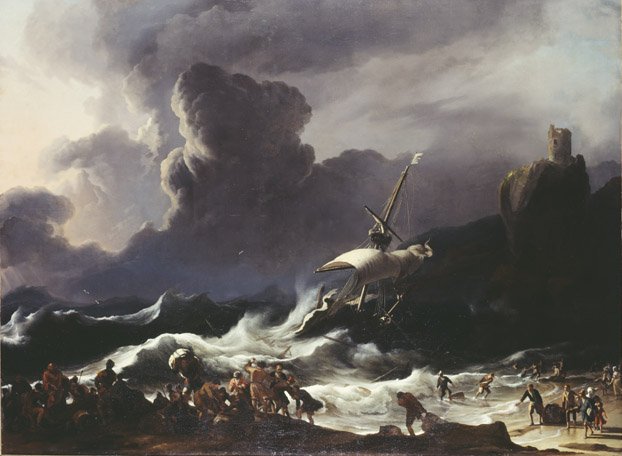
Ludolph Backhuysen: Paul’s Shipwreck
Paul says that a life lived in Christ will never be smooth; and he tells us that when shipwrecks occur in our lives – as they always will – Christ will make the impossible possible.
Today, as we consider the courage of the shepherds who followed the star to the Bethlehem stable, we might ask ourselves, “What risks are we willing to take as we resist easy comfort? And what shipwrecks are we willing to experience as we follow the bright star of Christ?”
Although Christmastide has closed, we continue to reflect on the renewingpower of God’s words to us, “Don’tgive up. Do not be afraid”.
We enter a new year, a time of replenishment and restoration. We look for a new message of transformed hope. A new sign of renovating freedom. We await a new pronouncement of the words we need to hear: Do not be afraid.
And the Lord said to Paul in the night by a vision, “Do notbeafraid any longer, but go on speaking and do not be silent; (NASB)
Saul, the persecutor of early Christ-followers, encounters the risen Christ and learned that his fears have no meaning in this kingdom of Jesus. He now believes the words: Do not be afraid.
One night Paul had a vision in which the Lord said to him, “Do not be afraid, but keep on speaking and do not give up. (GNT)
Saul the persecutor, blind for a time, trusts God’s plan as he shares the Good News that Christ’s new coming brings new hope and new meaning.
One night the Master spoke to Paul in a dream: “Keep it up, and don’t let anyone intimidate or silence you. No matter what happens, I’m with you and no one is going to be able to hurt you. You have no idea how many people I have on my side in this city.” That was all he needed to stick it out. He stayed another year and a half, faithfully teaching the Word of God to the Corinthians. (MSG)
Saul the persecutor becomes Paul the Apostle, sharing the Good News that hope is alive, rebirth and transformation are possible, and fear is only for those who refuse to believe.
Centuries after Paul shares his news with anyone who will listen, he tells each of us that there is no reason for fear or division.
Today, as we reflect on the journey the magi make to worship the new king, we might ask ourselves, “What journey we are willing to make? And what are we willing to put aside in this new year as a sign that we refuse to surrender to fear?”
Although Christmastide has closed, we continue to reflect on the transformative power of God’s words to us, “Do not be afraid”.
Today is the traditional close of the Twelve Days of Christmas, a day when many cultures celebrate the arrival of the three magi in Bethlehem. In some countries, children place hay-filled shoes outside their front doors to feed the camels of the kings as they pass by on their journey to the Messiah. In the morning, children find that the camels have eaten the hay and the kings have left presents behind in thanks.
The official name of this celebration is Epiphany, a word coming from the Greek word meaning “to reveal”. Our Merriman Webster English definitions are: a usually sudden manifestation or perception of the essential nature or meaning of something, an intuitive grasp of reality through something (as an event) usually simple and striking, an illuminating discovery, realization, or disclosure, a revealing scene or moment, an appearance or manifestation especially of a divine being. Today, on this traditional close of Christmas – a day when God surprises us with the revelation of Jesus’ divinity – we might put aside our fears to understand the full impact of this gift.
Sandro Botticelli: The Adoration of the Magi
In God I have put my trust, I shall not be afraid. What can man do to me?
Psalm 56 is one we might keep close to hand in 2017 as our personal and public lives unfold. The psalmist speaks to God – just as we might – to tell God that foes trample and oppress him; enemies lie in wait while the mighty and proud dominate his world. The psalmist’s words are distorted; adversaries lurk; opponents plot to end his life. Wickedness, anger, tears, and wanderings. The psalmist records the offenses of a lifetime but rather than despair, he gives his worries to God. Like the psalmist we might place our own woes in our shoes beyond the door as if they were stalks of hay or straw, trusting that the king of kings will exchange them for the promise of restoration.
Yourvows are bindingupon me, O God; I will render thank offerings to You. For you have delivered my soul from death, indeed my feet from stumbling, so that I may walk before God in the light of the living.
Today, as we reflect on the psalmist’s words, we ask ourselves, “How do we best prepare to enter the land of the living?”
Quentin Metsys: The Adoration of the Magi
Throughout Christmastide, we have reflected on the many times and the many ways the Living God assures us that we need not be afraid. Let us keep God’s wisdom always in our hearts and minds as our refuge and rock. Let us keep the centering presence of Christ always as our beginning and our end. And let us keep the healing indwelling of the Spirit as our homing guide.
When we explore other versions of these verses, we begin to understand how we might practice placing our fears in the restorative hands of the eternal, Living God.
As we move from through the Christmas season, let us decide to make our hopes tangible, our dreams a prayer for our reality, our faith unwavering and our love secure. Let us cleave to the Creator, follow the Redeemer and rest in the Spirit. This week let us give one another the gift of preparing for the very real promise of eternity.
The high priest Zechariah learns patience so that he might behold Emmanuel, God Among Us. While he awaits the birth of his only child who will become the announcer and baptizer of the Christ, he waits in patient hope until the day his speech returns.
And behold, you shall be silent and unable to speak until the day when these things take place, because you did not believe my words, which will be fulfilled in their proper time.” (Luke 1:20)
The girl Mary learns that God can do the impossible when the angel Gabriel visits her with the astounding news that she will bring the Light of the World to waiting humanity.
And behold, you will conceive in your womb and bear a son, and you shall name Him Jesus. (Luke 1:31)
Mary learns the astounding news that her elderly cousin Elizabeth has conceived life. An affirmation that with God, all things are possible.
And behold, even your relative Elizabeth has also conceived a son in her old age; and she who was called barren is now in her sixth month. (Luke 1:36)
Mary learns that her confidence in God is rewarded as she responds with her, “Yes,” to God’s invitation to enter into union with all of creation in a most special way.
And Mary said, “Behold, the bond slave of the Lord; may it be done to me according to your word.” And the angel departed from her. (Luke 1:38)
Elizabeth learns that her young cousin Mary is the new ark of the new Word. These kinswomen greet one another just as each of us might if we understand God’s message of hope.
For behold, when the sound of your greeting reached my ears, the baby leaped in my womb for joy. (Luke 1:44)
The marginalized shepherds learn the redeeming news that the Messiah has come to live among them as a vulnerable child.
But the angel said to the shepherds, “Do not be afraid; for behold, I bring you good news of great joy which will be for all the people; (Luke 2:10)
The wise man Simeon learns that his outrageous hope has been rewarded. He has met the Savior of the World, just as God has promised.
And Simeon blessed them and said to Mary His mother, “Behold, this Child is appointed for the fall and rise of many in Israel, and for a sign to be opposed— (Luke 2:34)
The woman Mary learns that this child she must share with world for the redemption of all is fully human and fully divine.
When they saw Him, they were astonished; and His mother said to Him, “Son, why have You treated us this way? Behold, your father and I have been anxiously looking for You.” (Luke 2:48)
Each of us is given the opportunity on this Good Night to become apostles of Christ. Each of us might carry Christ within and share him with the world. Each of us truly human and truly divine as our brother Jesus tells us. Each of us is given the gift of this Nochebuena, this wonderful Good Night. Let us rejoice with the shepherds. Let us give our confident “yes” to God’s plan. And let us behold the marvelous gift we hold in our hands.
These verses are taken from the NASB translation of Luke. Other versions open this story so that our ears might hear, our eyes might see, and our hearts might open wide to welcome Christ into our lives in a very real, very human, very divine way.
As we move from through the Christmas season, let us decide to make our hopes tangible, our dreams a prayer for our reality, our faith unwavering and our love secure. Let us cleave to the Creator, follow the Redeemer and rest in the Spirit. This week let us give one another the gift of preparing for the very real promise of eternity.
The prophet Malachi communicates God’s words to us.
Behold, I am going to send youElijah the prophet before the coming of the great and terrible day of theLord.He will restore the hearts of the fathers totheirchildren and the hearts of the children to their fathers, so that I will not come andsmite the land with acurse. (NASB)
Elijah was able to perform miracles just as Jesus did in his own day and even in this present time. Malachi advises that we might want to look forward in hope rather than backward in fear.
But also look ahead: I’m sending Elijah the prophet to clear the way for the Big Day of God—the decisive Judgment Day! He will convince parents to look after their children and children to look up to their parents. If they refuse, I’ll come and put the land under a curse. (MSG)
That day is great for some and dreadful for others. As followers of Christ we are convinced that God’s “greatness” is with us in every moment and in every place. We are also convinced that Jesus searches for every last sheep, for every hard heart, for every broken soul.
A stained-glass window featuring the prophet Elijah, Gloucester Cathedral, Gloucestershire, England
Behold I will send you Elias the prophet, before the coming of the great and dreadful day of the Lord. And he shall turn the heart of the fathers to the children, and the heart of the children to their fathers: lest I come, and strike the earth with anathema. (DRA)
And as followers of Christ, we are also convinced that the Spirit works to remove all anathema, to heal all destruction and to bring about complete transformation for all.
But before the great and terrible day of theLord comes, I will send you the prophet Elijah.He will bring fathers and children together again; otherwise I would have to come and destroy your country. (GNT)
Malachi calls out to us across the millennia: Behold, Emmanuel is among you. Awake. Rise up.And Malachi asks that we give witness to the enormity of the gift we find in our hands, the gift of God’s infinite peace, Christ’s overflowing compassion, and the Spirit’s miraculous renewal.
When we compare varying versions of these verses, we behold the enormity of God’s gift that we receive without asking.
N.B. Some versions of Malachi number this citation as 3:23-24.
For more about Malachi, the last of the minor prophets, or Elijah, the prophet who life is described in the Books of Kings, click on their names and/or images above.

 Wishing each of you Christmas peace and joy throughout the year.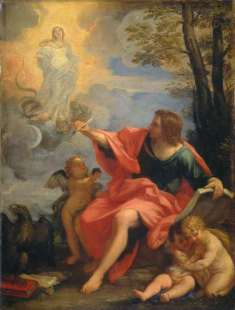




 The Noontimes
