Elijah’s CaveWritten on February 8, 2008 and posted today as a Favorite . . .
Elijah has just served as God’s instrument in the destruction of the gods of Baal. Jezebel and Ahab are furious with him and they seek revenge in the most ruthless of ways. And Elijah knows this. As we read Jezebel’s words at the opening of the chapter we can see that she throws her entire existence into seeking the end of Elijah. The prophet, exhausted, pleads to his God for his own end. He is drained. He has done as God has asked, and now he feels empty. But even as he seeks escape, Elijah turns to God, and God sustains him with cakes and water. Elijah rests and sleeps in the shade offered by a desert broom tree. An angel of God abides with him. The angel bids him to rise and go and so he walks for forty days and forty nights to the mountain of God, Mt. Horeb, Mt. Sinai where Yahweh spoke to Moses. And there Elijah curls into a cave to await his end. But the unexpected happens. Yahweh doesspeak to this tired prophet, but not in the fierce and thrusting wind, not in the powerful and destructive earthquake, not in the consuming and searing fire. The Lord speaks in the tiny whispering wind, and he brings news of restoration and legacy. God’s words bring hope.
We must still our over-active lives; find a space of quiet in our hyper-speed days. We must each day seek out a broom tree in the desert whose roots sink deep into the earth to find the rivers that flow beneath the sunbaked and wind-blown dryness. We must find daily sanctuary in a small cave on God’s holy mountain of our busy world. That is where we are fed, that is where we will tune ourselves to the voice that speaks in the whisper of the wind, the voice that speaks within, the voice that calls us to unity with the creator and creation.
Written on January 24 and posted today as a Favorite . . .
The Prophet Amos
We all wish for prosperity. We hope for fulfillment of dreams. Yet we are also are too often willing to relax into success too soon and too quickly. We sign up and sign on without examining the source and the reason for easy wealth. Amos warns against this kind of affluence which comes at the expense of others. What makes us happy may, in fact, be damaging others. What fills our plate and our purse may come to us through harm to others or to God’s creation. When fame and money roll in unabated, we need to summons the courage to be honest about the origin and the nature of this success for the only sort of achievement that truly lasts and truly saves comes to us through the heart from our God. This is what Amos’ audience does not want to hear.
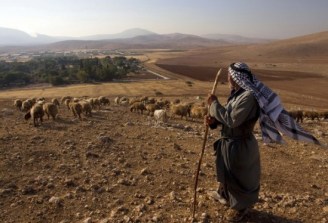
During the past two or so years of Noontimeswe have turned often to this brief but powerful prophecy spoken by a herdsman and aimed at the newly successful wealthy class of the northern kingdom of Israel. The ten northern tribes had separated themselves from the two southern tribes of Judah to establish their own temple center away from Jerusalem in order that they might collect their own taxes to do with as they liked. Their wealth was largely earned on the backs of the poor. This is what Amos calls into the open and for his effort he is expelled from Bethel where he has been preaching. He returns to his pastoral life after speaking the words that God calls him to speak.
Amos’ words were more than officials could bear (Senior 1126) and so he was sent away for asking them to examine their individual and collective conscience. He was silenced at that time but his words come to us today to ask the same questions.
What do ouractions express about our belief in justice? Do we relax into a life that brings easy gain? Are we silent when we ought to speak truth to power? Do we act with integrity, trying to match words and deeds?
The Lord will roar from Zion, and from Jerusalem raise his voice. Yet when Christ speaks, we see that this Lion of Judah has become the Lamb of God, pardoning in mercy, acting in compassion.
Amos asks us to take inventory and to pass judgment on our own prosperity. It is hollow? Or does it flow from and in Christ? Do we climb over others to snatch what we think is ours? Or do we imitate the Lamb to live a prudent and compassionate life? Do our words match our gestures? Do we act humbly, judge wisely, love deeply and truly?
These are the questions Amos raises as he begins his prophecy. How do we answer them today?
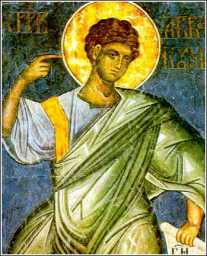
The Prophet HabakkukWe visited with the prophet Habakkuk twice last year and today we open again to . . .
How long, O Lord? I cry for help but you do not listen!
Prophets are not a happy people. They see and foresee. They remember and they know. They remind us and for the most part we do not listen.
Prophets are about waiting, listening and witnessing. They hear, they taste, and they feel. They bring God’s word to us and for the most part we do not want to hear.
Prophets are blessed. They have an intimate relationship with God. God trusts them with God’s word. Prophets know that they have no choice but to speak the word they hear for if they do not, they perish eternally.
Prophets are among us today just as vibrantly and as importantly as they were when Israel suffered through her separation and exile. We cannot exist without them although many times we think we might like to silence them.
What part of my life do I live as a prophet? Do I speak what God wants me to speak or is it my ego which speaks?
Do I shun the prophet within me? Do I shun the prophet I see in the face of a friend?
Unless I want to live by a code of perverted justice, I must let the prophets around me speak to me and I must listen.
Unless I want to live a life with no fire, I must listen to the prophet within.
Habakkuk’s Canticle at the end of Chapter 3 tells us how to live in right relationship with God, and we might use these words as a daily prayer.
For though the fig tree blossom not nor fruit be on the vines, thought the yield of the olive fail and the terraces produce no nourishment, though the flocks disperse from the fold and there be no herd in the stalls, yet will I rejoice in the Lord and exult in my saving God. God, my strength, God makes my feet swift as those of hinds and enables me to go sit upon the heights.
From Psalm 6, we hear a plaint from one who is weary from groaning, whose life has become a living hell.
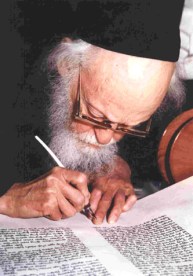
A scribeDo not reprove me in your anger, Lord, nor punish me in your wrath. Have pity on me for I am weak; heal me, Lord, for my bones are trembling. In utter terror is my soul – and you, Lord, how long . . . ? Turn, Lord, save my life; in your mercy rescue me. For who among the dead remembers you? Who praises you in Sheol? I am weary from sighing; all night long my tears drench my bed; my couch is soaked with weeping. My eyes are dimmed with sorrow, worn out because all of my foes. (Psalm 6:1-7)
In the HARPERCOLLINS BIBLE DICTIONARY Sheol is described as a biblical term for the netherworld and even, in Isaiah 5:14, a reference to a power that can destroy the living. Sheol is another word for Hades; it is a place where departed spirits live (Proverbs 9:18). It may also be the deepest depths of the earth (Deuteronomy 32:22 and Amos 9:2) where there is no light, no joy, and no hope. (Achetemeier 1011) In Sheol there is only darkness and terror; and some of us have been there. And back.
How do we humans climb out of the miry cistern in which we sometimes find ourselves? What do we do to calm inner terror even though we manage to dry outward tears? How is it possible for us to experience the happiness and warmth of a life lived in faith when all possibility of rescue seems gone? What do we do to stop the chattering of trembling bones and chase away our too many foes? How do we sleep on a bed that is drenched from our weeping?
Jeremiah is a Book we will want to open when we find ourselves overcome with grief. His prophecy is one that speaks to those who have visited the depths of despair or who are even beyond the place where all hope is abandoned. Today we are told that Jeremiah’s words were recorded by his secretary Baruch and we might wonder why the prophet wishes to terrify us. When we reflect further we know that Jeremiah’s real message is not fear; rather, it is this: with God there is hope for the hopeless, there is gain for those who have lost all, there is rescue for the weary, and there is planting where before there was only uprooting.
Jeremiah’s life and prophecy, we are told, require “us to face up more directly to the impediments and barriers along the way than to bask in the complete light at the end of the way . . . God intends prophecy to guide us throughthe path of human, emotional reactions, not round about them. If we transfer this approach into New Testament thought, Jesus is ‘the way and the truth and the life’ (Jn 14,6) – therefore, as much the way through human life as its destination, as much the truth that gradually emerges along the way forward as its definitive statement, as much life in its stages of growth as it is life bearing fruit to harvest (Mt 4,26-29) . . . Jeremiah does not allow us to detour round a difficulty. Persons gifted with keen, sensitive emotions, and thoroughly involved in their work and message, do not normally avoid the excesses of these virtues! They plunge straight ahead.” (Senior RG 305-306)
Jeremiah speaks his words to us today through his faithful secretary Baruch. When we feel ourselves sinking into the profundity of his muddy cistern, when our bed is drenched from our weeping, when we are weary from all of our groaning, let us plunge straight ahead and move toward God, singing as the psalmist sings:
Away from me, all who do evil! The Lord has heard my weeping. The Lord has heard my prayer; the Lord takes up my plea. My foes will be terrified and disgraced; all will fall back in sudden shame. (Psalm 6:8-10)
A re-post from Monday, January 21, 2012.
Images from: https://www.biblegateway.com/passage/?search=psalm+6%3A8-10&version=GNT;NRSV;CJB;MSG and http://www.alljewishlinks.com/steps-to-becoming-a-jewish-scribe/
Achetemeier, Paul J. HARPERCOLLINS BIBLE DICTIONARY. 2nd edition. San Francisco: Harper San Francisco, 1996. 1011. Print.
The prophet Amos left his sheep and fig trees to speak God’s word to the faithful and unfaithful alike. These words came at a time of prosperity, when his prognostications were easily and readily jeered by those who enjoyed luxury at the expense of the poor. From our 21st century perspective, we can see that his audience would have done well to listen better to this simple yet eloquent man. His sober, ardent proclamation is concise, pointed and brief . . . but carrying a deeply important message for the part of the Gospel which is eagerly forgotten by many. It is not enough to be kind, in the New Kingdom. We are called to be just as well.
It is easy to look at foreign countries in civil war, at the poor in our own city streets and point to the places where justice cannot flourish or even get a foothold. What is more difficult is to look to our own lives to find the pockets of impoverishment and injustice there. When have we walked away from a situation in which we should have given voice to God’s word? When have we reacted in an anger that stirs the pot rather than in patience which opens doors for communication? When have we avoided? When have we harassed? When have we neglected? When have we manipulated?
Justice shall flourish in his time, and fullness of peace forever.Psalm 72 calls on God to make his justice clear to those who yearn for it.
Justice shall flower . . .
May God rule . . .
God shall rescue the poor . . .
God shall have pity on the lowly . . .
The lives of the poor God shall save . . .
We ought not to shrink from God in our poverty of spirit, for it is the poor in spirit whom God touches quickly, heals surely, abides with eternally. We ought not shrink from confessing our lacks, from asking for our needs, for expressing our heart’s desire. Let us offer up our impoverishment daily.
May God remember your every offering, graciously accept your holocaust, grant what is in your heart, fulfill your every plan. (Psalm 20:4-5)
Amos reminds us when he speaks of the woes that God knows the content of our hearts. There is nowhere we can hide our secrets. So when we mourn, let us open our hearts fully to the God who created us. It is with this small action that we will be healed. It is with this openness that we best love God. It is through this honesty that we bring about the justice that the prophet Amos yearns to witness. Let us take our offerings of our own accord, let us seek impoverishment, and let us place them on the altar of our life.
When the Lord brought us back to Jerusalem, it was like a dream!
How we laughed, how we sang for joy! (Psalm 126:1-2)
When we find ourselves delivered from captivity or exile, we might well believe we are dreaming. And then we remember the prophecy of Isaiah.
You will leave Babylon with joy; you will be led out of the city in peace.
The mountains and hills will burst into singing, and the trees will shout for joy.(Isaiah 55:10-12)
When we find ourselves recovering from loss or pain, we might well believe we are dreaming. And then we remember the prophecy of Jeremiah.
See, I will bring them from the land of the north and gather them from the ends of the earth. Among them will be the blind and the lame, expectant mothers and women in labor; a great throng will return. (Jeremiah 31:8)
When we find ourselves delivered from loneliness or grief, we might well believe we are dreaming. And then we remember the prophecy of Ezekiel.
Yet this is what the Sovereign Lord says: At the end of forty years I will gather the Egyptians from the nations where they were scattered. I will bring them back from captivity and return them to Upper Egypt, the land of their ancestry. (Ezekiel 29:13-14)
When we find ourselves delivered from catastrophe or disaster, we might well believe we are dreaming. And then we remember the prophecy of Joel.
Return to the Lord your God, for he is gracious and compassionate, slow to anger and abounding in love, and he relents from sending calamity. (Joel 2:13)
When we find ourselves delivered from anger or fear, we might well believe we are dreaming. And then we remember the prophecy of Zechariah.
Therefore this is what the Lord says: “I will return to Jerusalem with mercy, and there my house will be rebuilt. And the measuring line will be stretched out over Jerusalem,” declares the Lord Almighty. (Zechariah 1:16)
When we find ourselves delivered from hunger or thirst, we might well believe we are dreaming. And then we return to Psalm 126.
Those who wept as they went out carrying the seed will come back singing for joy, as they bring in the harvest. (Psalm 126:6)
When we find ourselves delivered through the goodness and grace of God, we might well believe we are dreaming. And then we return to Psalm 126.
When the Lord brought us back to Jerusalem, it was like a dream!
How we laughed, how we sang for joy! (Psalm 126:1-2)
We have read the prophecies against the conquerors. We have witnessed the rebellion and grave misfortune of Zedekiah. We have seen walls tumble as cities are invaded. Families perish when famine sets in. We have gone into exile with Jehoiachin and his people. And we stumble into Babylon, weeping for our losses and pain. We grieve the loss of what was, and we hope for what might be.
As we observe the memorial of Good Friday when Jesus suffers death on the cross for his wayward sisters and brothers, we consider our own deliverance as we pray.
Good and gracious God, when we waiver in our belief that you are all we need, give us your strength.
Good and generous, God, when we tire of our travail and feel ourselves undone by life, bring us your courage.
Good and patient God, when we falter in our confidence in your work among us, send us the deepness of your hope.
Good and tender God, when we see no end to our suffering, deliver us with the joy of your love.
Finally, after an onslaught of horror and tragedy on the battlefield, deliverance arrives. At last, after families are forever destroyed and trauma sets in for generations, favor is shown. Finally, after buildings that once sheltered those who yearned to live in peace are now demolished, and places of refuge and worship are desecrated, yes finally, peace and grace settle upon a people exiled by conflict. It is a time for weeping. It is a time for healing. It is a time for restoration.
Today the church celebrates the loving bond between Jesus and his sisters and brothers in the rite of foot washing as a liturgical element that demonstrates Jesus’ love for humanity. Today we study The Favor Shown to Jehoiachin: In the thirty-seventh year of the exile of Jehoiachin, king of Judah, on the twenty-fifth day of the twelfth month, Evil-merodach, king of Babylon, in the inaugural year of his reign, took up the case of Jehoiachin, king of Judah, and released him from prison. He spoke kindly to him and gave him a throne higher than that of other kings who were with him in Babylon. Jehoiachin took off his prison garb and ate at the king’s table as long as he lived. The allowance given him by the king of Babylon was a personal allowance, in fixed daily amounts, all the days of his life until the day of is death. (Jeremiah 52:31-34)
These closing words of Jeremiah’s prophecy remind us that even when our lives are darkest, the possibility of redemption remains. Like Jehoiachin, we will throw off our prison garb. The Lord himself will wash our feet and we will eat at the high table. We will receive the daily dose of God’s providence and care for the rest of our lives. We will be delivered.
As we move toward Easter Day, we must continue to put our case forward. Continue to ask for God’s insight and grace. Continue to petition the heavens to ask that our mourning be turned into rejoicing.
Tomorrow, a prayer for those awaiting deliverance.
We have looked at how the conquerors become the conquered and we have considered that through the lens of Christ we see God’s wrath as God’s love. We have also considered what we believe we see through this accounting. Today we continue to explore Jeremiah’s prophecy as we discover and affirm what it is we believe. Do we lose heart as we focus only on the horrors and terrors of war, or are we open to loving our enemies into goodness as Jesus asks?
We believe that our consoling and loving God wants complete restoration for the faithful and calls to us to join God in the days when the virgins shall make merry and dance, and young men and old as well . . . [when] mourning will be turned into joy . . . [when the Lord will] console and gladden them after their sorrows.
We believe that despite what we see and hear in the news about our world, despite the tragedies that unfold daily in war zones around the planet, we are offered a life in which war wages no more, when never again shall the city be rooted up or thrown down.
We believe that we are to act in our hope of the fulfillment of these prophecies of Jeremiah, the promises of our God, of Yahweh for a new covenant has replaced the Law . . . and it now written in our hearts.
We believe that we are to act in the faith and knowledge that Yahweh is our God . . . and we are God’s people . . . and all, from the greatest to the least, now knows the Lord.
We believe that we are to act in love because we are forgiven . . . our sin remembered no more.
We believe that we are the New Jerusalem for we are delivered . . . from all the places to which we have been banished . . . we have been brought back from exile.
We believe that rather than look at the ruin around us we must focus on the promise of fulfillment and restoration for we are the light, we are the hope, we are The Way.
Let us give thanks to the Lord for this new opportunity to begin new life with softened hearts. Let us give thanks for the many Blessings and Graces God bestows on each of us in this time of renewal and resurrection.





 The Noontimes