Don’t bad-mouth each other, friends. It’s God’s Word, his Message, his Royal Rule, that takes a beating in that kind of talk.
And this is the Law that Jesus bring to us, The Law of Love. No matter what we hear or see, we must continue to do as Jesus does. Speak well of others, even when we find it difficult to do so.
You’re supposed to be honoring the Message, not writing graffiti all over it.
And this is the message that the Spirit creates in us. No matter how deeply we feel the injustices of the world, we are to witness, watch and wait on the Spirit.
God is in charge of deciding human destiny. Who do you think you are to meddle in the destiny of others?
And this is James’ message to us. Not that our lives are predestined and predetermined, but that our lives are integral parts of God’s marvelous plan for creation. No matter the harm we experience, God will turn all injury, maltreatment and sorrow to goodness. No matter the darkness, Jesus brings light sufficient to pierce it. No matter the appearance of our individual and collective lives, the Spirit has only healing and transformation in mind for our hearts of stone. Jesus shows us how to soften our hearts and unbend our stiff necks in order to hear God’s message. Let us honor this message today.
When we compare varying versions of these two verses and listen for the words of the Spirit, we allow God’s message to visit us today.
Today in our journey through the Gospel of Mark, we reflect on what it means to wait for the Lord.
Christians are recognized, collectively and individually, for their willingness to Witness, Watch and Wait. Will the master recognize us when he comes?
Our waiting is to be an active time of Witness, not a time for passive sitting and listening. It is a time for speaking when we are called to speak, being patient when we are called to patience, rebuking when we are called to rebuke, making amends when we see we have transgressed our covenant, pardoning and being pardoned, loving and being loved. It is a time of putting on the armor of God so that we might be able to stand firm,as St Paul tells us in Ephesians 6. It is a time for standing fast with loins girded for battle, clothed with righteousness and our feet shod in readiness for the gospel of peace. We must hold faith as a shield, wear the helmet of salvation, and take up the sword of the Spirit, which is the Word of God.
How are we clothed? What protection do we step behind or put on? What do we see as important for ourselves? How do we communicate this to the others? Will Jesus recognize us when he comes?
Watchfulness, for one who follows Christ is not optional, it is not quiet, it is not an inert state in which we sit idly waiting for Jesus. Indeed, as Jesus himself tells us, you do not know when the master of the house is coming.
“A lament of a person betrayed by friends. The psalmist prays that the evildoers be publicly exposed as unjust (1-8) and gives thanks in anticipation of vindication (9-10). Old friends are the enemies (11-16). May their punishment come quickly (17-21)! The last part (22-26) echoes the opening in praying for the destruction of the psalmist’s persecutors. This psalm may appear vindictive, but one must keep in mind that the psalmist is praying for publicredress now of a publicinjustice. There is at this time no belief in an afterlife in which justice will be redressed. 35, 1-6: The mixture of judicial, martial, and hunting images shows that the language is figurative. The actual injustice is false accusation of serious crimes (11, 15, 20-21). The psalmist seeks lost honor through a trial before God”. (Senior 668)
Defend me because you are just, Lord; my God, do not let them gloat over me.
It has been my experience that when enemies gloat over their opponents’ pain and loss, they later suffer the same pain and loss.
I have seen so often the trap dug by one to catch another ends up as the death-bed of the one who dug it.
I know in my bones that God defends those who are his faithful. I have seen too many examples of God’s fidelity to think otherwise.
I believe that God’s plan for conversion of my enemies is far better than any punishment I might ask . . . and so I send intercessory prayers for those who do me harm – whether they are friends from long ago or friends who are newly arrived.
With today’s psalm, we might be tempted to ask God to pull down fire on those who betray us, but this is not what Jesus does. We have the gift of knowing what Jesus has told us: That we are to witness, watch, and wait. Only this way of life will bring us the peace we seek.
So we ask ourselves . . . how much better is it to pray for those who betray us rather than ask for their fiery end? Is it not so that God punishes with the punishment we lay out for others? What then do we fear? Do we believe God incapable of making a just decision that brings about transformation of the soul?
And we also ask . . . now that we know of this precious gift of eternal life . . . why do we jeopardize it for a fleeting, ugly satisfaction that might come when we see our enemies suffer? Can we not intercede for those who are hateful while we await our trial before God? How much more effective it is for God to call each one to him as we move through his plan for our good than it is for us to plot someone else’s downfall?
We find a place for Christ-like thinking when we read this psalm and pray for those who wrong us unfairly. In this season of Lent, let us approach the day of Christ’s sacrifice on our behalf with the joy that comes from leaving our worries with him in willing obedience to The Word . . . as we look forward to the day of vindication in Jesus’ name, in Jesus’ Way, in Jesus’ hope for all of humanity.
Senior, Donald, ed. THE CATHOLIC STUDY BIBLE. New York, Oxford University Press, 1990.668. Print.
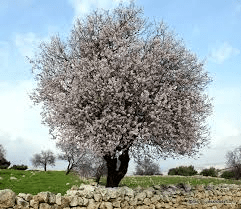
Footnotes tell us that the watching tree in verse 11 refers to the almond tree; “the first to bloom in the springtime as though it had not slept. The Hebrew name contains a play on words with ‘I am watching’.” The opening lines here tell us of Jeremiah’s office as prophet. We are given his credentials, so that we might hear and heed the words here offered, so that we might not be afraid, so that we might remember to turn to God in times of turmoil, and so that we might shun the false idols that offer themselves in place of God.
Jeremiah protests that he is too young to serve God as prophet but the Lord says to him: Have no fear . . . because I am with you to deliver you . . . It is I this day who have made you a fortified city, a pillar of iron, a wall of brass . . . they will fight against you, but not prevail over you, for I am with you to deliver you.
These are words of warning to a people who had turned away from Yahweh and back to the Baalgods. They are also words of encouragement to us. History tells us that the oracles predicted here by Jeremiah unfolded as truth; therefore, the opening words of this prophecy can serve to comfort us as we struggle to understand our role as followers of Christ. God’s words through Jeremiah are meant to console us while we remain thewatching trees that remind others of the hope Christ brings, of the trust we must place in God, and of the danger in worshiping false and feeble gods.
I remember the devotion of your youth, the Lord tells us, Sacred to the Lord was Israel, the first fruits of the harvest; should anyone presume to partake of them, evil would befall him, says the Lord. As watching trees, we must have our eyes and hearts open to those who would deceive us, we must announce with a flurry of white blossoming the advent of a time of renewal and rebirth so those who have strayed may yet return. And we need not have any fear about our work of watching, for with God all things are possible. God always delivers the faithful.
When storms destroy all that we hold sacred, there is yet hope.
When trials sap our courage, there is yet strength.
When betrayals blind us to the possibility of a love that knows no bounds, there is yet God.
When suffering swallows our days, there is a place to go and there is something to be done. We are called to be watching treesthat announce the hope of the human race. We are created to be watching trees that trust only their maker. We come to fruition as watching trees that offer first fruits back to God and produce good fruit in due season.
We are called by our creator to witness as we watch and wait. When pain and sorrow take over, or in gladness and celebration, let us keep watch as if we have not slept, let us be the first to burst into flower and witness to the hint of spring. And while we wait on the Lord, let us offer our work to the God who made us, God who delivers us, and God who loves us.
No matter our circumstances, sorrow or joy, let us take up our task as watching trees and announce the goodness of God.
Adapted from a reflection written on June 12, 2010.
Therefore, beloved, since you are forewarned, be on your guard not to be led into the error of the unprincipled and to fall from your own stability. But grow in grace and in the knowledge of our Lord and savior Jesus Christ. To him be glory now and to the day of eternity. Amen.
In our effort to find and remain in a comfortable spot, we accommodate the unprincipled; we drift form those habits and people that help us maintain equanimity. We can reverse all of this by rooting ourselves more deeply in God’s grace, and by growing in our knowledge of God.
God says: You may be puzzled by the words of my servant Peter but he is really quite clear. The faithful grow in their knowledge of me through prayer and worship. When you try to do all things on your own life becomes too stressful, too sad, too terrifying. When you trust in me, when you speak to me each day, when you worship me, when you pray with others who also believe in me you will feel yourselves growing in strength and balance. You do not have to fight against the unprincipled. All you need do is to witness . . . to watch . . . to pray . . . and to wait.
The single most important antidote to anxiety and fear is intimacy with God. We gain this understanding and closeness by seeking God each day in specific ways: by reading and studying scripture, by finding others who also seek to know God more fully, by praying unceasingly, and by uniting in solidarity with others who also believe. We gain balance and serenity by anchoring ourselves in God’s gift of grace. There is no force, no person and no evil that cannot be overcome or undone by the patient, persistent and joyful prayer of those who seek to know God intimately or of those who plant themselves firmly in God’s grace. The error of the unprincipled is that they root themselves in comfort, they scoff at the idea that grace has the power to bring balance into their lives, and they believe in themselves . . . more than they believe in God.
Enter the words witness watch and pray, or the faithful need not fight into the blog search box and reflect on Peter’s advice to us.
Power. This is a word we use a great deal and in various contexts. We speak of political power, civil power, social power. Queen Bees and Wannabes. The powerful. The powerless. Speaking truth to power. Power and destruction. Power and might. Power and glory. Engine power. Man power. Girl power. Lack of power. Power and strength. Power and weakness. The dark powers. The powers of truth and light.
These two psalms today ask us to think about power as we experience it used against us, power as we use it ourselves, and power as God uses it. As a New Testament people we will also need to think of power as Jesus uses it.
We see Jesus sit with the powerless; he cures their sicknesses and brings them healing on many levels. The Evangelists bring us a story that stands power on its head. St. John writes about The Word as power. St. Paul continually refers to the power he gains through his weakness; and that he learned this lesson through Christ.
We have clearly spelled out for us how we might act and think and pray in and for and about power. When we pause to reflect, we know that any time we try to power our way through life, we usually do not fare well. We may win an immediate victory, but the long-term gain turns into a loss.
We know that we cannot force people by our own power; yet we try to convince others of our own thinking.
We know that we cannot force situations; yet we continue to manipulate events to our own liking.
We know that we cannot control outcomes; yet we continue to tell stories that have our own endings.
The Psalmist sees destruction around himself and asks why, knowing all along that some of the scattered sheep are reaping the consequences of their own actions while others suffer innocently.
Look to your covenant . . .
The Psalmist also knows that hidden beneath the thanksgiving for deliverance is lurking a wanting to take revenge. As New Testament people we must await God’s decisions while we witness, watch and wait.
Our actions must stem from the longing for mercy implanted in us. Our discernment must flow from the love which created us. Our patience must rise from the hope which carries us. And all of this in Christ’s name.
Power, the powerful, the powerless. As New Testament people we must watch well how we react to power and we use it. We are both sheep and shepherd. We witness, we watch, we wait.
Written on February 4, 2009 and posted today as a Favorite.


![BiblicalLaw-and-Justice[1]](https://thenoontimes.com/wp-content/uploads/2012/12/biblicallaw-and-justice1.jpg?w=282&h=211)
![grow-in-grace-2-peter-3-18[1]](https://thenoontimes.com/wp-content/uploads/2013/10/grow-in-grace-2-peter-3-181.jpg?w=300)
![FuturePower[1]](https://thenoontimes.com/wp-content/uploads/2013/02/futurepower1.jpg?w=260)
 The Noontimes