Do not cast me from your presence or take your Holy Spirit from me.
The separation from society when murder is arranged and enacted is evident. Yet what we often fail to see is the damage which occurs to the murderer, the arranger. This man or woman who either commits the act, causes or arranges the act is in such a place of darkness and of self-importance that the light does not penetrate. And the fact that lust, adultery and murder are here so closely entwined is an important one. Lust which is acted upon is a kind of murder, both of self and of the other.
Wash away all my iniquity and cleanse me from my sin.
David serves as a wonderful model of how those who are blessed with amazing gifts are not immune from suffering. David ennobles himself through his pain by admitting guilt and repenting. David turns back to Yahweh. David and is forgiven and loved by Yahweh . . . eternally.
We might allow our pain to transform us into wounded healers. We might return to ask forgiveness. We might ennoble ourselves through the admission of guilt. e might turn back and repent for we, like David, are always and forever loved by God.
Adapted from a reflection written on February 13, 2008.
At that time Jesus said in reply: “I give praise to you, Father, Lord of heaven and earth, for although you have hidden these things from the wise and the learned you have revealed them to the childlike. Matthew 11:25
The Tree of Knowledge
The paradox of creation is that the weak are strong and the strong are weak. This Theology of the Cross, then is present in all suffering and opposes the norms usually associated with power and wisdom. From La Biblia de América: This foolishness of the cross becomes present in all debility, anguish and the profundity of God’s love. This is the surprising path of salvation opened to all humans by Christ.
We look for signs yet the only sign relevant to us, Jesus tells us, is the sign of Jonah– – – the prophet who finally did as God asked to save the city of Nineveh, after spending three days in the belly of a whale. God does not exact the punishment he had meant to carry out, because all of the inhabitants repent – – – inspired by the reluctant prophet. Jonah then complains about his surprising success. We are so often determined to be disappointed!
Notes will tell us that God’s ways are inscrutable because we insist on having things “our way” rather than in God’s way in God’s time. The wisdom and mercy we experience with God is incomprehensible to us because we have not yet learned to trust that this paradox about which Jesus speaks is real. Our viewpoint is too narrow, our perspective too self-centered to fathom the kind of acceptance and love the creator has for his creatures.
From the NAB comments on Jonah: The prophecy, which is both instructive and entertaining, strikes directly at this viewpoint [of forgiving wicked enemies]. It is a parable of mercy, showing that God’s threatened punishments are but the expression of a merciful will which moves all men to repent and seek forgiveness. The universality of the story contrasts sharply with the particularistic spirit of many in the post-exilic community. The book has also prepared the way for the gospel with its message of redemption for all, both Jew and Gentile. (Page 961)
These are God’s ways. This is God’s wisdom. We live the paradox that when we are weakest we are strongest . . . because we are nearest to God. In this Christmastide, let us celebrate God’s coming to us as an infant, defenseless and small. And let us remember that in a few short months we will journey through the Lenten time when we flourish in God’s forgiveness and mercy. Let us take time today to reflect on the lesson we might learn as we watch this tiny child grow into a man who offers both his humanity and divinity so that we might be free from fear, so that we might be saved. And let us bask in the wonder of this gift so freely given. Let us grant forgiveness, as we are forgiven. Let us bless with mercy, as we are blessed. Let us cradle and heal those who are broken . . . just as we are cradled and healed by God in his immense love.
When we suffer at the hands of others – – – either intentionally or unintentionally – – – let us gather up our wounded-ness, and our broken-ness. Let us make of ourselves wounded healers in God’s great plan, in God’s great love, in the paradox of God’s great wisdom.
LA BIBLIA DE LA AMÉRICA. 8th. Madrid: La Casa de la Biblia, 1994. Print.
![david repent[1]](https://thenoontimes.com/wp-content/uploads/2013/11/david-repent1.jpg?w=354&h=325) 2 Samuel 11 and 12 and Psalm 51
2 Samuel 11 and 12 and Psalm 51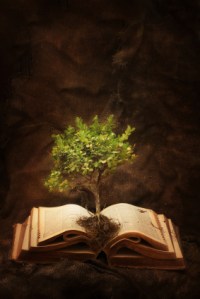
 The Noontimes