We seek wisdom, justice, prudence and restoration of all that has been lost. Old Testament wisdom writers remind the rulers of this world that the solution to chaos lies in the wisdom that lasts forever. And we see wisdom more clearly when we conduct our lives with honesty.
Love justice, you rulers of the world. Set your minds sincerely on the Lord, and look for God with all honesty.
The writers further warn that it is quite easy to slip away from the way God calls us to walk.
Dishonest thoughts separate people from God, and if we are foolish enough to test God, God’s power will put us to shame.
How do we employ this ancient wisdom? What do we do today when we find ourselves engulfed in turmoil? How do we filter the false from the real?
Wisdom is a spirit that is friendly to people, but she will not forgive anyone who speaks against God, for God knows our feelings and thoughts, and hears our every word.
How much do we avoid believing that we can hide our dishonesty from our Creator What do we do to follow the way of honesty and the wisdom God’s way?
Since the Lord’s spirit fills the entire world, and holds everything in it together, Wisdom knows every word that people say.
These ancient words repeat to us the importance of stripping all deceit from our lives, and the significance of cleaving always to God’s call for integrity and sincerity.
When we use the scripture link and the drop-down menus to compare other translations of these verses, we fog of confusion rises to reveal God’s way of integrity.
We have sought wisdom; we have sought justice. Today we seek Christ’s way of love, and we begin with the Book of Exodus.
Do not mistreat or oppress a foreigner; remember that you were foreigners in Egypt. Do not mistreat any widow or orphan. If you do, I, the Lord, will answer them when they cry out to me for help . . . If you lend money to any of my people who are poor, do not act like a moneylender and require him to pay interest. If you take someone’s cloak as a pledge that he will pay you, you must give it back to him before the sun sets.
Sophia – – – Wisdom
The Hebrew people were called to remember that they had once been aliens in a foreign land. Today we have the opportunity to answer to this call by caring for the most vulnerable among us. The Hebrew people were called to put aside self-interest and to respond to the divine call to be generous as God is generous.
When Jesus both tells and shows us how to live in a world centered on itself, Matthew records this recipe in Matthew 5 as he describes true happiness. Jesus further refines this formula to a simple rule of love when the Pharisees quiz him. You shall love the Lord your God with all your heart, and with all your soul, and with all your mind. This is the greatest and first commandment. And a second is like it: You shall love your neighbor as yourself. On these two commandments hang all the law and the prophets. (Matthew 22:34-40)
Each morning when we rise, we have the opportunity to pledge to both seek and enact love that day. Each noontime when we pause, we have the opportunity to reflect on the depth of that pledge. And each evening when we consider our work and prayer, we have the opportunity to rededicate ourselves to seeking love with ample hearts, with focused minds and with full strength.
When we use the scripture links and the drop-down menus to compare varying translations of these verses, we come upon new ways to discover God’s love. To discover ways we might find wisdom and justice, click on the images above, or visit: https://theconsecratedwoman.com/tag/seek-justice/ and http://www.uscatholic.org/church/scripture-and-theology/2008/07/desperately-seeking-sophia and https://dailyverses.net/isaiah/1/17/kjv
We have spent nearly a month reflecting with Ezra and Nehemiah, discovering the blessings that can rise from disaster and loss, considering the benefit of rebuilding a relationship that appears forever gone. Today we examine how the action of one we believe to be our enemy can bring us opportunities for transformation and rebirth.
The prophet Isaiah brings us the familiar words of the Lord.
“Israel, remember this; remember that you are my servant.
I created you to be my servant, and I will never forget you.
I have swept your sins away like a cloud. Come back to me; I am the one who saves you.”
A people who suffers exile because they had turned away from God, hear that the Lord still longs for their return. And the people respond.
Shout for joy, you heavens! Shout, deep places of the earth!
Shout for joy, mountains, and every tree of the forest!
The Lord has shown his greatness by saving his people Israel.
The Lord then tells the people that their enemy Cyrus will be the instrument of their liberation.
I say to Cyrus, “You are the one who will rule for me; you will do what I want you to do: you will order that Jerusalem be rebuilt and that the foundations of the Temple be laid.”
When we remember the stories of old, do we also remember the ironies they hold? When we think about the stories of our future, do we open our hearts to the ironies that await us? When we reflect on the story we live in the present, do we remember that God is always with us, calling us home to rebuild what we believe is lost.
These verses are taken from The Good News Bible. When we explore multiple translations of these words, we find new ways to remember.
This Chapter in Nehemiah’s story is interesting. The good work he is doing brings suspicion, envy and even anger from certain quarters. What does this builder do? He refuses to put aside the great work he is doing, and when her finds himself in a precarious position he does not hide; but rather, he prays. All the forces of Sanballat, Tobiah and Gesham are no match for this man and his God. The prophetess Noadiah holds no sway over the builder. We hear the story in Nehemiah’s voice.
Now when it was reported to Sanballat and Tobiah and to Geshem the Arab and to the rest of our enemies that I had built the wall and that there was no gap left in it (though up to that time I had not set up the doors in the gates), Sanballat and Geshem sent to me, saying, “Come and let us meet together in one of the villages in the plain of Ono.” But they intended to do me harm. (NSRV)
When Nehemiah declines to neglect the great work he is about, his enemies persist.
Sanvalat and Geshem sent me a message which said, “Come, let’s meet together in one of the villages of the Ono Valley.” But they were planning to do me harm; so I sent them messengers with this message: “I’m too busy with important work to come down. Why should the work stop while I leave it to come down to you?” They kept sending this sort of message to me — four times — and I answered them the same way. (CJB)
But Nehemiah sees through the ruse.
I knew they were scheming to hurt me so I sent messengers back with this: “I’m doing a great work; I can’t come down. Why should the work come to a standstill just so I can come down to see you?” (MSG)
Nehemiah sees their deceit.
They were trying to frighten us into stopping work. I prayed, “But now, God, make me strong!” (GNT)
Nehemiah remains firm.
I answered, “I’m not the kind of person that runs and hides. Do you think I would try to save my life by hiding in the Temple? I won’t do it.” (GNT)
Nehemiah asks help of the one who brings good out of harm.
“O my God, don’t let Tobiah and Sanballat get by with all the mischief they’ve done. And the same goes for the prophetess Noadiah and the other prophets who have been trying to undermine my confidence.” (MSG)
Nehemiah remains in the arms of God and does not fear the enemies who unite against him.
After fifty-two days of work the entire wall was finished on the twenty-fifth day of the month of Elul. When our enemies in the surrounding nations heard this, they realized that they had lost face, since everyone knew that the work had been done with God’s help . . . People would talk in front of me about all the good deeds Tobiah had done and would tell him everything I said. And he kept sending me letters to try to frighten me. (GNT)
Nehemiah lives out his trust in the Lord, knowing that he is doing the Lord’s great work.
Tomorrow, an assembly of clans.
When we use the scripture link to compare translations of this story, we come to understand the value of fidelity, steadfastness, and trust in the Lord.
We may recognize a familiar pattern in many lives.
Just when we believe our work is moving forward with purpose and success, an obstacle blocks our way to make forward progress impossible.
Now when Sanballat heard that we were building the wall, he was angry and greatly enraged, and he mocked the Jews. (NRSV)
Just when our relationships are most fruitful and supportive, a loss brings stress that strains the bonds we have built over so many years and with so much effort and prayer.
But when Sanvalat, Toviyah, the Arabs, the ‘Amonim and the Ashdodim heard that the repairs on the walls of Yerushalayim were going forward, and the breaks were being filled in, they became very angry. (CJB)
Just when our work place is most fulfilling and rewarding, stealthy plotters threaten chaos and destruction.
When Sanballat heard that we were rebuilding the wall he exploded in anger, vilifying the Jews. In the company of his Samaritan cronies and military he let loose: “What are these miserable Jews doing? Do they think they can get everything back to normal overnight? Make building stones out of make-believe?” (MSG)
Just when our prayer life is fruitful and healing, duplicitous schemers find their way into the heart of all that matters to us.
When Sanballat heard that we Jews had begun rebuilding the wall, he became furious and began to ridicule us. (GNT)
We may recognize a familiar pattern in many lives, and when we do, there is only one path of return to peace. We best thwart all hostile plots when we place our lives in the hands of God.
Tomorrow, dealing with oppression.
When we compare varying versions of how evil plots threaten the new-found order brought out of chaos, we open our hearts and minds to the healing order of the Spirit.
Unless we spend time with the story of Ezra, we miss the many miracles that call a broken people back home.
In the first year of King Cyrus of Persia, in order that the word of the Lord by the mouth of Jeremiah might be accomplished, the Lord stirred up the spirit of King Cyrus of Persia so that he sent a herald throughout all his kingdom, and also in a written edict. (NRSV)
Unless we reflect on these ancient verses, we fail to hear the message that with God all things are possible.
In the first year that Cyrus of Persia was emperor, the Lord made what he had said through the prophet Jeremiah come true. He prompted Cyrus to issue the following command and send it out in writing to be read aloud everywhere in his empire. (GNT)
Unless we attend to the story of King Cyrus of Persia and Ezra the priest, we ignore the healing love of the Spirit.
In the first year of Koresh king of Persia, in order for the word of Adonai prophesied by Yirmeyahu to be fulfilled, Adonai stirred up the spirit of Koresh king of Persia to make a proclamation throughout his whole kingdom, which he also put in writing. (CJB)
Unless we listen for the voice within that promises to stir up the Spirit in us, refuse the gift of everlasting life.
In the first year of Cyrus king of Persia—this fulfilled the Message of God preached by Jeremiah—God prodded Cyrus king of Persia to make an official announcement throughout his kingdom. (MSG)
When we use the scripture link to explore varying translations of these verses, we begin to see the stirring of the Spirit in our own lives as we ask: When has God put opportunities for change in our path? When have impossible circumstances turned in our favor? When have we helped others to see the movement of the Spirit in their lives?
The pace of modern Western life can move us along life’s path too quickly. And so we might ask the beasts how they live so simply.
Even birds and animals have much they could teach you; ask the creatures of earth and sea for their wisdom. All of them know that the Lord’s hand made them. It is God who directs the lives of his creatures; everyone’s life is in his power. (GNT)
Current global events cause us to lose sleep. And so we might ask the birds of the air how they live so faithfully.
But ask now the beasts, and they shall teach thee: and the birds of the air, and they shall tell thee. Speak to the earth, and it shall answer thee: and the fishes of the sea shall tell. Who is ignorant that the hand of the Lord hath made all these things? In whose hand is the soul of every living thing, and the spirit of all flesh of man. (CJB)
Science drives us always into new frontiers that call for new balance in out thinking. And so we God’s creatures how they live so fully.
But ask the animals what they think—let them teach you; let the birds tell you what’s going on. Put your ear to the earth—learn the basics. Listen—the fish in the ocean will tell you their stories. Isn’t it clear that they all know and agree that God is sovereign, that he holds all things in his hand— Every living soul, yes, every breathing creature? Isn’t this all just common sense, as common as the sense of taste? Do you think the elderly have a corner on wisdom, that you have to grow old before you understand life? (MSG)
The pace of Western modern life can move us along life’s path too quickly. And so we might ask all of creation how to muster the hope we need for each new day . . . and we allow God’s creatures to instruct us.
When we use the scripture link and drop-down menus to explore varying translations of these verses, we find common sense in the lives of the beasts of the land and sea, and the birds of the air. To learn more about Ann Carter’s book, click on the image above or visit: https://www.goodreads.com/book/show/6188005-birds-beasts-and-fishes
There is little wonder that we become confused in our contemporary society; and God is aware of this.
For my thoughts are not your thoughts, nor are your ways my ways, says the Lord.
For as the heavens are higher than the earth, so are my ways higher than your ways and my thoughts than your thoughts.(NRSV)
God’s generosity is far too deep and far too wide for us to understand; and God is aware of this.
“My thoughts,” says the Lord, “are not like yours, and my ways are different from yours.
As high as the heavens are above the earth, so high are my ways and thoughts above yours.(GNT)
God’s call to us to follow in the ways we cannot understand are a struggle. And God is aware of this.
“For my thoughts are not your thoughts,
and your ways are not my ways,” says Adonai.
“As high as the sky is above the earth
are my ways higher than your ways,
and my thoughts than your thoughts. (CJB)
God’s hope for us is greater than we can imagine. And God is aware of this.
“I don’t think the way you think. The way you work isn’t the way I work.”
God’s Decree.
“For as the sky soars high above earth, so the way I work surpasses the way you work, and the way I think is beyond the way you think.(MSG)
God’s love for us is greater than we can take in. And God is aware of this.
Although God’s ways are not our ways, God abides with us still. For God is aware of who we are. And so God loves us still.
When we compare varying versions of these verses, we understand the enormity of God’s faith, hope and love in and of us.






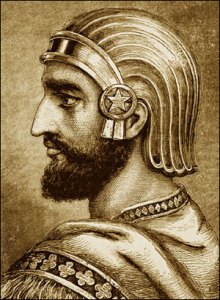
 To better understand the events surrounding the Jewish people’s return to Jerusalem, click on the image to the left or visit;

 The Noontimes