We visit this story about once a year as we journey together at Noontime, and here it is again. We have reflected on the narrative and how Psalm 51 – the beautiful song of contrition and yearning – rises from this account of lust, adultery and murder. We have also spent time thinking about how David succumbs to very human emotions only to later rise to his divine best self by finally facing the truth about his own actions. We have spent a bit of time with Bathsheba, wondering what more we might learn from her if only we had more details of her life. Today we meditate a bit on the role that Nathan plays in this drama: the truth-revealer who is wise with words and strong with God, the prophet who becomes the instrument of David’s conversion.
This is a fitting path to continue as today we celebrate the conversion of St. Paul, the devout Pharisee who was known for his persecution of the followers of The Way who becomes one of the most fearless defenders of the Christ story. A wonderful book to read about Paul’s conversion, particularly as it parallels the life of Christ, is Jesus and Paul: Parallel Lives by Jerome Murphy-O’Conner. The writer delineates for us the thesis that both Paul and Christ experience not one but two major conversions: a conversion of heart and a conversion of vocation. Using scripture and other ancient texts, Murphy-O’Conner supports this idea to lead us through his thinking that understanding our conversion is one thing. Acting on it is another.
Tomorrow, from Saul to Paul.
For a reflection on Paul’s conversion with an audio link, visit: https://www.franciscanmedia.org/conversion-of-saint-paul/
We experience all sorts of slavery in our lives: slavery to work, slavery to ideas, and slavery to people. Paul characterizes himself many times as a slave of Christ, obeying to the utmost, owning nothing, being strength itself in his earthly weakness and poverty.
Gossip repeated commits us to a kind of slavery. The speaker can never move out of an entrenched opinion; the victim remains stuck in an unpleasant characterization. The irony of slavery is that it reduces the owner more than the slave; and perhaps that is why we see the recommendation in today’s reflection that the slave be set free . . . For remember, you were once slaves in the land of Egypt, and the Lord your God ransomed you.
At the time the book of Deuteronomy was written, and also in Jesus’ day, slavery was an accepted fact of life. Only the Essenes of Qumran rejected it in principle (Achetemeier 1031) as we can read in the works of Josephus, a Jewish historian. The famous stoic philosopher Epictetus was a slave, as was the family of St Paul. Slaves in Old Testament days were mainly for domestic service, and they “played a minor economic role in the ancient Near East” (Achetemeier 1029). Crown and temple slaves were usually captured during war; private slaves were defaulting debtors and their families, or indigents who resorted to self-sale. In New Testaments days under Roman rule, slaves comprised as much as thirty five percent of the population. Poor masters were to be punished; slaves were to participate in the Sabbath rest. Many of the rules regarding slaves were established in an effort to maintain the dignity and humanity of these human beings; but no matter its form or purpose, slavery is something to be abolished. It meant “social death” in ancient times (Achetemeier 1030) and remains so today – cutting the slave off from family, friends, homeland and resources.
To what are we slaves today? Who do we enslave by our words and actions? How might we free ourselves and others from chains real or unreal?
The only freedom that is eternal and redeeming is that which comes when we give ourselves over to God’s love. Placing ourselves in the compassionate hands of Christ is the single most effective method of ensuring that we are slaves to no one and to nothing; for when we place God before all else in our lives we put ourselves in a place which no shackle can chain.
God always rescues; he always keeps his promises. As the prophet Zechariah tells us (8:7-8): Thus says the Lord of hosts; Lo, I will rescue my people from the land of the rising sun, and from the land of the setting sun. I will bring them back to dwell within Jerusalem. They shall be my people, and I will be their God, with faithfulness and justice.
No matter where we are or what our condition, we are well-loved by our creator. When we turn to him and agree to serve him only, we live in a state of freedom which can never be enslaved. Would it not be wonderful if we might set ourselves and others free from the chains in which we have entrapped them?
From this morning’s MAGNIFICAT intercessions:
For those who feel hopelessly trapped by the habits of sin: grant them forgiveness and peace.
For those who fear your anger: show them also your love.
For those who delay examining their decisions and habits: let them see how quickly life passes.
God in heaven, deliver us, rescue us, set us free from all that keeps us from you. Amen.
Achetemeier, Paul J. HARPERCOLLINS BIBLE DICTIONARY. 2nd edition. San Francisco: Harper San Francisco, 1996. 1031. Print.
Cameron, Peter John. “Prayer for the Morning.” MAGNIFICAT. 1.23 (2009). Print.
For more on the Essenes of Qumran, click on the image above or visit: http://www.pbs.org/wgbh/pages/frontline/shows/religion/portrait/essenes.html
Adapted from a Favorite written onJanuary 9, 2008.
This is something we need to hear a great deal, and if we were to read this more often we would find ourselves worrying less.
There is much imagery in scripture referring to seed, sowing, reaping, harvesting. And this makes perfect sense since agriculture was such an integral part of life during Old and New Testament times. Usually we think of these images as we imagine God’s word or work being planted to be harvested later. Today however, we might think of Job, and others like him, who plant by giving something up, who sow – and later reap – because they relinquish self, they witness patiently and persistently, they speak to God from the heart, and they become willing sowers and reapers.
And so we pray.
Dear God,
Help us to see that all we need do when we are weary is to give over to you our aches and pains . . . you will know how to make a flowerbed from our struggles.
Help us to understand that all we need do when we are anxious is to hand over to you our worries and anxieties . . . you will know which seed grows best in the dark.
Help us believe that all we need do when we feel too alone is call for you and tell you of our sorrow . . . you will know when to bring the warmth of the sun.
Help us to hope that all we need do when we are at our most fragile is look for you in the arid desert . . . you will know when to send the rain.
Help us to know the cycle of harvest . . . for you already know when we are ready to go into the field.
In this Noontime we find ourselves in the chapters of the Book of Sirach in which the writer spends time praising the Hebrew ancestors for their openness to God’s message and for their fidelity in following God. In this particular chapter, we relive the Hebrew transition from nomadic tribe to settled people. Joshua and Caleb, two leaders who have always been loyal to Yahweh and who have followed Moses from the beginning of their journey out of Egypt, now lead the people into the place of promise – the territory God secured for his people. The Judges are the leaders who continued to shepherd the Twelve Tribes until the time of the Davidic Kingdom. Samuel is the last of these and we may read more about this federation at the following site if we are looking for more information. http://www.jcpa.org/dje/articles/judges.htm
Notes will tell us that Joshua’s name means: The Lord is savior and this is apt since it is through Joshua’s wisdom and leadership that the Hebrew people are able to conquer enemies and receive their inheritance. The Book of Joshua will give us the details of this story. Caleb, whose name means wholehearted faith and devotion, is also appropriately named. Here is a site with a synopsis of the interesting story these men share. If you like espionage and are intrigued by the seamy parts of life, read about how these two friends who were able to secure a legacy for a people through some very unusual means. http://www.bible-knowledge.com/Joshua-and-Caleb.html
Samuel’s story is well known and the books named for him will remind us of the story read out to us on Sundays during particular times of the liturgical year. We will remember that his mother Hannah prayed for children and was rewarded for her fidelity with the birth of this child and others. We will remember how as a boy he ran to Eli in the temple, thinking that the priest was calling him in the night when all the while it was the voice of God he was hearing. Eli tells him to respond to this voice by replying: Speak, Lord, your servant is listening.Samuel serves God as a prophet, and he becomes the final judge of Israel who ushers in the kingdom by first anointing Saul and later David – all at God’s bidding.
What do these stories mean to us and for us? They tell us about our spiritual roots. They remind us of how and why we are created. They are our link to a past which brings us to this present. They are an opportunity to re-investigate who we are and what we mean.
These stories also bring another opportunity. They are the chance to think about our own immediate ancestors – who they were and what they mean to our own lives. Our forbears may have had a great influence on our spiritual life – either because of their dedication and fidelity to God, or perhaps because of their lack of any spiritual direction. In either case, our predecessors are the flesh from whom we come, they have given to us the habits and gestures we have inherited. Theirs may well be the message that we continue. As we reflect on our roots, we will want to think about whom we praise. And why.
Let us take a few moments sometime during this hectic day to reflect on the stories we have heard about the people in our family tree. What message does the story of their lives leave for us? And what part of their story do we wish to pass on as part of the great Story of the World? What or who will our own lives praise?
As we conclude our look at God’s inverted kingdom, we consider a Favorite from June 10, 2009, and we reflect on how Jesus might deal with the social injustice we find in our societies.
Isaiah 10 is book-ended by words that we hear so often during the Advent season: The people who walked in darkness have seen a great light . . . But a shoot shall sprout from the stump of Jesse, and from this root a bud shall blossom.These words remind us that someone is coming great enough to take all of us in . . . and indeed, this one is already among us. Today’s Noontime reminds us of what pulls us away from God and it draws clear imagery with Assyria and Sennacherib as vehicles not only of pain and loss, but ultimate transformation if we but follow the Light, the Christ.The people who walked in darkness have seen a great light . . . But a shoot shall sprout from the stump of Jesse, and from this root a bud shall blossom.
Isaiah tells us clearly that when we trust the Lord we need not tremble before overwhelming odds. If we move out of the darkness to stand in the light and obey the voice within, we have nothing to fear. Do not fear the Assyrian, though he strikes you with a rod, and raises his staff against you.
Isaiah reminds us that though we are small, we are also mighty when we place our fear where it is best handled, in God’s capable hands. The tall of stature are felled, and the lofty ones brought low; the forest thickets are felled with the ax.
Isaiah repeats a theme often heard with the prophets: those who can remain faithful through the holocaust will be standing when all others have blown away like chaff in the wind. The remnant of Israel, the survivors of the house of Jacob, will no more lean upon him who struck them; but they will lean upon the Lord . . . a remnant will return . . . only a remnant will return.
Allowing injustice to happen without speaking or witnessing is the broad path taken by many; but it is not the marrow path taken by the remnant. As Jesus tells us in Matthew (7:3) and Luke (13:24), most of us will succumb to a system that allows injustice for many the sake of the comfort of a few. This remnant that remains in God will have to bend before the force of the storm, but all of this bending will be worthwhile. This is the message that Isaiah brings to us: The people who walked in darkness have seen a great light . . . But a shoot shall sprout from the stump of Jesse, and from this root a bud shall blossom.
Elamiat captives and Assyrian officer. Relief from Ashurpanibal Palace in Nineveh, Iraq
Capture
Thus was Judah exiled from her land . . .
On January 15, 588 B.C.E. (Senior 1016) Jerusalem falls and the people of Judah are captured. History tells us that this people later returns to Jerusalem to restore the Temple and the city – and history also tells us all will be lost again. The human way is cyclical with valleys and peaks. It is an inconsistent wandering of the soul in search of what it already has. The Way that Isaiah announces, The Way we might live each day, is the constant journey of singing and rejoicing in the presence of God, a presence that is already with us.
When the enemy threatens, a highway will be there.
When capture is imminent, a holy way will be there.
When all seems lost, no lion will be there.
When darkness falls, no beast of prey will be there.
When it appears that there is no hope, there is a journey to make, and on it the redeemed will walk.
When we know that we have strayed from The Way, all we need do is be open to change, and we will find that . . .
A highway will be there, called the holy way . . . No lion will be there . . . nor beast of prey . . . It is for those with a journey to make, and on it the redeemed will walk . . . and they will be singing, crowned with everlasting joy . . . they will meet with joy and gladness . . . sorrow and mourning will flee. (Isaiah 35:2-10)
Let us join hearts and hands and souls to journey together along The Way.
Jewish captives with camel and baggage on their way into exile. Detail of the Assyrian conquest of the Jewish fortified town of Lachish (battle 701 BCE) Part of a relief from the palace of Sennacherib at Nineveh, Mesopotamia (Iraq)
Capture
Thus was Judah exiled from her land . . .
In this last Chapter of Jeremiah’s prophecy, we see the capture of mind, soul and body that results from enduring neglect and refusal to do what God asks of us. And we understand that we cannot sustain life when we practice this kind of internal death. We may want to renew ourselves with solutions we think palatable and we may believe that we know the best way to bring goodness out of evil, but we are children playing at being grown up when we prefer our ways to God’s.
Yesterday’s MAGNIFICAT Morning Prayer included a canticle from Isaiah (35:2-4, 8-10): [The faithful] will see the glory of the Lord, the splendor of our God. Strengthen the hands that are feeble, make firm the knees that are weak, say to those whose hearts are frightened: Be strong, fear not! Here is your God, he comes with vindication; with divine recompense he comes to save you. A highway will be there, called the holy way; no one unclean may pass over it. No lion will be there, nor beast of prey go up to be met on it. It is for those with a journey to make, and on it the redeemed will walk. Those whom the Lord has ransomed will return and enter Zion singing, crowned with everlasting joy; they will meet with joy and gladness, sorrow and mourning will flee.
We have a simple lesson here about how to live in a world that constantly runs counter to what the Lord asks of us. The people of Judah are vanquished, their leaders captured, their possessions taken. They become disenfranchised from all that identifies them. They are slaves to another culture. This capture is seen as something bleak and stark, a life without promise; but Isaiah reminds them that – as with all things involving the Living God – what appears to be loss is gain, and what seems to be gain is loss. It is precisely when all that we have and know is taken from us that we are given the opportunity to turn to the font of life. When we are and have little or nothing, there is only God.
Isaiah tells us that in this new life into which we have stepped there is not darkness but rather light. God will announce God’s self with reversals; and a Way will open up before us that we will only see once we have replaced our pride with humility and our desire to be independent from the Lord with a desire to be one with God. Nothing can threaten us when we walk along this Way for it is holy, and once we throw off the values that the darkness of the world has to offer, we will be holy, too. Our step will be quick, our burden light for we will be carried by God. We will also understand that we have a journey to make, a journey of redemption itself.
We, the ransomed, travel not towardthe very one who has ransomed us but withthe Lord. During Advent and the Christmastide we heard Isaiah’s prophecy read out in which the prophet announces The One who is The Way. We have revisited the results of capture and the road beyond that imprisonment. Today we Christ followers know our savior’s name as Jesus. The ancient Judeans could only dream about Christ’s coming. How fortunate are we to travel this highway with him.
Tomorrow, beyond the highway of capture.
Adapted from a reflection written on June 4, 2011.
This Favorite was written during Eastertide on May 3, 2011. We post it today as a reflection on Christ’s inverted transformation of the world, as an offering of peace in a time of trouble.
These are such sad verses; the images of the inconsolable one suffering intensely are so very difficult to sit with. We want to rush past them as we sometimes rush past those who are in pain or those who bear the visible scars of their suffering. Yet this is where Christ dwells, with the dispossessed, the broken, and those in the captivity of their addictions. We want our world to be a beautiful and ordered place. We want happy endings and bright, new beginnings. We want perfection and comfort. We look away quickly from pain and suffering. We do not want to be the least uncomfortable. We want all things in neat rows and nice packages, but life is not as tidy as we wish. And yet, when we pause to reflect, we realize that it is.
When we allow pain to convert us, as it will, when we allow God’s hands to heal us, as they will, we see that life is about reversal, inversion, irony and paradox. What appears to be lost is actually found; what we think has gone yet resides within.
Give heed to my groaning . . .
Matthew 19:30: Many who are first will be last and many who are last will be first.
There is no one to console me . . .
Psalm 126:5: Those who sow in tears will reap with cries of joy.
All my enemies rejoice at my misfortune . . .
Psalm 126:6: Those who go forth weeping, carrying sacks of seed, will return with cries of joy, carrying their bundles of sheaves.
My groans are many, I am sick at heart . . .
We are called today to give heed to the message of lamentations, to our own cries and to the cries of the bereft. We are called to take courage in the face of opposition, to the obstacles we put in front of ourselves and to those placed there by others. We are called to give heed to the sadness we experience ourselves and to the sadness we see in others for all lamentation will be transformed into happiness. Of this we can be certain, for this is the Easter message delivered by Christ.
Psalm 30:11-12: You turned my wailing into dancing; you removed my sackcloth and clothed me with joy that my heart may sing to you and not be silent. O Lord my God, I will give you thanks forever.
These are such beautiful verses; the images of a God so loving that all is forgiven, all are blessed. They are so wonderful to sit with. We want to rush toward them as we rush toward the Living God.
Adapted from a Favorite written on December 29, 2009.
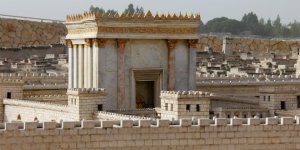
Refuge in the Temple
If we go to an Internet search engine and type in the key words “seek refuge in a church,” we may be amazed to see how many articles pop up instantly from places around the globe. Today is the feast day of Thomas Becket, an early British Archbishop murdered in the cathedral of Canterbury. Through ages, humans seek physical, emotional and spiritual shelter in a structure built by human hands. Today’s psalm, commentary informs us, is the lament of an individual unjustly attacked who has taken refuge in a temple. “Confident of being found innocent, the psalmist cries out for God’s just judgment (1-5) and requests divine help against enemies (6-9a). Those ravenous lions (9b-12) should be punished (13-14). The psalm ends with a serene statement of praise (15)”. (Senior 657)
I call upon you; answer me, O God. Turn your ear to me; hear my prayer.
B. Child: Thomas Becket
We might seek refuge from our own terrors by looking inward to that place in which Christ dwells in each of us, by searching for and finding that quiet temple within, by being still so that we might hear the words of comfort that will settle our fears.
Turn your ear to me; hear my prayer.
Jean Vanier
From yesterday’s MAGNIFICAT Meditation of the Day by Jean Vanier who sees Christ identify with the poor when he is born into the world to Mary and Joseph: How can God who is all powerful, all beautiful, and all glorious become so powerless, so little so weak? The logic of love is different from the logic of reason and power. When you love someone, you use her language to be close to her. When you love a child, you speak and play with him as a child. That is how God relates to us. God becomes little so that we will not be frightened of him, so that we can enter into a heart-to-heart relationship of love and communion.
The logic of the world tells us to fight, to beat others out, to be the first, the best, or the brightest. Our culture rarely tells us to take a deep breath and think before we buy, speak, or accuse.
My ravenous enemies press upon me; they close their hearts, fill their mouths with proud roaring.
The logic of love tells us to act for others who are marginalized, to witness, and to take refuge in the temple when we are persecuted. Then we will be filled with God’s presence so that we might better face the challenges before us.
When I awake, let me be filled with your presence.
When we are troubled, when we are accused, when we are anxious in any way, we might turn to the temple for refuge. There we will find a child who embodies the inversion of all that assails us. It will be this child who will show us the way to serenity amid turmoil. It will be this one who will bind up our wounds. It will be this one who fills us with a presence that is more powerful and more loving than any other we can ever know.
So let us begin the new year by packing up our woes, and taking refuge in the temple of God’s vulnerable love.