We continue to look for God’s yardstick in the New Testament.
Paul writes his story of the good news in his letters to Christian communities he establishes, and in the acts of love recorded in Acts of the Apostles. What does he tell us about the measure with which God measures?
Paul urges the followers of Christ to celebrate always . . .
Rejoice in the Lord always; again I will say, rejoice!
Paul asks that we share Christ’s goodness with all we meet and in all we do and say . . .
Let your gentle spirit be known to all.
Paul urges the followers of Christ to rely on prayer . . .
Be anxious for nothing, but in everything by prayer.
Paul reminds us to put our petitions in the creator’s hands . . .
Let your requests be made known to God.
Paul advises us to focus only on Christ . . .
Guard your hearts and your minds in Christ Jesus.
Paul gives a yardstick that is strong, concise, simple and elegant . . .
Whatever is true, whatever is honorable, whatever is right, whatever is pure, whatever is lovely, whatever is of good repute, if there is any excellence and if anything worthy of praise, dwell on these things.The things you have learned and received and heard and seenin me, practice these things, andthe God of peace will be with you.
When we explore Paul’s letters we find a consistent, clear message. This is a yardstick we will want to use. It is a yardstick we will want to share with others.
We continue to look for God’s yardstick in the New Testament.
Peter writes his Good News story not with ink or stylus but with his hands, feet, ears, eyes and lips. He sends us letters that remain pertinent through millennia.
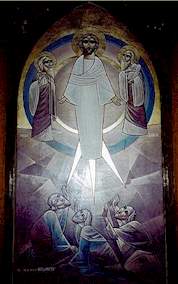
We couldn’t be more sure of what we saw and heard—God’s glory, God’s voice.
Peter understands that we doubt his story; yet he tells us this Good News from a full and loving heart.
The prophetic Word was confirmed to us. You’ll do well to keep focusing on it.
Peter knows about the distractions of the world and so he advises that we focus on his witness which we know to be true.
It’s the one light you have in a dark time as you wait for daybreak and the rising of the Morning Star in your hearts.
Peter assures us that the light of Christ will pierce the darkness to warm hearts hardened by darkness and doubt.
The main thing to keep in mind here is that no prophecy of Scripture is a matter of private opinion. And why? Because it’s not something concocted in the human heart.
Peter’s response to Jesus is recognition of who Jesus is.
Peter recognizes that the lure of false teachers tugs at us endlessly; for that reason, he tells us to rely on the divine Christ rather than those who give us simple solutions to complex problems.
Prophecy resulted when the Holy Spirit prompted men and women to speak God’s Word.
Peter urges us to rely on the Holy Spirit rather than those who harden hearts and stiffen necks. This is the measure of God’s mercy that Peter gives us today.
Tomorrow, Paul.
Visit Matthew 16:13-17 to examine the context of Peter’s response to Jesus’ question.
We continue to see God’s yardstick in the New Testament.
John the Baptist gives all that he has and all that he is to serve both the divine creator and Jesus, God among us. Today we consider how we might measure up to this yardstick.
He’ll be filled with the Holy Spirit from the moment he leaves his mother’s womb.
Might we allow the Spirit to fill us with God’s consolation and serenity?
He will turn many sons and daughters of Israel back to their God.
Might we allow our lives to live out God’s call to all of creation?
He will herald God’s arrival in the style and strength of Elijah, soften the hearts of parents to children, and kindle devout understanding among hardened skeptics.
Might we allow Christ to manifest himself through us in all we say and do?
He’ll get the people ready for God.
Might we believe that we, like John the Baptist, can bring a measure of love into the world?
Tomorrow, Peter.
To explore more of Luke 1, click on the Scripture link here or above.
John Everett Millais: Christ in the House of His Parents – The Carpenter’s Shop
Wednesday, January 25, 2023
We continue to see God’s yardstick in the New Testament.
The measure that Joseph presents to us might appear as an obstacle more than a help. We look more closely at the story of Jesus’ family.
The birth of Jesus took place like this. His mother, Mary, was engaged to be married to Joseph. Before they came to the marriage bed, Joseph discovered she was pregnant. (It was by the Holy Spirit, but he didn’t know that.) Joseph, chagrined but noble, determined to take care of things quietly so Mary would not be disgraced.
The yardstick that Joseph presents rises from his relationship with God, and gives us ground in which we can also rise and flourish.
While he was trying to figure a way out, he had a dream. God’s angel spoke in the dream: “Joseph, son of David, don’t hesitate to get married. Mary’s pregnancy is Spirit-conceived. God’s Holy Spirit has made her pregnant. She will bring a son to birth, and when she does, you, Joseph, will name him Jesus—‘God saves’—because he will save his people from their sins.”
The yardstick that Joseph offers is a generous and loving request for joy.
Then Joseph woke up. He did exactly what God’s angel commanded in the dream.
When Joseph is dismayed and disappointed he relies not on fear but on the gifts of decency, grace and goodness God has given to him. Joseph relies on the gift that all humanity possesses if we only care to open it, the gift of our own nobility.
We continue to see God’s yardstick in the Old and New Testaments.
Mattathias laments that he lives in an age when centuries of fidelity fade into corruption: Woe is me! Why was I born to see the ruin of my people, the ruin of the holy city?We might well ask this question in any age and in any place. It seems that the human condition is to succumb to the temptation of the call of false teaching and self-promotion. Fraud replaces fidelity; dishonesty becomes truth; disgrace and honor trade places. But Mattathias calls on his sons to remember their lineage as beloved children of Yahweh. Falling back on their relationship with God, this ancestry is characterized by strong men who consistently rely on qualities that nourish truth and light. These forbears trust God alone, and they serve as a measuring stick for our own behavior in turbulent times.
Remember the deeds that our ancestors did in their times, and you shall win great honor and an everlasting name.
Abraham, faithful in trial, fills with righteousness. Joseph keeps the commandment, despite distress, to become master of Egypt. Phinehas, for his burning zeal, receives the covenant of an everlasting priesthood. Joshua executes his commission to become a judge in Israel. Caleb bears witness before the assembly and receives an inheritance in the land. David, known for his loyalty, receives as heritage a throne of eternal kingship. Elijah, full of burning zeal for the law, is taken into heaven. For their faith, Hananiah, Azariah and Mishael are saved from the fire. Innocent Daniel is delivered from the mouths of lions. (verses 51-60)
We might pause with these verses 61-63 in particular.
And so, consider this from generation to generation, that none who hope in Heaven shall fail in strength.
Do not fear the words of sinners, for their glory ends in corruption and worms.
Today exalted, tomorrow not to be found, they have returned to dust, their schemes have perished.
When we spend time reflecting on these verses today, we see how this pedigree inspired Mattathias and his sons to defend the kingdom whose loss they lament. Like Mattathias, we might also allow ourselves to see the measure of God’s love in our own spiritual family tree. Let us place our hope in heaven so that whatever our circumstances require of us . . . we do not fail in strength.
We continue to see God’s yardstick in the New Testament, with Christ’s Law of Love superseding the Old Testament Mosaic Law.
Paul writes to Timothy, the disciple he left in Ephesus, to continue the work they began in Christ. Paul might be writing these words to us today.
Stay on top of things so that the teaching stays on track. Apparently some people have been introducing fantasy stories and fanciful family trees that digress into silliness instead of pulling the people back into the center, deepening faith and obedience.
Paul might also remind us today that the laws of the world too often stand at odds with the Law of Love that Christ teaches. When we find ourselves between these two ends, we need only come to the center where Christ always is. In love.
The whole point of what we’re urging is simplylove—love uncontaminated by self-interest and counterfeit faith, a life open to God. Those who fail to keep to this point soon wander off into cul-de-sacs of gossip. They set themselves up as experts on religious issues, but haven’t the remotest idea of what they’re holding forth with such imposing eloquence.
Paul might also urge us to share the Good News of the coming and in-dwelling of the Spirit. He might caution us that we will meet opposition. And he might remind us that we only need act in love as Jesus does.
It’s true that moral guidance and counsel need to be given, but the way you say it and to whom you say it are as important as what you say. It’s obvious, isn’t it, that the law code isn’t primarily for people who live responsibly, but for the irresponsible, who defy all authority, riding roughshod over God, life, sex, truth, whatever! They are contemptuous of this great Message I’ve been put in charge of by this great God.
James Tissot: The Lost Drachma
Paul might thank us as he thanks Timothy. He might remind all of us of our inadequacies. And he might also urge us to place these liabilities in God’s great hands, the hands that created each of us to be blessed with Beatitude and nourished with Love.
I’m so grateful to Christ Jesus for making me adequate to do this work. He went out on a limb, you know, in trusting me with this ministry. The only credentials I brought to it were invective and witch hunts and arrogance. But I was treated mercifully because I didn’t know what I was doing—didn’t know Who I was doing it against! Grace mixed with faith and love poured over me and into me. And all because of Jesus.
Paul might tell us that God’s mercy will overcome all adversity; that the Spirit will heal any injury; that Jesus will accompany any and each of us in our journey. He might urge us to persist in sharing this message with the same diligence as the woman who seeks the one lost coin (Luke 15:8-10). When we read Paul’s words we might realize that he speaks not only to Timothy but to each of us, urging us to rely on the Spirit and to remain in Christ. Paul might remind us that we come from God’s love and are to return this love in all we say and do. Paul might speak to us of this great Law of Love. Might we persist in sharing this love today?
Tomorrow, Mattathias.
When we use the scripture link to compare other versions of these verses with The Message translation we find here, we the opportunity Christ offers to explore his Law of Love . . . and to live this measure of God’s love more fully each day.
For a reflection on 1 Timothy 1:12-17, click on the image of the painting by Tissot. To read the Parable of the Lost Coin and consider how this story calls us to the Law of Love, read Luke 15:8-10.
Matthew 5: God’s Yardstick – The Law of Love – Part VI
Jesus The Word and Law
Sunday, January 22, 2023
We continue to see God’s yardstick in the New Testament, rising from the covenant in the Old Testament.
Often when a group begins a gathering in prayer and reads Christ’s Beatitudes, the leader will trail off after the “blessed” verses, omitting the last words Jesus gives un on persecution. This may be in error. By forgetting the final verses, we think only about the irony of verses 3 through 9 and that irony seldom fulfills or satisfies. The true paradox of Christ can only be seen when we include the final two verses that speak about the paradox of joy being gained through suffering. To recite the first seven blessings without the last two is to tell the Gospel story ending at the crucifixion and omitting the Resurrection, the road to Emmaus, the meal shared with the apostles along the bank of the sea, the return of Christ to the Upper Room, the Ascension, and finally the descent and in-dwelling of the Holy Spirit. There is nothing lasting if we neglect the last two verses. The prayer becomes hollow. And so we pray . . .
Blessed are the poor in spirit, for theirs is the kingdom of heaven.
Blessed are those who mourn, for they will be comforted.
Blessed are the meek, for they will inherit the earth.
Beatitude is blessing. Beatitude is happiness.
Blessed are those who hunger and thirst for righteousness, for they will be filled.
Blessed are the merciful, for they will receive mercy.
Blessed are the peacemakers, for they will be called children of God.
Beatitude is a gift freely given by God.
Blessed are those who are persecuted for righteousness’ sake, for theirs is the kingdom of heaven.
Blessed are you when people revile you and persecute you falsely on my account.
The desire for beatitude is written on each of our hearts by God.
Rejoice and be glad, for your reward is great in heaven, for in the same way they persecuted the prophets who were before you.
Cosimo Roselli: Jesus Delivers the Eight Beatitudes
Beatitude is a promise that challenges us to make moral choices. It is a covenant that invites us to purify our hearts, to seek God, and to rest serenely in beatific joy with God . . . because God alone is enough.
Tomorrow, concluding our reflections on the Law of Love.
When we spend time with Matthew 5, we explore the idea that we are salt and light, and we give ourselves the opportunity to unfold Christ’s wondrous Law of Love.
John 14:27: God’s Yardstick – The Law of Love – Part V
Peacemakers
Saturday, January 21, 2023
We continue to see God’s yardstick in the New Testament.
To understand how the Beatitudes form a ladder of love and gratitude that brings us purity of heart, we began at the first rungs: Blessed are the poor in spirit, those who mourn, those who are meek.We moved to the next rungs: Blessed are those who hunger and thirst for righteousness, and those who show mercy.From here we move into serenity.
“Blessed are the peacemakers, for they will be called children of God.”St. Paul tells us that we are God’s adopted sons and daughters. It is our brother, Jesus the Christ, who shows us this ladder of beatitudes so that we might attain our inheritance. We need only move to the uppermost rung where we see the inversion and paradox of living a Christian life.
“Blessed are those who are persecuted for righteousness’ sake, for theirs is the kingdom of heaven.”This may feel nonsensical. It may seem to be the opposite of what we seek and what we believe to be true. This new Law of Love may seem to be the opposite of the Old Testament Covenant where the good are rewarded and the bad reviled. But here Jesus pauses on his road to Jerusalem to preach this sermon to thousands as they recline on a hillside to tell them – and us today as we look for order and sanity – that there is a new order to things. “Blessed are you when people revile you and persecute you falsely on my account.” With the Beatitudes, Jesus calls us to spiritual maturity. He asks us to be faithful in a new way. Jesus asks us to step through the narrow gate with him, to tend to the marginalized, to stand and speak when he asks us to speak, to be silent when he asks for our silence, to preserve what is holy rather than to give it to dogs. And so he gives us these final words: “Rejoice and be glad, for your reward is great in heaven, for in the same way they persecuted the prophets who were before you.”
We continue to look for God’s yardstick in the New Testament.
“Blessed are those who hunger and thirst for righteousness, for they will be filled.”Once the soul has capitulated to God, emptied out the human to let in the divine, it thirsts for more of what it has begun to experience. And this soul will search without ceasing to experience God in deepest intimacy. It hears God’s call and must respond. This soul will wander through the night calling out for the beloved in the same way as the mourning lover in Chapter 3 of the Song of Songs (Song of Solomon).
Restless in bed and sleepless through the night, I longed for my lover.(Songs 3:1)
The soul searches endlessly as the does the soul in St. John of the Cross’ beautiful poem “Dark Night of the Soul.”
Upon a darkened night
The flame of love was burning in my breast
And by a lantern bright
I fled my house while all in quiet rest. (St. John of the Cross)
The soul that burns with desire for God will do all in order to be with God. And it will find healing serenity once it has found God because God alone is enough.
Those who are satisfied in this way cannot be manipulated by the world. They have no fear when they enter troubled waters because they have known the freedom of God’s embrace. And those who are satisfied in God alone respond with mercy – the fifth beatitude.
“Blessed are the merciful, for they will receive mercy.” And having walked through a gauntlet of people and events that taunt them to abandon God, having given and received mercy, having moved through fire to find peace . . . these souls will be purified.