James encourages a balanced view of the signs and symbols in our world. He reminds us that wealth, power and fame are fleeting. From THE MESSAGE edition of The Bible.
When down-and-outers get a break, cheer!
And when the arrogant rich are brought down to size, cheer!
Prosperity is as short-lived as a wildflower, so don’t ever count on it.
You know that as soon as the sun rises, pouring down its scorching heat, the flower withers.
Its petals wilt and, before you know it, that beautiful face is a barren stem.
Well, that’s a picture of the “prosperous life.” At the very moment everyone is looking on in admiration, it fades away to nothing.
And so we pray,
Steadfast and generous God, we are reminded that our plans are best when they are your plans. Help us through our trials. Speak clearly to us through our temptations. Remind us that we are sustained by you alone and that you share your heavenly perspective with us in the varied gifts you ask us to share. May we continue to return to you the fruit of our own lives as we struggle for balance in you. Amen.
James 1:5-8: Asking Boldly – Wednesday, September 28, 2022
If you don’t know what you’re doing, pray to the Father. The Lord loves to help.
Again today James gives us something to chew on. When we don’t know what we are doing, pray. When we feel disoriented or overwhelmed, go to God.
You’ll get God’s help, and won’t be condescended to when you ask for it.
God loves to accept our petitions with loving care. Christ wants to raise us up to share his intimate relationship with God. The Spirit longs to abide and nourish us when we are weary.
Ask boldly, believingly, without a second thought.
Jesus tells us frequently that when we knock the door is opened. We have only to live and act in him to realize this gift.
People who “worry their prayers” are like wind-whipped waves. Don’t think you’re going to get anything from the Master that way, adrift at sea, keeping all your options open.
When we lay down the foundation of our lives we have the choice of building on solid rock or sand. When we construct the precepts that govern our lives we have the choice of building in Christ or going our own way. When we struggle the all that overwhelms and wears us down, let us not hesitate to use frank words in our conversations with God.
When we spend time with these verses, we find that James recommends to us how we might have a right attitude and how what we are to do in times of trial. We are to act: boldly in Christ, believingly in God, and without a second thought . . . always in the Spirit.
Tomorrow, a heavenly perspective.
Use the scripture link to examine various versions of these verses to see which most plainly and clearly.
James 1:2-3: The Value of Obstacles – Tuesday, September 27, 2015
Consider it a sheer gift, friends, when tests and challenges come at you from all sides.
James opens his letter with advice that will catch anyone’s interest. In our modern cultures we do not consider trials as gifts to be examined; we too frequently dismiss or even ignore tribulations as inconveniences to be shunted into the darkness. We too rarely consider obstacles as doors of opportunity or growth; yet this is James’ invitation.
You know that under pressure, your faith-life is forced into the open and shows its true colors.
Perhaps this is why we pray for smooth days and comfortable nights. We do not believe that we are up to the test. Or we do not see ourselves learning good lessons from hard times. We are uncomfortable with being vulnerable and we fear having to rely on family, friends, neighbors or even strangers.
So don’t try to get out of anything prematurely.
James asks us to suppress our natural tendency to avoid uncomfortable circumstances; we infer from his words that we might gain more from a constrained environment than from easy comfortable surroundings. Rather than skitter around stressful situations or difficult people, James begins, we might allow ourselves to grow in fortitude and wisdom if we rely on God’s guidance when we must maneuver hard times.
Let it do its work so you become mature and well-developed, not deficient in any way.
Certainly we do not want to look for stress in our lives; the world presents us with enough disquiet to fill our days. Clearly we do not want to be the cause of conflict in our personal and professional lives. Yet just as certainly and clearly we understand that once we open ourselves to the guidance of God’s hand when we navigate straitened days, we will remember our success in dark times and recognize a certain confidence growing within.
Consider it a sheer gift, friends, when tests and challenges come at you from all sides. We live in a world that values power, fame and wealth. We humans tend to look at one person’s loss as being another’s gain; yet when we live an inverted life with Christ where loss is gain and gain is loss, we begin to better understand James’ lesson. Stumbling blocks become building blocks. Trials become jubilation. When sorrow and pain are traversed in God’s grace we begin to experience the joy of perseverance. When we live by God’s measure rather than our own, and when we allow God to guide us through the road blocks of our lives, we finally learn the value and joy of learning new faith and new life as a result of persevering through our obstacles.
Tomorrow, right attitude.
Use the scripture link to examine various versions of these verses to see which most plainly and clearly.
We have reflected on our restoration from dry bones, placed memorial stones to mark the importance of our relationship with God; we have entered in to the apostolic Spirit and marked the wisdom and prudence we want to govern our lives. And we have given over our interior temple to the transformation God has in mind for us, knowing that from our strife comes our great reward. For the next few weeks we will spend time with the letter of James, examining his message.
This letter is likely written by “a relative of Jesus who is usually called brother of the Lord” (see Mt 13, 55; Mark 6, 3). He is the leader of the Jewish Christian community in Jerusalem whom Paul acknowledged as one of the “pillars” (Gal 2, 9). In Acts he appears as an authorized spokesman for the Jewish Christian position in the early Church (Acts 12, 17; 15, 13-21)”. (Senior 368)
The letter, written in Greek despite the fact it is penned by a Jew, is considered one of the best of the New Testament and many believe that it was actually written down by a secretary. Some also regard these verses as some the earliest written after the Christ’s death and, quite likely, before the fall of Jerusalem in 70 C.E. (Senior 369)
James’ message is universal and timeless, emphasizing “sound teaching and responsible moral behavior. Ethical norms are derived not primarily from christology, as in Paul, but form a concept of salvation that involves conversion, baptism, forgiveness of sin, and expectation of judgment. (1, 17; 4, 12).” (Senior 369)
When we spend time with this short letter today, we find that its structure is neat and concise, focusing on the value of trials and temptation, the importance of heeding warnings, and the power of prayer. Using the scripture link in this post, we can skim differing versions of the letter to examine the themes and structure ourselves as we prepare to hear the message James wants to bring to us.
Tomorrow, James’ message.
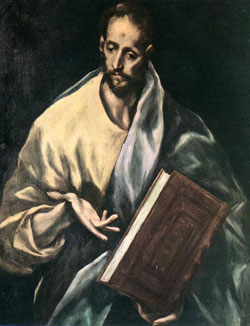
To learn more about James the Less, as he is often called to distinguish him from the Apostle James (James the Greater), follow the scripture links above in Matthew, Mark and Acts, click on the image above, or use a reference that you find helpful.
Senior, Donald, ed. THE CATHOLIC STUDY BIBLE. New York, Oxford University Press, 1990.368-369. Print.
Yesterday we reflected on the idea that Jesus replaces the Jerusalem Temple, and that Jesus invites us to be stones in this temple. He describes the coming destruction of this house where God abides; but although they have ears to hear, eyes to see and hearts to comprehend and live this message, the people do not understand what Jesus tells them.
Nor do we.
Each time we focus on our own needs and fears rather than placing faith in the Creator, we have ears but do not hear.
Each time we lust after our own outcomes rather than the hope delivered to us by the Redeemer, we have eyes but do not see.
Each time we sink into revenge rather than rise in petition for our persecutors, we have hearts but do not love.
Each time we gnash our teeth and pull out our hair about what we perceive as a stone in our path, we reject the nurturing care of the Holy Spirit.
From yesterday’s Noontime Reflection:
Do you not know that you are God’s temple?
Do you not know that God’s spirit lives in you?
You are not your own.
You were bought at a price.
You too are being built together to become a dwelling in which God lives by his Spirit.
And so we pray.
Good and great and wonderful God, guide us in understanding that we are a diverse people with diverse views and diverse voices coming together in your everlasting sacred heart. Help us to see that the new temple rises from the lessons learned in the destruction of the old. Walk with us as we go up to the New Jerusalem knowing that we are gifts to one another and to you, knowing that we are a collection of pearls purchased at a great price by Christ, believing that we are not our own, living in your Spirit of grace, and peace and joy. We ask this of you today and all days. Amen.
Do you not know that you are God’s temple; and that God’s spirit lives in you? If anyone destroys God’s temple, God will destroy him; for God’s temple is sacred, and you are that temple. (1 Corinthians 3:16-17)
Today we read a description of the prophet Ezekiel’s vision of the New Temple in the New Jerusalem. We are members, parts, living stones of this living temple.
As high as the lintel of the door, even into the interior part of the temple as well as outside, on every wall on every side in both the inner and outer rooms were carved the figures of cherubim and palm trees: a palm tree between every two cherubim. (Ezekiel 41:17-18)
Do you not know that your body is a temple of the Holy Spirit, who is in you, whom you have received from God? You are not your own; you were bought at a price. Therefore honor God with your body. (1 Corinthians 6:19-20)
Each cherub had two faces: a man’s looking at a palm tree on one side, and a lion’s face looking on at a palm tree on the other; thus they were figured on every side throughout the whole temple. (Ezekiel 41:19)
This is the table which is before the Lord. (Ezekiel 41:22)
You are no longer foreigners and aliens, but fellow citizens with God’s people and members of God’s household, built on the foundation of the apostles and prophets,with Christ Jesus himself as the chief cornerstone. In him the whole building is joined together and rises to become a holy temple in the Lord. And in him you too are being built together to become a dwelling in which God lives by his Spirit.(Ephesians 2:19-22)
Do you not know that you are God’s temple?
Do you not know that God’s spirit lives in you?
You are not your own.
You were bought at a price.
You too are being built together to become a dwelling in which God lives by his Spirit.
In any question of wisdom or prudence which the king put to them, he found them ten times better than all the magicians and enchanters in his kingdom.
Just like the Chaldeans, we marvel at the wisdom and prudence coming from one who lives in God. These holy ones are able to bring light to darkness, reason to insanity, tranquility to the turbulent spirit. We might do well to imitate those who walk with God. These four men, Daniel, Hananiah, Mishael and Azariah, are more free in their captivity than their captors are in their freedom for what they possess is a pearl of great price. They know that we are all children of God.
From MAGNIFICAT:
You chose the lowly of this world to bring salvation to all nations: grant your people the wisdom to seek your love rather than worldly honor.
You chose the faithful to bring forth the fruit of your promise: strengthen us in fidelity amid the uncertainties of our day.
You chose the unexpected to bring forth the gift of life: grant us freedom of spirit to rejoice in your work in every circumstance.
For those who are enslaved by poverty and oppression: send people of wisdom and generosity to discover ways to set them free.
For those who are enslaved by prejudice and fear: send people of courage and self-forgetfulness to keep them out of the darkness.
For those who are enslaved by addictions, recognized and unrecognized: send people enlightened by their own struggles to guide them along right paths.
If we are in the darkness yet see the light, we must take up Christ as our courage to move into that light, and we must try to bring our sisters and brothers with us. If we rise from our suffering, we must turn to others who suffer to likewise bring them out of the darkness and into God’s marvelous hands.
If we are ever in doubt as to how we are to behave or how we are to act in any situation, today’s brief reflection tells us all we need to know . . . the Apostolic Spirit resides in our prayer and speech.
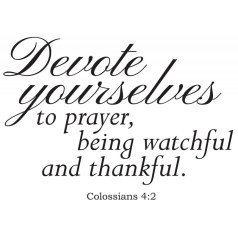
An apostle is watchful, thankful, perseveres in prayer and remains open to hearing the Word.
An apostle remains open to speaking this Word to others, and will also make the most of [every] opportunity to speak to outsiders.
Apostles live the mystery they are given. Apostles trust the creator in all circumstances. Apostles bring hope to hopeless situations. Apostles rebuke gently, love mercifully and always remain open to possibilities.
Apostles cannot carry this spirit in their hearts to hoard it for themselves. This spirit must be shared.
Apostles cannot remain silent when they are called speak.
Apostles cannot perform their mission alone; they must pray constantly and with others.
And so we pray:
God in heaven, God on earth, we know that we are your instruments for justice among your people. Speak to us today.
Joyful Christ, burdened Jesus, we know that you carry us up mountains and down on our journey. Pray for us today.
Holy Spirit, Loving Spirit, we know that you abide with always when we cry and when we laugh. Renew in us your Apostolic Spirit today.
May our lives enact the mercy and justice which we are shown. May we be the conveyors of Christ to the world. Amen.
We have reflected on the contents we will find when we open the ark of our lives before God. Will we find stone tablets with God’s law written upon them, or will we see an open and softened heart converted by God’s love? Will we find manna of God’s word that we have kept for ourselves but forgotten to share, or will that sustaining Word be present in our interactions with God’s people and all creation? And will we find the staff of life, the rod of God’s miracles in our lives kept in darkness, or will we see that it blooms in all we think and say and do as a result of our intimate relationship with Jesus? What will we have saved as treasures and tokens of God’s active presence in our lives? Will we want to unpack and re-pack what we find? Will we be content with the content of the ark of our life?
Today’s Noontimecontinues this story of God’s power and willingness to save. The Israelites have for a second time crossed a rushing body of water that under normal conditions would have swept them away; and what we read about now is their eagerness to record the wonder of this event, how they respond to God’s request that memorial stones be set in place to commemorate the bond between God and this people. And they agree to make a kind of outward and long-lasting verification of their internal union. The stones are there to this day.
When we mark the wondrous times of our lives, we must do so with reverence and joy; we must share the good news of our entering into holy relationship. We must pass the commemorative stories on; and we must be willing to allow the marking stones of our story to remain forever as a sign of God’s goodness. The stones are there to this day.
We can choose to dwell in the sadness of our journey or we can decide to celebrate and recount the saving power of God. We can curse the darkness in our lives or we can delight in the love we share with our Lord. We can grumble that God has not answered our prayer exactly as we would have liked, or we can set up memorial stones in honor of God’s goodness. The stones are there to this day.
When we stand before our maker, what will we bring with us? What symbols will mark the celebrations in our lives? Will the stones we haul into the waters of the Jordan be meager and small, or will they take effort to move, symbolizing in their greatness the enormity of God’s justice and mercy? Will the stones that we set on the hill for all to see be the ones that lie most convenient to our hands, or will they be ones that take great effort and cooperation with God’s plan to bring to the memorial site? They are there to this day.
When we are called out of chaos into truth and integrity, how will we mark that day? Where will we place our monument? And how will we answer our God? This is what we must decide today.






 The Noontimes