Isaiah 55:10-11: Just as from the heavens the rain and snow come down and do not return there till they have watered the earth, making it fertile and fruitful, giving seed to him who sows and bread to him who eats, so shall my word be that goes forth from my mouth; it shall not return to me void, but shall do my will, achieving the end for which I sent it.
God gives us great gifts – and asks that we use them well.
Jesus tells us parables of unfaithful and faithful stewards who abuse or use well the office with which the master entrusts them – and we see ourselves somewhere in these stories.
The Spirit moves us to act on the word we hear – and we are free to deny or respond to God’s call.
God creates us in God’s image – and asks that we go forth to represent God in the world.
Jesus models God among us – and calls us to follow him.
The Spirit lives within each of us – and manifests God’s word to the world.
We receive great gifts – and are asked to do much with them.
We aregreat gifts – and we are asked to share.
What nourishment do we bring to others? What sustenance do we provide to others? What action do we take as we achieve the end for which we are sent?
This week we have looked at the many ways in which Jesus wants to heal us. We have seen him give sight to those who are blind, hearing to those who are deaf, and movement to those who are paralyzed. All he asks in return is that we use the gifts he freely gives us to bear fruit for the kingdom. Today we look at a Favorite adapted from a reflection written onOctober 26, 2009.
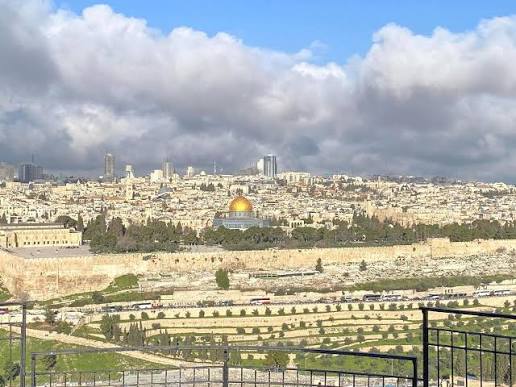
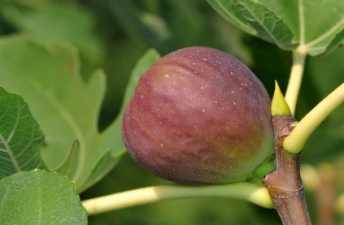
In today’s reading we come across a story that is troubling for some: the sudden way in which Jesus withers a fig tree that has not produced fruit. Here Jesus has just entered Jerusalem and has cleansed the temple of the money changers. In the next portion of this story we will see Jesus’ authority questioned and we will sit at the Master’s feet to listen to a series of parables. Footnotes tell us that we might see Jesus’ actions here as ill-tempered and arbitrary, but it is really a prophetic act portending the judgment that is to come upon Israel “that with all its apparent piety lacks the fruit of good deeds and will soon bear the punishment of its fruitlessness”. (Senior 45) Here too, besides this obvious portending of the future, Jesus affirms the amazing power of faith – that if we believe we too might cause trees to wither and mountains to be lifted up. What we read is a strange dichotomy that causes us to think . . . a tool which any good teacher will use: The placement of a puzzle before students so that they might be called to think outside of the normal typical story. What is Jesus doing when he withers the tree?
We might pose the theory that Jesus would win more converts if he had caused the tree to flourish; but then we miss the importance of our own free will. We, like the fig tree, have been planted in our particular place. We, like the fig tree, may have to exert ourselves to bear fruit. We, like the fig tree, will be held to an accounting of our stewardship of the gifts we have been given.
In one of our favorite stories, Queen Esther shrinks from the work she sees lying before her because she fears the loss of her own life and the lives of her fellow Jewish exiles. When she balks, her uncle Mordecai reminds her: Even if you now remain silent, relief and deliverance will some to the Jews from another source; but you and your father’s house will perish. Who knows but it was for a time like this you obtained the royal dignity? (Esther 4:14) Who knows for which moment in time our gifts are meant? Who are we to parcel them out in a miserly fashion or to decide to keep these gifts safely tucked away for ourselves?
In Luke 12:48 at the close of the parable about the watchful servant, we hear Jesus remind us that much will be demanded of those who have been given much. We might think of this today as we move through our many small and big chores. What is it we have been given that we are asked to share? What can we do to be certain to produce fruit with the gifts we are given? And do we ourselves have the faith to wither trees and move mountains?
Tomorrow, a gentle mastery.
Senior, Donald, ed. THE CATHOLIC STUDY BIBLE. New York, Oxford University Press, 1990.45. Print.
Andreas Achenbach: Ships in a Storm on the Dutch Coast
Wait for your valuable crops to mature as farmers do, patiently letting the rain do its slow but sure work. Be patient like that. Stay steady and strong. The Master could arrive at any time.
God says: I am always steadily at your back to protect you. I am always watching your path and leading you. I lend you my strength when you weary. I carry you on my shoulders when you cannot walk. I lead you beside still waters and I rescue you from overwhelming storms. I have given you gifts that I ask you to watch over and husband. You need not struggle and fight. You need not gather weapons or seek revenge. All you need do is remain steady and strong in me. I will do the rest. Strengthen your hearts for I am already with you.
We might use the scripture link to reflect on other versions of these verses and consider what gifts God has given us, to reflect on how we might be patient as we wait for our gifts to mature, and to remember that we need not fight . . . we need only remain steady and strong in God as the storms of roll over us.
James encourages a balanced view of the signs and symbols in our world. He reminds us that wealth, power and fame are fleeting. From THE MESSAGE edition of The Bible.
When down-and-outers get a break, cheer!
And when the arrogant rich are brought down to size, cheer!
Prosperity is as short-lived as a wildflower, so don’t ever count on it.
You know that as soon as the sun rises, pouring down its scorching heat, the flower withers.
Its petals wilt and, before you know it, that beautiful face is a barren stem.
Well, that’s a picture of the “prosperous life.” At the very moment everyone is looking on in admiration, it fades away to nothing.
And so we pray,
Steadfast and generous God, we are reminded that our plans are best when they are your plans. Help us through our trials. Speak clearly to us through our temptations. Remind us that we are sustained by you alone and that you share your heavenly perspective with us in the varied gifts you ask us to share. May we continue to return to you the fruit of our own lives as we struggle for balance in you. Amen.
Our talents are gifts from God and they are meant to be shared with the community – not hidden and kept away for ourselves. The last verse sounds so harsh, perhaps silly. Its true meaning is that once we begin to share what we have, we will be given the further gift of wanting to share. We will increase, we will convert, and we will find intimate union with God.
If our great fear is fear to commit, then once we begin to commit to others, the action becomes easier. If we do not take those steps toward others, if we build walls, then we will end up with less than we had when we arrived here. We will be alone in our tower – a tower built with our own hands.
Using another example, if we have a fear of paying attentionto others because we want all the attention for ourselves, we will never be fulfilled. If, on the other hand, we practice stepping out of ourselves and giving to others, we will receive further gifts which will enable us to truly forget ourselves and do for others. If we do not take these steps, we will end by being alone – separated from humans and from God – and again, all by our own hand.
Fill in the italicized words above with any human fear and Jesus’ message is this: Once we take the steps to convert ourselves in the area where we know we need improvement, we will receive more and more gifts which will empower us to continue our conversion. If we refuse to enter into this difficult process of conversion, we will lack more and more – until we have and are nothing. We will have diminished rather than increased. We will have separated ourselves from God. We will have descended the ladder of Beatitude into a lonely place – rather than ascended it to intimate union with God.
Mark’s Gospel is the most brief and succinct. His descriptions are precise. Jesus’ actions are seen in a clean, clear trajectory of purpose. His words are unadorned and plain, but strong and resolute. Mark’s story of Jesus is powerful.
May the power of these words be with each of you today.
Frequent arguments arise about how to create social and political policy for the common good and this is natural. There will always be those among us who take advantage of generosity hearts. This incontrovertible fact causes worry and suspicion. It creates a feeling of ill will toward those who need the help of the fortunate. There will always be suspicion and bias in human relationships but this does not mean that we cannot practice Christ’s example in our small, everyday dealings with one another.
Though Christ was rich, for your sake he became poor . . .
Once we discover how we our sharing of wealth can be managed prudently, we might begin to offer more of our abundance to others.
By Christ’s poverty you might become rich . . .
As Jesus so often tells us, our treasure must lie in our actions rather than the goods, property and fame we have stored up in this world.
Not that others should have relief while you are burdened, but that as a matter of equality your abundance at the present time should supply their needs, so that their abundance may also supply your needs, that there may be equality.
Paul reminds his readers that God dealt with the Israelites in the desert with generosity and grace by providing water from rock, and quail and manna from the sky. The real miracle in this story is not so much that sustenance appeared out of nowhere, but that there was enough for all.
Whoever had much did not have more, and whoever had little did not have less. (Exodus 16:18)
This generosity and plenty will again be seen when Jesus feeds thousands with a few fish and loaves offered by a child. (Matthew 14, Mark 6, Luke 9 and John 6)
There is a lad here who has five barley loaves and two fish, but what are these for so many people? So they gathered them up, and filled twelve baskets with fragments from the five barley loaves which were left over by those who had eaten (John 6:9 and 13)
And so Paul sends us this message: Brothers and sisters: As you excel in every respect, in faith, discourse, knowledge, all earnestness, and in the love we have for you, may you excel in this gracious act also.
All that have and all that we are is gift from God. Jesus himself, although he is divine, tells us that he does the will of the creator. How then can we refuse to imitate Christ in his generosity for us? How then can we reject the idea of sharing the abundance we have at this present time?
As we meditate on this reading today, let us consider where our wealth lies. It may be physical in that we own much and we may have worked quite diligently for this abundance. Yet is it not God who gives us this plenty and how can we not share it?
Our wealth may be spiritual or psychological. Again, was it not God who blessed us with this equanimity? How can we not share the benefit of stable mind and heart when God has given this sense of balance to us in the first place?
As we spend time with these verses and compare varying versions of these stories by clicking on the scripture links, let us also pledge to share our wealth in some way with those who have less. And let us commit to sharing a portion of this plenty with those who have far less than the gifts we have received from God.
If you find yourself without a cause to which you might devote yourself, click on the words Social Justice in the category cloud in the right hand column of this blog. Or enter the words Social Justice into the blog search bar and explore. If you already have a favorite cause, enter that information into the comment bar below and share it with others. In this way we come together in our reply to Christ’s invitation to share God’s gifts as a matter of equality.
Pagan gods demand to be carried while Yahweh carries his people. When we do the Lord’s work we are carried by God. We need not struggle for our daily shelter and bread. They will appear as a tent in the desert and as manna on trees’ branches and the ground. These are the fruits of God’s love for us. What fruits do we bear to God?
God says: I do not ask for holocausts or burnt offerings. I do not want to punish or frighten you. Rather, I want nothing more than your peaceful days and serene nights. My goodness and kindness will carry you if you make your heart open to me. My strength and persistence will sustain you if you allow me to wash your feet. My hope and love will heal you if you come to me with willing hands and mind. I give you the gift of life each day when you rise. All I ask is that you share that gift with others. The pruning you experience at my hand may dishearten you but when you trust the wisdom of my Way this discouragement will vanish. The pruning you undergo only brings forth more abundant and more beautiful fruit than you will have imagined. Trust me. Do not be afraid. Rise and receive the gifts I bring you. Then turn and share them as best you are able.
Enter the word pruninginto the blog search bar and consider how and why life prunes us each day.
We have been visiting with the Book of Sirach all week. Today and tomorrow we will want to spend time with Chapters 8 and 9 and think about how we spend our fiscal, physical and spiritual cash. We will want to ask ourselves if and how and even why we will want to stay within our means.
Many hurdles in life are too big for us to handle. We live in a society that tells us that we can do anything once we put our minds to it; but this is not true. We must recognize the limits with which we are born, assess our strengths, find our best talents and gifts, and use them well. This is also true of our spirituality. We are each endowed with a God-center in our brains which scientists have seen activated in meditating monks and nuns with brain scans. And each of these God-centers is likely to be as different as our physical being. It follows, then, that some of us feel more keenly the desire to seek God than others. I am guessing that some may not feel this desire at all . . . and these are people whom only God can reach. It is for these wounded souls that I pray each day.
Sirach urges us to steer clear of the quickly angry, the powerful, influential and rich. Kindle not the coals of a sinner, lest you be consumed in his blazing fire . . . Provoke no quarrel with a quick-tempered man, nor ride with him through the desert; for bloodshed is nothing to him, and when there is no to help you, he will destroy you. For my part, these words ring true.
In Chapter 9 we read more advice about becoming ensnared in matters which will take us beyond our own control mechanism. We are asked, in other words, to know and understand our weaknesses and strengths . . . to go not surety beyond our means (verse 8:13) . . .to exercise restraint where we know we have no strength . . . to take God with us everywhere we go . . . to include God in every relationship we enter.
This is the challenge we offer ourselves today as we continue our Lenten journey.






![article-new_ehow_images_a05_rc_gs_seed-money-inventors-800x800[1]](https://thenoontimes.com/wp-content/uploads/2013/02/article-new_ehow_images_a05_rc_gs_seed-money-inventors-800x8001.jpg?w=300&h=199)

