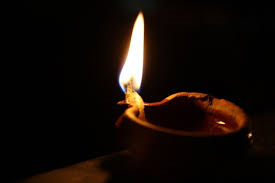
We possess the prophetic message that is altogether reliable. You will do well to be attentive to it, as to a lamp shining in a dark place, until day dawns and the morning star rises in your hearts.
We already have what we seek. We already are what we hope. We already know what we have been told. For we are Christmas people.
The prophet Isaiah forecasts Jesus’ death and resurrection as he describes our return from exile. We might spend time with the verses in chapter 14 today as we consider our own exit from pandemic.
The writer of Revelation tells us, “Whoever has ears ought to hear what the Spirit says to the churches.” Consider God’s gift of Christmas what the morning star might signify in chapters 2 and 22.
Enter the words morning star in the blog search bar and consider the prophetic message.
Behold, brothers and sisters, until the coming of the Lord. See how the farmer waits for the precious fruit of the earth, being patient with it until it receives the early and the late rains. You too must be patient. Make your hearts firm, because the coming of the Lord is at hand. Do not complain, brothers and sisters, about one another, that you may not be judged. Behold, the judge is standing before the gates. Take as an example of hardship and patience, brothers and sisters, the prophets who spoke in the name of the Lord.
Modern humankind has established an outpost in space, giving us a perspective of our world that the ancients could only imagine. Perhaps in our century we have strayed too far from the simple tasks of reaping God’s gift of bounty. Perhaps we have taken too much for granted the miracle that is our world. Perhaps we have learned to ignore the miracle of the Nativity.
God says: In your rush to understand me you may lose me.A bide with me for you are Christmas people who bring the Good News to the world. In your eagerness to explore my universe you may forget me. Remember me for you are Christmas people who bring authenticity and honesty to the world. In your haste to acquire and store up you may overlook me. See me in those who have little for you are Christmas people who bring Christ himself to the world. Behold and celebrate the importance of the Nativity. Behold and share my generosity with others who have nearly nothing to sustain them. Behold and love those who suffer. Behold . . . and be Christ in the world.
When we remember the miracle of Christ’s Nativity we also remember the patience of the prophets who foretold this arrival. We retell the stories of apostles and disciples who endured through hardship and we also tell our own stories of endurance and fortitude. When we behold the precious fruit of this Messiah who is delivered of a woman in a lowly place in a small town we also behold our own smallness and celebrate God’s gift of Christmas, for we are Christmas people.
During Christmas week . . . what did the prophets foretell?
The child grew and became strong, filled with wisdom; and the favor of God was upon him.
Last week we spent time with Luke’s telling of the Nativity Story and in our reflections we explored four Lucan themes: the rearing of Jesus in the Mosaic Law and traditions, the importance of Jerusalem and the Temple in Jesus’ family life, the presence of God’s Spirit in the Jesus story, and Jesus as the presence of truth and light that will effect decision and judgment. (Mays 932)
God says:When you experience my son in this story you too will be filled with wisdom and light. When you live in my Spirit you too will find your decisions come to you more easily for they will be made in and through me. I do not want to control you and that is why I have given you full free will. I want to love you, and I want you to love me. Jesus lives by the old law in order to bring about the new. This is not easy and it involves misery and disappointment; yet this sadness is transformed just as a butterfly arises from the cocoon spun by a caterpillar; new life springs from the decaying seeds of the old tree, and eternal life arrives through the fidelity and integrity of your relationships. Remain in me as I remain in you. Allow yourself to be filled with my wisdom and light. And allow my favor to bring you out of all suffering and pain.
As the child grows strong and becomes filled with wisdom, so too do we grow in strength and understanding when we grow in God. As God’s favor rests upon the Child of Wisdom and Light, so too does God’s favor rest on each of us when we live and work in the Spirit. As we move through this holiest of weeks, let us open our hearts and minds to the gift of endless light and life.
Mays, James L., ed. HARPERCOLLINS BIBLE COMMENTARY. New York, New York: HarperCollins Publishers, 1988. 932. Print.
Better one day in your courts than a thousand elsewhere.
In this brief last week of Advent we have little time to reflect on the coming nativity of one who is the keystone of our existence. Tomorrow is Christmas Eve, La Nochebuena or “The Good Night” as the Spanish name this holy day. This year, as we struggle with the stress and anxiety brought on by a pandemic, we can experience the quickness that is our lives in this last week that brings us to the celebration of Christmas.
Better one day in your courts than a thousand elsewhere.
One of the messages we hear continually in the Gospel parables is the need to be prepared. Jesus is forever reminding us of the importance of being good stewards of gifts God has given to us. We are repeatedly asked to be prepared for our own exodus. We are constantly told of the great value of the kingdom we are called to build with others. We are always asked to remain close to God no matter the circumstance. We might wonder why Jesus repeats this message so often and if so we need not look long for an answer.
As a sparrow finds a home and the swallow a nest to settle her young, my home is by your altars, Lord of hosts, my King and my God! Happy are those who dwell in your house! They never cease to praise you.
We have no way of knowing our future no matter how hard we work at knowing. We have no eyes to see images of our lives a generation forward. We can only rely on God and God’s goodness to preserve and protect those who flock to him.
As a sparrow finds a home and the swallow a nest to settle her young, my home is by your altars . . .
Chipping Sparrow Nest with Eggs
It is impossible to live the past again even if we want to right wrongs we have committed, even if we hope to heal wounds or change our crooked ways. We can only trust God and God’s mercy in forgiving all wrongs and transforming all transgressors.
As a sparrow finds a home and the swallow a nest to settle her young, my home is by your altars . . .
We do not control our own destiny; we only control our reaction to the world and the circumstances in which we find ourselves. We can only step forward as we answer the call we hear from God in our hearts. We can only prepare a place for God’s presence in our lives. We can only build our nest under the plinth of God’s altar and settle our young in the safe haven of God’s court.
Better one day in your courts than a thousand elsewhere.
As Advent draws so quickly to a close, we might feel the crush of time to complete hundreds of worldly tasks but rather than spend our time fussing with the details of a life that is fleeting, let us rather decide to build our permanent home in a place that is eternally protected. Let us choose to spend our time with The Living One who transcends all time and all wrongdoing. Let us fix on a site for our nest under God’s altar. Let us pledge to spend our last days of Advent preparing our minds and our hearts for the coming of The Christ Child. And let us spend our last days in God’s court, rather than a thousand elsewhere.
This brief letter has something to say to us about forming community. Today we reflect on its third and last chapter. Titus was an assistant to Paul mentioned in some of his other letters and also in Acts. He began a Christian community on the island of Crete, and Paul counsels him about how he might advise these early Christians to live among deceivers and heretics. These are words we might use today.
Be under the control of magistrates and authorities . . . be obedient . . . open to every good enterprise . . . slander no one . . . be peaceable, considerate, exercising all graciousness toward everyone.
Paul reminds Titus and us that we have all been foolish, disobedient, deluded, slaves to various desires and pleasures, living in malice and envy, hateful ourselves and hating one another. No one but a saint escapes the downside of humanity.
The upside, the good news is that the Christ has come to walk among us, to be one of us, to take on our burdens which overwhelm us because God isgoodness and mercy in their most perfect form.
What are we to do to reach for such heights? Avoid foolish arguments, genealogies, rivalries and quarrels about the law . . . After a first and second warning, break off contact with a heretic. We are to devote ourselves to good works to supply urgent needs.
The message is clear. While we strive to follow Christ we cannot expect perfection in or of ourselves. This perfection can be obtained only in and through Christ because of God’s mercy and compassion and love for each of us.
In this Advent season, as we near the celebration of the day when the child comes to live among us, we might pause to consider our arguments and our foolish enterprises. We might consider how we are to cast off anything that does not lead us to Christ. We might consider how we best devote ourselves to good works that address urgent needs when all else fails us. We might consider how we will be best prepare. For now is that time.
Adapted from a reflection written on December 18, 2008 and posted today as a Favorite.
At that time I will bring you home, and at that time I will gather you; for I will give you renown and praise, among all the peoples of the earth, when I bring about your restoration before your very eyes, says the Lord.
We yearn to go back to a place and time of innocence. We miss the elders who peopled our childhood years. We look for comfort in old, familiar places. Zephaniah reminds us today that all of these dreams are already fulfilled.
God says: Rather than see the world around you as chaos, come to me so that I might give you rest. Rather than look at what is missing in your lives, consider all that you are and have. Rather than look for consolation, turn to others who need your consolation. This is the gathering Zephaniah describes to you. This is the restoration he proclaims. It is the healing I bring to each of you when you decide to live and think and act in me. You do not have to wait for the death of your body to experience this coming home to me . . . you are already there. Put aside your chores and your worried for a little time . . . and come to me. I have much I wish to give you.
Time, people and places. We feel nostalgia as we recall good memories and ward off the bad. We re-create in our mind’s eye the faces of loved ones we can no longer see or touch. We close our eyes and conjure up the scents and aromas of those places we thought we had lost but that we now somehow find in an old reminiscence. God’s time is eternal; God brings all of us together in the Mystical Body of Christ; God is in all places at all times. When we join this great coming home . . . all of time, all the faithful, and all places come together in union with this God who loves us so much that he chooses to live among us. Zephaniah tells us that when we come home to God we are already there in those times and places we miss, we are already there with all of our beloved.
In this last week of Advent when the day of Jesus’ birth nears, let us consider for a time the renown and praise that we are already given by God. Let us consider the renewal this season brings to us. And let us go gladly to take part in this gathering up and this coming home.
For more reflections on the words of the prophet Zephaniah, enter his name into the blog search bar and explore.
Notes from the NAB, page 1328: Rather than allow the slow to become content in their slowness, Paul exhorts them to even higher levels of spirituality. He is not lenient. And as for those who have fallen away completely, he does not even address these apostates. If all we need is energy to progress in our spiritual journey, we can turn to Christ for he tells us through Matthew (10:28-30), my yoke is easy, my burden light. Christ himself exhorts us Come to me, all you who are weary and burdened, and I will give you rest.
Sometimes we are not so much sluggish as afraid. We know that the task lying before us is laden with tricky passages, dark corners, deceitful paving stones that look firm and yet sink into quicksand. On these occasions we must also turn to Christ, trusting him when he says take my yoke upon you and learn from me, for I am gentle and humble in heart.Disobedience is not an option for an apostle.
Paul tells us that Christ’s promise is immutable, and he uses the long story of the covenant promise between Yahweh and Abraham as ample proof. Did not the elderly couple – Sarah and Abraham – begin a kingdom of millions? Did this new way of seeking God not travel to allpeoples of allnations? Do we not know even today the story of this Abraham, Sarah, and the high priest Melchizedek? Paul reminds us that it is impossible for God to lie; his very goodness and honesty force him to keep his covenant with his people.
So when we feel weary or afraid, we might turn to Paul for a reminder of the words of hope we can never hear too often. This we have as an anchor of the soul, sure and firm, which reaches into the interior behind the veil [into the Holy of Holies], where Jesus has entered as forerunner . . .
In this Advent season when we anticipate the arrival of Emmanuel, God among us, let us rest in this promise. Let us acknowledge that when all is dark and appears to be lost, when all is more difficult or more terrifying than we can bear we must be still . . . so that we might hear again . . .
Come to me . . . and you will find rest for your souls . . .
She never left the temple, but worshiped night and day with fasting and prayer.
“A fourth and final [Lucan] theme is expressed in Simeon’s word to Mary (apparently this occurs in the outer court where women were allowed). Jesus will bring truth and light and will effect decision and judgment. However, in so doing he will face opposition and death. When Jesus comes to Jerusalem as an adult, the journey will be his ‘exodus’ (NRSV: ‘departure,’ 9:31).
“Simeon’s words are confirmed by Anna, a devout woman of advanced age . . . The two aged saints are Israel in miniature, poised in anticipation of the new. God is leading Israel to the Messiah, but the Messiah will weep over this city because it did not know the time of the messianic visitation (19:41-44)”. (Mays 932)
Scholars describe Anna as having insight that most of us lack and she appears in this story to affirm the Messiah’s identity. She is likely 105 years old, lives in or near the Temple, and dedicates her days and nights to a life of service to and in God; but she is no doddering ancient. Robin Gallaher Branch describes her saying that “her lifestyle evidently invigorates her, for she is mobile, articulate, alert, spiritually savvy and unselfish”. (Branch)
Elizabeth and Zechariah, Mary and Joseph, Anna and Simeon, servants, disciples, prophets, all announcing that openness and peace and joy have come to a people who yearn to be free, that light and courage and hope have come to a people who wait in darkness, that healing and consolation and union have come to a people who remain faithful despite their fear. As we approach the fourth Sunday of Advent, a time when we near the announcement of joy to the world because the Messiah is come, let us remember that we are Advent people. And let us, like Anna, be articulate, alert, spiritually savvy and unselfish as we declare to all that the one who saves is indeed come to live among us.
This is a verse which is my consolation as a parent and particularly as a mother: A sword shall pierce your own heart, so that the thoughts of many may be revealed. When one of my children is suffering through an injustice brought on by no fault of their own, I ask them to remember that there are times when we suffer so that evil and corruption will surface. This does not make the pain any less; it does, however, give us a place to put the pain.
I also love Simeon’s canticle, the prayer we pray as part of the Night Office in the Liturgy of the Hours. It is a lovely way to be thinking as we put ourselves to bed at night. When I am restless during midnight hours, I re-pray this oration because it reminds me why we are here on earth: To know, love and to serve God.
Lord, now you let your servant go in peace;
Your word has been fulfilled:
My own eyes have seen the salvation
Which you have prepared in the sight of your people:
A light to reveal you to the nations
And the glory of your people Israel.
The image of drifting into sleep having surrendered ourselves to God’s beneficent will is a calming one.
The image of God performing all deeds openly and honestly is a strengthening one.
The image of God keeping true to his agreement with us is a reassuring one.
The image of the Blessed Mother handing her child in confidence to the wise and holy Simeon is a moving one.
The image of Simeon rejoicing at the gift of holding in his arms the world’s salvation is a joyful one.
The image of God’s love for us being so intense, so enduring and so true that it pierces our hearts so that our very thoughts are revealed to us and to others is at once challenging and heartening. It is generous beyond our expectations. For we each hold the Christ child in our own arms.
What a generous and trusting mother is Mary that she allows her heart to be pierced for us. What an awesome and piercing love is Christ’s that he remains with us, and that he persists in taking us with him back to the Father. Knowing this, we might surely walk in peace, even though our hearts be pierced.
Tomorrow, the faithful Anna . . .
This reflection was first written on November 5, 2009.