And the firmament shows forth the work of God’s hands.
Day unto day takes up the story
And night unto night makes know the message.
No speech, no word, no voice is heard
Yet their span extends through all the earth,
Their words to the utmost bounds of the world.
This spring we have reflected on the importance of preaching God’s Word with every small and great act in our lives. We have pondered the Lesson of the Fig Tree and the worth of even the smallest of sparrows. We have spent time examining our experience of Christ and we have compared the ideal with the real. Today we arrive at understanding that each day and each night are filled with God’s grace even when we cannot see or feel it. We have arrived at believing that just as the firmament extols God’s goodness . . . so must we. No speech is necessary. No word need be uttered. We have only to spend each waking moment doing God’s work. We have only to put our slumber into God’s trustworthy hands for it is in this way that we enter into God’s eternal goodness.
Is this what the Apostle John has seen and heard? Is this the goodness we seek? Is this the gift we have already been freely given?
Tomorrow, a prayer for our days and nights.
Visit the scripture link above and read the versions of this citation that have been pre-selected. Choose another version and ponder how the firmament speaks without words.
We have believed a promise pledged in total honesty. We have believed in the integrity and authenticity of a vow given freely and openly. We have relied on a belief to such an extent that we have become completely open ourselves, fearless and yet completely vulnerable.
And then . . . it was night.
We have acted in full confidence of words we took as truth. We have followed one who cured and healed and called us out of ourselves. We have stood up, we have owned problems, we have held off naysayers, we have remained faithful through narrow gates.
And then . . . it was night.
We have followed the one who spoke truth. We have forsworn easy living and have taken the road less travelled. We have emptied ourselves, built bridges, entered into the work of the kingdom; we have stood at the foot of the cross.
And then . . . it was night.
All that we once held closely and shared openly as eternal truth appears to have vanished so easily and so quickly. What did we miss? How did we arrive at this darkness?
The black emptiness that grips the heart feels everlasting and we are frozen in this spot and time, waiting for the night to lift, hoping that the promise has not faded. And yet each time we draw aside the curtain to catch a glimpse of the world as it is we see only the night.
Karl Heinrich Bloch: The Burial of Christ
Our bodies somehow function yet our thoughts freeze with incomprehension; we feel strangely locked in time as we follow the quiet, little procession to the waiting tomb where we will bury the last of our hopes. How can something we thought so immense become so small? Why can we so easily carry this body to its resting place? Where is the shoulder that bears the heavy yoke?
How is it that this night can be so dark?
It is night yet tucked inside us we feel the fluttering of something that will not give up; some small memory of a healing touch and word persists. The night feels heavy, intense and infinite and yet we know that there is the promise of the moon below the horizon. We light candles and hang lanterns in imitation of the stars we know spangle the night sky that is veiled from our view by low-slung clouds.
This night is so intense.
And yet as we scan the darkness again we feel the small fluttering of the promise take wing for a passing moment. Perhaps the intensity of our waiting has opened some small door to the light. Perhaps the words and touch given in pledge still hold their truth. Perhaps the light beyond the lowering clouds will at last break through. Perhaps . . . but for now we roll the stone across the entrance to the tomb and we wait in the darkness. Perhaps . . . but for now . . . it is the night.
Often during our Noontimes we have explored the theme of infidelity and the effects it has upon our intimate relationships and our collective experience as a people of God. We have spent time thinking about how an act of betrayal never has a single secret effect. We have prayed for those who deceive and harm us. We have pondered how to handle an act of betrayal when it slices through our lives. Today we see God himself allow each of us to make a choice for freedom and life or slavery and death. Judas has become a slave to an idea which leaves his soul open to darkness. Jesus allows him to proceed along the path he has chosen: What you are going to do, do quickly.Yesterday we reflected on Judas’ betrayal of Jesus. Today we explore John 13 more closely.
Today’s citation comes from the portion of John’s Gospel often called The Book of Glory; Chapters 13 to 20 tell the story of the passion, death and transformation of Jesus. Here he has just delivered his discourse on the relationship he has with the Father – one of deepest intimacy. And he has just told his followers – his followers of that evening and his followers today – that the same intimacy is open to each of us, that God yearns to hold us and to possess us more than anything we can imagine from our human experience. Yet this citation begins with: Jesus was deeply troubled . . .
Able to read our inmost thoughts, Jesus understands that Judas is disappointed, disgruntled, and about to act on his envy and anger. Judas Iscariot, despite so much time spent with the Master, is unable to enter into this intimacy offered. And so he strikes at that which he cannot experience.
Jesus dipped a morsel and handed it to Judas . . . extending an ultimate invitation . . . knowing that it and he will be rejected; for after Judas took the morsel . . . Satan entered him.
Who and what are Satan? I believe that this force of negativity cleverly appeals to the narcissistic child in each of us; and I believe that it is present always. Only through our fidelity to God and the light . . . do we evade that which relishes the night. The risen Christ offers this invitation to unity constantly. How do we respond?
Jesus shares a last meal with a man who believes that he operates in secret and who has likely convinced himself that his actions are for some greater good. Judas’ actions will set a course of events into motion which cannot be recalled. The calculus has been set much earlier than this through a series of moments of discontent, of wounded pride, of self-importance. Judas resists the call to goodness and falls to the darkness.
So he took the morsel and left at once. And it was night.
In an understatement of fact, the writer John tells us all we need to know about betrayal and the evil on which it feeds. Envy, willfulness, desire for control of self and others, attendance to our own needs at the expense of others . . . these are signs that lead only to darkness. And it was night. Goodness, mercy, kindness, gentleness, prudence, courage, openness, perseverance . . . these are the signs that lead to light and life.
Heavenly Father, keep us always open to Christ, your Word among us. Count us among your faithful. Create in us a spirit that will always recognize you and welcome you . . . even in the most surprising places and unexpected people.
Today we receive you; we receive your word. Keep us ever mindful of your love for us. Call us always to the light that is you. Amen.
Written on January 27, 2009. Re-written and posted today as a Favorite.
Psalm 71:17-20 – You have shown me great troubles and adversities; but you will restore my life and bring me up again from the deep places of the earth.
The deep places are dark and lonely. Jeremiah speaks of the terror of the miry cistern. Many are lost in the dark places; yet that is precisely where many are found.
God says: I understand the terror you feel when darkness pulls you down. Jeremiah speaks my words to you when he says, “Obey the Lord and all will go well with you, your life will be spared”. It may appear that obedience to me is a capitulation of self but it is rather a coming to fullness, a burgeoning into fruit which is good. Your troubles and worries will melt away when you bring them to me. They are too great for you to carry. Bring your burdens to me, and I will give you rest.
Let us give our yoke to God today . . . nothing is too heavy for God to bear.
We usually spend time with this portion of Mark’s Gospel in the spring as we near Easter; but it is also fitting to spend time with this quickly paced, action-packed Gospel as we approach the last, brief week of Advent that 2012 offers to us. In Mark’s portrayal of Jesus we see a leader who warns his follows of the coming destruction that will look like the end. We might need to hear these words today as we look at local and world events.
So often we see that life is dangerous and destructive. It seems that the promise of goodness is overshadowed by the power of darkness. Frequently we witness the victimization of the innocent who suffer at the hands of the wicked. It appears to us that those who practice corruption and betrayal with such swift precision escape any negative consequences of their actions. They squirm away from justice and delight in the evil they have wrought. Sometimes bad news arrives with a loud chorus of alarm; at other times it whispers into our lives on cat-like feet of murmuring insinuation. It announces itself with pride or glides into our lives almost unnoticed and before we know what to say or how to act we are overtaken; and yet . . . this malevolence is repeatedly drowned out by the Good News of revivification. This is what we witness as we read these final chapters of Mark. We are assured that despite gloomy forebodings and dire predictions we do constantly experience renaissance and restoration in the promise of Christ . . . the promise of the Nativity of the Prince of Peace and Light.
Today we might be swept away by the treachery of those close to Jesus; we read about the coming ruin of the Temple; we struggle with the Lesson of the Fig Tree. But we must see that we are also anointed with Christ; we prepare for the Passover with Christ; and we shudder with the miracle of the risen Christ. If we might place ourselves in Christ when evil approaches, we will marvel at the transforming power of the empty tomb. We will climb from the pit of despair to the height of salvation. When we read Mark’s rapid, sweeping, final description of the torture, the death and the annihilation of Christ . . . we are also shown the healing . . . the renewal . . . and the guarantee of God’s promised love for us.
As the earth transits its orbit around the sun and moves through times of darkness and cold to return to the warmth and light, so do we journey through shadow and bitterness to come back to God’s mercy and security. With Christ, let us travel through our agony to arrive at our own restoration. Let us stand boldly against conspiracy to secure unity with all. And let us not fear the threat of death and division for hidden in all of this suffering . . . is Christ who leads us to life everlasting.
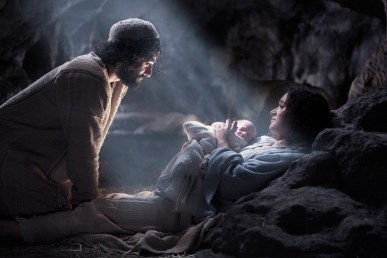
This is the Promise of Advent. This is the Promise of Death. This is the Promise of Resurrection.
 Tuesday, May 25, 2021
![img0486-2[1]](https://thenoontimes.com/wp-content/uploads/2013/03/img0486-21.gif?w=300&h=199)



 The Noontimes