John 5:31-47: The World of Mystery and Miracles – Part III
Thursday, March 9, 2023
Jesus tells us: You have your heads in your Bibles constantly because you think you’ll find eternal life there. But you miss the forest for the trees. These Scriptures are all about me! And here I am, standing right before you, and you aren’t willing to receive from me the life you say you want.
We spend time with these words and we imagine that we, like the lame man at the Bethesda Pool, might be transformed so that we can find peace. We spend time with these verses and realize that . . . they are Christ himself in our hands. We spend time with John 5 and move from doubt to faith as Jesus asks.
We, like the crippled and lame who wait by the pool at Bethesda, have been freed . . . although we might not see it.
We, like those who plot to kill Jesus, have heard this good news . . . although we might not acknowledge it.
We, like those who sent emissaries to John, have heard further testimony about this new king and kingdom . . . although we might not admit it.
We, like those who do not believe the writings or the words, have experienced the healing hand of Christ . . . although we might not concede it.
We commit to believing in mystery and miracle in our lives and we call others to a transformation in peace with this week’s Lenten practice. Rather than thinking: “God’s generosity is sometimes not fair,” let us think instead, “When we put away the past and follow God’s example of enormous generosity, we are better able to welcome the lost back home into the kingdom . . . and to give thanks for our own part in God’s great rejoicing”.
John 5:17-30: The World of Mystery and Miracles – Part II
Wednesday, March 8, 2016
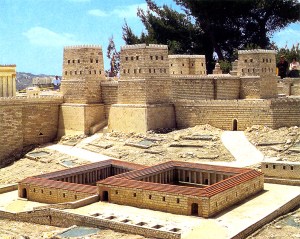
Jerusalem: The Bethesda Pool today
Don’t act so surprised at all this, Jesus tells us. And so we reflect on the mystery and miracles that surround us, seeking to better understand these verses.
We are pardoned and healed by God who is merciful and just.
We are given a clear sign of God’s eternal goodness and truth.
We receive additional testimony about the source of this goodness and truth.
We are shown a door to the life we all desire.
And we are given the option to enter into a new life or to strike out on our own.
We need not wait until the next world to experience peace and serenity or to take down the defenses we have so carefully built around us. The world of mystery and miracles is one in which we already live . . . we have only to be open to it.
We, like the crippled and lame who wait by the pool at Bethesda, have been freed . . . although we might not see it.
We, like those who plot to kill Jesus, have heard this good news . . . although we might not acknowledge it.
We, like those who sent emissaries to John, have heard further testimony about this new king and kingdom . . . although we might not admit it.
We, like those who do not believe the writings or the words, have experienced the healing hand of Christ . . . although we might not concede it.
As we discover our willingness to acknowledge mystery and miracle in our lives, we transform our thinking with this week’s Lenten practice.Rather than thinking: “God’s generosity is sometimes not fair,” let us think instead, “When we put away the past and follow God’s example of enormous generosity, we are better able to welcome the lost back home into the kingdom . . . and to give thanks for our own part in God’s great rejoicing”.
Tomorrow, a prayer to understand the mystery and miracle of Jesus in our lives.
John 5:1-16: The World of Mystery and Miracles – Part I
Tuesday, March 7, 2023
Bethesda Pool
A cure on the Sabbath. The work of the Son. Some witnesses to Jesus. The unbelief of Jesus’ hearers.
This might be a microcosm of our own lives.
We receive a gift of the miracle of life. We are given an instruction by the giver of this gift about the nature of life and who governs it. We have the choice to believe or reject the mystery we experience.
When we read this chapter of John’s Gospel, we have the opportunity to examine our willingness to believe the miracles we have seen and experienced. We read again the promise from Jesus that we are so well-loved that there is already a place reserved for us God’s eternity. We are offered the invitation to be one with the divine for we have been cured of all that limits us.
Today we receive a call to see, to acknowledge, to admit, to concede and to declare the story of the mystery we live. If today we cannot share this story of miracles with others, let us determine why not, and then let us witness as the Gospel writer John the Evangelist does.
When we suspect that we are called to mystery and miracle, let us rejoice and give thanks with our Lenten practice this week. Rather than thinking: “God’s generosity is sometimes not fair,” let us think instead, “When we put away the past and follow God’s example of enormous generosity, we are better able to welcome the lost back home into the kingdom . . . and to give thanks for our own part in God’s great rejoicing”.
A Favorite from May 6, 2010.
Explore a website that presents a model of Jerusalem in Jesus’ time and photographs of Jerusalem today.
John tells us unequivocally . . . they welcomed him, but only because they were impressed with what he had done in Jerusalem during the Passover Feast, not that they really had a clue about who he was or what he was up to. Today we pause to consider if this thinking mirrors our own. Do we follow Jesus blindly because of what he can do for us? Or do we follow him because of who he is, what he embodies, and who we hope to become?
God says: The miracles I shower on the world are not meant to lure you into loving me. They come from my genuine desire to be one with you. The signs I leave along your pilgrim way are not meant to convince you of my presence. They are the physical reality of my faith in you. My actions in your life are not meant to dazzle you. They are the hands of hope that I offer you. You are free to come with me and follow My Way. You are free to follow the way you see that another lays out for you or the way you prepare for yourself; but unless you follow me you will not revel in the goodness, the comfort and joy that I have in mind for you. I have promised this to you from your inception and I will continue to offer it until you expire. I am always and everywhere. I am. And I offer this wholeness to you. It is my hope for you that you come to believe in my deep and abiding love for you.
The impact of the healing of the official’s son is so enormous that it brings the entire family to conversion. Do we need such enormous signs? Do we need such convincing? Or do we need God . . . and nothing more?
When we believe that we do not see God’s presence often in our lives, let us ask God for the gifts of strength and persistence as we, like the centurion and his family, come to believe. Today we remember this week’s Lenten practice. Rather than thinking: “God’s generosity is sometimes not fair,” let us think instead, “When we put away the past and follow God’s example of enormous generosity, we are better able to welcome the lost back home into the kingdom . . . and to give thanks for our own part in God’s great rejoicing”.
Sceptics wonder where the faithful see God in the world that surrounds us. Non-believers take credit for all that they store up; they blame themselves and others for a lack of success. The faithful move forward with their eyes on the prize knowing that all that was lost will in the end be found, all who were scorned will in the end be justified, and all who were last will certainly be first.
In this familiar Gospel we again hear the stories we know so well of the Lost Sheep, the Lost Coin, and the Prodigal Son. We hear Jesus’ clear assertion after each of these stories that God rejoices more over the gratitude of the lost who are found than the steady love of those who never leave him. This gives us a concept to consider.
We may see ourselves as sheep who never leave the shepherd’s side, but when we are honest we know that we have each been lost at one time or another. We might welcome the joy the creator showers on us.
The Lost Coin
There’s more joy in heaven over one sinner’s rescued life than over ninety-nine good people in no need of rescue.
We may see our tiny turnings toward God as insignificant moments in a turbulent day . . . but God sees them as a wonderful occasion to rejoice. We might join in the rejoicing of others.
Count on it—that’s the kind of party God’s angels throw every time one lost soul turns to God.
We may see a lack of fairness in our lives when those who are newly arrived to faith in God are celebrated as much or more than those who have been faithful, but God invites all of us to join in the celebration of the return of those who have been found. We might tell others this good news of God’s goodness.
You’re with me all the time, and everything that is mine is yours—but this is a wonderful time, and we had to celebrate. This brother of yours was dead, and he’s alive! He was lost, and he’s found!
We may each remember times when we have envied the good fortune showered on others when we work long and hard to remain close to God. We may each have experienced times in our lives when all that has been lost far overshadows what appears to be found. In all of these occasions, when we look carefully and honestly, we will see that what once was empty has been made full. What once was dark now has been made light. And what once was lost has
most beautifully been found. When we give thanks to God for this marvelous gift of redemption, we become part of the celebration and great joy in the kingdom that erupts when the lost are found.
The Lost Son
When we believe that we do not see God’s presence often in our lives, let us look at these times when weariness, anger, jealousy or envy may have unfocused our vision. And let us ask God for clarity as we begin this week’s Lenten practice. Rather than thinking: “God’s generosity is sometimes not fair,” let us think instead, “When we put away the past and follow God’s example of enormous generosity, we are better able to welcome the lost back home into the kingdom . . . and to give thanks for our own part in God’s great rejoicing”.
Tomorrow, coming to believe.
For other reflections on, The Lost Sheep, The Lost Coin and The Prodigal Son, use the blog search bar to explore.
Jesus tells his next storytosome who were complacently pleased with themselves over their moral performance and looked down their noses at the common people.
The story begins in this way . . . Two men went up to the Temple to pray, one a Pharisee, the other a tax man.
“I know this one,” we tell ourselves. But do we really?
“I am the Tax Man,” we say as we move quickly through the verses. But do family, friends and strangers alike see us this way?
“I am humble,” we continue, “and so will be made great”. But is this all there is to the story?
Jesus reminds us: If you walk around with your nose in the air, you’re going to end up flat on your face, but if you’re content to be simply yourself, you will become more than yourself.
It is likely that most of us are both tax man and Pharisee as we move through our days; and it is certain that God’s forgiving heart heals our wounds and forgives our errors. When we read various versions of this well-known story, the impact of the daily choice we make to accept our foibles and forgive faults in others is evident. And it is certain that when we lay all that we are and all that we do in God’s able hands, we allow God’s great love to make us more than we ever might have dreamt.
This is God’s great kingdom and commandment of love at work. This is the power of the love that Jesus brings to the world. This is the effect and outcome of the Spirit’s nurturing, healing presence. For even when we walk with our noses in the air, God makes a way for us to become more than ourselves.
As we consider the tax men and Pharisees in our lives and where we place our hopes and build alliances, we better understand the reality of this week’s Lenten practice. Rather than thinking: “The dream of peace is an unreal and distant illusion,” let us think instead, “The dream of peace we hold is present in God’s kingdom. And God’s kingdom is now”.
In today’s Gospel reading we are given a clear antidote to yesterday’s frightening exposition of the power of Beelzebub. Yesterday we were reminded that there is no neutral ground between good and evil. Jesus tells us that there is no quiet place where we can ride the fence and hide from a decision to love God as God loves us. Today we are reminded that in both the Old and New Testaments we are called to honor God, and to remember that God alone is the source and goal of all life. It is love that engenders, nurtures and unifies all of creation. We are invited today to join in this great communion of love.
Revisit an earlier Noontimes reflection on this post by entering the words The Greatest Commandment into the blog search bar.
When we contemplate the abundance of God’s love we understand the importance of this week’s Lenten practice: rather than thinking: “The dream of peace is an unreal and distant illusion,” let us think instead, “The dream of peace we hold is present in God’s kingdom. And God’s kingdom is now”.
James Tissot: The Chief Priests ask Jesus by What Right Does He Act in This Way
Thursday, March 2, 2023
If we have heard or read this story a number of times, it is likely that we know only one or two translations. Today we look at THE MESSAGE version as we reflect on our relationship with God . . . and our understanding of how Satan comes stealthily into our lives.
Jesus knew what they were thinking and said, “Any country in civil war for very long is wasted. A constantly squabbling family falls to pieces. If Satan cancels Satan, is there any Satan left? You accuse me of ganging up with the Devil, the prince of demons, to cast out demons, but if you’re slinging devil mud at me, calling me a devil who kicks out devils, doesn’t the same mud stick to your own exorcists?
Those who are jealous of Jesus’ power are eager to claim that his authority comes from darkness. In our Lenten pilgrimage we might consider our own reaction to others’ good news.
But if it’s God’s finger I’m pointing that sends the demons on their way, then God’s kingdom is here for sure.
Those who cannot understand the depth and beauty of Jesus’ transformative love want to credit themselves with for their success and blame others for their failures. The concept of God’s kingdom of love where love and forgiveness are powerful runs counter to their thinking of justified revenge and just wars.
When a strong man, armed to the teeth, stands guard in his front yard, his property is safe and sound. But what if a stronger man comes along with superior weapons? Then he’s beaten at his own game, the arsenal that gave him such confidence hauled off, and his precious possessions plundered.
Those who believe that our world justifies an escalation of power find comfort in their belief that God blesses the good and condemns the bad.
This is war, and there is no neutral ground. If you’re not on my side, you’re the enemy; if you’re not helping, you’re making things worse.
Jesus’ words bring us the news that our dualistic thinking of good/bad, strong/weak, right/wrong is not the way of the kingdom but an illusion of the world. Jesus tells us clearly that the evil we throw at others comes back to live with us. And Jesus reminds us that when we chose to disbelieve his assertion that God’s world is nothing but love . . . we will want to reconsider our thinking . . . and the devil mud that we are tempted to throw.
When we compare other translations of Jesus’ words, their meaning takes on new light. And as we reflect on our concept of Satan, let us remember our Lenten practice this week. Rather than thinking: “The dream of peace is an unreal and distant illusion,” let us think instead, “The dream of peace we hold is present in God’s kingdom. And God’s kingdom is now”.
Do we fully understand the depth of Jesus’ words? Do we fully open ourselves to Jesus’ transformation?
Jesus says: Don’t suppose for a minute that I have come to demolish the Scriptures—either God’s Law or the panorama. God’s Law is more real and lasting than the stars in the sky and the ground at your feet. Long after stars burn out and earth wears out, God’s Law will be alive and working.
Do we fully understand that when we mock creation we mock ourselves? Do we fully open ourselves to the wonders of God’s universe?
Jesus says: Trivialize even the smallest item in God’s Law and you will only have trivialized yourself. But take it seriously, show the way for others, and you will find honor in the kingdom. Unless you do far better than the Pharisees in the matters of right living, you won’t know the first thing about entering the kingdom.
God says: You work inordinate hours. You fret over the past and worry about the future. You wriggle through plans that you lay for yourselves. You create rules and parameters that you hope will keep you safe. The Law I speak about is simple indeed – it is the only law the actually keeps you safe. It is the Law of Love. The Law of forgiveness. The Law of generosity and kindness. The Law of healing and comfort. The Law of mercy. Rest in me. Bring your worries to me. Allow my Law of Love to reconcile, restore and rebuild. Allow yourself to step into my kingdom of love.
We continue our Lenten practice as we consider how we might bring others to God’s kingdom of love. Rather than thinking: “The dream of peace is an unreal and distant illusion,” let us think instead, “The dream of peace we hold is present in God’s kingdom. And God’s kingdom is now”.
Tomorrow, Beelzebub.
For another post on these verses, enter the words A Teaching on the Law into the blog search bar and explore.

 We commit to believing in mystery and miracle in our lives and we call others to a transformation in peace with this week’s Lenten practice. Rather than thinking: “God’s generosity is sometimes not fair,” let us think instead, “When we put away the past and follow God’s example of enormous generosity, we are better able to welcome the lost back home into the kingdom . . . and to give thanks for our own part in God’s great rejoicing”.









 The Noontimes