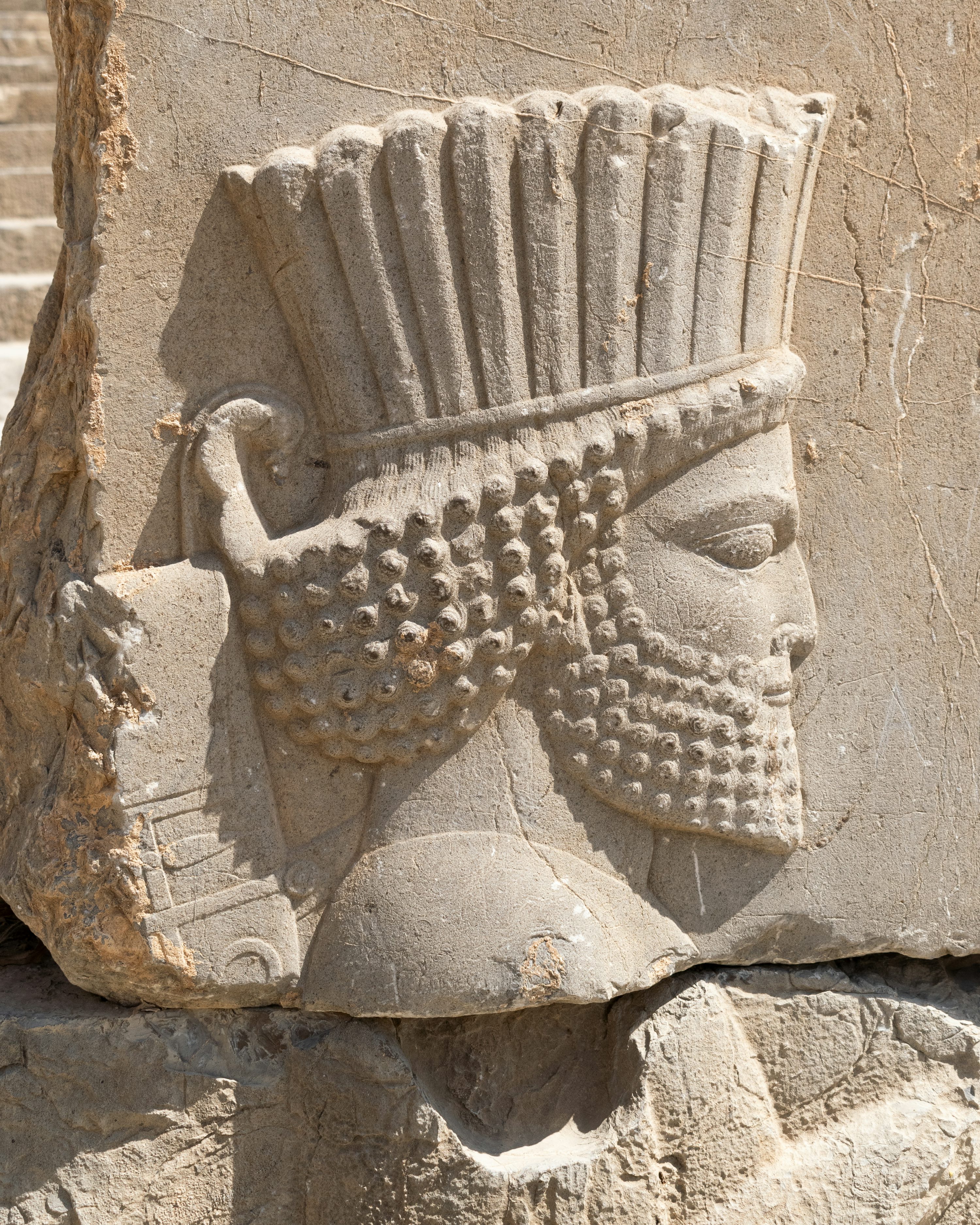
The stela of Pharaoh Hophra: open air museum of Memphis, EgyptA sea monster lives in the Nile, is subdued and caught by God, and is then thrown back into the river as food for scavengers. Bible commentary will help us to sort out the prophet’s imagery that we see in chapters 29 through 32 but as we focus on this opening portion we may learn something useful. In this chapter dated to January of 587 B.C.E. Ezekiel was likely responding to events which took place surrounding Pharaoh Hophra’s unsuccessful attempt to capture Jerusalem from the Babylonians. (Mays 616) Tiny Israel finds herself between two warring giants, and an enemy leader becomes the vehicle of unexpected good fortune. This dilemma is one that may sound familiar to us.
See! I am coming at you . . .
In all ways and in all times we must be prepared for God’s voice to come to us from unexpected quarters. Life has a way of springing the unanticipated upon us in both negative and positive ways. Family members fuss with one another; trusted colleagues become adversaries. Sworn enemies turn out to be partners in a common cause. Betrayal comes from the place we least expect it – as does hope. God uses whatever means he must to reach us – and God seems to love surprises.
See! I will bring the sword against you . . .
During a very sad time for our family recently, I heard myself repeating to loved ones: God does not want us to suffer. God does not plan disaster. God loves us so dearly that he suffers with us. We are not alone. God is in charge. When we are in deep anxiety or deep sorrow we cannot see what stands before us. And sometimes the well-known faces and familiar phrases cannot penetrate our grief. It is then that God will surprise us – and usually when we least expect it.
The Niles are mine; it is I who made them, therefore see! I am coming at you . . .
Apries/Hophra Obelisk: RomeThe prophet Isaiah reminds us . . . Those whom the Lord has ransomed will return and enter Zion singing, crowned with everlasting joy. (Isaiah 35:10) God comes at us with all God has in God’s arsenal to reclaim and redeem us. God uses surprise, inversion, and paradox to reach us. God is persistent; God does not give up or give in. We cannot out-wait or out-maneuver God. In the end, God is all, does all, sees all and knows all. God loves us intensely and well. God wants us to experience joy. And God loves us enough to use even our enemies to speak to us when we are determined to ignore the message we are meant to hear.
See! I am coming at you . . . I will use anything or anyone to penetrate your sorrow in order to bring you joy . . . I will do whatever it takes to get your attention . . . I love you that well . . .
A re-post from November 16, 2011.
Images from: http://en.wikipedia.org/wiki/Apries and http://www.answersingenesis.org/articles/utp/the-glory-departs
Mays, James L., ed. HARPERCOLLINS BIBLE COMMENTARY. New York, New York: HarperCollins Publishers, 1988. 616. Print.
For more information about Pharaoh Hophra: https://biblearchaeologyreport.com/2022/02/04/hophra-an-archaeological-biography/
Mark 12:1-12:Wicked Tenants and Temple Authorities
Wednesday, December 10, 2025
We will find this same story again in Matthew 21 (vv. 33-45) and in Luke 20 (vv. 10-19). This triple telling is likely an indication that Jesus told this story more than once and that Jesus struck home with his words. Yesterday’s Noontimeasked us to reflect on our stewardship of the gifts God has given to us. Today we are reminded that our hard work will likely go unrecognized by those around us, but this will not matter since it is God’s recognition that matters in the end. We are also reminded that we can expect our own company of wicked tenants and temple authorities just as Jesus did in his journey to Jerusalem and his final act of sacrifice.
“The parable of the wicked vineyard tenants forms the centerpiece of the Jerusalem ministry. As an original parable of Jesus, it could express the constant reaching out by the long-suffering God for human response in the face of continued rejection . . . Mark locates this allegory of the rejection of Jesus by the Temple authorities at that point in the Gospel where Jesus, in conflict with Jewish authorities, is pointing to the emergence of the Christian community (the house that will be built on the cornerstone) . . . At the end of the parable, [Jesus’] questioners . . . perceive that the parable is directed against them”. (Mays 916)
The world is full of “wicked tenants” who envy the good works they see others performing; and the world has many “temple authorities” who seek to control each breath others take. We will not want to be caught up in the perverse envy and vicious greed we see in this story Jesus tells us so well; rather, we will want to prepare ourselves for the newness that is born out of the pain of rejection, for the hope Jesus brings out of the heartache of denial. While our eyes are riveted on the loss of the vineyard, the death of loyal servants and a faithful son, Jesus focuses on the new disciples who will answer his call. And on the new life of a promising community.
We ought not fear the wicked tenants and temple authorities we encounter every day. Instead, let us rejoice that we nestle side by side with a cornerstone that has been rejected for it is this rejection that we find a most meaningful life – a life promised by God, a life nurtured by the Spirit, a life shown to us by our brother, Jesus.
“Zacchaeus, hurry and come down; for I have need of you today.”
Sycamore tree in Jericho
Too frequently we see our relationship with Jesus as one in which we have need of his help and advice. Today we have the opportunity to think about how Jesus tells us that he has need of us; he calls to us as his adopted sisters and brothers to join with him in kingdom building. This is a lesson we might too easily miss as we bury ourselves in the flurry of activity we call life.
Yesterday’s Gospel reading was a similar story from Matthew 25:14-30 in which we see how serious God is about his trust in us and about his expectation that we will return his goodness to him multiplied rather than hoarded. In Matthew’s story Jesus is teaching his disciples. In today’s story Jesus speaks to those who have shown some curiosity about who is and what he represents. Jesus does not hold back and in fact, the end of the parable is a stark telling of bitter consequence. It is one which we might have difficulty reconciling with the gentle image we have of Jesus. Today we see how serious Jesus is about those who have much stored away and about those who refuse to share. Today we see how serious Jesus is about those who willingly share all that they have and all that they are.
From yesterday’s MAGNIFICAT “Day by Day” reflection by Dom Anscar Vonier: In the things of God and the Holy Spirit, wealth is the rule; the more you have, the more you receive . . . there is nothing that pleases God more than to enrich his creatures, and whenever he sees a man making good use of his gifts he pours more and more upon him with lavishness which is astonishing; as if in the school of God all the worldly methods of giving and taking were reversed, and there were other standards instead . . . In the things of the Spirit this is the rule of God. Because God is rich, there are inexhaustible treasures for bestowal, and he pours them forth ungrudgingly.
Jesus leaves no doubt about what he means when he refers to the faithful; he is clear about asking his disciples to give without fear for the future. He is clear about how we must give over control, how we must release our anxiety, how we must trust him in all matters while we witness to his message. Zacchaeus has trouble with these concepts. So may we. The message of inversion is a paradox we want to believe, but against which we continue to struggle.
Between his interaction with the tax collector Zacchaeus and his entry into Jerusalem, Jesus will tell us a parable that explains what kingdom building is, but we must be curious enough to ask him questions, we must be probing enough to examine our actions, and we must be questioning enough to witness to this message. Kingdom building is about the increase of talents, it is about following Christ where ever he leads. And it begins with our own curiosity about the message the Teacher is bringing to the world when he calls to each of us . . . hurry and come down; for I have need of you today!
A re-post from November 14, 2011.
Cameron, Peter John. “Day By Day.” MAGNIFICAT. 13.11 (2011): 178-179. Print.
O Lord, come quickly to help me . . . come quickly to help me, God.
Victor FranklFriday’s MAGNIFICAT Meditation of the Day, was written by Victor Frankl, a psychiatrist who survived Auschwitz. As I read this psalm I recall some of his words.
Being human always points, and is directed, to something or someone, other than oneself – be it meaning to fulfill or another human being to encounter. The more one forgets himself – by giving himself to a cause to serve or another person to love – the more human he is and the more he actualizes himself . . . (Cameron 151)
As I reflect on his words I wonder how those who physically survived a death camp can ever smile again. I wonder how they move past the fear that must haunt them. I wonder how they manage to move through days of freedom without falling into fits of dark despair. I wonder how they begin again.
In some way, suffering ceases to be suffering at the moment it finds a meaning, such as a meaning of sacrifice . . . In accepting this challenge to suffer bravely, life has a meaning up to the last moment, and it retains this meaning literally to the end . . . My comrades’ . . . question was, “Will we survive the camp? For, if not, all this suffering has no meaning.” The question that beset me was, “Has all this suffering, this dying around us, a meaning? For, if not, then ultimately there is no meaning to survival; for a life whose meaning depends upon such a happenstance – as whether one escapes or not – ultimately would not be worth living at all”. (Cameron 151)
Entrance to AuschwitzWe too often believe that life’s meaning is found in quick happiness and forget that true human meaning comes from paring ourselves down to a nothingness that brings us sharply up against the realization that only God is worth seeking. We too often act out of fear and forget that no deceit lasts forever, and that we only fool ourselves with our feeble deceptions for God knows and sees all in the end. We too often look for quick solutions and forget that only a forgiving heart and an abiding love bring true and eternal life.
O Lord, come quickly to help me . . . come quickly to help me, God.
And so we pray . . .
Good and glorious God, we struggle to find meaning in the highs and lows of our lives and so we gather up all that we have and all that we are . . . to offer it back to you. For you are our only place of refuge . . . you are our only source of meaning . . . you are the only salvation worth seeking. O Lord, come quickly to help us . . . come quickly to help us, God. Amen.
Jeremiah encourages the faithful to keep eyes fixed on God, to remember that God is both the source and goal of our being. Our journey here on earth is one of working in the vineyards of the Kingdom, of witnessing to injustices committed against the marginalized, and of waiting on God’s plan in God’s time. Jeremiah tells us that the faithful are guarded and led out of exile. He reminds us that the remnant that was scattered is gathered up in hope and loved with passion. The blind and the lame, mothers and those with child, those who departed in tears . . . all departed in sorrow will return in an immense throng . . . and none shall stumble.This is the best kind of news we can hope to hear.
The daily drone of life wears down our defense against pain. The monotony of waking each morning to hope endlessly in a better day saps our resources. The aridity of the desert dries up the wells we frequent for refreshment. The oases are further apart; our rest stops do not sustain us as they once had. We have difficulty celebrating the good news we know is upon us, and it is difficult for us to believe that none shall stumble.
When the life we have arranged for ourselves fails us we have two options: we can turn away from the pain of our suffering, or we can turn toward our grief where God waits to sweep us into waiting arms.
“We must go through the stages of feeling, not only in the last death of anything but also in all the earlier little deaths. If we abort these emotional stages by easy answers, all they do is take a deeper form of disguise and come out in another way. So many people learn that the hard way—by getting ulcers, by all kinds of psychosomatic diseases, depression, chronic irritability, and misdirected anger—because they refuse to let their emotions run their course, honor them consciously, or find some appropriate place to share them.
“Emotions are not right or wrong, good or bad. They are merely indicators of what is happening, and must be listened to, usually in the body. People who do not feel deeply finally do not know or love deeply either. It is the price we pay for loving. Like Job we must be willing to feel our emotions and come to grips with the mystery in our head, our heart, and our body. To be honest, that takes years”.
We live in a world of instant replay, quick solutions, smiling gurus, and impatience with suffering. Jeremiah speaks to the faithful who understand that living well is not about covering over or covering up but of delving deep and allowing the fiery furnace of pain to refine us as we witness, work and wait. Job understands the intensity of suffering innocently. Rohr tells us that our pain is not a punishment but an acknowledgement of our eagerness to be one with God. We know that the journey is long and steep. We know that our yearning for God means that we are remnant. And we know that with God . . . none of the faithful shall stumble.
Today is Veteran’s Day and the birthday of my littlest granddaughter who lost her sister a few short weeks ago. I read this Psalm and think of death as we understand it – the loss of one we love – and I wonder . . .
Help us, O God, our Savior . . .
Today is also the feast day of St. Martin of Tours, a soldier who converted to Christianity and gave up the world of physical violence to enter into a spiritual life that in many ways looks much like war. As St. Paul reminds us in Ephesians 6:12-13: Our struggle is not with flesh and blood but with the principalities, with the powers, with the world rulers of this present darkness, with the evil spirits in the heavens. Therefore, put on the armor of God, that you may be able to resist on the evil day and, having done everything, to hold your ground. From the MAGNIFICAT Mini-reflection: Saint Martin translated his long military career into a campaign of spiritual warfare against the paganism and the temptations to worldly wealth which threatened the people of the Church he served as monk and bishop. I think of evil spirits in the heavens,and warfare and death and St. Martin and I wonder . . .
May your mercy come quickly to meet us for we are in desperate need . . .
Paul writes to the Corinthians and to us in today’s Morning Prayer:The weapons of our battle are not of flesh but are enormously powerful, capable of destroying fortresses. (2 Corinthians 10:4) I think about how we may not recognize our own paganism, our own violence, our own falling away from God, and I wonder . . .
Help us, O God, our Savior . . .
Good women and men step forward when times are dark. God never leaves our side when circumstances extinguish hope. I think about warfare of all kinds and I wonder . . .
May your mercy come quickly to meet us for we are in desperate need . . .
I call upon the God who suffers with us, who abides with us, and who heals all wounds and violations shot through the faithful by the pagans who invade their inheritance, who breach the temple gates and defile holy places, and I wonder . . .
Written on March 10 and posted today as a Favorite . . .
In today’s Noontime we have the juxtaposition of Simon the magician – who uses sleight of hand and deceit to lure in an audience – with Philip the apostle – who allows the Spirit to work through him to call others to Christ. Which are we today? Who are our friends, family, companions and colleagues? What do we expect from our world? How do we interact with all of God’s creatures and God’s creation?
Following the martyring of Stephen, the apostles scatter. This brutal act which was meant to stifle the Spirit only carries it out into the world. As always, God turns all harm to good – if we prepare ourselves to receive God’s gift of grace.
We might examine our conscience as we move into our Lenten journey.
You thought you could obtain God’s gift with money . . . Pray to the Lord that, if possible, the intent of your heart may be forgiven you . . .
Do I want to know the truth even when inconvenient?
Peter said . . . your heart is not right with God . . .
Will I accept critique, even when it is delivered unkindly?
How can I understand [the Gospel] unless someone guides me . . .?
Am I willing to listen more than I talk?
The crowds listened eagerly to what was said by Philip, hearing and seeing the signs that he did . . .
Do I consistently create time and space for God in my life no matter the circumstance?
Now those [apostles] who were scattered went from place to place . . .
Am I willing to proclaim the good news even when joy eludes me?
Philip proclaimed to him the good news about Jesus . . .
We cannot purchase or earn God’s grace in any way. God’s grace is not a trick that fools the eye or ear. God’s grace is the action of Spirit that moves within and through us. The proper response to this gift is our gratitude, our fidelity, and our willingness to build the kingdom with all who are likewise called by God.
We may be tempted to worry only about ourselves and we may want to think that our relationship with God is with God alone. We find out, once we begin to listen well, that we are to act in concord with one another despite and even because of our differences. God’s great oneness is not a monolith but a kaleidoscope variety of his creatures and creation. Once we begin to notice what attracts us to God, once we begin to discern our reason for seeking God, we will know if we are looking for magic to solve our problems, or the Spirit that transforms us into faithful kingdom builders.
Benjamin Jean Joseph Constant: JudithJust this morning I was speaking with a friend about Nebuchadnezzar and when I opened the Bible for the Noontimereflection I saw his name in the middle of the page. I thought back to the conversation and remembered that my friend was saying how the extravagance at the Oscar awards celebration made her think of this man who demands that his subjects worship him. We might take a lesson from this. The beginning of the book of Judith is about how Nebuchadnezzar demands much of his vassal nations and of how he exacts his demands by making war. This is the backdrop for the story of Judith which we have visited often. It is an environment of violence and survival, a dangerous setting with various groups of people: the Assyrians, Persians, Medes, and Chaldeans. Rivers familiar to us from our school studies mark borders: the Tigris and Euphrates, the Jordan. We recognize the names of countries: Egypt and Ethiopia. The name of King Arphaxad is new and even exotic. The opening of this drama brings with it the known and unknown with destruction immediately announced. Frontiers are breached, limits are exceeded. We know that this will not be a gentle story. This dovetails, in a surprising way, with the first reading for Mass today from Sirach (17:20-24) about how one who is penitent is guided toGod byGod. I am wondering if these leaders in the opening chapter of Judith would heed this kind of advice if offered to them. I am wondering about people who believe they know the best way to do everything. I am hoping that I have better ears and a bigger heart than the leaders we read about today.
To the penitent God provides a way back, he encourages those who are losing hope and has chosen for them the lot of truth. Return to him and give up sin, pray to the Lord and make your offenses few.
This is good advice to follow when we find ourselves baffled, lost or alone; but it is impossible to follow if we are actively involved in anger. Strong, negative emotions are easy to use against others; they are difficult to put aside once they have become comfortable tools.
Who in the nether world can glorify the Most High in place of the living who offer their praise? Dwell o longer in the error of the ungodly, but offer your praise before death.
This is good advice to follow when we are embroiled in conflict or swamped with fear. If we can do nothing else, we can begin to praise God, even if we can only begin half-heartedly.
How great the mercy of the Lord, his forgiveness of those who return to him!
There is a good ending that comes to the faithful in today’s story if we want to read ahead; and this story teaches us a lesson worth learning. “There can be no doubt that Judith was meant as didactic fiction, not factual history . . . Part 1 narrates a military and religious struggle that begins in Persia and makes its way across the western nations to the little Israelite town Bethulia . . . Part 2 tells how the God-fearing woman Judith destroys the enemies of Israel. This ‘beautiful’ widow of Manasseh (8.7) lays aside the sackcloth of her widowhood in order to make herself ‘very beautiful, to entice the eyes of all the men who might see here’ . . . Together Parts 1 and 2 show what it means to serve only one God, to turn to this God for an easing of life’s plights, and to trust God without reserve. The book teaches that by vocation and God’s design, the covenant people are free if they fear only God and rely wholeheartedly on the covenant.” (Mays 1460-1461)
Repent, return and celebrate. This is a lesson worth learning. It is a lesson worth enacting in our lives.
If we get away from ambient light to look into the heavens on a clear night, we will see millions of stars. And it is all too breath-taking. The sky proclaims the builder’s craft.
On a clear day when we look into the skies, we see powder puffs or high horse tails of clouds; on other days the banks and streaks of clouds announce a coming storm. And it is all too awesome. The sky proclaims the builder’s craft.
If we look at the one who announces God among us, Jesus, we see that he is all too splendid. He too, proclaims the builder’s craft. He isthe Lord’s law, the newlaw that supersedes the old and fulfills the promises made to Abraham. The psalmist describes this law, this Christ to us. He is . . . perfect, refreshing, trustworthy, giving wisdom, right, clear, pure, true, desirable, and sweet. He comes to save and restore. He is among us to transform. He is our rock and our redeemer.
We are also the builder’s craft for we are created in God’s image, adopted as Jesus’ sisters and brothers, consoled and protected by God’s Spirit. When we allow ourselves to be cleansed of our faults – both known and unknown – then shall we be blameless and innocent of grave sin.
Then will the words or our mouths meet with the Lord’s favor.
Then will we keep our thoughts ever before God.
Then will we fully know that we are, like the skies, the handiwork of God’s loving hands.
Then will we declare with full voice the glory of God, and like the skies, then will we . . . proclaim the builder’s craft.