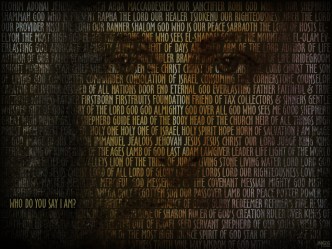
A scandalous revelation. Blasphemy. A confession that asks us to lay down our ambitions.
Who do people say that I am?
What do we reply when we stand before the world?
Who do you say that I am?
What do we reply when we stand before the Lord?
You are the Christ, the Son of the Living God, the savior of the world.
Are we willing to stand before those who doubt or jeer? Are we willing to carry hope, peace and joy into the world?
We reflect on our willingness to act on what we say we believe. Musician Matt Maher presents a video reflection on what our ambitions might promise or condemn. Watch at: https://www.youtube.com/watch?v=z5PHGRMHm8o
Francisco de Zurbarán: The Adoration of the Shepherds
As we prepare for the celebration of Easter, we return to some Christmastide meditations from 2011 and we reflect on how the Passion and Easter stories begin in a stable in Bethlehem.
In yesterday’s Noontimewe considered how much we rush toward Christmas only to miss its deep promise and sure gift – the gift of Christ himself. Today we continue our reflection . . .
The Noontimereading takes us to Jesus’ entry into Jerusalem; the natural culmination of the Savior’s life lived in humble obedience to God, although we might not see it at first. We know that Jesus will be crucified and we shrink from that knowing, wondering how much or how little we have to do with Christ’s suffering. The people in today’s story follow Jesus into the town; Jesus goes to the Temple, enters and looks around. The gift has been given and now the promise is to be fulfilled. The people who walked in darkness have seen a great light . . .
See, the Lord proclaims to the ends of the earth: say to daughter Zion, your savior comes! Here is his reward with him. They shall be called the holy people, the redeemed of the Lord, and you shall be called “Frequented,” a city that is not forsaken. (Isaiah 62:11-12) The prophet Isaiah proclaims with joy the arrival of the remnant’s reward. We look for the meaning in this Feast of the Nativity; we look for solutions to big and little problems. Suddenly, the event is over. Or is it?
The mystery of Christ’s entry into our world and into Jerusalem is too much to take in. Why does our God love us this way? The beauty of Jesus’ coming into the world and into our lives is too much to believe. Why does our God abide with us always? How can we abide with this gift and promise now that God has made this entry into our lives?
And so we pray . . .
Good and constant God, You have proclaimed to the ends of the earth that our Savior comes . . . and still we complain. You have announced glad tidings, peace, good news and salvation . . . and still we forget. You have told us that we who have who walked in darkness have seen a great light . . . and still we doubt. You have loves us and brought us abundant joy and cause for great rejoicing . . . and still we rush on.
Good and persistent God, Hold us closely, remind us of you strength often, speak to us always of your compassion, tell us again that we have not been abandoned, remind us that we are not forsaken, ask us to linger with you . . . hold us from rushing on.
Good and loving God, You have entered the world as a babe. You redeem the world as a savior. You love each of us more than we can understand. Continue to bring us the mystery of your story. Continue to enter into our lives each day. Catch us and hold us always in your arms so that we might not move past you. Enter fully into all we say and do . . . so that we do not rush on. Amen.
Bartolomé Esteban Perez Murillo: Adoration of the Shepherds
As we prepare for the celebration of Easter, we return to some Christmastide meditations from 2011 and we reflect on how the Passion and Easter stories begin in a stable in Bethlehem.
The people who walked in darkness have seen a great light; upon those who dwelt in the land of gloom a light has shone. You have brought them abundant joy and great rejoicing . . . (Isaiah 9:1-2) The prophet Isaiah anticipates the joy that will come into the world with the birth of the Messiah. We anticipated the coming of the Christmas holiday, expending energy on little details and big decisions. Suddenly, the event is over. Or is it?
In a too-quick, on-to-the-next-thing world, Christmas ends suddenly. In North America, evergreen trees that a few hours ago decorated family rooms with a display of tended ornaments and artificial lights now lie bare at the curbside for recycling. Presents opened and exchanged are nestled into their new places in the hubbub of our lives. Objects stowed, family and friends greeted, back to work until the next holiday. We have waited and shopped and prepared in anticipation for weeks, and now we are tempted to rush on. When we do, we miss the gift and promise of Christmas.
Today’s Noontime takes us to another part of the Christmas story; although we might not see it at first. We find ourselves at the gates of Jerusalem about to enter with the Master. He sends some of his followers into town in search of a colt he knows is tethered in a particular place. Strangely, the animal is lent; the disciples answered just as Jesus told them to do when bystanders questioned them. The colt is brought, people spread their cloaks on the road and raise leafy fronds as they sing: Hosanna! Blessed is he who comes in the name of the Lord! The gift has been given and now the promise is to be fulfilled. The people who walked in darkness have seen a great light . . .
How beautiful upon the mountains are the feet of him who brings glad tidings, announcing peace, bearing good news, announcing salvation, and saying to Zion, “Your God is King!”(Isaiah 52:7) The prophet Isaiah announces with joy the entry of the Messiah. We looked for the coming of the Christmas holiday, offering prayers for big and little petitions. Suddenly, the event is over. Or is it?
In a too-fast, we-are-so-connected world Christmas is over. Cranky relatives have been visited or called; old emotions and arguments boil to the surface to be put back into place. All as it should be until the next occasion. We have thought and reflected in anticipation for some time, and now we are eager to push on; yet if we push on too quickly we miss the true gift and the eternal promise of Jesus’ entry into our lives.
And so we pray . . .
Good and gentle God, you come into our lives as both a vulnerable child and a determined savior. Help us to linger in this message. Encourage us to slow down so that we can take your message in. Abide with us as we sink into the mystery you bring to us of your eternal and always constant love. We rest in you this day and this night . . . as we ponder the gift of your entry. Amen.
Sceptics wonder where the faithful see God in the world that surrounds us. Non-believers take credit for all that they store up; they blame themselves and others for a lack of success. The faithful move forward with their eyes on the prize knowing that all that was lost will in the end be found, all who were scorned will in the end be justified, and all who were last will certainly be first.
In this familiar Gospel we again hear the stories we know so well of the Lost Sheep, the Lost Coin, and the Prodigal Son. We hear Jesus’ clear assertion after each of these stories that God rejoices more over the gratitude of the lost who are found than the steady love of those who never leave him. This gives us a concept to consider.
We may see ourselves as sheep who never leave the shepherd’s side, but when we are honest we know that we have each been lost at one time or another. We might welcome the joy the creator showers on us.
The Lost Coin
There’s more joy in heaven over one sinner’s rescued life than over ninety-nine good people in no need of rescue.
We may see our tiny turnings toward God as insignificant moments in a turbulent day . . . but God sees them as a wonderful occasion to rejoice. We might join in the rejoicing of others.
Count on it—that’s the kind of party God’s angels throw every time one lost soul turns to God.
We may see a lack of fairness in our lives when those who are newly arrived to faith in God are celebrated as much or more than those who have been faithful, but God invites all of us to join in the celebration of the return of those who have been found. We might tell others this good news of God’s goodness.
You’re with me all the time, and everything that is mine is yours—but this is a wonderful time, and we had to celebrate. This brother of yours was dead, and he’s alive! He was lost, and he’s found!
We may each remember times when we have envied the good fortune showered on others when we work long and hard to remain close to God. We may each have experienced times in our lives when all that has been lost far overshadows what appears to be found. In all of these occasions, when we look carefully and honestly, we will see that what once was empty has been made full. What once was dark now has been made light. And what once was lost has
most beautifully been found. When we give thanks to God for this marvelous gift of redemption, we become part of the celebration and great joy in the kingdom that erupts when the lost are found.
The Lost Son
When we believe that we do not see God’s presence often in our lives, let us look at these times when weariness, anger, jealousy or envy may have unfocused our vision. And let us ask God for clarity as we begin this week’s Lenten practice. Rather than thinking: “God’s generosity is sometimes not fair,” let us think instead, “When we put away the past and follow God’s example of enormous generosity, we are better able to welcome the lost back home into the kingdom . . . and to give thanks for our own part in God’s great rejoicing”.
Tomorrow, coming to believe.
For other reflections on, The Lost Sheep, The Lost Coin and The Prodigal Son, use the blog search bar to explore.
The second chapter of Acts contains the description of the descent of the Holy Spirit and the joy and enthusiasm of the apostles. This bursting forth from the Upper Room, this settling into communal life, this might be the description of the initiation of any intimate relationship that begins with fire and energy to settle into a constant, abiding love. Joy settling into constancy returning to joy again. This is what we seek. This is what God seeks. Why do we so often forget this?
There is an image in today’s MAGNIFICAT Reflection which describes how the tiny particles of smoke fog our vision. It continues with the thought that as we seek God through the haze, we pray for one another, and in so doing we exhibit our faith and longing for God. God sees and recognizes this. Father Men tells us that then all of us will ascend toward the Lord, as if holding onto that prayer. This is the main thing – the rest will follow – but this is essential to our lives. Then Jesus, seeing our faith, will say to all those for whom we have been praying: “My child, awake from your sleep and your sickness, from your palsy, your spiritual paralysis; arise, your sins are forgiven you”.
The image of the apostles who gathered in fear and spiritual paralysis in the Upper Room to pray as they consoled one another is strong as we read this chapter of Acts. These early disciples are rewarded for their faith, for turning to God. They receive the Holy Spirit in such a way that their ardor never flags. We, too, receive this Spirit. We, too, are loved. We, too, are lifted up in joy to our God. May our own desire and zeal for the Lord never falter.
A Favorite from March 3, 2008.
Cameron, Peter John. “Meditation of the Day.” MAGNIFICAT. 3.3 (2008). Print.
Duccio di Buoninsegna: Christ at the Sea of Galilee (detail from Episodes of Passion and Resurrection)
Tuesday, January 31, 2023
We hear eye-witness accounts from those who were there, from those who walked and talked, ate and lived with Jesus. Scholars believe that Mark most likely writes his Gospel for early followers, gentiles who faced persecution after Jesus’ death and resurrection. He explains a number of Jewish customs to his audience and only once refers to the Old Testament. Matthew, on the other hand, writes to Jews who believed in Jesus as Messiah. Luke directly addresses Theophilus, someone of high position and wealth, and his message bolsters the story the early Christians told. John writes to non-Jewish believers, those who struggle with the conflict between philosophy and faith. And it is John who opens his first letter with words that ought to convince any who doubt the veracity of the Jesus story. (Zondervan 1356, 1620, 1663, 1718)
From the very first day, we were there, taking it all in—we heard it with our own ears, saw it with our own eyes, verified it with our own hands. The Word of Life appeared right before our eyes; we saw it happen! And now we’re telling you in most sober prose that what we witnessed was, incredibly, this: The infinite Life of God himself took shape before us. (1 John 1:1-2)
Not only do the Gospel writers give testimony to the truth they have lived, they ask that we pass this story along. They ask that we keep the Spirit in our hearts. They ask that we keep the Creator forever in our minds.
We saw it, we heard it, and now we’re telling you so you can experience it along with us, this experience of communion with the Father and his Son, Jesus Christ. Our motive for writing is simply this: We want you to enjoy this, too. Your joy will double our joy! (1 John 1:3-4)
And Jesus says to his followers: “So, you believe because you’ve seen with your own eyes. Even better blessings are in store for those who believe without seeing.” (John 20:29)
Those who lived the Gospel story have something to pass along to us. Those who read this story today have something to pass along to those who follow. When we spend time today with Gospel verses of our choosing or with one of John’s letters, we open the door to a deeper understanding of the yardstick of love that God hands to each of us so we might better measure the wealth of our lives, the infinite life of Christ we share with others.
Tomorrow, yearning.
ARCHAEOLOGICAL STUDY BIBLE (NIV). Grand Rapids, Michigan: Zondervan, 2005. 1356, 1620, 1663, 1718. Print.
On this eve of a new year, we look for ways to better see God’s yardstick in our lives, and for ways to leave the world’s yardstick behind.
And Mary said,
I’m bursting with God-news; I’m dancing the song of my Savior God. God took one good look at me, and look what happened— I’m the most fortunate woman on earth! What God has done for me will never be forgotten, the God whose very name is holy, set apart from all others. His mercy flows in wave after wave on those who are in awe before him. He bared his arm and showed his strength, scattered the bluffing braggarts. He knocked tyrants off their high horses, pulled victims out of the mud. The starving poor sat down to a banquet; the callous rich were left out in the cold. He embraced his chosen child, Israel; he remembered and piled on the mercies, piled them high. It’s exactly what he promised, beginning with Abraham and right up to now.
Who among us might dance and sing with joy when discovering that our circumstances endanger our lives? Who among us can see that up is down and down is up when everything around us tells us otherwise. Who among is willing to sacrifice our lives with such outrageous hope? Who among us is so open to the indwelling of the Spirit? Who among us can see the world with Mary’s yardstick rather than the one we have fashioned with our lives?
To read other versions of these verses like THE MESSAGE version above, click on this scripture link and explore. Use the drop-down menus to find versions of the Bible that may be new to you. Consider why this canticle is part of the Evening Prayer in the Liturgy of the Hours. To learn more about Henry Ossawa Tanner, click on the image above or visit: http://www.artstudio.org/virgin-mary-and-electricity/
Fray Juan Bautista Maíno: Adoration of the Shepherds
In this time of Advent, as we expect the coming of light and truth, we reflect on the gift of life that comes to us in the innocence of a child.
As we are. . . We come to the crèche to adore as the lowly shepherds came. The poorest, the marginalized, the abandoned and neglected. We bring our worries and anxieties . . . just as we are.
As we are . . . We come to the stable as the Magi came. The wise, the enlightened, the privileged and comfortable. We bring our hopes and our fears . . . just as we are.
As we are . . . We come to the Christ child as people for millennia have come. The troubled, the peaceful, the miserable, the joyful. We bring our dreams and plans . . . just as we are.
Fray Juan Bautista Maíno: Adoration of the Magi
As we are . . . We come to Christ as our families and colleagues, our friends and enemies come. We come to Christ’s beauty and innocence and we are either closed or open. We come to life in Christ, and Christ accepts us . . . just as we are. We give thanks for God’s great generosity today.
Celebrate God all day, every day. I mean, revel in him! Make it as clear as you can to all you meet that you’re on their side, working with them and not against them. Help them see that the Master is about to arrive. He could show up any minute!
If only we might celebrate that the Light of the World is among us in this way. If only we might live our lives as a demonstration of our belief that the Healer of all walks with us. If only we might call others to rejoice that the Rescuer from fear, anxiety and desperation lives in us.
Don’t fret or worry. Instead of worrying, pray. Let petitions and praises shape your worries into prayers, letting God know your concerns. Before you know it, a sense of God’s wholeness, everything coming together for good, will come and settle you down. It’s wonderful what happens when Christ displaces worry at the center of your life.
Visit the links below and explore other renditions of this ancient celebration of the coming of Christ. Send the link of your favorite performance to family and friends and encourage them to celebrate with you!