This week we continue our exploration of the manner in which Jesus describes himself, helping us to find our beyond the obstacles on our path, to accompany one another in both sorrow and joy, to give thanks for God’s always present power.
We ask which way to go, how to speak, what to do with what we hear and see; and Jesus speaks constantly in our ear. When we question, we receive. When we knock on the door, it opens. When we seek, we find.
Jesus answered [Thomas], “I am the way, the truth, and the life; no one goes to the Father except by me. Now that you have known me,” he said to them, “you will know my Father also, and from now on you do know him and you have seen him.” Jesus answered [Philip], “For a long time I have been with you all; yet you do not know me?”
We are astounded by Jesus’ confidence and long for his compassion. We are eager for Jesus’ friendship and rely on his wisdom. We are hopeful in Jesus’ message and give thanks for his understanding.
Jesus told them, “Do not be worried and upset. Believe in God and believe also in me”.
These words are so well known. They are straightforward and astounding. They promise the unthinkable and spell out the profound.
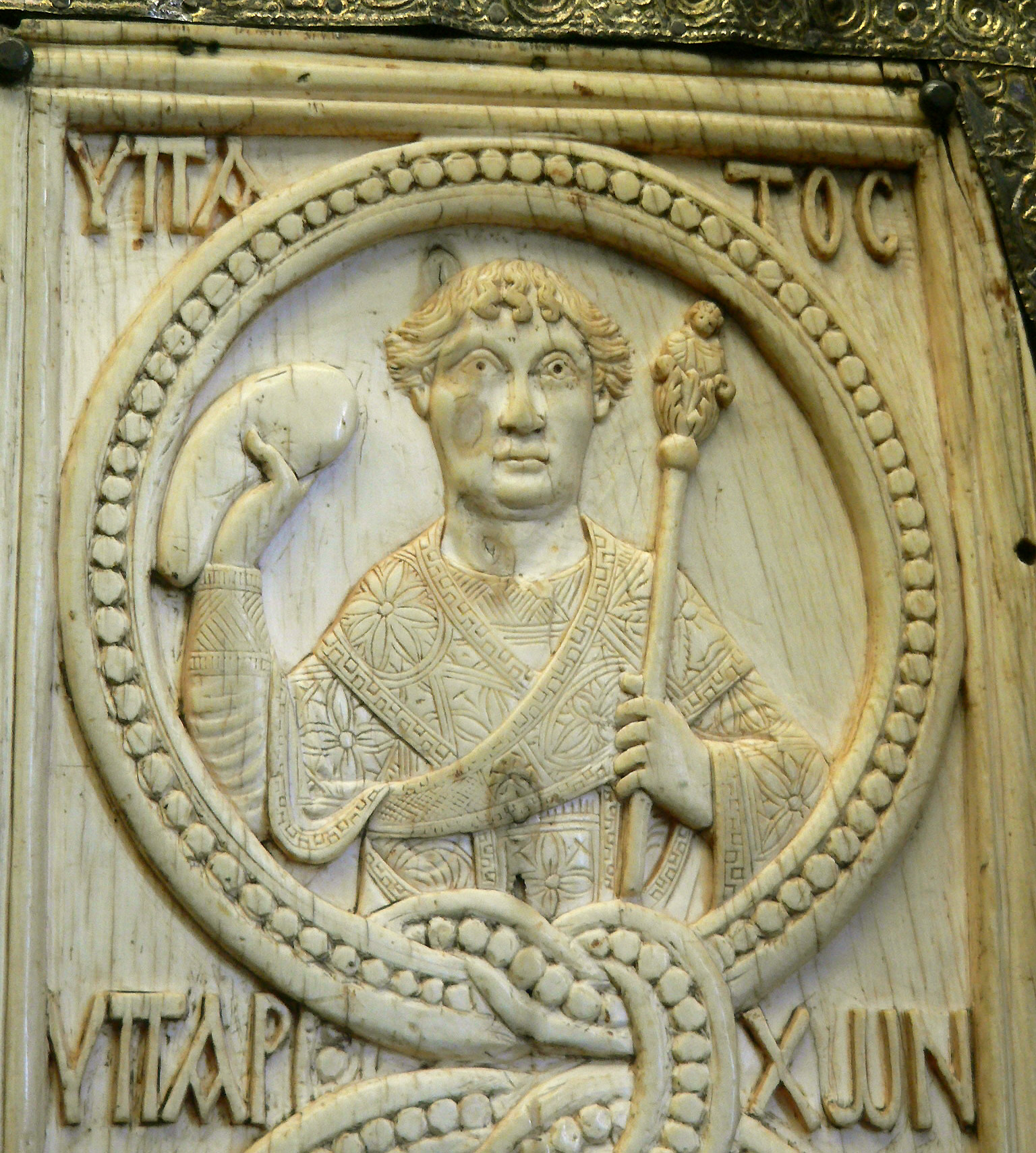
We constantly look for the Spirit’s presence and miracles; yet we too often give up on following The Way that lies before us. Yesterday we remembered the guidance we receive from Jesus, The Good Shepherd. Today we step boldly onto Christ’s Way.
This week we continue our exploration of the manner in which Jesus defines himself, helping us to better understand the importance of his example, to better respond to the Creator’s call, and to better practice the Spirit’s New Law of Love. Today we share this reflection adapted from a Favorite written on April 24, 2007.
These words are so well known. They are so beautiful and complete. They embody the paradox that is our life. All fades away except for the one vibrating and constantly resonating truth. Love. There is nothing else. It is a gift freely given to us by the Creator, Incarnate in the Son of Man, and ever present in the In-Dwelling of the Spirit. All we need do is return the love. Because God alone is enough.
Love is patient; love is kind; love is not envious or boastful or arrogant or rude. It does not insist on its own way; it is not irritable or resentful; it does not rejoice in wrongdoing, but rejoices in the truth. It bears all things, believes all things, hopes all things, endures all things. Love never ends.
We constantly look for presence and miracles; yet we too often ignore The Way that lies before us. Yesterday we remembered the guidance we receive from Jesus, The Good Shepherd. Today we step boldly onto Christ’s Way.
God says: I understand that The Way I lay before you is full of pitfalls and stumbling blocks. Today I ask you to remember that every obstacle that obstructs your path is a stepping-stone for you to use as you grow and live in me. I ask you to remember that every gaping hole that suddenly appears to gobble up The Way, is an opportunity for you to rely on me. I will guide and protect. I will lead and heal. I will restore and transform. I am The Way, and I send my son to you to live in that Way with you.
When we consider Paul’s description of Jesus’ Law of Love, we open our hearts to possibility.
May those who are wise understand what is written here, and may they take it to heart. The Lord’s ways are right, and righteous people live by following them, but sinners stumble and fall because they ignore them.
We constantly look for messages and signs; yet we too often ignore the Word before us. Yesterday we reflected on Jesus as The Good Shepherd. Today we explore the many ways each of us might respond to God’s call.
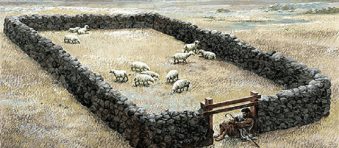
Hosea, a prophet about whom we know little, brings us the heartbreaking image of one who loves greatly and suffers deeply. Some might say that in pledging himself to the prostitute Gomer, Hosea deserves the anguish she brings him. Others will admire his steadfastness, mercy, and hope. The imagery we see today leaves us with no doubt that no matter the severity of any pain we cause the Creator, the Good Shepherd will always welcome us back to the sheepfold.
The Lord says:
“I will bring my people back to me.
I will love them with all my heart.
“I will be to the people of Israel like rain in a dry land.
They will blossom like flowers; they will be firmly rooted like the trees of Lebanon.
“I will answer their prayers and take care of them. Like an evergreen tree I will shelter them; I am the source of all their blessings.”
These Old Testament words foreshadow a new prophet who will search endlessly for the last lost sheep. How can we turn away from one who follows us so closely? How can we reject a love that runs so deep and true? How can we reject a hope that transforms us forever?
May those who are wise understand what is written here, and may they take it to heart.
Tomorrow, Jesus as The Way.
When we compare varying translations of these verses, we open our hearts to the Good Shepherd.
This week we explore the manner in which Jesus defines himself, helping us to better understand the importance of his presence in our lives, to better take in the enormity of God’s love for us, and to better open ourselves to the healing power of the Spirit. Today we share this reflection adapted from a Favorite written on August 6, 2007.
This was the Gospel reading at my mother’s funeral mass – and it is one of my favorite readings. Perhaps it is yours as well. There are several verses I like in particular.
With today’s he reference to the gate, we might also think of Jesus as “The Narrow Gate,” the Way by which we might live this life. Christ’s constant call to forgive and love those who injure us, to always begin again in the Spirit, is heard – sooner or later – by those he calls. Many of us hear this message later, but no matter our circumstances, Christ is always ready to guide us back into the sheepfold.
In this reading, I like the way Jesus explains his own imagery. We can only imagine how frustrating it must have been for this man to repeat himself in so many ways and have so few truly hear him. Here we see Jesus as patient and clear, saying that not only does he speak from God the Father’s authority, but that he ISthe New Law of Love, fulfilling and superseding the Mosaic Law.
Toward the end of the citation, we see the difference between those who listen and those who truly hear. Some said he was “mad.” Others said he was not.
When we act in Jesus’ behalf here in this life, when we bloom where we are planted, when we go about the minutiae of our days, when we work at living in the Spirit, some will say we are ‘mad,’ and others will say we are not. When we shepherd as The Good Shepherd does, we will look for Christ’s guidance. And so we pray.
Gentle and Good Jesus and Lord, keep us always mindful of your love for us. We know that we are “pearls of great price” that you put all else aside to recover from its place of exile. we know that you are The Gate and The Way, the only True Shepherd. Keep us mindful of your patience and your perseverance. Continue to speak to us in that sacred place that each of us knows with you. Protect us from those who would harm us. Help us to pray for those who injure us. Keep us ever close to you in mind and body and soul as we shepherd one another. Amen.
Enter the words Good Shepherd into the blog search bar and explore.
Today we reflect on the message God gives to Moses through the medium of the burning bush that never burns; and over the next days, we will spend time reflecting on how God communicates with us the enormity and the mystery that is God’s love for us.
God said, “I am who I am. You must tell them: ‘The one who is called I Am has sent me to you.’ Tell the Israelites that I, the Lord, the God of their ancestors, the God of Abraham, Isaac, and Jacob, have sent you to them. This is my name forever; this is what all future generations are to call me”.
“I am who am”.
What does this simplest of phrases mean for us? That all of creation announces God. That all of humanity comes from this source.
“I am who am”.
What might this simplest of phrases hold for us? God’s promise that we are never alone, and never abandoned.
“I am who am”.
What might this simplest of phrases portend for us? That we have nothing to fear and everything to expect.
“I am who am”.
Today as we contemplate God’s gift of self to each of us, we spend time with this simplest of phases as we reflect on its meaning and promise.
We have established a dwelling place where we rest in the Spirit only to find that there are times when we must flee this sanctuary. Some of us are called to remain forever outside of that refuge, and others are called to return transformed and transforming. No matter our circumstances, we might do as the words from Luke ask us.
A good person out of the store of goodness in the heart produces good; for from the fullness of the heart the mouth speaks. (NAB)
In this image of God’s kingdom as a tree bearing fruit, there is no doubt that storing up goodness is the heart of our daily mission; but today we pause to reflect on what we might do when we are weighted with a burden too heavy to carry. How are we to manage when we are overwhelmed with doubt or fear? Jesus tells us: Do not let your hearts be troubled.(John 14:1) Today we rest in these words.
A good person brings good out of the treasure of good things in his heart; a bad person brings bad out of his treasure of bad things. For the mouth speaks what the heart is full of. (GNT)
The looming image of God measuring out the good from the bad is too terrible for us to consider for those who find themselves barely able to journey from morning to evening without losing heart. How are we to manage when our hearts are too empty to fill? Jesus reminds us: Blessed are those who mourn for they shall be comforted. (Matthew 5:4)Today we rely on these words.
The good person out of the good treasure of the heart produces good, and the evil person out of evil treasure produces evil; for it is out of the abundance of the heart that the mouth speaks. (NRSV)
The dual image of an either/or world asks us to make too simple a choice when we know that few of us are all good or all bad, but rather a blend of both worlds. How are we to manage a dualistic world that offers only black-or-white decisions when we know that the real world we live in is mostly gray? Jesus asks us: Go therefore to the main highways, and as many as you find there, invite to the wedding feast.(Matthew 22:9) Today we have hope in these words.
The good person produces good things from the store of good in his heart, while the evil person produces evil things from the store of evil in his heart. For his mouth speaks what overflows from his heart. (CJB)
The image of an intense struggle between goodness and evil rises before us as we consider this verse, giving us a deceiving reality of false choices. How are we to behave when it appears that everything and everyone align in a tribal dance of self versus other? Jesus says to us: Love your enemies, do good to them, and lend to them without expecting to get anything back. (Luke 6:35)Today we find a challenge in these words.
You don’t get wormy apples off a healthy tree, nor good apples off a diseased tree. The health of the apple tells the health of the tree. You must begin with your own life-giving lives. It’s who you are, not what you say and do, that counts. Your true being brims over into true words and deeds. (MSG)
If the image of a worm-infested life terrifies us so that we are unable to accept our reality, we have taken this image too far. When life itself frightens us, we must find a way to pray for those who harm us, and ask that Christ show us the way to still our troubled minds and dissolve the anger, fear, hatred, and fog . . . and to fill our troubled hearts with forgiveness, patience, courage and clarity. In time, we discover that despite, or perhaps because of all we have suffered, we have a certain fullness of the heart.
When we compare translations of these verses, we open our hearts so that Christ might fill them with his generous love.
James Tissot: The Mess of Pottage – Jacob and Esau
This reflection continues thoughts posed in the Revenge and Forgivenessposts on this blog.
Obadiah, one of the Minor Prophets, offers us ideas we will want to examine further.
From the ARCHEOLOGICAL STUDY BIBLE we discover themes. We learn that Obadiah’s name means “servant of Yahweh,” and many scholars believe that his brief prophecy was written between 586 and 553 B.C.E. We know that Obadiah does not specify that his prophecy is meant for any particular king or event; yet he indicates that a major calamity has occurred in Judah and that the Edomites have capitalized on this event. In general, scholars believe that there was a post-exilic setback for the Israelites, and most believe it to be the fall of Jerusalem to the Babylonians in 586 B.C.E. They also remind us that Edom itself fell to this same empire in 553 B.C.E. All of this sets up a story of intense tribalism, payback, and retaliation. We look a little further.
Who are the Edomites and where is their land? These people descended from Esau, the son of Issac, who was cheated of his heritage by his brother Jacob and his mother. Obadiah writes to the people of Judah (the descendants of Jacob) condemning the Edomites for their treachery and violence toward the people of Judah. He also rails against the people for their sins of arroganceand indifference toward God. So this prophecy harkens back to the conflict between these two brothers. Judah feels that the hostility shown to them when they are at a low point by the people of Edom is crueland unjustified.Edom’s arrogance was founded in its nearly impregnable mountain strongholds where the Edomites safeguarded their wealth (gained from trade) in rock vaults. Obadiah teaches that God is sovereign over allnations. (Zondervan 1464-1465)
James Tissot: The Meeting of Esau and Jacob
So much of what we read here reminds us of the story we live each day; our modern world is occupied with ancient themes: indifference to a higher authority, arrogance of the ego, injustice of systems and structures, and the use of cruelty as a fair means to any end. The rivalries in this prophecy echo the petty rivalries we set up early in life and, as we grow older, carefully nurture.
Turning to today’s reading, we see these familiar words in verse 18: “Vengeance is mine; I will repay.” Yet, despite our recognition of the truth these words bring to us, we need more urging. The prophet, knows that despite enlightenment we will have setbacks, and so he lays them out for us to examine in ourselves: the malignant hope for revenge, the overpowering force of hubris, the willingness to use any means to achieve our ends, the animal-instinctive fear of others. Obadiah asks us examine the suffering of our daily experience as we reflect on his prophecy.
As New Testament believers, we want to be poised for Jesus’ coming into our lives and receptive to the Spirit that lives among us. Feeling Christ’s call to our highest goodness, we might look at Hebrews 11 and determine to follow the example of the faithful lived by the Patriarchs: Adam, Enoch, Abraham, Sarah, Isaac, Jacob, Joseph, Moses, Rahab, and the Judges . . . “all these . . . approved by the testimony of faith”. We might look to these people as models of how and what we are to do, how and why we are to overcome our lust for revenge, how and why we are to practice love. When we study their individual stories, we see that these ancestors do not lead perfect lives; but they strive for that perfection in their loyalty to Yahweh. They listen, they obey, and they bear their trials well.
In the name of Jesus, let us call out our best selves to serve God, to fulfill his hope in us. Let us be good and loyal servants who want nothing more than to discern our mission and to complete it well. We ask this in the name of Jesus, the one who dwells among us to lead us, to heal us, to restore us, to be one with us.
Amen.
Adapted from a Favorite written on October 27, 2007.
Read the brief prophecy of Obadiah and compare varying translations to better understand our tendency to seek revenge . . . and our need to rely on God’s wisdom rather than our own.
ARCHAEOLOGICAL STUDY BIBLE (NIV). Grand Rapids, Michigan: Zondervan, 2005. 1464-1465. Print.
Yesterday we reflected on how at times we must abandon the sanctuary. Delving into this separation from all that comforts us helps us to explore the idea that there are times when God calls us to leap over the abyss of our doubts. Today we reflect on the establishment of the first sanctuary or “dwelling place” for Yahweh, the desert temple tent. Verse 43 tells us that Moses was pleased with the work of the people and so he blessed them. This is reminiscent of the Creation story when God moves through the phases of creation – the sea, the land, the plants and animals, the humans – he sees that the work is good. In the relativistic twenty-first century western world, it is easy to think that our standard for goodness relies on our personal perspective. But when we read both Old and New Testaments, we remember that accountability, evaluation, and even assessment are part of the Gospel story.
Moses saw that all the work was done just as the Lord commanded, [and] he blessed them.
It is good to review the portions of Exodus that describe in detail the Temple Tent of Yahweh that the people carried as they wandered the wilderness for several generations. Verse 39:43 describes the experience of joy in the completion of work and a task well done for Yahweh. When we read varying translations of these words, we begin to feel the blessing God gave the Hebrews – that God gives to us.
Moses saw that all the work was done just as the Lord commanded, [and] he blessed them.
When we complete any task to which God calls us, it is good to rest awhile and reflect on what we have accomplished. It is good to give God thanks for we know – if we will admit it – that all we do is done throughGod. All we do that is worthy, is done withGod.
Moses saw that all the work was done just as the Lord commanded, [and] he blessed them.
This blessing of all work done in God’s name may put a new spin on our daily lives, and in fact, it ought to do so. If we work, play, and pray for ourselves, we have missed the point of our existence. When we work, play, and pray with God, we participate in a plan far greater than any we might devise.
Moses saw that all the work was done just as the Lord commanded, [and] he blessed them.
When we have struggled through the travail of repairing a relationship, we will know the goodness of God’s providential care. When we have repaired, restored, rejuvenated our soul with God, we will know the beauty of God’s plan.
Moses saw that all the work was done just as the Lord commanded, [and] he blessed them.
When we have worked our way carefully through the many tasks of a day with no casualties or misunderstandings, we know the joy of putting a peaceful head on our nighttime pillow.
Moses saw that all the work was done just as the Lord commanded, [and] he blessed them.
When we make a presentation of our work, and we see that our efforts have produced fruit in abundance that will last, we know the perfect serenity of God.
Moses saw that all the work was done just as the Lord commanded, [and] he blessed them.
When we are forced to flee our sanctuary and then agree to return, restored and healed, we will see that the work we have done has been done just as the Lord commanded. We will know that we, like the Hebrew people, are blessed. We will know that the presentation of our labor is pleasing to God, so let us rejoice in God’s blessing.
Adapted from a reflection written on May 16, 2008.
In thinking about David as King and priestly leader of a chosen nation, we might forget about the twisting and turning of his story and the times when he fled a place or a people where he had previously found refuge. One summer, I was able to slowly read the books of Samuel, Kings and Chronicles to get a better picture of the spiritual history from which we spring. As with all history, the saga is full of error and woe, accompanied by the providential watchfulness of God, and our experience of joy. The story of David is no different, and it merits careful reading and reflection because there are many places in this narrative in which we will want to stop along the way, places that speak to both our losses and our celebrations.
From Psalm 24: Who shall climb the mountain of the Lord? Who shall stand in his holy place? The man with clean hands and pure heart, who desires not worthless things, who has not sworn so as to deceive his neighbor.
David Roberts: Citadel of Jerusalem
We are imperfect, yet we cannot let this imperfection keep us from seeking the perfection that is God. Sometimes this seeking is also a healthy escape as when Joseph takes Mary and the infant Jesus to Egypt to avoid the wrath of corrupt leadership. We notice in today’s reading that David in flight pauses opposite the ascent to the Mount of Olives. This is the place where Jesus also halts before entering Jerusalem triumphantly on the day we now celebrate on Palm Sunday. He stays there and sends his disciples ahead to prepare for his entry. Many times in the Gospel, we see Jesus pause, retreat, and even vacate a place or people. We will also notice, if we continue to read, that he gathers himself for re-entry.
From 2 Chronicles 30:18-19: May the Lord, who is good, grant pardon to everyone who has resolved to seek God, the Lord, the God of his fathers, though he be not clean as holiness requires.
Absalom
Sometimes it is necessary to evacuate the sanctuary. Sometimes we leave behind all that we cherish, all that has made us feel safe and comfortable. Sometimes we step off into an abyss of doubt and anxiety because we fear the destruction of the people and places that normally are our havens.
From Psalm 92: How great are your works, Lord! How profound your purpose!
Sometimes we must leave the sanctuary and take the faithful with us because we go toward something that holds greater value, greater potential, greater hope and life.
From MAGNIFICAT today: To be a disciple means to follow the Master. He ascended the hill of the cross and transformed it into the seat of glory, a holy place. Risen, he invites us to leave behind all worthless desires and seek him in holiness, that is, in love.
Sometimes we are driven from the sanctuary by the ones we hold dearest – as with David and his son Absalom who later self-implodes.
1 Corinthians 2:11: No one knows the thoughts of God except the Spirit of God.
Sometimes we evacuate the haven to look for restoration and then, like David, we may be lead back to this refuge. As humans, it is impossible to know the plan or mind of God, but what we do know, if we allow ourselves to rest in the Spirit, is God’s care, Christ’s healing touch and restoring hand. Yet despite this love, there are times when – in order to take in the enormity of this precious gift, in order to fully receive this gift – we first must evacuate our safe harbor. We must flee the sanctuary.
Tomorrow, despite our flight . . . we make a presentation of our work.
Adapted from a Favorite written on May 15, 2008.
Cameron, Peter John, Rev., ed. “Mini-Reflection.” MAGNIFICAT. 15 May 2008. Print.