Love from the center of who you are; don’t fake it. Run for dear life from evil; hold on for dear life to good. Be good friends who love deeply; practice playing second fiddle. (MSG)
Paul describes the mark of a true Christian.
Don’t burn out; keep yourselves fueled and aflame. Be alert servants of the Master, cheerfully expectant. Don’t quit in hard times; pray all the harder. Help needy Christians; be inventive in hospitality. (MSG)
Paul tells us that we must rely on God alone. We must be open and welcoming. We must keep the faith and pray.
Bless your enemies; no cursing under your breath. Laugh with your happy friends when they’re happy; share tears when they’re down. Get along with each other; don’t be stuck-up. Make friends with nobodies; don’t be the great somebody. (MSG)
Paul asks us to give ourselves over to kingdom thinking. Paul asks us to give ourselves over to inversion. Paul ask us to live on the margins rather than the center.
When we use the scripture link and drop-down menus to explore these words as translated differently from THE MESSAGE, we find a pathway to courage and a source of deep love.
Once again my people will see the difference between what happens to the righteous and to the wicked, to the person who serves me and the one who does not. (GNT)
When we cannot distinguish facts in an argument, we might want to turn to God.
And you shall return, and shall see the difference between the just and the wicked: and between him that serveth God, and him that serveth him not. (DRA)
When we do not know which way we are to go, or how we are to go, we might ask Christ to show us The Way.
Once more you’ll see the difference it makes between being a person who does the right thing and one who doesn’t, between serving God and not serving him. (MSG)
When we are in pain but see our neighbors rejoicing without a care to our suffering, we might ask the Spirit to console and abide with us.
Then you will again distinguish between the just and the wicked,
Between the person who serves God, and the one who does not.(NABRE)
When we realize that we rejoice and our neighbors are in pain, we might turn inward to discern what prevents us from building bridges with others.
When we explore this verse in different translations, we have a better understanding of we might serve God well.
John of Patmos, the writer of the Book of revelation, watches the descent of New Jerusalem: 14th Century tapestry: La nouvelle Jérusalem
I saw Heaven and earth new-created . . .
These familiar verses might be overlooked. We have heard all of this before, we tell ourselves, and so we move on too quickly.
I saw Holy Jerusalem, new-created, descending resplendent out of Heaven, as ready for God as a bride for her husband.
These familiar words continue to sound strange. We have read all of this before, we say to ourselves, and the words still do not make sense. Again we move on without thinking.
Look! Look! God has moved into the neighborhood, making his home with men and women! They’re his people, he’s their God.
This familiar metaphor still eludes our understanding. We have seen this passage before, we say to others, and it still makes no sense. Yet again we move on without pausing.
Yes, we say, we know. God wipes tears from every eye . . . yet we do not see this in our world.
Yes, we acknowledge, God will bring about a new order and a new way . . . and this will be in a distant, foggy future that we cannot imagine.
Look! I’m making everything new. Write it all down—each word dependable and accurate.
Still . . . a small voice at the periphery of our awareness speaks to us: What if this were so?
Now God’s home is with God’s people . . .
Yes, we say to ourselves. There is a possibility that all of this is true, today, here, now.
Now God’s home is with God’s people . . .
Yes, we say to others. This Jesus who was betrayed by a companion with a false kiss, this Jesus is still among us.
Now God’s home is with God’s people . . .
Yes, we say to anyone who will listen. God’s home is with God’s people.
Let us act as if we believe. For we are Easter people.
When we use the scripture link and the drop down menus to explore varying translations of these verses, we become more aware of how Jesus continues to make his home among us. We are better able to see that Jesus continues to show us The Way.
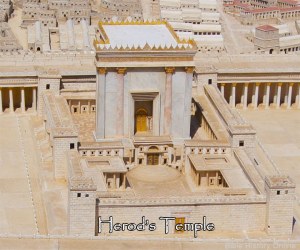
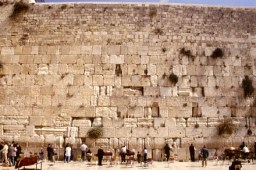
The followers of Yahweh erected a tent to house the ark they created to hold their tangible remnants of their relationship with the Lord: stone tablets holding God’s ten pronouncements of the Mosaic Law, manna provided by the Lord during the Hebrews’ desert wanderings, and the staff that Aaron used to mystify Pharaoh, the ruler of Egypt whom the enslaved people of God escaped. The Israelites replaced the tent with a glorious Temple to house the ark, sacred scrolls of God’s word to them. More than once this Temple was overrun, brought down, and reduced to rubble and a single, solemn wall of prayer. Today followers of Christ carry this tent, this Temple within; and it is in this sacred interior space that we find courage, hope, strength, faith, persistence, peace and joy. As we move through Eastertide, we bolster ourselves for the journey ahead as we continue our pilgrimage.
The New American Bible gives a wonderful title to these verses: A Psalm of Fearless Trust in God. We might benefit from the grace of this special prayer if we reflect carefully on its words as we pray them.
A depiction of the Moses Tent
When we are anxious or troubled, we recall . . .
TheLordis my light and my salvation; I will fear no one.
The Lord protects me from all danger; I will never be afraid.
When we are overwhelmed and distraught, we remind one another . . .
Even if a whole army surrounds me, I will not be afraid;
even if enemies attack me, I will still trust God.
When we are lost or abandoned, we remember . . .
I have asked the Lordfor one thing; one thing only do I want:
to live in the Lord’s house all my life, to marvel there at his goodness, and to ask for his guidance.
When all seems lost and dark, we remind one another . . .
In times of trouble God will shelter me; God will keep me safe in the Lord’s Temple and make me secure on a high rock.
When we are alone or bereft, we call out . . .
So I will triumph over my enemies around me.
With shouts of joy I will offer sacrifices in his Temple; I will sing, I will praise theLord.
Hear me,Lord, when I call to you! Be merciful and answer me!
When we falter, we encourage one another . . .
When you said, “Come worship me,”
I answered, “I will come, Lord.”
The Western Wall of the Temple in Jerusalem today (The Wailing Wall)
When the world closes in and we find no exit from sorrow, we pray . . .
Teach me,Lord, what you want me to do, and lead me along a safe path, because I have many enemies.
Don’t abandon me to my enemies, who attack me with lies and threats.
When we are rescued, we rejoice . . .
I know that I will live to see
theLord‘s goodness in this present life.
Trust in the Lord. Have faith, do not despair.
Trust in the Lord.
When this present life seems as though there is no evidence of God’s presence, let us remember Christ’s temple of light and peace that we carry within.
If there is time in the next several hours, enter the word TEMPLE into the blog search bar and consider how God’s plan has brought us from enslavement through the desert to a solid place where we rejoice and yet remains with us when great loss or great sorrow overtake us. It is God’s abiding love that brings us this fearless trust in the temple of God that remains within. When we reflect on these images or listen to these or other audios as we pray, we allow this fearless trust in God to rest in us today. Wishing all of you peace and joy on this day and all days.
We have celebrated Easter Week, an eight-day celebration of the resurrection of the crucified Christ, and as we move forward through Eastertide, we continue to explore the doubt we might have about the resurrection miracle. We continue to ask the familiar question in the face of violence and tragedy: Where is God? And Ezekiel, the prophet who lives in exile from the physical place in which he believes God resides, gives us a simple answer to this simple question: God resides everywhere. As Easter people who celebrate the miracle of Easter renewal, we see God best in the new temple of the Christ’s body. We see God best when we all strive toward creating the New Jerusalem here among us, a place where differences are anticipated and respected, a place where every voice is heard, a place where reparations are made and accepted, a place of healing and restoration. A place of ultimate and intense truth. A place of purity and of fire and of healing.
The prophet Ezekiel tells us that God is a paradox. He tells us that the Temple and God’s presence must be central to our lives. He tells us that God is awesome – “reaching far beyond human relationships and human explanations”. (Senior RG 339) He tells us that as individuals we are responsible for our own adherence to the Law and that no matter our ancestry or our misfortunes, we cannot scapegoat our circumstances. “Each person lives or dies according to his or her wicked or virtuous way of life”. (Senior RG 340) Ezekiel transforms the art of prophecy, bringing it to a new level and setting the stage for the entrance of the Messiah and the New Testament. He also lays the foundation for the Second Coming – when the Lord returns and sends his angels among the living to separate the sheep from the goats.
Mikhail Nesterov: The Empty Tomb
All of this is too terrible, too wonderful, too much to believe – and yet there is nothing else to believe. All other thought pales and hence the paradox. What we first see and hear we want to believe but do not, thinking that this New Jerusalem is impossible. Yet through living, suffering, hoping, believing and loving we arrive at no other spot. We have no choice but to believe that indeed, the Lord is Here.
When we spend time with this prophecy today, we have the opportunity to feel the presence of God as we remember andreflect . . . we are Easter People . . . visited by the risen Christ . . . and so the Lord is among us.
EdwardVon Steinle: The Four Horsemen of the Apocalypse
We might well believe that we live in a world that is in cosmic conflict. Terrorist attacks, extreme politics, fanatic social movements might give us good reason to believe that “the end times” are near. We must exercise caution before reading the last book of the Bible without commentary lest we slip into a dualistic world of fundamentalism. This narrow view emphasizes the vision of universal struggle, and forgets the message of hope, trust, prudence, mercy and love that Jesus delivers. These verses must be read through the filter of unity and solidarity, hope and determination that Jesus brings to the world. Rather than relying on an apocalyptic eschatology in which God rescues the world and sets all wrongs right while we watch and observe, we are urged to delve into the ethical eschatology of joining with Christ to bring his message of love to all.
Commentary cautions us appropriately; it encourages us to take up the challenge of these remarkable verses. “It is useless to tease such poetry into a train schedule. The vision here is not one of history unfolding like clockwork; it is a religious vision of God’s ultimate conquest despite current appearances. Once the reader lets go of the obsessive ‘need to know’ that twists beauty into biorhythm charts, it is possible to wonder at the powerful poetic and religious imagination at work in these glorious images”. (Senior RG 575)
When we spend time with various versions of these verses today, we allow the gift of Christ’s wisdom and love to settle over us. We allow ourselves to become of God’s remarkable kingdom. And we allow the consolation of the Spirit to work through us to heal a waiting world.
Today we remember as we reflect . . . we are Easter People.
Senior, Donald, ed. THE CATHOLIC STUDY BIBLE. New York, Oxford University Press, 1990.RG 575. Print.
If we listen to the song Alive Againby Matt Maher, we may find new peace and a new energy as we ponder the question Where have I gone . . . we may experience a new birth, and we may discover that we are alive again. https://www.youtube.com/watch?v=h30qiH7MSHM
Wishing all a blessed Easter, and offering all of you this Easter Prayer.
May each of us be renewed in Christ.
May each of us be blessed by the Creator.
May each of us be graced by the Holy Spirit.
May we keep in mind that we are Easter people.
May we announce and share the gift of Resurrection that God has bestowed on us.
And may we hold the story of God’s love for all creation in our hearts.
As we enter Holy Week with the celebration of Palm Sunday, we remind ourselves that human history has the unmistakable pattern of flight and return. We flee when we sense danger. We shrink to hide when we are overwhelmed. We reject the story before us that reminds us of our shortcomings. But the powerful story of the coming week is one of return, redemption, forgiveness and a love that is so powerful that it can erase any transgression.
Today we take time to visit the story of Ezra to look for the clues it gives us to our own road to retrieval, renovation, and recovery. We stray and yet while we wander the roadways that lure us away from God who sustains us, we hear the voice that continues to call. We celebrate a life we believe is free when we throw away our relationship with Christ to live a life with no controls, but still we hear that quiet voice that continues to beckon. We sink into the easy life that offers no obstacle to our whims and yet we feel the abiding presence of the Spirit.
Ezra and the Israelites return to Jerusalem to rebuild the city that had sheltered them and had represented their unique relationship with God. Together with Ezra and Nehemiah the people respond to that voice that has never ceased calling. This distance and return are foreshadowed in the Christmas story that we have been visiting. We know that the Holy Family flee to Egypt to avoid the hatred and envy of Herod. We also know that they return once God calls them back.
Bartolomé Esteban Murillo: The Holy Family with Little Bird
Today we return. Whether we have fled because we have felt no need of God, or because we experience deep danger, we know we must return. We hear the call of the Shepherd’s voice, we feel the warmth of Christ’s love, we remember the loving embrace of the Spirit. And we return to the sure safety of the Holy Family. In the days of Holy Week that unfold before us, let us confess that we are not always present to God’s call. And let us enter this holy time with the surest and purest of intentions that we re-commit ourselves daily to the unfailing love of God.
Our story is told through the whole of scripture as the story of Christ. Today we reflect on the traces of this story that we find in our own lives from the first words of Genesis . . . In the beginning . . . to the last words of Revelation . . . The grace of the Lord Jesus be with all.What has been our beginning? What do our lives reveal?
From the Torah and narratives, through the books of wisdom and prophets, and finally with the gospels, letters and final oracles, we read the story of Jesus who is predicted and promised, and who comes to fulfill that covenant promise. What is our prediction? What potential of hope has God placed within us? What is the promise our lives disclose?
The scripture stories fit together, notching closely as a mosaic to form the Mystical Body of Christ. What sort of image of God do we speak to the world with our lives? How do the stories we play out speak of our relationship with God?
Christ’s story can be our own not in that we live perfect lives as Jesus did, but in that we strive for this perfect love that Jesus teaches us daily. Today, we look at the words that begin his story as a human . . .In those days a decree went out from Caesar Augustus that the whole world should be enrolled . . . and we take the opportunity to consider once again how our own story might begin . . . In those days a war erupted between . . . In those days there was great political, economic and social unrest . . . In those days peace had come upon the land . . . In those days there was much to celebrate . . . We might enumerate our family lineage as Matthew does in his Gospel. We might wade immediately into our story as Mark does; or we might allow poetry to take over as does John . . . In the beginning was The Word, and the Word was with God, and the Word was God. Our own New Testament might begin . . . In the beginning there was Fury . . . there was Peace . . . there was Confusion . . . there was Joy.
Today we spend time reflecting on the introduction of our story. The introduction of our hope. The introduction of the love we bring to the world as our response to God’s call.
Tomorrow, our stories of obstacles and rejections.