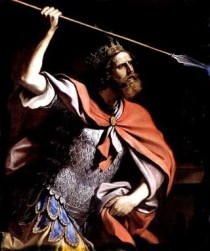
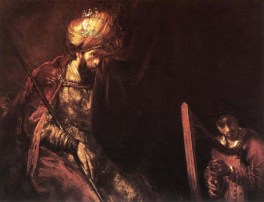
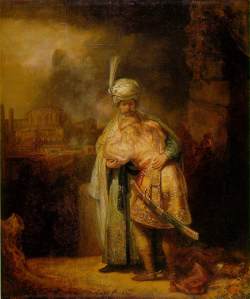
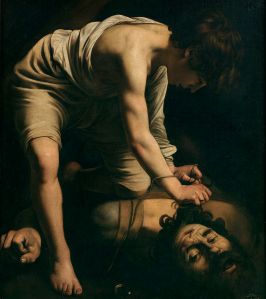
Rembrandt: Saul and DavidSeveral weeks ago, we reflected on celebrating escape from something or someone who would have brought us great ruin or harm. Yesterday’s Gospel gave us the opportunity to examine how Jesus is able to escape the traps laid for him by those who hated him. Today we take a look at a small portion of the story of David, the young man who is designated as King of Israel by Samuel but who waits his turn as leader of God’s chosen people by resisting the temptation to fight against Saul. David does not deny that he has been chosen King, nor does he murder Saul in order to take what is his; rather, he abides in God’s will and God’s time. And he takes the routes of escape that God offers while he actively waits on the fulfillment of God’s plan.
Today we read the story of how God saved his imperfect yet faithful servant and we are no less than David.
Today we read the story of how David relied on his God’s constancy and he did not allow fear to turn him toward revenge or cowardice.
In yesterday’s Gospel (Matthew 22:15-21) we read the story of how Jesus confronted prejudice and hatred and we do well to follow his example.
In yesterday’s Gospel we were given a road map for how to escape manipulation and scheming. We must rely on God always, remain faithful to the covenant God shares with us, and always act inlove and forlove of God. In this way we will always know escape from anything danger or evil that hopes to overtake us.
And so we pray . . .
When the call to do God’s work pulls us into alien and dangerous territory, we must rely on God’s wisdom and not our own.
When the hand of God heals us and then sends us out to do God’s work, we must rely on God’s fidelity and nurture our own.
When the voice of God urges us to work in fields are that unfamiliar to us and that sap our energy, we must rely on God’s strength and conserve our own.
When the heart of God sends us to work with those who would do us harm, we must rely on God’s love and hope for redemption. Amen.
Dorè: David Attacks the AmmonitesWe might take a lesson from both David and the Ammonites today; and each of these lessons will save us suffering if we can be open to their message. From the Ammonites who expect insult and war, we see that when we take a bellicose stance, we guarantee our suffering. It seems we humans are often eager to fulfill our own dark hope. Nestled against Israel’s eastern boundary, this tribe may have felt a kind of national inferiority. Along with the Moabites, these descendants of Lot struggled to maintain peace within and along their borders. Rightly or wrongly, the young king Hanun took an aggressive stance against David when he rejected David’s offer of amity and instead sought allegiance against Israel with the Arameans, another small kingdom to the north. All hope for independence is dashed and in the end these Ammonites – whose rudeness stirs the Israelites to revenge – becomes subject to Israel, and the Arameans stand down from their aggressive posture. We can never know if David somehow plotted in hopes that this scheme would bring him a vassal state; but we can easily see that the ultimate outcome for the Ammonites was the same – or perhaps even worse. When we expect insult and take a bellicose stance, we guarantee our suffering.
Van Honthorst: King David Playing the HarpThe major player in this reading is, of course, David and from him today we might learn: We are most open to failure when we are at our most secure. From the HarperCollins Bible Commentary, “If, on the one hand, we think of the Ammonite war as after the events of chap. 8, we are struck by the rapidity with which what appeared secure has again become a threat. If, on the other hand, we read the war account as a flashback, we may be struck by the irony of the context in which David’s adultery and murder have been set. It is at the very peak of his power, when YHWY is giving him victory wherever he goes (8:14), that the king most conspicuously fails. Security breeds insecurity; success incubates failure. It is as the gift of the kingdom is being made complete that YHWY’s chosen one chooses to grasp most rapaciously what is not his to grasp. In short, it is at his most secure that David turns out to be most open to failure”. (Mays 269)
We know this statement to be true if we take an honest look at our own lives and at the lives of friends and enemies. Cinema and literature reinforce the universal concept that we learn from our mistakes rather than our successes. We also know that we are most conciliatory, most ready to listen, and most open to change when we are faced with multiple obstacles; and that we are most closed, most deaf to common sense, and most eager to control our environment and others when we are at the peak of accomplishment. All of this is perhaps because we have forgotten some central truths: that God is the author of all good, that we can choose to enter into this goodness with God or we can choose reject God in the belief that we alone are responsible for all that has gone well in our lives. In short, it is at our most secure that we turn out to be most open to failure.
In David’s actions and thinking, and in the actions and thinking of the Ammonites, we discover the hidden pitfalls of success and promises of disappointment. We find an openness to failure that is certain to bring great pain and a guarantee of hardship and suffering. None of this suggests that success is something to be avoided or that failure is the mark of holiness. On the contrary, we experience happiness and joy despiteour failures and along with our successes at precisely those times when we nurture an openness to God and forego our natural tendency to remain open to failure.
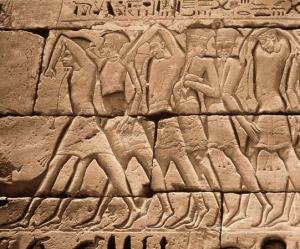
Philistine captives being led away after their failed invasion of Egypt, from a relief at Ramses III’s mortuary temple at Medinet Habu, Thebes, Egypt. (Britannica online)
Wednesday, January 29, 2025
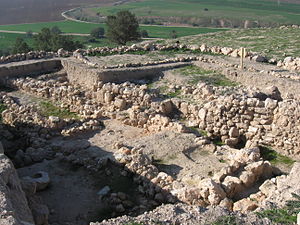
The stories in 1 and 2 Samuel are intriguing if we take the time to pause with them; and over the past weeks we have considered the variety of ways God speaks to us. We have paused to reflect on how we might hear, and then heed, God’s Word. Today it is the story of David, Achish, the Philistine King of Gath, and the Philistines.
Many of us perceive the Philistines as enemies of the Jewish people. As a noun describing characteristics, we define a philistine as “a:a person who is guided by materialism and is usually disdainful of intellectual or artistic values, or b: one uninformed in a special area of knowledge”. (Merriam Webster Online) No matter the context, we understand that David and his men align with Achish in order to somehow endure the wrath of Saul. And we further understand that the Philistine chieftains reject this small band who are trying to survive in a brutal world. The ancient order reflects our own as we too struggle to make and maintain alliances, as we look for connections and coalitions.
Archaeological findings at Gath
What might we learn from David’s dilemma today? That at times we are required to lie among the enemy. And at times even the enemy rejects us.
Psalm 89:A Hymn in Time of National Struggle – Part IV
Friday, January 24, 2025
The next several posts were published in 2018, and they seem appropriate this year in a time when nations around the globe struggle to find effective, authentic, life-giving governance.
Rembrandt van Rijn: The Reconciliation of David and Absalom (2 Samuel 14)
Finding the Servant
Perhaps the most heartbreaking part in the story of David’s rise and reign is the accounting of his son Absalom. As Nathan had predicted, this favored child hatches a plot to do away with his father. In Chapters 16-17 we see the counselor Ahitophel create double deceit as the writer records, Any advice that Ahithophel gave in those days was accepted as though it were the very word of God; both David and Absalom followed it.Later we read that Ahithophel takes his own life (2 Samuel 17:23) and we consider, when we plot to take down our enemies, are we prepared to have that plot turn against us?
Men prepare for conflict. The battle ensues and Absalom dies. Messages fly. David mourns and shames the soldiers who have saved him and the city. The world turns on its head. David’s nephew Joab steps in to bring the world back into focus and life settles into a series of defensive moves in which David maintains the kingdom in a series of skirmishes and disagreements. In the closing chapters of this long tale we read the beautiful song of this faithful servant’s thanksgiving. And so we consider, when we reflect on our lives with all of its peaks and valleys, can we recognize God as our rock, fortress, deliverer and refuge, or do we curse our circumstances and blame bad fortune on others?
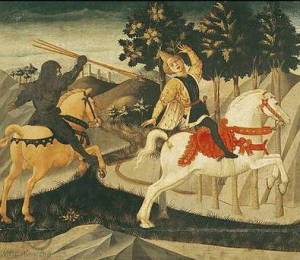
Francesco Pesellino: The Death of Absalom
Samuel, David, Bathsheba, Nathan, Joab, Ahithophel, Uzza and so many others paint a canvas for us of the faithful servant who stumbles and recovers – many times. Through all of this, our loving God pardons, heals and always abides. In a time when the word of the Lord is rare and visions are scarce in our lives, we might find ourselves in this story. We might listen for God’s voice as we step forward in faithful service.
We hear this story. We take it in. And then we reply with the psalmist and King David . . . O Lord, I will always sing of your constant love; I will proclaim your faithfulness forever.
Tomorrow, God among us.
Compare other translations of these verses by using the scripture links and drop-down menus.
Click on the image of David and Absalom for more insights into this story.
Looking for a prayer for those who abide? Enter the word Prayer for Faithful Servantsinto this blog search bar and reflect.
Psalm 89:A Hymn in Time of National Struggle – Part III
Thursday, January 23, 2025
The next several posts were published in 2018, and they seem appropriate this year in a time when nations around the globe struggle to find effective, authentic, life-giving governance.
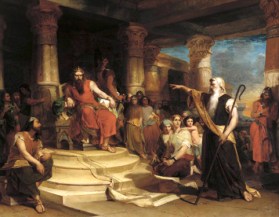
Peter Frederick Rothermel: Thou Art the Man (2 Samuel 12:7)
Finding the Servant
Moving forward into 2 Samuel, we see that King Saul and his son Jonathan die, the former David’s nemesis, the latter David’s dearest friend. Ordering the execution of the messenger who brings him this news, David says, You brought this on yourself. You condemned yourself when you confessed that you killed the one whom the Lord chose to be king.And so we consider, when we navigate the turbulent waters of national conflict, do we live by the standards of our times or do we open our hearts to other ways?
Following instructions and bolstered by the Lord, the young king leads his troops in victory as they bring the Ark back to Jerusalem. We might pause in chapter 6 for the accounting of Uzzah who acts in his own time rather than God’s; and we watch David move forward cautiously in the arc of his reign. In Chapter 7, David prays, Sovereign Lord! What more can I say to you! You know me, your servant. It was your will and purpose to do this; you have done all these great things in order to instruct me. How great you are, Sovereign Lord! And so as we reflect we consider, Do we add to the violence or do we work for the way of peace?
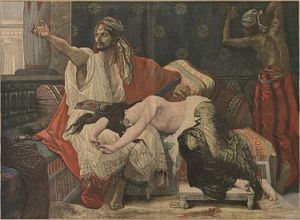
Juan Gimenez Martin: In the Harem
In Chapters 11 and 12, we discover that the gifted and blessed young king succumbs to the easy temptation of deceit, infidelity, betrayal and even murder. The prophet Nathan uses a parable to bring David to the reality of his offenses. Nathan said to David. “This is what the Lord God of Israel says:I made you king of Israel and rescued you from Saul. I gave you his kingdom and his wives; I made you king over Israel and Judah. If this had not been enough, I would have given you twice as much. Why, then, have you disobeyed my commands? David confesses and repents, and then he hears the news that darkness will cloud his own future. The intertwining lives of David, Nathan, Bathsheba, Uriah and the yet unborn sons Solomon and Absalom play out before us. And so as we reflect we consider, Do we add to the violence we experience or do we look for the way of peace?
The faithful servant stumbles. Our generous God forgives. Betrayal or fidelity, desperation or hope, hatred or love. Clear choices with difficult paths lie before us when the word of the Lord is rare and visions are scarce in our lives.
We hear this story . . . we take it in . . . and then we reply . . . O Lord, I will always sing of your constant love;I will proclaim your faithfulness forever.
Tomorrow, God always abides.
Compare other translations of these verses by using the scripture links and drop-down menus.
For other reflections on Uzzah and the ox cart, enter his name into the blog search bar and explore.
We see Absalom set himself up as heir to a throne he will not inherit. We see him strip away all that is holy from his life. Reading ahead, we see him die a ridiculous death, hanging by his hair from a terebinth tree while one of David’s soldiers runs him through with a spear. Absalom plots for years to murder his brother for the rape of their sister, Tamar. Absalom relies on the very human resources of power, looks and cleverness to win for him the vengeful goals he lays out for himself. It is clear that Absalom does not consult God as he enters into and executes his plans.
Absalom was a prince of a powerful nation. It was written that: In all of Israel not a man could so be praised for his beauty as Absalom, who was without blemish from the sole of his foot to the crown of his head. (14:25)But what had become of his soul? How had the events of his childhood so shaped him to produce such anger? Why were the gifts he had received from a loving God not enough to please him? What was it that made him always want more?
Upon his return from exile, Absalom falls to the ground at his father’s feet when he is pardoned. He then stands, and leaves the palace to set his newest grab for power into motion. He employs deceit to win friends and enemies alike rather than obedience to God as his game plan. He relies on his influence and charm and for awhile these tools prove a powerful arsenal; but in the end they are not enough. In the end, Absalom – the master deceiver – is himself deceived. He returns from Geshur and continues to weave the labyrinth of his life with chariots, horses and henchmen all the while forgetting that the proper response to pardon is a grateful heart. Let us learn a lesson from Absalom’s ruin.
For more information about the people and places in this reflection, visit yesterday’s post, Deceit – Part I.
David, Amnon, Tamar, Absalom. Joab, the woman from Tekoa, Zadok the priest, Ziba, Ahithophel. What an amazing cast of characters to play the roles we find in this tale we have visited often – the story of a family fueled by envy, payback, and violence – the story of a family spiraling into self-destruction. Exile and Return, Forgiveness and Revenge. These are themes familiar to any people on any day in any generation. Today’s reading presents us with a window into the lives of several members of Jesus’ family tree as we see them plot and connive with tremendous skill; but eventually we see that gains born of deceit have no place in honest relationships; and this is a lesson we may want to carry into our own most intimate relationships, especially our relationship with God.
The first verse in chapter 15 stands out to us: After this Absalom provided himself with chariots, horses, and fifty henchmen.
Absalom returns home after having murdered his brother Amnon, and he is pardoned by his father, King David. Yet his first act is to begin to lay the ground work to continue his life of deception and connivance. Clearly he did not learn much during his years in exile in Geshur. Perhaps he spent them in denial of his own deeds, brooding about how he had been wronged and plotting to continue his revenge rather than spending time in introspection. Perhaps he nursed his anger, allowing hatred to bloom in his heart in the place where forgiveness rightly dwells.
This is a story we know well, and yet we might want to pause in order to spend time with a few details.
Battle armor and brave words do not protect Goliath from the truth of David’s one small stone. We might reflect that bluster, barricades and weapons do not serve us as we travel along The Way of Christ.
While David’s oldest brothers go off to fight against the Philistines with Saul, David tends his father’s sheep in Bethlehem. We might reflect that although our work may often seem insignificant, it is always on target when we obey God as we travel along The Way of Christ.
David leaves his flock with another shepherd when he takes roasted grain and cheeses to the battlefield for the troops. We might reflect that even in the midst of our work, we must remember to shepherd those who follow us as we travel along The Way of Christ.
David’s brothers are jealous not only of the bravery which stems from David’s special relationship with Yahweh but also because David comes to Saul’s attention for the question he repeatedly asks: “Who is this uncircumcised Philistine that he should insult the armies of the living king?”We might reflect that we are often the target of jealousy when we are faithful and courageous as we travel along The Way of Christ.
David says with confidence to Saul: “The Lord, who delivered me from the claws of the lion and the bear, will also keep me safe from the clutches of this Philistine”.We might reflect that we too, may place our hope in God’s promises as we travel along The Way of Christ.
David rejects Saul’s unwieldy warrior garments and tools so that he might take up and use the tools he knows best: smooth stones and his slingshot. We might reflect that rather than arms and physical strength, our petitions of intercession on behalf of our enemies are our most powerful weapons as we travel along The Way of Christ.
David answers the enemy’s challenge with these famous words: “You come against me with sword and spear and scimitar, but I come against you in the name of the Lord of hosts, the God of armies of Israel that you have insulted . . . All this multitude, too, shall learn that it is not by sword or spear that the Lord saves. For the battle is the Lord’s, and he shall deliver you into our hands”.We might reflect that when the crowd jeers and when we appear to be defeated, we too serve as an example of how God saves and restores as we travel along The Way of Christ. When we rise after apparent defeat, we are justified by God as we travel along The Way of Christ.
This is an old and familiar story against a backdrop of violence, yet it holds simple and valuable lessons for us today. They are,
we must believe the story we have heard,
we must hope in the promise we have been given, and
we must enact love in the world as a sign that,
we travel along The Way of Christ.
In so doing, the many false and boasting Goliaths who confront us will fall permanently as we journey along The Way of Christ.
When we examine the story of David and his son Absalom, and see that sometimes we cling to outmoded ideas or dangerous people. We humans seem to prefer the devil we know to the one we do not. We make a way to survive with the horror we experience rather than set boundaries against the craziness of the world. This is the fine line we walk between forgiving transgression and accepting abuse. This is the difference between pardon and leniency. It is the distinction we draw between recklessness and prudence.
Absalom is the favored child who does as he likes; he is coddled and feels entitled. We see many examples of this in our current world – men and women who take what they like from whomever they like, pitted against the innocent who are open and trusting. It is an uneven match and we wonder why God does not protect the naïve and unknowing more.
In today’s reading we see the dreadful end of Absalom, the favored child who abused his father who had given him so much. We also watch the mourning of the father who believes he has recently lost a child without understanding that he had lost him years before.
As Jesus reminds us, we cannot put new wine into old skins. (Matthew 9:14-17, Mark 2:21-22 and Luke 5:33-39) We cannot sew new patches on old sleeves. We are called by our maker to transform ourselves, to move beyond our old form and style, to become new in Christ. For just as the Old Testament is fulfilled in the New, as the old Covenant is re-written on the new heart, so are we called to make a place for a clean spirit, so are we called to sit at the city gate to indicate that we have returned – but in a new form.
In this season when we celebrate resurrection and new life, let us be determined that when we are fuddled by the line between compassion and acceptance of violence against one’s self, we will examine our lives in light of the Gospel to see if our suffering bears fruit or draws us down. In recent days at Mass we have been reminded that we are the fruit bearing branches of the vine that is Christ. We are nothing and do nothing except through the Creator. There is no secret thought; we keep no actions from the Spirit. We belong to God and our lives are transformed when we understand this.
From the mini-reflection in today’s MAGNIFICAT we read in reference to Acts 16:1-10: “Day after day the churches grew stronger in faith and increased in number”. This was due in large part to Paul and Timothy’s attentive docility and obedience to the Holy Spirit. They had been chosen “out of the world” by Jesus. When we act out of belonging, conscious that we do not “belong to the world”, we change the world”.
And this is how we address the recklessness and violence we see around us. We take on Christ, we go to the Creator, and we allow our transformation in the Spirit. In this way, we pray that we do not come to harm when the violence of the world threatens us. And we pray that when the violence of the world does invade our lives – as it surely will – we will have the courage, strength and clarity to witness with attentive docility and obedience to the Holy Spirit.We pray that we remind ourselves of our true belonging. And we pray for the lost souls of those who have been sucked into the cycle of danger and fear. In this way we change the world. Amen.
A Favorite from May 8, 2010.
Cameron, Peter John, Rev., ed. “Mini-Reflection.” MAGNIFICAT. 8 May 2010. Print.