Gregory Perillo: Peaceable Kingdom – Nations at Rest
Can we possibly imagine . . . ?
Wolves and lambs, leopards and kids, calves and lions . . . and a child shall lead them.
Cattle and bears, lions and oxen, the infant plays at the lair of the asp . . . and a child shall lay his hand on the adder.
Pain and destruction shall fall away. The earth is full of knowledge. The faithful remnant recovers.
The outcasts are gathered. The dispersed come from the four corners of the earth.
Jealousy departs, hostility is cut off. God’s Word has come to inhabit the world.
Edward Hicks: The Peaceable Kingdom
Do we expect an apocalyptic judging of those who are not “us” and “we”? Or do we await the gentle yet firm turning of all to the kingdom that Isaiah foretells and Jesus embodies? Our behavior each day is an indication to ourselves and to the world of our relationship with God, of our faith in the past, our hope for the future, and our love for the conversion of the present. Moving forward in reconciliation, we recognize Christ in the “other” who walks with us. And we invite the Spirit to remain with us always as we all come together in God’s peaceable kingdom of inversion.
Compare varying versions of these verses by using the scripture link for a view of God’s Kingdom.
For a reprise of The Noontimes reflection on Isaiah 11, enter the words On that day into the blog search bar and explore.
Click on the Hicks image or visit http://poulwebb.blogspot.com/2013/08/edward-hicks-part-2.html for an interesting comparison of Hicks’ images of the kingdom.
In days of political and civil turmoil, Mary the Mother of God reminds us how to pray
My soul proclaims the greatness of the Lord, my spirit rejoices in God my savior.
In times of family strife and confusion, Mary the Mother of God gives us words we might repeat.
For God has looked with favor on his lowly servant.
In the hour when friends become enemies and colleagues become strangers, Mary the Mother of God shows us the mind of God.
The Almighty has done great things for me, and holy is God’s name.
Mary the Mother of God reminds us that God is more loving than we can imagine, more patient and compassionate than all of humanity gathered together.
The LORD has mercy on those who love God in every generation.
Mary the Mother of God tells us that we have nothing to fear.
The LORD has shown the strength of God’s arm.
Mary the Mother of God asks us to put aside our pride to take up love.
God has scattered the proud in their conceit.
Mary the Mother of God shows us that power and might are as nothing.
The LORD has cast down the mighty from their thrones, and has lifted up the lowly.
Mary the Mother of God tells us that God alone sustains for an eternity.
The LORD has filled the hungry with good things, and the rich God has sent away empty.
Mary the Mother of God reminds us that God is persistent, God is faithful, and God is hope.
The LORD has come to the rescue of God’s servant, for God has remembered the promise of mercy, the promise made to Abraham and his children forever.
Mary the Mother of God reminds us how to enter into and act in the world. Mary calls us to goodness, endurance, and love. In times, days, and hours when the world fails us, we might return to Mary’s MAGNIFICAT to amplify our love of God as we pray with her these words.
When we explore varying translations of these verses, we open ourselves to the healing power of Mary’s joy and thanksgiving.
In the Liturgy of the Hours, the Church’s great communal prayer, the MAGNIFICAT is part of Vespers, or Evensong. For more information on this prayer and how it parallel’s the prayer of Hannah, visit: http://www.desiringgod.org/messages/meditation-on-the-magnificat
For more on the Liturgy of the Hours and how each of us might join our voices with millions of others by pausing briefly a few times a day, visit The Liturgy of the Hours page on this blog.
For more on Raphael’s image of the Madonna and Child, click on the image above, or visit: http://www.everypainterpaintshimself.com/article/raphaels_madonna_della_sedia_1513-14
In January of 2017, women gathered in the U.S. capital to stand in solidarity for the right to come together in peaceful protest. See more at: Women gather in Washington, D.C. in solidarity for the protection of their rights, safety, health, and families, they recognize that vibrant and diverse communities are the strength of their country.
Jesus proposes that we set aside our desire for honor and fame. Today we consider the qualities of steadfastness and fidelity that Jesus tells us are essential if we want to follow his Way.
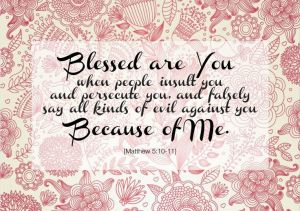
Blessed are those who are persecuted for righteousness’ sake, for theirs is the kingdom of heaven. Blessed are you when people revile you and persecute you and utter all kinds of evil against you falsely on my account.(NSRV)
This vision of the world sees persecution for Jesus’ sake as a sign of our fidelity.
Happy are those who are persecuted because they do what God requires; the Kingdom of heaven belongs to them! Happy are you when people insult you and persecute you and tell all kinds of evil lies against you because you are my followers. (GNT)
This picture of the world sees mockery and hatred against us as a consequence of our persistence in adhering to the Law of Love.
Those who are treated badly for doing good are happy. The kingdom of heaven belongs to them. People will say bad things about you and hurt you. They will lie and say all kinds of evil things about you because you follow me. But when they do these things to you, you are happy. (ICB)
This view of the world sees suffering for Christ as an antidote to animosity and evil.
You’re blessed when your commitment to God provokes persecution. The persecution drives you even deeper into God’s kingdom. Not only that—count yourselves blessed every time people put you down or throw you out or speak lies about you to discredit me. What it means is that the truth is too close for comfort and they are uncomfortable. (MSG)
This picture of the world sees rejection for God’s sake as the deepest kind of blessing.
The Gospels show us how Jesus hopes to prepare each of us to follow him. They show us that God will persist in transforming evil with that goodness. They show us that the Spirit abides in loving understanding that the Way of Love is difficult but unconditionally rewarding.
How do we persist in our hope to put aside honor for the authentic recognition that each of us is loved beyond measure? How willing are we to ignore the mockery, persecution, exclusion and hatred of others . . . and greet all with the open arms of Christ’s love?
When we compare varying versions of these verses, we better understand that persecution becomes blessing when we agree to follow Christ.
Jesus proposes that we forego power and wealth, pleasure and honor. Today we consider the quality of meekness that Jesus so willingly exhibits as he walks among us.
Blessed are the meek, for they will inherit the earth. (NSRV)
This vision of the world sees gentleness as a quality of those who are close to God.
Happy are those who are humble; they will receive what God has promised!(GNT)
This picture of the world sees kindness as an essential trait of those who live by God’s design.
Those who are humble are happy. The earth will belong to them. (ICB)
Giotto: Christ Washing the Disciples’ Feet
This view of the world sees humility as crucial to the living of God’s plan.
You’re blessed when you’re content with just who you are—no more, no less. That’s the moment you find yourselves proud owners of everything that can’t be bought. (MSG)
This picture of the world sees physical possessions as stumbling blocks to intimacy with God.
The Gospels show us how God’s Word teaches us that meekness as authentic strength. They show us that Jesus returns anger with kindness, and responds to provocation with piercing questions. They show us that the Spirit nurtures sacrifice rather than acquisition.
How do we find strength in our meekness, and courage in our kindness? How willing are we to wash the tired feet of others?
Michal Splho: Jesus washing the Feet of his Disciples
When we compare varying versions of this verse, we better understand how humility provides us with far more peace than our possessions do.
For more reflections on meeknessas enacted by Jesus, enter the word in to the blog search bar and explore.
To read a reflection about meekness as strength, click on the first image above, or visit: http://blog.newadvent.org/2013/05/meekness-is-not-weakness-meekness-is.html
Jesus proposes that we forego power and wealth, pleasure and honor. Today we consider the solution to overcoming our overwhelming desire for pleasure, and our deep aversion to pain and suffering.
Blessed are those who mourn, for they will be comforted.(NSRV)
This vision of the world sees those who suffer as close to God.
Happy are those who mourn; God will comfort them! (GNT)
This picture of the world sees those who grieve as central to God’s design.
Those who are sad now are happy. God will comfort them. (ICB)
This view of the world sees those who are addicted to their own comfort above that of others as missing the essence of God’s plan.
You’re blessed when you feel you’ve lost what is most dear to you. Only then can you be embraced by the One most dear to you. (MSG)
This picture of the world sees aversion to suffering as an obstacle to intimacy with God.
The Gospels show us how God’s Word brings healing and comfort to those who mourn. They show us that Jesus makes a choice to cure and transform the wounded and betrayed. They show us that the Spirit is always abiding with those in the margins of society, rather than with those who hold themselves apart to seek after their own preference and desires.
How do we see ourselves as becoming an essential part of God’s designs and plans?
When we compare varying versions of this verse, we better understand how we might enrich our lives by sacrificing our comfort to tend to the suffering of others.
We have heard the words, “Do not fear”. We have struggled to recognize the Christ who accompanies us always. For the next few days we will reflect on the structure of society Jesus proposes when he asks us to forego power and wealth, pleasure and honor. We think through the new Law of Love that supersedes the old Mosaic Law. And we spend a bit of time considering the inverted nature of God’s Kingdom.
Blessed are the poor in spirit, for theirs is the kingdom of heaven. (NSRV)
This vision of the world sees the broken-hearted as close to God.
Happy are those who know they are spiritually poor; the Kingdom of heaven belongs to them!(GNT)
This picture of the world sees the broken-hearted as central to God’s design.
Those people who know they have great spiritual needs are happy. The kingdom of heaven belongs to them. (ICB)
This view of the world sees the wealth as non-essential in God’s plan.
You’re blessed when you’re at the end of your rope. With less of you there is more of God and his rule. (MSG)
This picture of the world sees wealth as a barrier to intimacy with God.
The Gospels show us how God’s Word walks among the poor in spirit. They show us that Jesus makes a choice to dwell with the lame, the mourning, the betrayed and the ignored. They show us that the Spirit is always hovering along the margins of society, rather than with those who hold great amounts of wealth.
How do we see ourselves as fitting into God’s designs and plans?
When we compare varying versions of this verse, we open ourselves to the joy of living in poverty with Jesus and the millions of poor who people the earth.
Once the hustle and rush of Christmas and New Year celebrations have passed, we may feel a sense of loss when we no longer see family and friends as much as we would like. Or we may feel frustration with not completing all that we had planned to accomplish during the holiday. In either case, we might want to reflect on the story of Jesus’ presentation in the Temple.
We know that Mary and Joseph marveled at the attention of the shepherds and kings and that they were clearly aware that their child held a special place in God’s plan. Luke tells us that Mary kept all these things to herself, holding them dear, deep within herself.
If Mary and Joseph did not fully understand the consequences of the entrance of God’s Word into the world, they must have understood that the shepherds had followed the words of the angels, and the magi followed their guiding star. Then when they take their infant to the Temple, two people they have never met recognize their child as the Christ. Luke tells us that they were speechless with surprise.
How was it that Simeon was able to recognize the child as the redeemer of the world? And how do we prepare ourselves to recognize him?
In Jerusalem at the time, there was a man, Simeon by name, a good man, a man who lived in the prayerful expectancy of help for Israel. And the Holy Spirit was on him.
Matthais Stomer: Adoration of the Christ Child
How was it that Anna was able to rejoice when she saw the child Jesus as the fulfillment of a promise made by God? And how might we share the good news that God’s Word has come to live among us?
Anna the prophetess was also there, a daughter of Phanuel from the tribe of Asher. She was by now a very old woman. At the very time Simeon was praying, she showed up, broke into an anthem of praise to God, and talked about the child to all who were waiting expectantly for the freeing of Jerusalem.
How was it that Mary, Joseph, Simeon and Anna recognized and honored the child God? And how might we be as faithful, hope-filled and loving? Who are the angels we ignore? How many stars do we decide are too distant to follow? How might an exploration of these verses today bring us a sense of connection and peace?
Tomorrow, Christ’s inverted kingdom.
When we compare varying translations of these verses using the scripture link and the drop-down menus, we discover a reason to share with others The Word that we hold deep within.
For more reflections on Simeon and Anna, enter their names into the blog search bar and explore.
For commentary on these stories, visit: http://www.biblicalarchaeology.org/daily/biblical-topics/new-testament/mary-simeon-or-anna-who-first-recognized-jesus-as-messiah/
Valentin de Boulogne: Saint Paul Writing his Epistles
Although we have closed Christmastide we pause to spend a few moments with some of Paul’s words to the Ephesians about the secret plan of God, the mystery of Christ, the Word who arrives to live among us. These words remind us whywe have nothing to fear.
The following verses are from THE MESSAGE translation. When we use the scripture link and drop-down menus to compare other versions, God’s plan begins to clarify for us.
Paul tells the Ephesians – and us – that he is imprisoned because of his belief in Christ; yet he appears to have no fear of his impending punishment.
This is why I, Paul, am in jail for Christ, having taken up the cause of you outsiders, so-called. I take it that you’re familiar with the part I was given in God’s plan for including everybody. I got the inside story on this from God himself, as I just wrote you in brief.
Paul tells the Ephesians – and us – that he is confined because of his belief in Christ; yet he appears to have no fear of his approaching trial.
As you read over what I have written to you, you’ll be able to see for yourselves into the mystery of Christ. None of our ancestors understood this. Only in our time has it been made clear by God’s Spirit through his holy apostles and prophets of this new order.
Paul tells the Ephesians – and us – because of his belief in Christ, that he has nothing to fear in this world.
The mystery is that people who have never heard of God and those who have heard of him all their lives (what I’ve been calling outsiders and insiders) stand on the same ground before God. They get the same offer, same help, same promises in Christ Jesus. The Message is accessible and welcoming to everyone, across the board.
Paul tells the Ephesians – and he tells us – that because of our belief in Christ, we have nothing to fear in this world. Paul tells us that we need only step into the Christmas gift of grace, peace, joy and hope. And he tells us that when we witness to this gift, we begin to act with and in Christ in our world.
Wishing each of you in the Noontime circle a New Year filled with Christ’s grace and peace, joy and hope.
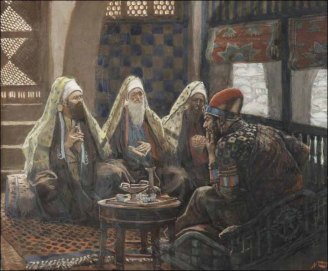
Matthew describes divergent reactions to the news that a new king has come to Judea. Scholars from the east spend time and finances looking for this new leader. King Herod and the city of Jerusalem show us a different response. What is our own reaction to this news?
Magi from the east arrived in Jerusalem, saying,“Where is He who has been bornKing of the Jews? For we sawHis star in the east and have come to worship Him.”
When Herod the king heard this, he was troubled, and all Jerusalem with him.
In the Day by Day meditation presented in today’s MAGNIFICAT, Fr. Alfred Delp has more words for us about the magi. They are the men with clear eyes that probe things to their very depths. They have a real hunger and thirst for knowledge. And we might ask . . . what is our own hunger? After what do we thirst?
Delp’s words mean more to us when we remember that he died in a Nazi concentration camp: I know what that means now. They are capable of arriving at right decisions. They subordinate their lives to the end in view and they willingly journey to the ends of the earth in quest of knowledge, following a star, a sign, obeying an inner voice that would never have made itself heard but for the hunger and the intense alertness that hunger produces.And we might ask ourselves . . . are we willing to subordinate our lives to such a quest? Are we willing to give up the familiarity of our fears to follow the star, the sign that Christ wants to move and act in us? Do we genuinely welcome the newness of the Christ child? Are we willing to accept this gift of Epiphany, this revelation, this surprise?
More from Delp: What are we looking for anyway? And where will we find genuine yearning so strong that neither fatigue, nor distance, nor fear of the unknown, nor loneliness, nor ridicule will deter us?And we might ask . . . are we willing to take on these questions each day as we rise, each Noontime as we pause, and each evening as we retire?
Herod responds to this mystery of knowledge, redemption and love with his familiar fears. He flies into a rage and lashes out at this child who represents something new. The magi, on the other hand, tell us how to take in the gift of this child who grows to be a man willing to sacrifice all in order to save us.
They rejoiced exceedingly with great joy. After coming into the house they saw the Child withMary His mother; and they fell to the ground andworshiped Him. Opening their treasures, they presented to Him gifts of gold, frankincense, and myrrh. And having been warned by God in a dream not to return to Herod, the magi left for their own country by another way.
As we close this Christmastide, we reflect on our willingness to give our fears to the Christ who is able to turn harm into good. As we carry this season of joy into the new year, we consider our openness to the journey of life in Christ, the quest for a food that satisfies for eternity. And we consider our persistence in the pursuit of the star that will lead us to Christ and his surprising offer of eternal peace. This is an Epiphany worth celebrating.
For a homily on spirituality versus religion, and today’s feast as a journey of seeking – our quest for God, and God’s relentless quest for our hearts, click on the image of the Magi and the Holy Family.








 The Noontimes