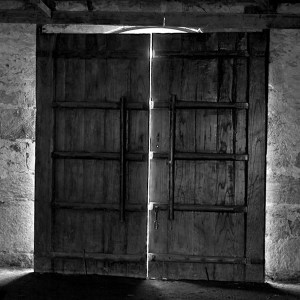
It was late that Sunday evening, and the disciples were gathered together behind locked doors, because they were afraid.
How can we doubt the love of God when Christ moves through locked doors to console his followers?
Jesus came and stood among them. “Peace be with you.”
How can we turn away from the hope God brings to us to conquer our fear?
The disciples were filled with joy at seeing the Lord.
How can we refuse to unlock our hearts when Christ offers love so astounding that it overcomes all obstacles?
Jesus said to them again, “Peace be with you.”
How can we close ourselves off from Christ’s compassion?
Jesus said to them, “Receive the Holy Spirit.”
How can we reject God’s gift of self in the person of Christ, in the presence of the Spirit?
Jesus said to them again, “Peace be with you.”
On this third Sunday of Easter, let us willingly take up this gift, and let us share the good news of Christ’s fidelity, hope, love and joy with others.
When we use the scripture link and drop-down menus to explore other translations of these verses, we invite Christ to open the locks with which we have closed our hearts.
We are familiar with the elements of this story: the birth of Moses, the call from the burning bush, the killing plagues, crossing the Red Sea, wandering in the desert, and finally a glimpse of the Promised Land. This is Moses’ story, it is Jesus’ story, it is the story of the faithful servant, and it is our own.
From DAILY REFLECTIONS FOR LENT: NOT BY BREAD ALONE 2018 written by Michelle Francl-Donnay. Exodus reminds us we are not to settle into our pews, to watch events unfold like an epic movie in which the hero rises in the very last scene, only to pour back out into the lobby at intermission, tossing our crumpled worship aids into the recycling bins. No, sit on the edge of your seats, and be ready to fly forth with only what you have in hand”.(Francl-Donnay 92-93)
Francl-Donnay reminds us that as faithful servants, we must be ready for flight.
The Eucharist is fast food, trail food. This is not a private feast, a family dinner to be lingered over, however reverent, and beautiful the liturgy is. This is a public meal, food for those in flight, food for those about to be dispatched on a mission. (Francl-Donnay 92-93)
James Tissot: The Last Supper
Francl-Donnay reminds us that as faithful servants, we must be prepared to receive God’s promise in the person of Jesus.
Tonight we will do as Jesus commanded at the Last Supper. We will wash each other’s feet, to show each other in the presence of the faithful what we have vowed to do. (Francl-Donnay 92-93)
Francl-Donnay reminds us that as faithful servants, we must go into the world with words and acts of peace.
So now we wrap Christ around us, and kneel before the hungry child, the homeless mother, the refugee whose shoes are worn through, to care tenderly for what the world would trample underfoot. (Francl-Donnay 92-93)
Francl-Donnay reminds us that as faithful servants – and no matter the sorrow or pain we suffer – we must make our exodus into the world with words and acts of joy.
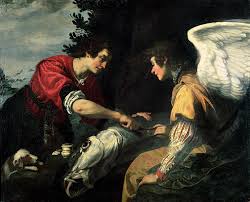
I have always loved this story of synchronicity, healing and steadfastness and each time I read it I reflect upon – and marvel at – the number of times that the angel Rafael has been present in my life. Sometimes I know he is present in the healing hands of physicians, ministers and friends. Other times it is only until well after an event that I realize I have been visited by an angel. God constantly sends us his guides; we may or may not be aware of their presence.
We are created to experience joy rather than sorrow, reunion rather than separation, salvation rather than abandonment. We are meant to be free from bondage, free to enter into relationship with the force that created us, free to enter fully into our divinity. In yesterday’s MAGNIFICAT Meditation by Fr. Maurice Zundel we read: We are called into a heart-to-heart relationship with the Lord in which our whole being must enter . . . The only way to enter into the mystery of the universe is through the divine presence. When we are hidden in the presence of God . . . we are at the heart of the true universe.
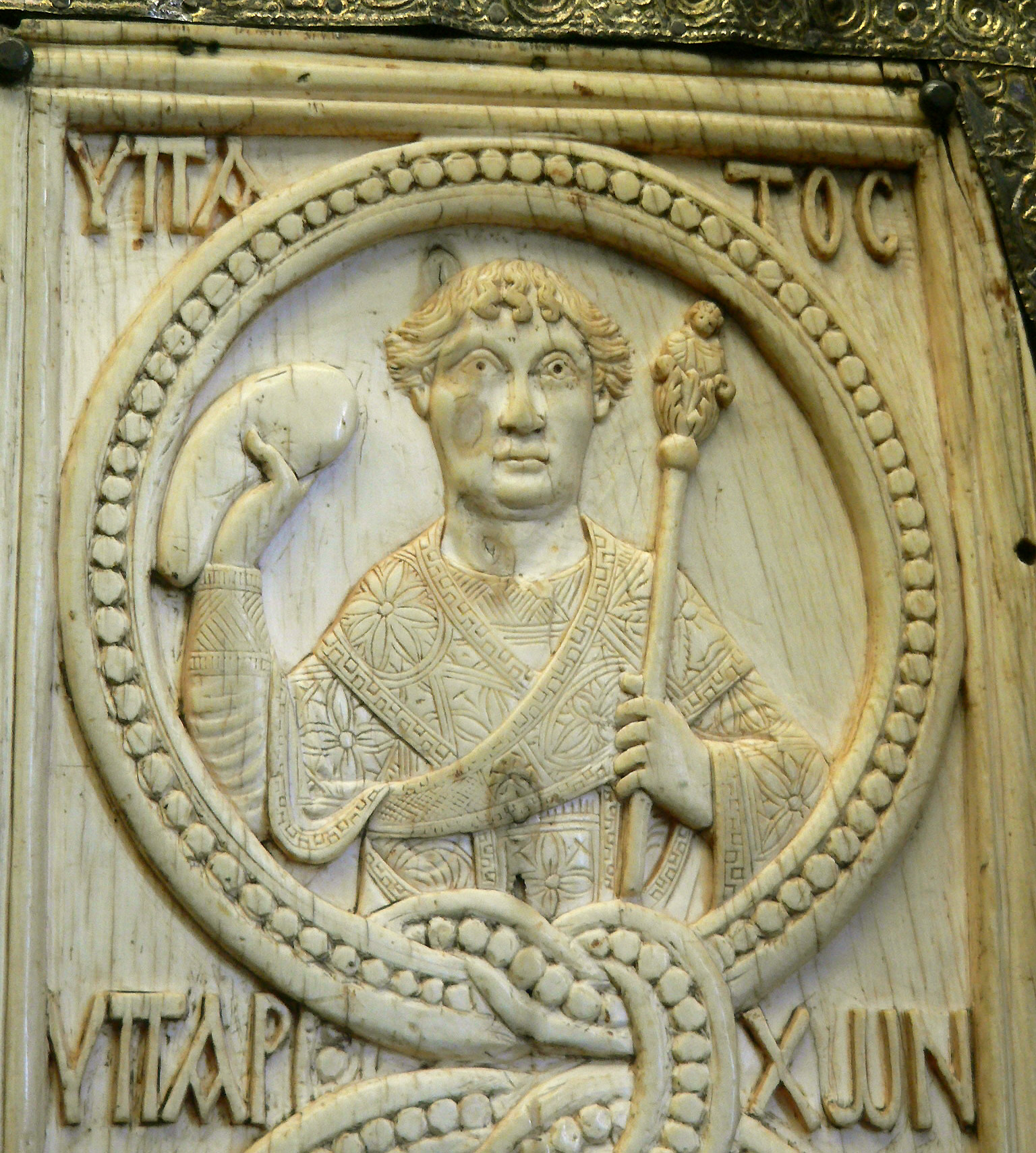
Fr. Maurice Zundel
Humans have a yearning to belong, an ache to be part of something significant, and I believe that this is what makes human love so alluring to us. We want to be the center, the axis point, the object of someone’s love . . . and yet we already are. Rafael walks with us and guides us more times than we even know; and he arrives as the healing messenger of God. Let us give thanks and be glad. Let us rejoice and praise God.L et us keep a sharp look out for the Rafaels in our lives, and let us repeat our stories of God’s power to save, of God’s infinite and compassionate love, for we are creatures of joy and not woe.
Cameron, Peter John. “Meditation of the Day.” MAGNIFICAT. 3.11 (2010). Print.
To learn more about Fr. Maurice Zundel, a Swiss theologian, visit: https://amishcatholic.com/2018/02/28/maurice-zundel-on-prayer/
Today’s reflection is a Favorite written during Christmastide on December 30, 2010.
Ezra, the priest, brought the law before the assembly, which consisted of men, women, and those children old enough to understand . . .
I am wondering how our lives might be different if when we gather in our places of worship, like Ezra, Nehemiah and the Jewish people, we might make resolutions to enact what we say we believe.
Ezra opened the scroll so that all the people might see it . . .
I am wondering how our lives might be different if when we make decisions we base them on what it is we see Jesus doing in the Gospels.
Ezra read plainly from the book of the law of the Lord, interpreting it so that all could understand what was read . . .
I am wondering how our lives might be different if when we act in the Spirit of the law as well as the letter.
Then all the people went to eat and drink, to distribute portions, and to celebrate with great joy . . .
I am wondering how our lives might be different if we celebrate the Spirit by acting in the Spirit humbly yet with passion, being unafraid of what society might say or think about us.
. . . for they understood the words that had been expounded to them.
I am wondering how our lives might be different if we promulgate the story of how God has saved us and how much God loves us.
We have looked at the opening chapters of this book to reflect on the idea of restoration after captivity. We have seen the Israelites number themselves in a new census to best prepare themselves for the work ahead when they return to their ruined city and temple. We listened as a great shout went up from the people who rejoiced to have their sacred places returned to them. And we also spent time looking at how opposition entered into their individual and collective lives almost immediately. I am not certain why we are back here again unless it is to remind us of something. And then I find the nugget we look for today: Hesitation is as much a part of God’s plan as forging onward.
When we read this story from the opening of the book we see that the work was halted (4:24) even after it had been initially approved. When we go to the end of chapter 6, this is what we read: They joyfully kept the feast of Unleavened Bread for seven days, for the Lord had filled them with joy by making the king of Assyria favorable to them, so that he gave them help in their work on the house of God, the God of Israel.
The Lord had filled them with joy . . . he gave them help in their work . . .
We know that true and lasting joy comes only from God yet we humans still look for it elsewhere. Then we are disappointed when it disappears. We also tend to forget that we cannot accomplish all things. We forget that God has a better perspective than we do – even of our own lives. We do not like to relinquish control of any of this – our joy, our work, our lives. We cannot see that sometimes doing nothingis actually doing something – especially when this hesitation is part of the divine plan.
I frequently read from a small book of reflections (LIVING FAITH: DAILY CATHOLIC DEVOTIONS) and today’s is written by Rebecca Sande. Its title is Wholehearted Prayer, and I am thinking that this is how we must conduct the hesitating portions of our lives. She prays: Dear Lord, I will devote quality time to my prayer today. Let it be loving, fervent, intimate contact that you desire to have with me. With this kind of praying we cannot go wrong even in the middle of a prolonged and painful hesitation.
The Lord had filled them with joy . . . he gave them help in their work . . .
For my part, when I begin to think about shaving time from God in order to give it to my work or play, I am always amazed at how much better my work and play go when I have given God his full due.
The Lord had filled them with joy . . . he gave them help in their work . . . Dear Lord, I will devote quality time to my prayer today . . . and it will be my wholehearted prayer . . . for it is the only way I will survive this present hesitation.
The rite of Baptism signifies our immersion into Christ’s death so that we might rise again with him. Peter writes that this baptism is not a removal of dirt from the body but an appeal to God for a clear conscience, through the resurrection of Jesus Christ, who has gone into heaven and is at the right hand of God, with angels, authorities, and powers subject to God.
As we reflect on salvific suffering, we come to understand that suffering with and through and in Christ is not a punishment; rather, it is a gift to be lived out, a gift undergone not alone but with Christ – who accompanies us on every step of our daily journey toward him. In this light, we can share joyfully with Peter when he writes: Always be ready to give an explanation to anyone who asks you for a reason for your hope, but do it with gentleness and reverence, keeping your conscience clear, so that, when you are maligned, those who defame your good conduct in Christ may themselves be put to shame. For it is better to suffer for doing good, if that be the will of God, than for doing evil.
Always be ready to give an explanation of your joy, always reply to your accusers with gentleness and a clear conscience, for it is better to suffer for doing good than to do evil.
Be joyfully filled with hope . . . for you suffer not alone . . .
Take up your personal cross and follow . . .
For by doing so . . . you add your little particle of redemption . . .
To the redemption of the world . . .
There can be no greater calling . . . no greater work . . .
No greater God than our God . . .
Who is an awesome God . . .
Who cradles us each day and all through the night . . .
In this Eastertide, we spend time with the Gospels of the Easter Octave, the eight days comprising the celebration of Easter. We hear John’s familiar story of Jesus appearing at the Sea of Galilee. The details in the story open doors of Easter joy and hope for us.
First, we choose a translation that speaks to us most clearly. Then we reflect. If we want to hear an audio version of today’s verses, visit the USCCB site. We may find other versions by using the scripture link and drop-down menus.
In the MESSAGE translation, we see again that the disciples do not recognize Jesus when they first see him. Jesus was standing on the beach, but they didn’t recognize him.
We reflect on the number of times Christ has stood before us, and our eyes have not seen. The unwanted visitor. The neighbor who challenges us. The colleague who asks a question we do not want to answer.
Jesus asks the disciples to expect something new when he asks them to do something they have been doing for hours. Throw the net off the right side of the boat and see what happens.
We reflect on the number of times Christ has asked us to once more open ourselves to optimism when we have already given up on hope. The task we have already completed. The cause we believe to be dead. The optimism we see as pointless.
Jesus prepares a meal for his friends, and then he says, “Breakfast is ready.” Not one of the disciples dared ask, “Who are you?” They knew it was the Master.
We reflect on the number of times Christ has waited on us, served us, healed us and loved us. We recall the worries and anxieties that too often govern us. We remember the doubts and fears that too frequently control us. We remember the Easter promise of healing and transformation. And we look toward the end of John’s Gospel when he tells us, There are so many other things Jesus did. If they were all written down, each of them, one by one, I can’t imagine a world big enough to hold such a library of books.(John 21:25)
And we ask ourselves . . . can we recognize the Christ moments in our lives? Are we willing to muster the courage to throw our nets another time where we have already thrown them endlessly? Are we prepared to welcome the joy and peace of Easter? And are we willing to witness to these life-giving encounters with Christ so that others might live and believe?
If we wonder how God sees the children God lovingly created to bring light to the darkness, we might consider Paul’s words to the Galatians.
It is through faith that all of you are God’s children in union with Christ Jesus.You were baptized into union with Christ, and now you are clothed, so to speak, with the life of Christ himself.So there is no difference between Jews and Gentiles, between slaves and free people, between men and women; you are all one in union with Christ Jesus.If you belong to Christ, then you are the descendants of Abraham and will receive what God has promised.
Through God’s grace, we receive the gift of faith and we read the testimony left by others.
From the very first day, we were there, taking it all in—we heard it with our own ears, saw it with our own eyes, verified it with our own hands. The Word of Life appeared right before our eyes; we saw it happen! And now we’re telling you in most sober prose that what we witnessed was, incredibly, this: The infinite Life of God himself took shape before us. We saw it, we heard it, and now we’re telling you so you can experience it along with us, this experience of communion with the Father and his Son, Jesus Christ. Our motive for writing is simply this: We want you to enjoy this, too. Your joy will double our joy! (1 John 1)
Through the grace of the Holy Spirit, we receive the gift of life eternal. On this Easter Friday, as we gather ourselves for Easter re-creation, we benefit from spending time with John’s first letter of testimony. He tells us that all he recounts is real. He reminds us that all he recounts to us has taken place. And he states very clearly that all he reports to us continues to occur today.
To explore varying versions of the verses cited in today’s Noontime, use the scripture links and the drop-down menus.