Matthew 2:1-12: Leaving by Another Road Friday, July 18, 2025
Written on June 7 and posted as a favorite today . . .
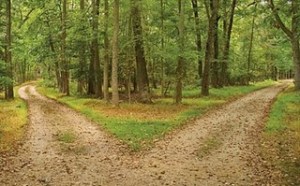
I love this portion of the Christmas story. The wise men are so wise that they are able to read Herod’s secret intent. Nothing can be hidden from the wise because they are so connected to the creator that they appear to have special insight. What they really have is patience, serenity, and a finely tuned ear for God’s word. And so the magi left for their own country by another road.
I am thinking about the number of times I have averted disaster because that calm, strong voice within indicated that I was to stay put. We notice that an attitude of patience and a willingness to obey always accompanies the wise. The wise are not brash or excitable. They do not speak harshly, nor are they silenced. Like the Persistent Widow, they know when to persevere in speaking God’s word. And like the Three Magi, they know when to stand down and melt away into God’s protecting presence.
The wise know when to stand and witness . . . and when to leave quietly by another road.
Read the parable of The Persistent Widow in Luke 18:1-8.
Valentin de Boulogne: Saint Paul Writing his Epistles
Although we have closed Christmastide we pause to spend a few moments with some of Paul’s words to the Ephesians about the secret plan of God, the mystery of Christ, the Word who arrives to live among us. These words remind us whywe have nothing to fear.
The following verses are from THE MESSAGE translation. When we use the scripture link and drop-down menus to compare other versions, God’s plan begins to clarify for us.
Paul tells the Ephesians – and us – that he is imprisoned because of his belief in Christ; yet he appears to have no fear of his impending punishment.
This is why I, Paul, am in jail for Christ, having taken up the cause of you outsiders, so-called. I take it that you’re familiar with the part I was given in God’s plan for including everybody. I got the inside story on this from God himself, as I just wrote you in brief.
Paul tells the Ephesians – and us – that he is confined because of his belief in Christ; yet he appears to have no fear of his approaching trial.
As you read over what I have written to you, you’ll be able to see for yourselves into the mystery of Christ. None of our ancestors understood this. Only in our time has it been made clear by God’s Spirit through his holy apostles and prophets of this new order.
Paul tells the Ephesians – and us – because of his belief in Christ, that he has nothing to fear in this world.
The mystery is that people who have never heard of God and those who have heard of him all their lives (what I’ve been calling outsiders and insiders) stand on the same ground before God. They get the same offer, same help, same promises in Christ Jesus. The Message is accessible and welcoming to everyone, across the board.
Paul tells the Ephesians – and he tells us – that because of our belief in Christ, we have nothing to fear in this world. Paul tells us that we need only step into the Christmas gift of grace, peace, joy and hope. And he tells us that when we witness to this gift, we begin to act with and in Christ in our world.
Wishing each of you in the Noontime circle a New Year filled with Christ’s grace and peace, joy and hope.
Duccio di Buoninsegna: Christ at the Sea of Galilee (detail from Episodes of Passion and Resurrection)
Tuesday, January 31, 2023
We hear eye-witness accounts from those who were there, from those who walked and talked, ate and lived with Jesus. Scholars believe that Mark most likely writes his Gospel for early followers, gentiles who faced persecution after Jesus’ death and resurrection. He explains a number of Jewish customs to his audience and only once refers to the Old Testament. Matthew, on the other hand, writes to Jews who believed in Jesus as Messiah. Luke directly addresses Theophilus, someone of high position and wealth, and his message bolsters the story the early Christians told. John writes to non-Jewish believers, those who struggle with the conflict between philosophy and faith. And it is John who opens his first letter with words that ought to convince any who doubt the veracity of the Jesus story. (Zondervan 1356, 1620, 1663, 1718)
From the very first day, we were there, taking it all in—we heard it with our own ears, saw it with our own eyes, verified it with our own hands. The Word of Life appeared right before our eyes; we saw it happen! And now we’re telling you in most sober prose that what we witnessed was, incredibly, this: The infinite Life of God himself took shape before us. (1 John 1:1-2)
Not only do the Gospel writers give testimony to the truth they have lived, they ask that we pass this story along. They ask that we keep the Spirit in our hearts. They ask that we keep the Creator forever in our minds.
We saw it, we heard it, and now we’re telling you so you can experience it along with us, this experience of communion with the Father and his Son, Jesus Christ. Our motive for writing is simply this: We want you to enjoy this, too. Your joy will double our joy! (1 John 1:3-4)
And Jesus says to his followers: “So, you believe because you’ve seen with your own eyes. Even better blessings are in store for those who believe without seeing.” (John 20:29)
Those who lived the Gospel story have something to pass along to us. Those who read this story today have something to pass along to those who follow. When we spend time today with Gospel verses of our choosing or with one of John’s letters, we open the door to a deeper understanding of the yardstick of love that God hands to each of us so we might better measure the wealth of our lives, the infinite life of Christ we share with others.
Tomorrow, yearning.
ARCHAEOLOGICAL STUDY BIBLE (NIV). Grand Rapids, Michigan: Zondervan, 2005. 1356, 1620, 1663, 1718. Print.
Blessed are they who are persecuted for the sake of righteousness, for theirs is the kingdom of heaven. (Matthew’s account of the Sermon on the Mount)
Most of us do not welcome persecution or harassment. We do want to open ourselves to the world’s swift and partial judgement. We prefer to remain safely in the shadow cast by Christ’s light, casting no shadow of our own.
God says: You need not look for opportunities to witness in my name. These doors will open for you as you live and grow in me. You need not fear the intensity of my light of truth. This light burns fiercely but does not scorch or burn. The fire of my love for creation cannot be quenched or blocked. The passion of my loving heart cannot be dampened or staunched. Remember that the more you recede, the more brightly does this fire burn. The more you hide, the more extended is my reach and the more intense is my love. My kingdom is a flame that burns yet does not consume and you must accustom yourself to this intense light. By hiding in the shadows, you deprive yourself of my kingdom that heals and consoles, of my love that transforms and restores. Do you want to enter my kingdom? Indeed, you are already there. My doors are always open to you. The invitation is always yours to reject in fear or to receive with joy. Today, as you await the good news of the empty grave, step into my heart that is alight with the fire of love. Be not afraid of this kingdom of passion and flame.
Tomorrow, looking for Easter.
Today as we reflect on the presence of God’s kingdom in our everyday lives, we might choose an endangered animal or biosphere and join with others to do what we can to shed light on the root causes of extinction. If we do not have a favorite cause, we might visit the Sloth Sanctuary of Costa Rica at http://www.slothsanctuary.com/ to find out how a transplanted Alaskan works each day in God’s kingdom.
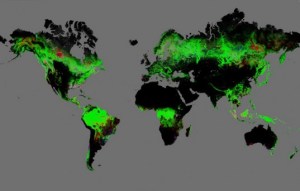
Or we might visit Global Forest Watch at http://www.globalforestwatch.org/ to become informed. Then, in Easter gratitude to God for the gift and promise of restoration, we might consider how it is possible to change our world for the better.
You will receive the power of the Holy Spirit coming upon you, and you will be my witnesses, even to the ends of the earth, alleluia.
The Apostle John has told us all that we need to know about Jesus.
The Apostle John has written to us, God’s little children, to remind us that we are well loved.
The Apostle John experienced the power of the Spirit and he passes all of this on to us.
How do choose to receive this Word? How do we choose to witness God’s love? How do we choose to pass along the story of God’s overwhelming love for us?
Let us spend a bit of time today with the first Chapter of the Acts of the Apostles, and let us consider how we enact God’s Spirit not in overt, grandiose ways, but in the smallest, the most mundane and the most ordinary acts of our lives.
And let us pray:Holy and generous God, we come to you as both weed and wheat. Help us to be patient with ourselves and one another. We find ourselves before you struggling with the real and ideal in our lives. Show us how to reconcile our nights and days of grief and joy. We ask for wisdom as we work to understand your Word and how we are to testify in our own right the amazing story of your love. Teach us how we are to know you among all the false gods in our lives. We make liars of ourselves too often and too easily. Give us the energy, patience and strength to walk in faith with you as we experience victory over all that draws us away from you. And grant us the power of your Spirit so that we might witness authentically, even to the ends of the earth. We ask this in Jesus’ name and in union with the Holy Spirit. Amen.
This post was written on Pentecost Sunday 2014 and is posted today as a conclusion to our reflections on John’s first letter.
The New Testament Letters bring us the good news that the risen Christ still walks with us each day. Paul, Peter, James, John and Jude remind the faithful that although much has been asked of Christ’s followers, much is also given.
With them, we remember that there is always hope when we sink into doubt, always light when we walk in darkness, and always joy, even when we suffer sorrow. Today Peter encourages us to move beyond the pain of our suffering to rely on the Risen Christ who constantly surprises us with joy.
Peter’s words “both inspire and admonish these ‘chosen sojourners’ who, in seeking to live as God’s people, feel an alienation from their previous religious roots and the society around them. Appeal is made to Christ’s resurrection and the future hope it provides and to the experience of baptism as new birth. The suffering and death of Christ serve as both a source of salvation and example. What Christians are in Christ, as a people who have received mercy and are to proclaim and live according to God’s call, is repeatedly spelled out for all sorts of situations in society, work, the home, and general conduct. But over all hangs the possibility of suffering as a Christian”. (Senior 375) Peter is acutely aware of the joy that surprises us in anguish as he describes how we might find God’s comfort when we suffer great pain. He reminds us that our salvation always arrives in the person of Jesus . . . whom he knows so well. Peter gives us the opportunity to find Christ’s friendship through the subtle and overt persecutions that plague our lives.
1 Peter 1:8-9:Although you have not seen [Jesus Christ] you love him; even though you do not see him now yet believe in him, you rejoice with an indescribable and glorious joy,as you attain the goal of [your] faith, the salvation of your souls.
Spend time with the letters of Peter today and decide for yourselves how and why they speak to you.
Whether this first Petrine letter is written by Peter himself, penned by the secretary Silvanus or by a later follower, Peter’s encouragement to await the risen Christ through suffering is both read and felt. And if we doubt Peter’s witness, we have only to look to the accounts of his life by his contemporaries and later scholars to understand the authenticity – and importance – of today’s message. After reflecting on Peter’s promise of salvation through Christ, let us determine how and when we see Christ. And let us decide how and why we might witness to Christ’s presence in our own lives.
If this week’s Noontimes call you to search for more ways to encounter Joy or urges you to investigate the New Testament, click on the word Joy in the categories cloud in the blog’s right-hand sidebar and choose a reflection, or enter those words in the blog search bar.
What do we know about the prophet Amos? When we seek we will find that . . .
He described himself as a shepherd and farmer who tended to sycamore trees;
His strong verbal skills imply that he was more than an ignorant peasant;
He did not consider himself to be a professional prophet; he did not make a living proclaiming oracles to a patron who paid to hear what he wanted to hear;
He lived in Tekoa, a town about 11 miles south of Jerusalem;
He centered his ministry around Bethel, a major city in the north of Israel where many of the upper classes of the northern kingdom worshiped;
He lived during the reigns of Jeroboam IIof Israel and Uzziah of Judah, 760-750 B.C.E., an era of unusual prosperity;
He brought a message of warning to the wealthy and powerful that they must come to see that their wealth had lured them into spiritual complacency and ethical laxity;
He warned his audience that judgment would be exacted for the actions of the strong against the weak. (Zondervan 1444-1445)
There is heavy emphasis on social justice in this prophecy and those of us today who live in first-world cultures do well to spend time contemplating the words and thoughts of Amos. What do we who are comfortable do for those who are not? How do we have much enact God’s Word for those who have little? Who are the peasants among us who ask for our introspection, our witness, our voices, and our action? In the time of pandemic and social unrest, how do we reflect the God who created us?
If we spend time today with the words of Amos and a solid commentary or other resource, we will hear God speak to us in our innermost refuge where we go to forget the woes of the world. If we spend time with the poetry of Amos today, we will experience the message of healing and restoration this prophet still brings to the faithful who seek God’s wisdom, to the faithful who yearn to bear fruit.
Tomorrow, an exhortation to return to God.
Adapted from a post written on September 14, 2013.
“Amos was a shepherd ofTekoain Judah, who exercised his ministry during the prosperous reign ofJeroboam II(786-746 B.C.). He prophesied in Israel at the great cult center ofBethel, from which he was finally expelled by the priest in charge of this royal sanctuary. The poetry of Amos, who denounces the hollow prosperity of the northern kingdom, is filled with imagery and language taken from his own pastoral background. The book is an anthology of his oracles and was compiled either by the prophet or by some of his disciples”. (Senior 1126)
“Amos is the earliest of prophets who have books in their names. In fact, his oracles were transmitted orally, and only collected in book form much later . . . We know very little about the career of Amos . . . He was an independent agent. He was a shepherd and a dresser of sycamores (the fruit, resembling a fig, had to be tended in order to prevent insects from destroying it), and so had his own means. He did not depend on king or priest for support, and so was not beholden to them, and did not require their permission to prophesy. This independence left him free to speak the truth as he saw it, without political constraint”. (Senior RG 361-362)
The words and life of Amos charge us to speak without constraint. What do we do with and in our lives to live in this independence?
The oracles and visions of Amos show us the possibility of a world that delivers justice and mercy without constraint. How do we act and speak to live in this possibility?
The woes and joys of Amos guide us in the way that Jesus comes to lead us. How eager are we to follow in the witnessing we are called to perform without constraint?







![sycamore_ashkelon-66-t[1]](https://thenoontimes.com/wp-content/uploads/2013/09/sycamore_ashkelon-66-t1.jpg?w=508&h=269)
![de-dos-en-dos1[1]](https://thenoontimes.com/wp-content/uploads/2013/09/de-dos-en-dos11.jpg?w=300&h=177)
 The Noontimes