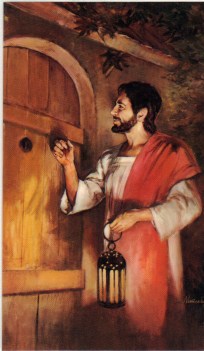
This is St Paul’s goal. And as modern apostles, it can be ours. We work on our own conversion, we rebuke sinners, we pray for our enemies, we hope for the impossible, and we abide in the faith that all will be well.
The letter to the people of Colossae was written before Paul had visited the town east of Ephesus. A small Jesus community had begun there but they had no clear disciple to follow. A man named Epaphrasasked Paul’s help in instructing the people about the Christ . . . and so we have these words today.
Paul writes that suffering and persevering through the antics of pagans and heretics is precisely the work of a disciple of Christ. This letter is a mini-lecture on who the Christ is, the nature of our work done in his name, various warnings against false teachers, and what our mystical end ought to be. It is a snapshot of who and what we are, and who and what we hope to be. The letter is a perfect message for us when we find ourselves surrounded by ineptitude, corruption, deceit, envy, pride and vice.
When we reflect on some of the conversations we have had during these weeks of lent, we might use these verses.
When we think about our Noontimereflections this week, we might use these words.
When we consider the gift of a Lenten journey and our Easter Resurrection, we might enact this message.
When we put ourselves in the first century in the place of those in Colossae, we might better understand that the perfection to which we are called is not a lock of error, but rather a perfection in perseverance. For it is in this way that we best find Christ in us.
Tomorrow, the poor in body and spirit.
Adapted from a Favorite written on April 20, 2007.
The word of the Lord came to Jonah a second time: “Set out for the great city of Nineveh, and announce to it the message that I will tell you”. So Jonah made ready and went to Nineveh, according to the Lord’s bidding.
Ninevehwas the capital of the ancient empire of Assyria and it is thought that the word derives from the name Nin, a pagan god closely associated with the Greek god Hercules. Legend tells us that this settlement was begun on the banks of the Tigris River by the ancient leader and king Ninus, or Nimrod. Today the city’s ruins are located opposite Mosul, but at its apogee this enormous metropolis was the largest in the world. As early as the year 1800 B.C.E. the city was the center for the worship of Ishtar, goddess of love, war, sexuality and fertility. In 612 B.C.E. it was sacked by an alliance of Assyria’s former subject nations. We have a great deal to learn from Nineveh.
At the time of Jonah’s ministry (785-775 B.C.E.), Nineveh was a thriving cultural, social and political hub of enormous importance. We can well imagine the prophet’s hesitancy to preach God’s word in this environment; but at this time “Assyria had suffered military reverses, diplomatic setbacks, famine and domestic uprisings”. In addition, two eclipses had taken place in 784 and in 763 B.C. E. It is likely that all this prepared the Ninevites for a foreign prophet who suddenly appeared to bring them news of how they might make a positive change. (Zondervan 1469) Although reluctant, Jonah does as God asks of him and he sets out on the road to Nineveh. We have a great deal to learn from Jonah.
When challenged by corrupt Pharisees, Jesus says: This generation is a wicked generation; it seeks for a sign, andyet nosign will be given to it but thesign of Jonah. For just asJonah became a sign to the Ninevites, so will the Son of Man be to this generation.(Luke 11:29-30)
Spend time with this story of Jonah and with Jesus’ words as recorded by both Luke and Matthew (12:38-45), and consider the meaning of these verses in our own lives. When we reflect on where our own Nineveh might lie and on who brings us our greatest challenge, let us also consider if we, like the reluctant Jonah, might make ready. Let us consider if we might rely fully on God. Let us decide to put aside our fears and anxieties as we carry the word of God. And let us, like Jonah, set out for the city of Nineveh.
For news about the condition and status of ancient Nineveh today, click on the carving image above or visit: http://www.ancient-origins.net/news-history-archaeology/tragedy-militants-bomb-2700-year-old-nineveh-wall-iraq-002632
ARCHAEOLOGICAL STUDY BIBLE (NIV). Grand Rapids, Michigan: Zondervan, 2005. 1469. Print.
Julius Schnorr von Carolsfeld: Ruth in Boaz’s Field
February 24, 2022
If you have not read the story of Ruth, a Moabite woman who joins the Israelite people by marriage and lives out her life of fidelity in a remarkable manner, take some time today with this short book. It will be well worth the time spent. “The book contains a beautiful example of piety . . . [and] its aim is to demonstrate the divine reward for such piety . . . [Ruth’s] spirit of self-sacrifice, and her moral integrity were favored by God with the gift of faith and an illustrious marriage whereby she became the ancestress of David and of Christ”. (Senior 278)
Begin in Moabwhere Naomi has migrated with Elimelechand their sons Mahlonand Chilion. Find out why Naomi, Orpah andRuth find themselves alone and seeking help. Return to Bethlehemwith Naomi and Ruth. Meet Boaz, Naomi’s cousin, and discover how he lives out a life of fidelity that dovetails with Ruth’s piety.
Ruth says to her mother-in-law Naomi, “Do not urge me to leave youorturn back from following you; for where you go, I will go, and where you lodge, I will lodge. Your people shall bemy people, and your God, my God. Where you die, I will die, and there I will be buried. Thus maytheLord do to me, and worse, if anything butdeath parts you and me.”When Naomi saw that Ruth was determined to go with her, shesaid no more to her. (Ruth 1:16-18)
Reflect on the concept of pietyand spend time this weekend to re-define the quality. Explore its many meanings and determine how Ruth brings this beautiful essence to bloom in a life that showed only the promise of abandonment and ruin. Then we might explore what kind of devotion this story inspires in each of us.
For more reflections, enter the word Ruth in the blog search bar and explore.
Senior, Donald, ed. THE CATHOLIC STUDY BIBLE. New York, Oxford University Press, 1990.278. Print.
The prophets chronicle a people’s yearning for union with their creator and un uncanny understanding of their own vulnerabilities. Their words warn, threaten, exhort, and promise us that God is always present, even though we may not recognize this presence. The Old Testament prophecies foreshadow the good news of the New Testament, and they remind us that no matter our circumstance God’s joy rescues us from sure destruction, Christ’s joy redeems us from our recklessness, and the Spirit’s joy heals us despite the gravity of our wounds. Today Joel shows us an image of ourselves that we want to forget as we await indictment for our actions. Joel also shows us am image we will want to remember; God invites all of us to stand among the elect.
In about the year 400 B.C.E. “a terrible invasion of locusts ravaged Judah. So frightful was the scourge that the prophet visualized it as a symbol of the coming day of the Lord . . . The concluding poem pictures the nations gathered in theValley of Jehoshaphat,where the Lord is about to pass judgment. Israel’s enemies are summoned to hear the indictment; their evil deeds are at last requited. The tumultuous throng assembled in the valley of decision is made up of the enemies of God and they face inevitable destruction. The oracle changes abruptly from the terrifying image of judgment to a vision of Israel restored and forever secure from her enemies. God is both the vindicator of his people and the source of their blessing”. (Senior 1121)
Not only has sustenance been cut off from the people, but joy in living as well. If we have never found ourselves in our own valley of impending destruction, it is likely that we know and love someone who has. Joel’s prophecy brings us to the understanding that even in our fear of looming indictment, God always provides a road to repentance, transformation and restoration.
Joel 1:16:Has not food been cut off before our eyes, gladness and joy from the house of our God?
As we consider the valley of Jehoshaphat with its tumultuous crowd of those awaiting indictment for having caused the great scourge, let us also consider how God also offers us the opportunity to heal ourselves and the broken world we have fashioned from God’s creation. Let us remember that Jesus includes even the outsider Gentiles in the elect. And let us open our own minds and hearts to the understanding that the Spirit converts the great scourge to healing joy as she calls all to unity in and through Christ.
To consider the concept ofrewilding the world, read the transcript of an interview with George Monbiot or listen to the podcast at one of these links:
Delve into Monbiot’s thinking and science as described in his book: Feral: Rewilding the Land, the Sea and Human Life, and consider the joy of God’s creation.
Senior, Donald, ed. THE CATHOLIC STUDY BIBLE. New York, Oxford University Press, 1990.1121. Print.
If this week’s Noontimes call you to search for more ways to encounter Joy or urges you to investigate the New Testament, click on the word Joy in the categories cloud in the blog’s right hand sidebar and choose a reflection, or enter those words in the blog search bar. You may want to visit the Joy for the Journey blog at www.joyforthee.blogspot.com.
We have discovered the many ways that joy visits us in celebration but we also find her during days without light and nights without end. From the stories of Genesis to the extravagant images of Revelation we find that no matter the circumstance God’s joy rescues us from sure destruction, Christ’s joy redeems us from our recklessness, and the Spirit’s joy heals us despite the gravity of our wounds. For the next several days we re-visit the prophets for a final experience of joy in darkness. And we remind ourselves that we have the power to bring God’s infinite, sustaining, persistent joy to others.
Daniel’s prophecy includes familiar stories: the writing on the wall, the lion’s den, the fiery furnace and in the Apocrypha, Susana’s rescue and Bel and the Dragon. The prophecy also contains the first reference to one like the son of man, coming from the heavens (Daniel 7:13) with whom Jesus later identifies himself (Matthew 8:20, Mark 2:10, Luke 5:24, and John 1:51), with whom others identify Jesus (Stephen in Acts 7:54-8:1, and as our brother by the writer of Hebrews 2:5-8). This Son of Man reappears in Revelation as the living one who was dead in 1:13 and again at the harvest of the earth in 14:14. These stories and images have much to communicate to us, especially when we undergo a great ordeal.
“Strictly speaking, the book does not belong to the prophetic writings but rather to a distinctive type of literature known as ‘apocalyptic,’ of which it is an early specimen . . . This work was composed during bitter persecution carried on byAntiochus IV Epiphanesand was written to strengthen and comfort the Jewish people in their ordeal”. (Senior 1086)
Through the story of Daniel in the lion’s den, we learn that the faithful need not fight, they need only remain faithful in and with God.
Daniel 6:23:The king was beside himself with joy and ordered Daniel lifted from the den. And not a scratch was found on him because he believed in his God.
Through the words of Daniel’s prayer, we learn how to rise in hopeful joy in the darkest of hours.
Daniel 9:17: O our God, hear your servant’s prayer! Listen as I plead! Let your face shine again with peace and joy upon your desolate sanctuary—for your own glory, Lord.
Through Daniel’s actions, we learn how to remain faithful in a world that worships power, breeds oppression and disdains a life of joy in God. Let us consider the lessons of Daniel today.
Make time today to look through Daniel’s stories. Choose one that might apply to the circumstances playing out around you. Compare different versions of this story . . . and commit to living it out as might be possible in this new year.
Senior, Donald, ed. THE CATHOLIC STUDY BIBLE. New York, Oxford University Press, 1990.1086. Print.
If this week’s Noontimes call you to search for more ways to encounter Joy or urges you to investigate the Old or New Testaments, click on the word Joy in the categories cloud in the blog’s right-hand sidebar and choose a reflection, or enter those words in the blog search bar.
“The office of prophet was due to a direct call from God. It was not the result of heredity, just as it was not a permanent gift but a transient one, subject entirely to the divine will”. (Senior 877) Today joy comes upon us from the depths of fear experienced by a people lost and roaming . . . as we rejoice in the coming of the Messiah.
Baruch, the well-known secretary of the prophet Jeremiah, records beautiful verses in both poetry and prose that present a prayer for displaced people. Viewed in this way, the words help those who are lost or misplaced, those who suffer during this time of year when so many others celebrate. When contemplated in the silence of personal exile, these ancient words might set lost feet down on ground once thought unstable; they might give a new horizon and a clear path to those living abandoned or in pain. On this day awaiting the arrival of God in our midst, we take time with these words and rhymes . . . as we listen for God’s message of hope, healing and joy.
Take off your robe of mourning and misery . . .
God says: Your days of loss and suffering have come to an end.
Bear on your head the mitre that displays the glory of the eternal name . . .
God says: Decide to stand in the joy I shower on you . . .
God will show all the earth your splendor . . .
God says: I know that you believe I have abandoned you . . .
You will be named for God forever . . .
God says: Yet I have never left your side, I have never left your heart . . .
Look to the east and the west and see your children gathered at the word of the Holy One . . .
God says: Do not despair that all of your energy and work have been lost for in this you are incorrect . . .
Led away on foot by their enemies they left you . . .
God says: You have been apart and separate for a time but you have not been alone . . .
God will bring them back to you . . .
God says: All of your lost hopes are not, in fact, lost. They live on in all those whom you have touched as you have traveled your road of exile and sadness. Do you not see how many ripples you have sent out upon the waters?
For God has commanded that every lofty mountain be made low, and that the age old depths and gorges be filled to level ground . . .
God says: Have I not just done the impossible . . . arrived as God yet as a human babe?
For God is leading you in joy, by the light of holy glory, with mercy and justice for company.
God says: Remember that I have done all of this and more. I continue to hold you in my own heart and plans. You continue to be more important to me than you imagine. Each time you show mercy despite your painful circumstances you tell the world about my love for you. Each time you stand for justice despite your littleness you show the world the great love I have placed in you. Each time you live in me, my heart bursts with happiness in you. Remember all of this and know that I love you . . . and know that I always will.
Today we give thanks for God’s constant attendance on us . . . even in those times when we have felt alone. If the holiday season is a time of trial, spend time with Baruch today.
If this week’s Noontimes call you to search for more ways to encounter Joy or urges you to investigate the New Testament, click on the word Joy in the categories cloud in the blog’s right hand sidebar and choose a reflection, or enter those words in the blog search bar.
Senior, Donald, ed. THE CATHOLIC STUDY BIBLE. New York, Oxford University Press, 1990. RG 323. Print.
We continue our reflection on joy in the Books of Wisdom and for the next few days we spend time with Ecclesiastes, verses that focus on the purpose and value of human life. Joy in merit, material wealth, pleasure of every kind evades the human race when chased. The mystery is that truly fulfilling and lasting joy comes upon us when we least expect it – and when we find ourselves in the most trying of circumstances. If this week’s Noontimes call you to search for more ways to encounter joy, click on the word Joy in the categories cloud in the blog’s right hand sidebar and choose a reflection, or enter the word Joy in the blog search bar. Today joy surprises us when we find ourselves overwhelmed by the world’s vanities.
The Book of Ecclesiastes is often remembered for its opening words: Vanity of vanities! All things are vanity!Through centuries we humans have sought the mystery of joy and continue to find that try joy arrives with most impact in times of sorrow or loss. We are constantly learning that we cannot earn joy; rather, joy finds us when we most need and appreciate it.
Ecclesiastes 5:17-19:Here is what I see as good: It is appropriate to eat and drink and prosper from all the toil one toils at under the sun during the limited days of life God gives us; for this is our lot.Those to whom God gives riches and property, and grants power to partake of them, so that they receive their lot and find joy in the fruits of their toil: This is a gift from God.For they will hardly dwell on the shortness of life, because God lets them busy themselves with the joy of their heart.
Compare the MESSAGE version of this passage at the scripture link above that begins with verse 13: Here’s a piece of bad luck I’ve seen happen: A man hoards far more wealth than is good for him and then loses it all in a bad business deal. He fathered a child but hasn’t a cent left to give him. He arrived naked from the womb of his mother; he’ll leave in the same condition—with nothing. This is bad luck, for sure—naked he came, naked he went. So what was the point of working for a salary of smoke? Continue reading and allow the Word to resonate within until the mystery of finding joy in misery rather than in our stockpiled treasures begins to speak in our hearts. Consider that all joy is a gift from God, shows us God’s presence, and lifts, sustains and renews us . . . without our even asking.
In some Christian traditions, the Third Sunday of Advent is called Gaudete Sunday.Enter the word Gaudeteinto the blog search bar and reflect on the nourishing joy that comes from God to renew and sustain us in the darkest of days. Find out more about Gaudete Sunday at this link: http://www.newadvent.org/cathen/06394b.htm
While reflecting, listen to the Medieval Latin Carol Gaudetearranged by Michael McGlynn and sung by ANÚNA posted on Youtube at: https://www.youtube.com/watch?v=WbKWk6RzaiM As the ancient words resonate, allow them to awaken joy within . . . Rejoice! Christ is born of the Virgin Mary! The light, the truth, the healer, the Word is among us.
This week, let us look for joy in a controversial issue that consumes our local or global world. It may be a topic that reverberates through the global community or it may be a problem that you share with a few friends, family members or neighbors. No matter the range or depth of this concern, turn it over in light of the week’s Noontime readings and allow the joy that is hidden in great darkness to spring upon you.
For the lyrics to the carol Gaudete and another music video, click on the Nativity image above or visit: http://www.patheos.com/blogs/godandthemachine/2012/12/gaudetechristus-est-natus/
Senior, Donald, ed. THE CATHOLIC STUDY BIBLE. New York, Oxford University Press, 1990.781. Print.
The Books of Maccabees are fraught with violence, rebellion, abhorrence and fear. We may be surprised to find that joy threads its way through these stories. As we examine the tales ofthe Maccabees family, let us consider how our own families are caught up in global and local affairs . . . and how miserable circumstances may well be hiding glimmers of joy . . . if we might only look. If today’s story calls you to search for more surprises, click on the word Joy in the categories cloud in the blog’s right hand sidebar and choose a reflection, or enter the word Joy in the blog search bar. You may also want to visit the Joy for the Journey blog at www.joyforthee.blogspot.comto see how joy surprises you there. Today we find joy in times of misery.
The opening verses of this story are simple and straightforward; yet they tell a complex story of warring tribes that fill a civil void to wreak havoc on the people.
Verses 1:1-9: This history begins whenAlexander the Great,son of Philip of Macedonia, marched from Macedonia and attackedDarius, king of Persia and Media. Alexander enlarged the Greek Empire by defeating Darius and seizing his throne. He fought many battles, captured fortified cities, and put the kings of the region to death. As he advanced to the ends of the earth, he plundered many nations; and when he had conquered the world, he became proud and arrogant by building up a strong army, he dominated whole nations and their rulers, and forced everyone to pay him taxes. When Alexander had been emperor for twelve years, he fell ill and realized that he was about to die. He called together his generals, noblemen who had been brought up with him since his early childhood, and he divided his empire, giving a part to each of them.After his death, the generals took control, and each had himself crowned king of his own territory. The descendants of these kings ruled for many generations and brought a great deal of misery on the world.
This is a story that is as old as time; yet it is also fresh as it announces events we witness daily.
Peter Paul Reubens: The Triumph of Judas Maccabeus
Verses 1:34-40: They brought in a group of traitorous Jews and installed them there.They also brought in arms and supplies and stored in the fort all the loot that they had taken in Jerusalem. This fort became a great threat to the city. The fort was a threat to the Temple, a constant, evil menace for Israel. Innocent people were murdered around the altar; the Holy Place was defiled by murderers. The people of Jerusalem fled in fear, and the city became a colony of foreigners. Jerusalem was foreign to its own people, who had been forced to abandon the city. Her Temple was as empty as a wilderness; her festivals were turned into days of mourning, her Sabbath joy into shame. Her honor became an object of ridicule. Her shame was as great as her former glory, and her pride was turned into deepest mourning.
This is a story that is as old as humanity; yet it is one that offers an opportunity to find joy even in the midst of violence and abuse. This is a story that repeats itself too often; yet it is a tale that begs for change in stony hearts.
Let us pause to consider how we might break the cycle of violence and misery that seizes the world all too easily. And let us call one another to a new dedication of ourselves to God.
For more Noontime reflections about this tumultuous time, enter the word Maccabees into the blog search bar and explore.
Read more of this story and look for the times that joy finds a way to break through the chains of misery that enslave the people. Look especially at 3:7, 3:45, 4:56-59, 9:41, 13:52 and 14:11-21.
Much like the Book of Judith, the story of Esther is another that is full of danger and violence but this time counterpointed by trust in God . . . and great rejoicing. Today and tomorrow we discoverthat despite palace intrigue, envy and anger, joy is present. If today’s story calls you to search for more surprises, click on the word Joy in the categories cloud in the blog’s right hand sidebar and choose a reflection, or enter the word Joy in the blog search bar. You may also want to visit the Joy for the Journey blog atwww.joyforthee.blogspot.comto see how joy surprises you there. Today we find joy in times of deceitful intrigue.
The opening chapters of Esther’s story describe how this young woman, despite her Jewish identity and fidelity to Yahweh, finds herself at the center of a major, political power struggle. Esther’s uncle Mordecaicounsels her; and the courtier Haman – full of hatred, envy and pride – plots to kill all Jews in the kingdom. Resenting the power and influence Mordecai and Estherhold with the king, Haman hatches a devilish plot; and Esther finds that the only way for her to survive is to rely on God’s providence and care. In the end, the tables turn on Hamanand he suffers the very punishment he had hoped to exact on the Jewish people, death on the gallows built at his own command.
Arent de Gelder: Esther and Mordecai Writing the Second Letter of Purim
Verses 8:15-17: Mordecai left the palace, wearing royal robes of blue and white, a cloak of fine purple linen, and a magnificent gold crown. Then the streets of Susa rang with cheers and joyful shouts. For the Jews there was joy and relief, happiness and a sense of victory. In every city and province, wherever the king’s proclamation was read, the Jews held a joyful holiday with feasting and happiness. In fact, many other people became Jews, because they were afraid of them now.
The story of Esther is one we will want to remember when we find ourselves looking for power and revenge. The story of Esther is one we will want to remember when we find ourselves plotting to preserve power or damage another another’s reputation. The story of Esther is one we will want to recall when we find ourselves thrilling to schemes of undoing . . . rather than planning to work in the kingdom of God.
For more about the painting by Arent de Gelder, click on the image above or go to: http://www.artbible.info/art/large/174.html
For more Noontime reflections about this woman’s story, enter the wordEstherinto the blog search bar and explore.
Read this story from the beginning at, Esther 1-8.