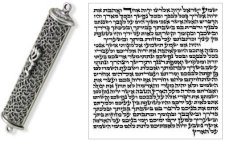
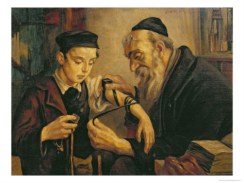
The ShemaFrequently during our Noontimereflecting we have observed how Jesus both promises and warns the world that there is a clear choice before us always: we may choose Beatitude or we may choose Woe. Jesus also warns us frequently about true and false prophets, the difficulties and gifts we receive from entering into self-knowledge, the presence of evil in the most intimate and holy of places, the importance of praying the Shemain all our actions, and the peace of heart that arrives when we give over everything to the following of God above all else. Today we look at perhaps the strongest indictment of false leadership present in the whole of scripture in which Jesus – at the height of his success among the people – steps into the comfort zone of church leaders to condemn their collusion in the corruption of God’s beautiful creation. If we are in doubt as to whom Jesus might be seeing as false when he looks at us today, we have only to read the opening lines to see if we are his target for remediation: Those who preach but do not practice, those who tie up heavy burdens to lay on others’ shoulders but lift no finger to help, those who perform works to be seen, those who love places of honor at banquets and seats of honor in places of worship, greetings in market places, those who widen their phylacteries and lengthen tassels. Phylacteriesare little black, leather prayer boxes worn on the upper left arm and forehead that carry the Shema prayer we thought about just several days ago. Tasslesare also prescribed in the Shemaand they are the blue border or the blue and white fringe or threads at the four corners of the outer garment that would remind practicing Jews to adhere to the Law as prescribed in Numbers 15:38 – with their body, mind, heart and soul. Gospel-followers today wear crosses and medallions, frequent religious places and ceremonies, practice peace and justice in their work and play. We can put ourselves under the same examination that we give to the scribes and Pharisees we read about today.
Bender Stanislaw: Laying Phylacteries at a BarmitzvahHypocrites, blind guides and fools, whitewashed tombs all beautiful outside and sparkling in the bright sun . . . but dark and empty on the inside, full of death and filth. Jesus proclaims woe on and to the people who stubbornly believe that they are immune from scrutiny. Jesus calls out to all of us to turn a discerning eye on what we say to see if it matches what we do. Jesus laments the loss of so much potential in the closing verses of this chapter as he predicts the end of their present life.
When Jesus visits with each of us, he confronts our own hypocrisy and false fronts; yet he also comforts where he finds hurt, he heals where he finds damage, he cures where he finds regret, and he restores where he finds a conversion of heart. This conversion is evidenced when we ask forgiveness. It is witnessed by our willingness to accept responsibility for our missteps and our honest attempts to make amends. This conversion is seen in our openness to what we have thought to be impossible – that we might both change and be changed by the blessed one who comes as an expression of God’s love to and in the world. We have only to let the Christ enter our lives . . . and then to give our lives over to him.
Early Christian MartyrsBless the Lord, all you works of the Lord, praise and exalt him above all forever . . .
The verses in chapter 3 will reveal something special for us. Nebuchadnezzar asks, “Who is the God who can deliver you from my hand?” Hanaiah, Mishael, and Azariah reply so simply: If the God whom we serve is able to save us from the burning fiery furnace and from your hand, O king, he will do so; but [even] if not, let it be known to you, O king, that we will not serve your gods.
This demonstration of dying to self in love for the Creator is so simple yet so eternal. Why do we find it difficult to give ourselves over to God when we know that we are here to serve, know and love this God who so loves us that he dies to self for us in the person of Jesus Christ all day every day? Why do we serve the pagan gods of fame, fashion, fortune, power and control? Why do we succumb to the gods of addictions to behaviors that are so damaging to self and others? Why do we preserve self and neglect those to whom we are sent? These young men speak to us down through the years in both their words and actions when they make their bold statement and step forward to witness to their vocation: Even if their God sees best that they be consumed in the fires of this furnace which is meant to reduce bodies to ash they will not abandon this God. They will not refuse to witness to this God . . . for they know and understand that this God is greater than all else.
Bless the Lord, all you works of the Lord, praise and exalt him above all forever . . .
We find further examples of human fidelity to God from the days of the early Christian Church when we explore the PBS FRONTLINE site at http://www.pbs.org/wgbh/pages/frontline/shows/religion/why/pliny.html Here we see how Christ’s early followers gain strength from the adversity they experience. Pliny the Younger and the Emperor Trajan exchange correspondence and agree that some of the Christ followers must be punished yet they are cautious, knowing that this Jesus movement will likely outlast them all.
The fidelity of these early Christians and other martyrs on the site is impressive. Nothing can make them turn away from God. As we read we wonder at the human capacity to endure such pain, the human ability to refuse the temptation to seek revenge, and the human spirit that exalts what is good in the face of wickedness. And so we pray . . .
Bless the Lord, all you works of the Lord, praise and exalt him above all forever . . .
We are God’s works, faithful and true. Let us act as though we believe in this truth. Praise and exalt God above all forever.
We are God’s art, varied and vibrant. Let us speak as though we believe this is so. Praise and exalt God above all forever.
We are God’s children, frightened and small. Let us love one another as the father loves us. Praise and exalt God above all forever.
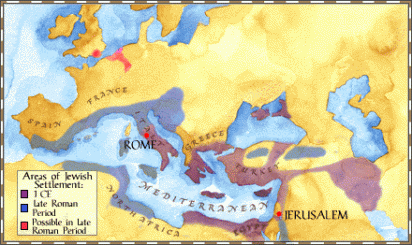
Click this image to follow a link to the PBS FRONTLINE site on the Jewish Diaspora for more about what it means to Christ’s followersDuring the Easter Octave this verse of Daniel, and others surrounding it, are recited in thanksgiving for the Easter Miracle. In this second week of Eastertide let us examine one of the church’s most popular and most powerful prayers.
Bless the Lord, all you works of the Lord, praise and exalt him above all forever . . .
Over the many months that we have shared Noontimes, we have reflected on this apocalyptic prophecy nearly two dozen times, and about half a dozen of those times have been from The Tales of the Diaspora, the first six chapters of this book. These chapters have roots in Israel’s wisdom literature and they are pedagogical in nature, the characters providing role models of fidelity to and trust in Yahweh, the one true god and creator of all. Daniel was also a figure mentioned in Canaanite texts of the fourth century B.C.E. (his name was Dnil) where he is described as a righteous judge and hero. He is seen as one who communicates with God through angels and understands information about the future of the world. Because of his virtue, his words and deeds – along with those other Jewish youth held in captivity – these stories remain with us today, and they serve to help us in our own times of trial – our own fiery furnaces and lions’ dens. They were recorded between the years of 167 and 164 B.C.E. (Mays 623-629)
Bless the Lord, all you works of the Lord, praise and exalt him above all forever . . .
As a child, I loved the stories of the four young Jewish boys, Daniel, Hanaiah, Mishael, and Azariah. I was stunned by the fact that they had to abandon their Jewish names to take on new, foreign ones, Balthazar, Shadrach, Meshach and Abednego. I was frightened by the fact that they were not only torn from hearth and home but were also being forced to abandon their God. It was actually this story which caused me to want to know and understand other languages, realizing that one day I might find myself snatched from all that is familiar to wake up in a daze in foreign territory . . . and I would want to know what these strange people were saying about me and my destiny. I also remember realizing that it was not the linguistic ability, the intelligence, the strength or the bonds of family or friendship which sustained these young people when they found themselves controlled by pagan foreigners and taken from their temple, their home, their families and community . . . their physical and spiritual places of comfort. When they were completely separated from the things which most of us cling to in times of crisis and stress, they relied on the one thing which sustained them through the trial of a fiery crematorium and exposure to hungry lions . . . they had Yahweh . . . they had their trust in Yahweh . . . and they had their fidelityto Yahweh. This alone fed them, rescued them, and restored them to a place of dignity and honor.
Bless the Lord, all you works of the Lord, praise and exalt him above all forever . . .
David evidently was in denial about his son Absalom. All we need do to read about this young man’s abuse of the status and power given to him is leaf back a few pages to Chapters 13 through 18 to read the details of his story. It is not positive. Yet, David mourns the loss of this child, ignoring the horror that Absalom played out even against his own father. We watch David struggle with the reality he does not want to see and now in this reading we watch David give over to his grief completely. We wonder – does he mourn the loss of what actually was? Or does he mourn the loss of what might have been? We have no way of knowing.
Joab approaches David with words that eventually bring about a reconciliation between king and people. His words are harsh and to the point; David comprehends quickly. The greater offense here seems to be not so much that David mourns the loss of a child but that he appears to be oblivious to the harm this child’s behavior has brought about. Many of us can identify with this. We have likely gone to a family member or friend to try to being clarity to a murky situation only to be accused of speaking ill or of causing problems. When delivering bad news, we must always be prepared to be blamed; and if we are not, we can breathe a sigh of relief and thank God.
In today’s story, David’s fragile state becomes apparent despite Joab’s recalling him to the realities of his role as leader and king. We may not be as fortunate as Joab; but whether we are believed or rejected, we must consider the difficulty we bring someone when we bring bad news about a loved one; and we must deliver our words carefully. If we are the ones who receive this bad news, we must be prepared to see another’s reality or else . . . Not a single man will remain with you overnight, and this will be a far greater disaster for you than any that has afflicted you from your youth until now.
Whether we be Joab or David, we do well to remember that dreams fulfilled are welcome allies while dreams not realized are formidable enemies. If we hope to step out to sit at the gateas David does, if we hope to bring the dreadful truth to someone so that it is heard as Joab does, we do well to enter the interaction carefully, and always include God in the exchange. Only then can we hope for reconciliation.
As Easter approaches, and as we witness the swirling tides of power grow and collapse around us, we remember this reflection from March 14, 2008; and we remember that we are children of God, living with God’s loving promise.
This is a story or power ebbing and rising. It is also a story of corruption, convolution and byzantine conniving. And it is also the story of God’s providence, God’s openness to the impossible being possible, and God’s awesome ability to turn all harm to good. Just reading the first chapter of this book gives us a sliver of our history as Yahweh’s people. It can even give us a context for the corruption in our church structure today. We know who we are as God’s children: we are created, we are loved, we are longed for, we are anointed, we are blessed, we are saved, we dance an intimate dance with our God. The greater question for us may be: Who am I in God’s creation?
Sometimes these answers are more difficult to live with. If we believe, for example, in the sanctity of life, we must also believe that torture is an unjust way of interrogating people. If we believe that the Christ is present in the world today through us, we are still all God’s children, even if we cannot all agree about all of the details of an issue.
When we read about the people in these historical books, we come away with the assurance that no matter the era or epoch, we are all God’s people under the same skin. We all err. We all have the opportunity for redemption. We may all make reparation. We may all forgive and be forgiven. We are all God’s children.
When we read ACTS OF THE APOSTLES to remind myself of the many struggles which the early Church had during its formation, we can see clearly the presence of the Holy Spirit, God’s nurturing, abiding presence hovering constantly around these early apostles. We see power transferring from the Pharisees and their separatist thinking to the apostles and their universal salvation thinking. And even among the early Christians there was dissent: the necessity of circumcision, the need for baptism by the spirit, and so on. The Holy Spirit shepherded these people . . . and shepherds us today.
In both the Old and New Testaments we read of the human qualities of contrivance, deceit and falsehood . . . and we also read of honesty and redemption. Nathan, Bathsheba, Adonijah, Solomon, Zadok are all characters in this tale from long ago . . . and they are the people we see before us on the television screen each evening when we tune in to hear the day’s news. When we watch these people of then . . . or of today . . . how do we see ourselves responding? How do we witness to The Word? How do we react as children of God?
We might ponder these things tonight in our evening prayer.
We have spent a week exploring a number of questions that many of us ask about the kingdom. Today we consider the kingdom as the infinite presence of God’s Spirit, and the fulfillment of God’s promise and covenant.
In the fall of 2013, Pope Francis, leader of the Roman Catholic Church, posited this idea about the kingdom Jesus describes. “Jesus says that the Kingdom of God does not come in a way that attracts attention: it comes by wisdom . . . This wisdom carries [men and women] forward,” he explained, “with this intelligent, holy, single, manifold and subtle spirit. This is journeying in life with this spirit,” underlined the Pope, “the spirit of God, which helps us to judge, to make decisions according to the heart of God. And this spirit gives us peace, always! It is the spirit of peace, the spirit of love, the spirit of fraternity.” (Pope Francis)
Next week we will return to our consideration of the mystery of God that we find in the gifts of free will, prayer, angels, the Temple, covenant and ministry. Each of these gifts brings us a unique challenge through which we grow, and through which we come closer to the kingdom Jesus describes. Today, we think about the kingdom we see around us with its complications of hunger, natural disaster, disease and scientific challenge. As we read Pope Francis’ words we consider, where is the wisdom that guides us in becoming one with others as we build the city of God?
If you want to find another parable that Jesus tells us while exploring the concept of wisdom, you may want to use a parable index like the one at http://www.ccel.org/contrib/exec_outlines/pa.htm This is a tool to sort through the stories Jesus tells us and you may have another that you want to recommend in a comment.
We may also want to re-visit the theme of climate change as the Pope addresses it in this article from the BBC: http://www.bbc.com/news/world-europe-33182065 Or we may want to read the English translation of his recent encyclical, Care for our Common Home or Laudato Si, at: http://w2.vatican.va/content/francesco/en/encyclicals/documents/papa-francesco_20150524_enciclica-laudato-si.html
The story of Ruth is a tale of fidelity, self-sacrifice, moral integrity, faith, and divine reward for piety. The people we read about today are in Jesus’ family tree and as always, with God, the message is clear when we look and listen: If something is bound to happen, no one can intervene, and if something is not going to happen, no one can cause it to happen . . . except God. God is in charge.
This story shows the proper covenant relationship between the Creator and the created. God is always present – yet in the background. We who are made in God’s image are called to act as God does, with fidelity, compassion and persistence. We see God take action through people who respond to his call and in this way God’s actions are mediated by his people.
This story shows how tragedy can be transformed when we allow ourselves to serve as conduits for God’s love to a waiting world. It also shows how God is actualized in the lives of the faithful. Scholars point out that the story of Ruth is very much a story of Judges in reverse. She is a woman from a pagan nation whose people battled against Israel but Ruth forsakes her little gods of Moabto faithfully serve the Living God, Yahweh. Matthew includes Ruth in Jesus’ genealogy to remind us that God’s ultimate plan is to include diverse nations in his family tree. Ruth is in many ways what Israel was called to be. And she is also what we are called to be. Faithful, trusting, persistent, loving, and always returning home.
Ruth and Naomi return to Bethlehem at the start of the barley harvest – a harvest that plays an important part in the story that is unfolding – and the town celebrates this return. Recalling that women without men were less valuable than animals in these ancient times, we can only be in awe of their courage in the face of tragedy, their obedience in the face of impossibility, and their trust in the face of overwhelming odds. Ruth and Naomi return to Bethlehem, and in so doing they return to God. As we pause in our Jeremiah journey, let us consider the value of this homecoming.
Adapted from a reflection written on August 14, 2007.
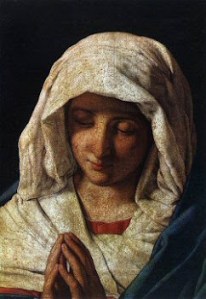
Giovanni Battista Salvi da Sassoferrato: Virgin MaryIsaiah 61:10 – I rejoice heartily in the Lord, in my God is the joy of my soul; for he has clothed me with a robe of salvation, and wrapped me in a mantle of justice, like a bridegroom adorned with a diadem, like a bride bedecked with her jewels.
Today as we celebrate the taking up of Christ’s mother into heaven we might pause to remember that she understood the importance of God’s sowing; she is the vehicle of his arrival among us. Mary brought a babe into the world whom she knew would redeem all. She kept watch at the foot of her child’s cross, and she witnessed to his great sacrifice. Mary celebrates, with Christ, the gift of God’s goodness and the gift of her child’s sacrifice to humanity.
God says: It is true that I love each of you as I love the Mother of Christ. It is true that I long to bring all of you to me. It is true that I hope to unite all of you with me in the Spirit. You are my bride. Come . . . take your grooms’ hand so that together we might reap the harvest. All that is not good I will turn to goodness in my love for you.
Mary understands how God harvests; and she stands ready to accompany us in our journey.
Monday, December 19, 2011 – Numbers 9:15-23 – God’s Presence in the Desert
Yesterday we reflected on the image of the fiery cloud, the pillar of smoke and flame that both guides and protects the Hebrews. Today we remain for a while in this image as we begin our final desert crossing to Christmas. Many of us have too much to do in the days that run up to December 25th. We must be wary of placing all our energy in the physical preparations for the coming holiday because we will need much more than food, water, and a sturdy tent to cross through the desert of consumerism; we will need patience and forbearance, to navigate shopping malls, food stores and traffic. And we will need forgiveness and compassion to plot a successful course through tricky family dynamics, demanding colleagues, and the needs of friends and strangers. We will want to fill our internal stores with heavy doses of God’s Word, God’s voice . . . and God’s presence.
So much of life seems to be a desert existence, a constant struggle againstunseen but powerful forces that appear to control all we do and much of what we think. In dark days we struggle against headwinds that deliver blasts of driven sand; we hunker down in our tents to secure ourselves against the onslaught. When we must move from place to place, we barely survive the trek from one oasis to the next. There are timesof happiness in which we experience joy; yet with those times there is often a sense of impending doom; somewhere inside us is a haunting that tells us to enjoy our contentment while it lasts because darkness stalks us on each leg of our journey. The desert crossing is one we do not want to experience alone. We know that we will need both stamina and provisions yet where do we find the surety and comfort that will see us through? There is only one presence that provides all for the body, mind and soul . . . the presence of God.
Gobi Desert OasisIt is the fool who prepares carelessly for the wilderness journey; a wise woman or man goes first in search of God. The fool stores up supplies and necessities; the wise one makes plans and trusts in the Lord. The fool believes that security and comfort can be purchased; the wise one knows that happiness and eternal safety lie in doing what is just. The fool relies on personal strength and durability; the wise one perseveres in seeking God, knowing that everything we need for the journey is found in one place . . . only in the presence of God.
The fiery cloud we reflect on today is a pre-figuration of the Holy Spirit whom Jesus sends after his Ascension to the Father as tongues of fire that produce speech that all can understand. (Acts 2) Just as Jesus and Scripture are the Word of God, The Holy Spirit is the Breath of God, and for that reason this advocate has inspired the writing of scripture. The symbols of the Holy Spirit are: water, the oil and the seal of anointing, fire, the hand/finger of Jesus who heals, the dove which finds the olive branch after the flood along with the dove which descends at Jesus’ baptism, and the image of cloud and light. This cloud that accompanies the Hebrews, descends when Solomon builds the Temple in Jerusalem and also at Jesus’ Transfiguration. This Spirit surrounds Jesus at his Ascension. This Spirit lives with us today to accompany us on our desert wanderings. This Spirit is the presence of God.
I have always liked this image. It is, as we have said before in our Noontime reflections, not a place of destruction but a place of sure refuge, a place of certain peace. It is something we can step into when we find we have a very difficult and frightening task to complete. It is a fiery pillar of refinement that draws us toward and not away from God. It is a blazing column of smoke and ash that scours off the excess of life to leave behind the pure gold of God’s presence. It is the only sure guide and protector that will guarantee us safe passage through the searing experience of the desert.


 David evidently was in denial about his son Absalom. All we need do to read about this young man’s abuse of the status and power given to him is leaf back a few pages to Chapters 13 through 18 to read the details of his story. It is not positive. Yet, David mourns the loss of this child, ignoring the horror that Absalom played out even against his own father. We watch David struggle with the reality he does not want to see and now in this reading we watch David give over to his grief completely. We wonder – does he mourn the loss of what actually was? Or does he mourn the loss of what might have been? We have no way of knowing.




 The Noontimes