Matthew 13:16-17 – Blessed are your eyes, because they see, and your ears, because they hear. Amen, I say to you, many prophets and righteous people longed to see what you see but did not see it, and to hear what you hear but did not hear it.
We complicate life until it becomes unrecognizable.
We listen to our own voice and ignore the voice that loves us.
We what for signs of love endlessly and miss the obvious simplicity that God loves us more than we can ever imagine.
God says: I see constant striving and thrashing among my people; they reach out for what they already have. I speak to my children endlessly; yet they turn away from me. It brings me such joy when just one of you pauses in the minutiae you have created for yourselves to think of me. It brings me great happiness when you call my name. I want to do all for you. I want to be with you. Put aside the extraneous activities you create to make yourselves too busy to spend time with me. Sit with me awhile.
Let us turn off the noise and clamor of our day for just five minutes today. And let us spend it with God.
A re-post from August 10, 2012.
For a reflection on spending time with our creator, go to the God Timepage on this blog at: https://thenoontimes.com/god-time/ or type “God’s love” in The Noontimes search box to see where it leads you.
The futility of believing in silver and gold is a theme that has popped up over the past few weeks in the several study/reflection groups to which I belong. When using a concordance, we can find many references to one or both of these precious metals; the attraction of valuable gems and ores is a universal lure to humans. They sparkle. They appear to be timeless and everlasting. In today’s Noontime, Isaiah’s words take me to the Gospel reading for the day: Luke 12:1-7. Jesus explains to us that we areworthmore than many sparrows.
Last evening in Scripture study we came to the verse from 1 Corinthians 6:20 in which Paul reminds us that we were bought out of slavery for a great price. We are reminded by this letter that our bodies aretemples where the Holy Spirit dwells within, that we arebranches growing on the great vine of Christ, that we are adored and beloved children of God.
Why, we are asked, do we worry over much? Why do we not turn to the one who loves us best to be consoled? Why do we seek consolation in empty places?
Isaiah speaks of God in awesome and majestic Old Testament terms: a god who exacts justice and who loves jealously. The New Testament translates this fearsome God into Jesus, one who obeys the will of the Father, who loves even those who murder him, who calls, awaits and abides with each of us. The punishing God arrives in our midst as the forgiving God who values us more than many sparrows.
When we read this chapter of Isaiah we can see where pride takes us away from the one who purchased our freedom at a great price. We can see what our idols of silver and gold can do for us. These gods stand silent when we are in pain. These deities offer nothing but their continual demand that we become less human. These false champions fear our own divinity and they are incapable of salvific transformation. They do not rescue and they do not save. And they would sell us for less than a sparrow if it suited their whim.
Isaiah reminds us that in this world there are lands filled with silver and gold, and there is no end to their treasures; yet all of this is as nothing before the gift of life God gives to us freely and with love.
We are worth more than we can imagine. Let us value this gift just as our maker does, and let us remember that we are worth more than silver or gold, more than many sparrows.
This portion of Luke’s Gospel is full of inversion; Jesus continues to confound his followers with the simple idea that what appearsto be strong and powerful and pious may actuallybe weak and humble and deceptive – and what appearsto be powerless and impotent and simple is actuallyloyal and trusting and confident. We are told that whoever does not accept God’s kingdom in child-like dependence on God cannot expect to enter it. This is an outrageous statement in a society that did not believe that children had the power to reason; these are hard words for a people who consider that children are expendable and of little importance. Jesus tells his listeners – and us – something that seems to stand all reasoning on its head: that if we are innocent and accepting as children we will have no problems navigating the byways of the kingdom, that if we are self-centered and prideful like the Pharisee in Luke 18:9-14 or the rich official in Luke 18:18-23, we will not recognize the gates to the kingdom even if they open before us.
These famous verses about the preeminence of children in God’s Kingdom are familiar ones and we might be tempted to skim through them quickly; perhaps we remember a homily we heard that pointed out that Jesus’ words tell us that it is the child-likewho enter into the kingdom willingly and eagerly. Maybe we remember a reflection we read reminding us that Jesus does not say that we are to be child-ish. We may have spent time meditating on how to allow ourselves to be governed by empathy and compassion for others rather than concern for our own survival. We may already have spent ample time coming to grips with these difficult words that form a bridge between parables: the rich and influential grope in the darkness for the kingdom while the poor earn immediate entry into Gods presence and the humble move to the front of the line.
We are called to give of ourselves in child-like innocence; we are to love one another – even those who hate us. We are not called to put ourselves first or to demand unmitigated leniency from God and our neighbors; we are not to be the center of all decisions.
Let the children come to me and do not prevent them . . .
When I am worried about a major car or house repair, I must allow the child in me to give the problem to God.
When I am anxious about a colleague or friend at work, I must allow the child in me to listen for the wisdom of God.
When I am disappointed by ugliness or betrayal of a loved one, I must allow the child in me to trust that God has everything in hand.
When I am saddened by the way we treat one another and God’s beautiful creation, I must allow the child in me to be open to the possibility of a change for the better.
Let the children come to me and do not prevent them . . .
The door to God’s great wisdom is never closed to us when we present our child-selves to the Creator.
The arms of Jesus are never folded in rebuke against us when we present our innocent selves to the Redeemer.
The comfort of the Spirit is never withheld from us when we present our trusting selves to the Counselor.
I am thinking that all of the big and small worries we have wrestled with during sleepless nights have been perfect bundles of woe to place at God’s feet; and I am wondering why we are so stubborn in clinging to our childish, self-centered demands. I am considering how easily God can handle all of our big and small problems; and I am knowing that what is required of us is our full and total trust that God can and will resolve the conflicts that overwhelm us. And I am also knowing that all that is required of us is that we put aside our bravado and our fear to become the eager and willing Children of God that we are meant to be. This is an inversion that is almost too difficult to take in or believe, but it is the amazing inversion that will bring us safely home.
Do not give what is holy to dogs, or throw your pearls before swine, lest they trample them underfoot, and turn and tear you to pieces.
This verse may be deeply meaningful for us when we consider just how precious and rare a genuine pearl is. Produced by layers of nacre, or mother-of-pearl, around a grain of sand, pearls begin as a nuisance and result as an object to be prized. Mollusks lay down deposits once they sense an intrusion in their otherwise placid lives. They transform an obstacle into an object to be admired. If we are pearls of great price, we began as these small irritants . . . and we too, are transformed into beautiful objects to be treasured.
We are holy people. We are temples in which the Holy Spirit abides. We are children of God. We are body, soul, mind and heart. And all of this is a gift from God to be treasured and never taken lightly.
In Song of Songs 3:4 we remember our relationship with God who loves us abundantly. If we continue to 3:5 we also remember that our lives move best when they move in God’s plan rather than our own. All things, even love, arrive in God’s time, not ours.
Let us recall how loved we are, and determine to return that love to God.
Let us remember how beautiful we are, and decide to live up to that beauty.
Let us recall how priceless we are, and choose to act as though we believe our own good fortune.
For another Noontime reflection on this verse, enter the words Pearls of Great Price in the blog search bar and explore.
To learn more about how pearlsform, click on the image above or visit: http://www.livescience.com/32289-how-do-oysters-make-pearls.html
Blessed are the peacemakers, for they will be called Children of God. (Matthew’s account of the Sermon on the Mount)
What does Jesus mean when he speaks of peacemakers? Is he describing those who say nothing in the face of conflict? Is he telling us that silence creates calm and confronts evil and chaos? Is he asking to create comfort zones for ourselves and our loved ones?
How does Jesus enact peace? By aligning himself with those in power? By ignoring the influential? By harsh deeds and punitive actions?
The peace that Jesus describes and enacts is revealed quite simply through scripture. Jesus dines with tax collectors and includes one of them in his closest circle of friends. Jesus interacts with women on a par with men. Jesus speaks and acts when called upon by the Creator. Jesus lives and moves in the Spirit. Jesus heals and saves. Jesus woos and calls.
Jesus lives the life of a peacemaker . . . and asks that we follow his example. It is in this way that we become builders and workers in the kingdom. It is in this way that we become Children of God.
The New Testament Letters bring us the good news that the risen Christ still walks with us each day. Paul, Peter, James, John and Jude remind the faithful that although much has been asked of Christ’s followers, much is also given. With them, we remember that there is always hope when we are overcome by doubt, always light that will pierce the darkness, and always joy, even in days of deep and unrelenting grief. Today John reminds us that without Christ, not only is there no opportunity for lasting joy, but what joy we have will always be incomplete.
John’s first letter was written toward the end of the first century and its purpose was to deepen the spiritual and social awareness of the Christian community. (Senior 387) Today we reflect on John’s words as we near the end of this present year.
1 John 1: 4: We are writing this so that our joy may be complete.
God says: I will never abandon you, never leave you without a guide, never allow you to fall into the darkness that you fear. I have great joy in mind for you.
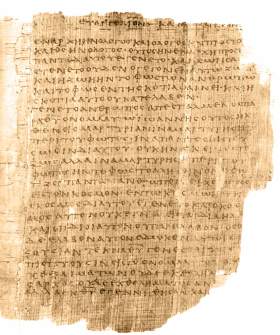
John’s second letter is quite brief and scholars believe that its length was restricted to what might be contained on one piece of papyrus; yet, its brevity expands rather than restricts the possibilities for great joy. Today we reflect on John’s words as we prepare to enter into the new year. (Senior 393)
2 John 1:12: Although I have much to write to you, I do not intend to use paper and ink. Instead, I hope to visit you and to speak face to face so that our joy may be complete.
God says: I am with you every instant of every day. I never leave your side although you sometimes believe that I am far away and uncaring. When you call on me, I bring you great joy and completion. Did I not come to live as one of you millennia ago in the town of Bethlehem? I am with you still. Did I not rescue you on Calvary in order that you might live in eternal joy? I rescue you each day. Did I not enter fully into the apostles in Jerusalem so that they might carry my word and my joy to those who had no means of knowing it? I dwell within you still.
John’s third letter is addressed to Gaius and is less theological in content and purpose. Although we know little about the details in the lives of these early Christians, we understand from this letter that there was much division and turmoil in the early church. John writes to Gaius and he writes to us to remind us that we ought not fear conflict. He reminds us that despite the divisions we create, God brings us together in an authentic, relentless and all-forgiving unity. Today we reflect on John’s words as we enter into a newness of life, love and joy. (Senior 394-395)
3 John 1:4: Nothing gives me greater joy than to hear that my children are walking in the truth.
God says: My Spirit is in the tiniest fiber of your being. It is also in the immensity of creation. This creation is one with you and you are one with my creation. All of my works – and these include each of you – demonstrate my great love and my great joy. Open you mind and ears and heart to this joy today. Choose to live and walk, work, play and pray in and with me. In this way, you bring great joy to yourself and to others. In this way your everlasting joy is made complete.
Senior, Donald, ed. THE CATHOLIC STUDY BIBLE. New York, Oxford University Press, 1990.387 & 393-395. Print.
To learn about the earliest Bible papyri, click on the word Papyrus or go to: http://earlybible.com/ Click on the links to the left of the copy to view bits of the New Testament. To enlarge the writing, move the computer’s cursor over the sample. Click on the papyrus image above to read John 1:14.
If this week’s Noontimes call you to search for more ways to encounter Joy or urges you to investigate the New Testament, click on the word Joy in the categories cloud in the blog’s right hand sidebar and choose a reflection, or enter those words in the blog search bar.
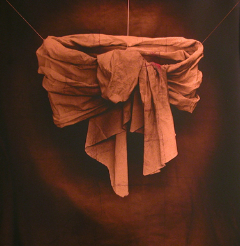
This wicked people who walk in the stubbornness of their hearts, and follow strange gods to serve and adore them, shall be like this loincloth that is good for nothing. For as the loincloth clings to the main’s loins, so had I made the whole house of Israel and the whole house of Judah cling to me, says the Lord; to be my people, my renown, my praise, my beauty. But they did not listen to me.
Today we are presented with this image that indicates the level of intimacy God expects to experience with us. The faithful are so close to God that they share in God’s goodness and are worthy of praise. The faithful are a beautiful part of God’s plan. They are the Children of God.
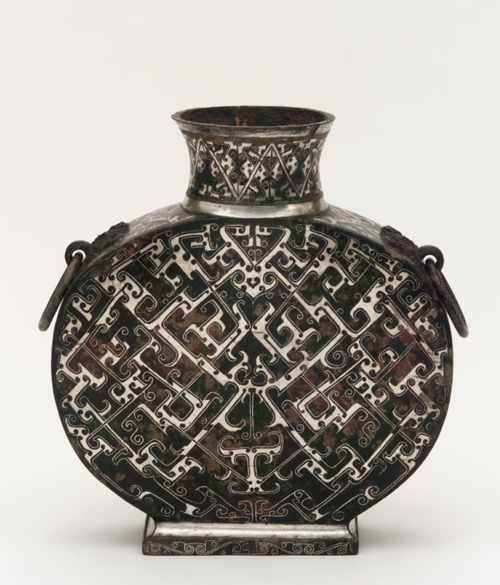
Every wineflask is meant to be filled with wine . . . Can the Ethiopian change his skin? The leopard his spots?
God says: Your destiny is to live life fully as my precious, lovely children. When I say that you are meant to cling to me I do not look to demean you; rather, I look to glorify you just as you glorify me. When you act in the ways that my son shows to you, you become one with me. When you turn away to follow your little, demeaning gods, you walk away from this beauty, goodness, renown and glory. Come! Follow me! I want to bring you home to this most safe, most intimate, most loving of places. Allow me to heal and counsel you. Permit me to guide and protect you. Soften your hearts, unbend your necks, and come home to the one who wants to lift you in body, mind and spirit.
The people who listen to Jeremiah’s prophecy turn away from these words; they draw away from God’s work of ministering to those on the margins and focus instead on the accumulation of wealth, comfort and goods.
What do we choose to do today?
To meditate on Jeremiah Chapters 11, 12, 13, enter the words The Infinity of True Happiness into the blog search bar and explore.
To explore more artifacts of the ancient world, click on the image of the wine flask above and follow links, or go to: http://theancientworld.tumblr.com/post/16764938939/wine-flask-bianhu-with-geometric-decoration-ca
For another reflection on Jeremiah 13, click on the image of the loincloth above or go to: http://dwellingintheword.wordpress.com/2013/06/19/1078-jeremiah-13/
When we consider the factors that move us to hope in some one or some thing, we may have difficulty mustering the steadfastness we will need to rest in God’s hope. Yet for millennia God has assured us that trust in God’s presence and encouragement in God are hallmarks of the faithful. Over the last few weeks we have contemplated John’s first letter to Jesus’ disciples. This week we continue to look for the many times we have been supported and guided as God’s precious children.
Be firm and steadfast; go to work without fear or discouragement, for the Lord God, my God, is with you. God will not fail you or abandon you before you have completed all the work for the service of the house of the Lord. (Verse 28:20)
The prophet Haggai records God’s words: Take courage, declares the Lord, and work; for I am with you. (Haggai 2:4)
As the people consider the immense work of rebuilding the Temple, the prophet Zechariah tells us: Thus says the Lord of hosts, “Let your hands be strong, you who are listening in these days to these words from the mouth of the prophets, those who spoke in the day that the foundation of the house of the Lord of hosts was laid, to the end that the temple might be built”. (Zechariah 8:9)
Isaiah encourages us in times of difficulty: Be strong, do not fear, your God will come . . . God will come to save you. (Isaiah 35:4)
Daniel hears God’s words: Be strong, now, be strong! (Daniel 10:19)
Finally, St. Paul tells us in his letter to the Ephesians: Be strong in the Lord and in God’s mighty power. Put on the full armor of God so that you can take your stand against the devil’s schemes. (Ephesians 6)
And so we pray: Wherever we are, whatever we experience, no matter what day or time, God is with us to animate and reassure us. God is unwavering. God is forgiving. God is hope and light and truth. And these hopes, this light, these truths will not be extinguished by any power in any time. In this then, let us take refuge. In this then, let us in turn give encouragement to others. In this then, let us abide with those in need as God abides with us. In this then, let us teach our children and even our children’s children. Amen.
Tomorrow, David’s words to his son Solomon. A guide to address our own children.
Click on the scripture links above and read other versions of these verses; and let us consider how God speaks to us of hope and steadfastness. OR, enter the words hopeand steadfastnessinto the blog search bar and reflect on how often, when and where and why God encourages us as we set to work building the kingdom.
 Matthew 13:16-17 – Blessed are your eyes, because they see, and your ears, because they hear. Amen, I say to you, many prophets and righteous people longed to see what you see but did not see it, and to hear what you hear but did not hear it.







 The Noontimes