Jesus proposes that we forego power and wealth, pleasure and honor. Today we consider the quality of meekness that Jesus so willingly exhibits as he walks among us.
Blessed are the meek, for they will inherit the earth. (NSRV)
This vision of the world sees gentleness as a quality of those who are close to God.
Happy are those who are humble; they will receive what God has promised!(GNT)
This picture of the world sees kindness as an essential trait of those who live by God’s design.
Those who are humble are happy. The earth will belong to them. (ICB)
Giotto: Christ Washing the Disciples’ Feet
This view of the world sees humility as crucial to the living of God’s plan.
You’re blessed when you’re content with just who you are—no more, no less. That’s the moment you find yourselves proud owners of everything that can’t be bought. (MSG)
This picture of the world sees physical possessions as stumbling blocks to intimacy with God.
The Gospels show us how God’s Word teaches us that meekness as authentic strength. They show us that Jesus returns anger with kindness, and responds to provocation with piercing questions. They show us that the Spirit nurtures sacrifice rather than acquisition.
How do we find strength in our meekness, and courage in our kindness? How willing are we to wash the tired feet of others?
Michal Splho: Jesus washing the Feet of his Disciples
When we compare varying versions of this verse, we better understand how humility provides us with far more peace than our possessions do.
For more reflections on meeknessas enacted by Jesus, enter the word in to the blog search bar and explore.
To read a reflection about meekness as strength, click on the first image above, or visit: http://blog.newadvent.org/2013/05/meekness-is-not-weakness-meekness-is.html
We have witnessed the dishonesty of corrupt rulers; we have seen the fidelity of fearful but courageous prophets. If we wonder how or when the faithful might be rewarded, we do not have far to look.
Consolation Foreseen
A Favorite from July 26, 2010.
I will gather the lame, and I will assemble the outcasts, and those whom I have afflicted. I will make of the lame a remnant, and of those driven far off a strong nation; and the Lord shall be king over them on Mount Zion, from now on forever.
We are reminded by the prophet Micah that we are to be restored through the Messiah who will gather up the broken and the broken-hearted. When we become discouraged, when we believe that even God does not listen to our plight, when we become confused and forget that God’s call to perfection in us is about persistence and not about living a life without flaw, then we might turn to Micah who reminds us that the best and only true hope is the Messiah, the Christ. Infinite restoration, abounding rejuvenation, eternal redemption and limitless salvation are the gift he brings us each day. If only we might persist long enough to ask for the strength to rise to this timeless hope.
Fr. Bede Jarrett
Most of the difficulties of life come because man is so prone to lose heart . . . His faltering attempts at perfection disconcert him from any very persistent or long-continued service . . . He has given up hope; he is disheartened; he is too discouraged to go on. He is very human; oh yes, but he is very foolish also: for when hope is gone, all is over. Failure counts for nothing; defeat, disappointment – these matter nothing at all, so long as only hope sits patiently, stirring the embers, watching and tending the fire, coaxing the flame, never despairing and never leaving the wind to work its will. That the clouds should come up over the sky, or that darkness should encircle the earth, brings no real terrors, for we are sure that the dawn will come out again and that the sun will break through with its golden glory.
Father Jarrett – a British Dominican known for his preaching
MAGNIFICAT, July 26, 2010, Meditation of the Day
We are reminded by the prophet Micah that we are to be restored through the Messiah who will gather up the broken and the broken-hearted. If today we have lost courage and strength, let us call on this only One who will restore us . . . so that we might coax the flame of our lives rather than leave our work to the wind.
Cameron, Peter John. “Meditation of the Day.” MAGNIFICAT. 26.7 (2010). Print.
Say to those who prophesy their own thought: hear the word of the Lord . . . I am coming to you, says the Lord God.
Yesterday we reflected on evil leaders. Today we spend time praying and thinking about false prophets. Who are they in our lives? How have we been false prophets ourselves?
Say to those who prophesy their own thought: hear the word of the Lord . . . I am coming to you, says the Lord God.
Yesterday we reflected on how evil leaders operate, how they appear to working for good and may even use the vocabulary we come to expect from those who walk in the light. Today we meditate on how we might be lured into following the broad road rather than the narrow path.
Say to those who prophesy their own thought: hear the word of the Lord . . . I am coming to you, says the Lord God.
Yesterday we reflected on those who surround evil leaders to enable them in their dark work. Today we think and pray about those whose gestures and actions appear to have divine inspiration but do not.
Say to those who prophesy their own thought: hear the word of the Lord . . . I am coming to you, says the Lord God.
We notice that God does not remain silent when evil operates. We see that God speaks to darkness. We understand that even the dark ones are offered the opportunity to allow their pain to transform them.
Say to those who prophesy their own thought: hear the word of the Lord . . . I am coming to you, says the Lord God.
When we are doubtful about false and true leaders and prophets, we might remember that our courage, strength and perseverance lie in and with God. When we read scripture, when we join in liturgy, when we try to do as Jesus does, when we open ourselves to the Holy Spirit, this is how we will know what to think, what to say, and how to act. And so we pray.
When silence is more attractive than fidelity to the truth: Our God, remember us.
When approval is more desirable than perseverance in good: Our strength, abide with us.
When safety is more appealing than suffering for righteousness’ sake: Our Lord, transform and heal us.
When we celebrate and commemorate the gift of the Holy Spirit, we remember that it is impossible for us to discern false and true leaders and prophets on our own. We can only maneuver life’s treacherous waters when we rely on the Spirit who will tell us where to go and what to say. If we want to live with less fear, if we want to transform the lives of our enemies and even our own lives, we might remember: Say to those who prophesy their own thought: hear the word of the Lord . . . I am coming to you, says the Lord God.
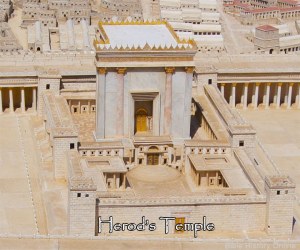
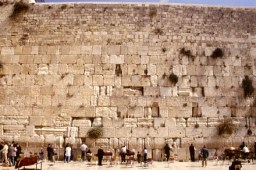
The followers of Yahweh erected a tent to house the ark they created to hold their tangible remnants of their relationship with the Lord: stone tablets holding God’s ten pronouncements of the Mosaic Law, manna provided by the Lord during the Hebrews’ desert wanderings, and the staff that Aaron used to mystify Pharaoh, the ruler of Egypt whom the enslaved people of God escaped. The Israelites replaced the tent with a glorious Temple to house the ark, sacred scrolls of God’s word to them. More than once this Temple was overrun, brought down, and reduced to rubble and a single, solemn wall of prayer. Today followers of Christ carry this tent, this Temple within; and it is in this sacred interior space that we find courage, hope, strength, faith, persistence, peace and joy. As we move through Eastertide, we bolster ourselves for the journey ahead as we continue our pilgrimage.
The New American Bible gives a wonderful title to these verses: A Psalm of Fearless Trust in God. We might benefit from the grace of this special prayer if we reflect carefully on its words as we pray them.
A depiction of the Moses Tent
When we are anxious or troubled, we recall . . .
TheLordis my light and my salvation; I will fear no one.
The Lord protects me from all danger; I will never be afraid.
When we are overwhelmed and distraught, we remind one another . . .
Even if a whole army surrounds me, I will not be afraid;
even if enemies attack me, I will still trust God.
When we are lost or abandoned, we remember . . .
I have asked the Lordfor one thing; one thing only do I want:
to live in the Lord’s house all my life, to marvel there at his goodness, and to ask for his guidance.
When all seems lost and dark, we remind one another . . .
In times of trouble God will shelter me; God will keep me safe in the Lord’s Temple and make me secure on a high rock.
When we are alone or bereft, we call out . . .
So I will triumph over my enemies around me.
With shouts of joy I will offer sacrifices in his Temple; I will sing, I will praise theLord.
Hear me,Lord, when I call to you! Be merciful and answer me!
When we falter, we encourage one another . . .
When you said, “Come worship me,”
I answered, “I will come, Lord.”
The Western Wall of the Temple in Jerusalem today (The Wailing Wall)
When the world closes in and we find no exit from sorrow, we pray . . .
Teach me,Lord, what you want me to do, and lead me along a safe path, because I have many enemies.
Don’t abandon me to my enemies, who attack me with lies and threats.
When we are rescued, we rejoice . . .
I know that I will live to see
theLord‘s goodness in this present life.
Trust in the Lord. Have faith, do not despair.
Trust in the Lord.
When this present life seems as though there is no evidence of God’s presence, let us remember Christ’s temple of light and peace that we carry within.
If there is time in the next several hours, enter the word TEMPLE into the blog search bar and consider how God’s plan has brought us from enslavement through the desert to a solid place where we rejoice and yet remains with us when great loss or great sorrow overtake us. It is God’s abiding love that brings us this fearless trust in the temple of God that remains within. When we reflect on these images or listen to these or other audios as we pray, we allow this fearless trust in God to rest in us today. Wishing all of you peace and joy on this day and all days.
And the Apostles said in reply: We must obey God rather than men . . .
Do we see Jesus’ Apostles as only the twelve who followed him? Do we believe that Jesus’ followers were men alone? Can we stretch beyond any narrowness to believe that we number among Jesus’ Apostles today? Are we willing to stand during difficult times to say . . . we must obey God rather than men . . .?
When we read these verses in their varying translations, how do they speak to us of Jesus’ remarkable gift of resurrection? What do they reveal to us about God’s generous promises? And why do they call us – or perhaps not call us – to become one with the Spirit that wants to heal a troubled world? When we use the scripture link to explore this story of the Apostles who carry out miracles in Jesus’ name well after his death, we find new life and new energy to carry out the Gospel in all we say and do. When we allow God’s goodness to settle into our bones, we find new courage and new patience to smile in the face of adversity.
A video presentation of Acts 5:17-42 may be of interest. While we may not be in accord with all the speaker tells us, we are invited to reflect on this story of the importance of obeying God. Click on the image above or go to: https://www.youtube.com/watch?v=0MiSr5yx9nA
We may or may not know the story of Stephen, the martyr stoned for acting with and speaking about the healing power of Christ. Once the full impact of this story settles on us, we might hope that the Spirit notinspire us. We might wish to shed the power of God’s wisdom rather than ask that it dwell within. It is likely that the trials are not as severe as Stephen’s; yet gossip in the home or workplace can break the spirit just as stones break bones. Severe illness, economic and natural disasters, slander, bullying and fear can bring an end to life. Stephen’s reaction to his enemies gives us a measuring stick for our own actions.
If we look only quickly at these chapters, we might at first believe that the lives of all true Christians must come to a frightening end. When we look more closely to find clues in the details, we uncover what it means to live a life brimming with God’s grace and energy. No matter our persecution, no matter the place or time of our trial, Stephen’s yardstick serves as a stark measure of God’s love in our lives.
6:7: The Word of God prospered. The number of disciples in Jerusalem increased dramatically. Not least, a great many priests submitted themselves to the faith.
When we experience God’s presence, we can expect envy and anger from others. Like Stephen, we must persist in gentleness and honesty.
6:8: Stephen, brimming with God’s grace and energy, was doing wonderful things among the people, unmistakable signs that God was among them.
When we witness God’s presence, we can expect dishonesty and deceit from others. Like Stephen, we must persist in courage and hope.
6:11: In secret [Stephen’s enemies] bribed men to lie [against him].
When we live in God’s presence, we can expect fear and anger from others. Like Stephen, we must persist in patience and love.
When we meet obstacles brought on by avarice, resentment and rage, we might consider the power we find in gentleness, honesty, patience, courage, hope and love. These traits will appear weak to the foolish, but in reality they are manifestations of God’s grace and energy, God’s enduring and healing love.
If we do not have time to spend with Chapters 6 and 7 of Acts, we might focus on Acts 6:8-10 and 7:54-59.
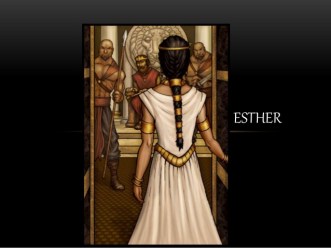
We have visited the story of Esther frequently in our Noontimejourney and this Christmas as pause to spend some time in Chapter 3. Because of various redactions, different Bibles have divided this story with both numbered and lettered parts but today we are looking at both Chapter 3 and B, the story about the letter of King Ahasuerus that decrees death to the Jewish people on the fourteenth day of the month of Adar. When we read the entire account, we know how the king finds out that Queen Esther is Jewish. We know how Esther and her uncle Mordecai intercede with God and king for the preservation of the Jewish people. And we know what becomes of the envious Haman and his family. This may be an unusual story to consider in the last week of Advent, but when we pause we see a connection with the Christmas Story: signs of God’s grace coming to a nation through people who are easily overlooked in a world that focuses on the supremacy and authority of powerful men. Today’s stories are about the surprising influence of the most vulnerable among us: a baby, and a woman.
While we are not in any way suggesting that Esther is the equivalent of the Christ child, we may want to consider the parallel these stories offer as analogous to our own feelings of defenselessness. And we may want to take direction from both Esther and Jesus as we watch them obey the Father who created them. These stories show us that the human life is best lived in search of and in preparation for our divinity. They show us that fidelity, simplicity, honesty and courage are essential to one who seeks to arrive at the potential God breathed into each of us at our creation.
Spend time with Esther 3 (B) today and consider it as preamble to a new coming.
Daily headlines may lead us into thinking that we have no reason for hope in the future. Isaiah tells us that we would be mistaken. Isaiah gives us reason to enter into Advent hope, promise and joy.
Wilderness and desert will sing joyously, the badlands will celebrate and flower . . .
All peoples and places where terror and pain rule will celebrate Christ’s healing rescue.
Energize the limp hands, strengthen the rubbery knees.Tell fearful souls, “Courage! Take heart!
All injury and harm that is meant to destroy will transform sorrow into joy with the Spirit’s comforting presence.
God is here, right here,on his way to put things rightand redress all wrongs.
All evil and darkness that whips up angry and anxiety will become tools for transformation with God’s renewing power.
Blind eyes will be opened, deaf ears unstopped,lame men and women will leap like deer, the voiceless break into song.
Jesus healed hundreds and fed thousands when he walked among us; Christ continues to restore and sustain.
Springs of water will burst out in the wilderness, streams flow in the desert. Hot sands will become a cool oasis, thirsty ground a splashing fountain.
The Spirit brings about the impossible; the Creator fulfills all promise.
There will be a highway called the Holy Road. No one rude or rebellious is permitted on this road.
Jesus has shown us The Way in which we are to walk – with the marginalized rather than the powerful, with the abandoned rather than the famous and beautiful, with the abandoned rather than the familiar.
It’s impossible to get lost on this road. Not even fools can get lost on it. No lions on this road, no dangerous wild animals – nothing and no one dangerous or threatening.
The Way is the Narrow Gate that stands before us. When we trust in God the door to this way opens to us. When we follow Christ the narrow gate opens wide. When we have faith in God the Holy Road opens at our feet . . . inviting us to move forward into a future full of hope, promise and joy.
The peopleGodhas ransomed will come back on this road.They’ll sing as they make their way home . . . welcomed with gifts of joy and gladness as all sorrows and sighs scurry into the night.
Isaiah again today, and it is the chapter which begins the second half of the prophecy – often referred to as the Book of Consolation. The words remind us also of chapters 38 through 42 of Job when God speaks to his loyal yet questioning servant.
Like Job, we also may have questions for the creator of the universe, questions about his plan for us, his plan for others, questions about how God expects so many diverse elements can possibly come together in peaceful union. Today’s citation tells us that we need not fret about howGod’s plan will be accomplished. It tells us that if we place our hope in God, all that is inscrutable will be made plain to us. Isaiah asks: Do you not know? Have you not heard? Was it not foretold you form the beginning? Have you not understood?
Our spirit is captured in human vessels, struggling to break free, to soar above the ugly parts of this life; and yet in all of our struggle for release we forget that we have already been ransomed, as we spent time reflecting yesterday. Do you not know or have you not heard? The Lord is the eternal God, creator of the ends of the earth. Today’s words are a reminder that we are not meant to struggle alone.
When we present to God daily our list of petitions that beg for miracles . . . God does not faint or grow weary.
When we are confounded by the duplicity and complexity if darkness . . . God’s knowledge is beyond scrutiny.
In all of our turmoil, all of our tears, all of our anxiety . . . God gives strength to the fainting.
In the darkest hours, in the deepest mourning, in the depths of despair . . . God makes vigor abound.
Wherever we are wrung out, exhausted, at wit’s end, beyond recovery and when we stagger and fall, they that hope in the Lord will renew their strength, they will soar as with eagles’ wings; they will run and not grow weary, walk and not grow faint.
There is always joy beyond our imaginings. There is always strength beyond our human power. This is what makes us divine . . . in that we acknowledge this divinity and allow ourselves to be drawn to it. Once we step out of self, empty self, and allow God in, then we too have knowledge beyond scrutiny, strength beyond fainting, and joy beyond tears.