How do we rise again once we have failed? How do we handle jealousy and envy, our own and that of others? Where do we find our escape route on the brow of the hill and how do we get to it when the world crowds around us? Today’s Gospel calls us to re-visit an earlier post about how Jesus reacts to the rejection he experiences in his own home town. When we realize that those closest to us seem like strangers, we read these verses and consider how Jesus is rejected in his own hometown. We reflect on how he escapes the anger of those he wants to save. And we continue our Lenten practice. Rather than thinking: “The dream of peace is an unreal and distant illusion,” let us think instead, “The dream of peace we hold is present in God’s kingdom. And God’s kingdom is now”.
Tomorrow, seventy-seven times.
For the original post, enter the words The Brow of the Hill in the blog search bar, and explore.
Psalm 103 is one we might pray when we jealousy begins to creep into our lives. Psalm 103 reminds us that we are not the generators or creators of the goodness that blesses us. In Luke 15:1-32 we read the story of the prodigal son or, as some call it, the parable of the forgiving father. Today we consider the envy that rises up in the forgotten son.
The jealousy experienced by the straying son draws him away from the father and toward a life of dissipation. The jealousy felt by the son who stays home, leads him away from understanding the infinite mercy and generosity of his father. It seems that no matter which course we take in life, we are susceptible to wanting that which is not meant to be ours.
When we feel jealousy and turn to thank God for what we have rather than becoming sad or finding a way to have what it is not ours, we enter the plan of conversion that God has in mind for us. We enter into God’s grace. We also enter into God’s conversion of harm to goodness.
Today as we thank God for what is ours and give back to God what is not ours, we pray the intercessions from last evening’s prayer.
Seeking the generosity of God our Father, we pray to him: Deliver us from jealousy.
When we see the good fortune of others, let us rejoice in their happiness. Deliver us from jealousy.
When we see our own shortcomings, let us not despise those who excel in areas where we are lacking. Deliver us from jealousy.
When we feel jealous, let us be happy with the gifts God has given us and not covet that which is not rightfully ours. Deliver us from jealousy.
Amen.
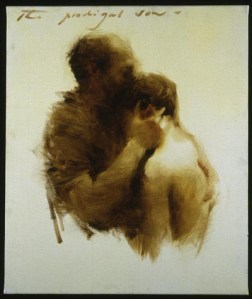
For a Lenten activity, use a search engine to find image of the prodigal son story and reflect on these two siblings and their generous father. Let us imagine that we were present in this drama and then consider what role we would play. And when evening arrives, let us again read Psalm 103 and thank God for the blessings so generously bestowed on all of creation.
Cameron, Peter John. “Prayer for the Evening.” MAGNIFICAT. 14.4 (2009). Print.
Adapted from a reflection written on March 14, 2009.
“It is easy to look on the gifts of others as a threat. We often want what we don’t have and in doing so forget the good that God has given us. But wanting what is not rightfully ours is the root of many serious sins. Let us instead look how generous God has been to us and rejoice in his generosity to others. For this is the way to justice and happiness”. (MAGNIFICAT Evening Prayer for Friday, March 13, 2009).
Psalm 103, often given the name Praise of Divine Goodness, brings us an opportunity to consider how willing we are to consider what is ours and what is not. It asks us to reflect on who has given us all that we have. It is an opening into our own psyche to think about who and what we covet, and why.
Today’s readings bring us new windows on our own lives.
It was out of envy that they handed Christ over.Matthew 27:18
It is now the hour for you to awake from sleep . . . The night is advanced, the day is at hand. Let us then throw off the works of darkness [and] put on the armor of light; let us conduct ourselves properly as in the day, not in orgies and drunkenness, not in promiscuity and licentiousness, not in rivalry and jealousy. But put on the Lord Jesus Christ . . . Romans 13:11-14
Wanting what is not ours only brings pain to ourselves and others. This we know and we are quick to realize the damage we suffer when we covet the possessions of others; but how often do we unknowingly covet the intangibles of life? We may wish we possessed others’ friends, others’ jobs, others’ good looks and easy manner. Do we wish we had the closeness others have with God? Are there relationships others might have in work and in play that we wish were ours?
When we want what is not ours, we open ourselves to that which grows in the dark. When we give thanks for the gifts freely given us by God, we open ourselves to the light. When we use our feelings of jealousy as opportunities to thank God, we regard each sensation of envy as an opportunity to rejoice in God’s merciful kindness.
Bless the Lord, oh my soul, do not forget all the gifts of God . . . he delivers your life from the pit, surrounds you with love and compassion, fills your days with good things . . .
Tomorrow, The Forgotten Son.
To read about women and envy at the PSYCHOLOGY TODAY site, click on the image above or visit: https://www.psychologytoday.com/blog/the-couch/201307/why-women-fear-envy-and-why-we-dont-need
Cameron, Peter John. “Prayer for the Evening.” MAGNIFICAT. 14.4 (2009). Print.
Adapted from a reflection written on March 14, 2009.
The Book of Proverbs is more than mere adages we repeat in moments of confusion or stress. They are universal metaphors that serve as anchors in a bewildering and sometimes tumultuous world. Many resources are available to understand these maxims and during this second week of Advent we will focus on the surprising power of the proverbs to reveal God’s truth to us. If this week’s exploration of Proverbs calls you to search for more ways to encounter joy, click on the word Joy in the categories cloud in the blog’s right hand sidebar and choose a reflection, or enter the word Joy in the blog search bar.Today joy surprises us in the midst of evil.
In this second week in Advent we continue to share simple verses from Proverbs that bring joy to our hearts even in the most surprising of circumstances.
Verse 13:9:The light of the just gives joy, but the lamp of the wicked goes out.
Verse 21:15: When justice is done it is a joy for the just, downfall for evildoers.
Verse 29:6:The sin of the wicked is a trap, but the just run along joyfully.
God says: When you experience every kind of evil – greed, anger, pride, lust, envy, gluttony or sloth – you need not devise a plan to combat these forces of darkness. You need only rest in me. Christ shows you which way to walk. The Spirit gives you the words you are to use. And I, the Creator, give you strength and stamina beyond your imaginings. Only rest in me. In this way you find joy in the darkest of days and my joy in you is a lamp that pierces all darkness.
Tomorrow, God’s joy will surprise us even in bitterness.
Much like the Book of Judith, the story of Esther is another that is full of danger and violence but this time counterpointed by trust in God . . . and great rejoicing. Today and tomorrow we discoverthat despite palace intrigue, envy and anger, joy is present. If today’s story calls you to search for more surprises, click on the word Joy in the categories cloud in the blog’s right hand sidebar and choose a reflection, or enter the word Joy in the blog search bar. You may also want to visit the Joy for the Journey blog atwww.joyforthee.blogspot.comto see how joy surprises you there. Today we find joy in times of deceitful intrigue.
The opening chapters of Esther’s story describe how this young woman, despite her Jewish identity and fidelity to Yahweh, finds herself at the center of a major, political power struggle. Esther’s uncle Mordecaicounsels her; and the courtier Haman – full of hatred, envy and pride – plots to kill all Jews in the kingdom. Resenting the power and influence Mordecai and Estherhold with the king, Haman hatches a devilish plot; and Esther finds that the only way for her to survive is to rely on God’s providence and care. In the end, the tables turn on Hamanand he suffers the very punishment he had hoped to exact on the Jewish people, death on the gallows built at his own command.
Arent de Gelder: Esther and Mordecai Writing the Second Letter of Purim
Verses 8:15-17: Mordecai left the palace, wearing royal robes of blue and white, a cloak of fine purple linen, and a magnificent gold crown. Then the streets of Susa rang with cheers and joyful shouts. For the Jews there was joy and relief, happiness and a sense of victory. In every city and province, wherever the king’s proclamation was read, the Jews held a joyful holiday with feasting and happiness. In fact, many other people became Jews, because they were afraid of them now.
The story of Esther is one we will want to remember when we find ourselves looking for power and revenge. The story of Esther is one we will want to remember when we find ourselves plotting to preserve power or damage another another’s reputation. The story of Esther is one we will want to recall when we find ourselves thrilling to schemes of undoing . . . rather than planning to work in the kingdom of God.
For more about the painting by Arent de Gelder, click on the image above or go to: http://www.artbible.info/art/large/174.html
For more Noontime reflections about this woman’s story, enter the wordEstherinto the blog search bar and explore.
Read this story from the beginning at, Esther 1-8.
Today we continue to visit with scripture to look for stories about joy that will surprise us in a variety of ways. If you want to explore other stories in which joy astounds us, click on the word Joy in the categories cloud in the blog’s right hand sidebar and choose a reflection, or enter the word Joy in the blog search bar. You may also want to visit the Joy for the Journey blog atwww.joyforthee.blogspot.comto see how joy surprises you there. Today our story is from the Book of Samuel.
Too often the high points in our lives are followed by turmoil and darkness brought on by jealousy. My dad always warned us that as we move up the ladder of life to become more proficient in the workplace we may also become targets for office gossip and suspicion. But, he added, we cannot allow this to affect either our work or our relationships. Rather than frighten us, Dad meant to arm us with the knowledge that joy is accompanied by suspicion, and we see truth play out with David today when he returns from slaying the giant Goliath to be greeted with both great joy and deep suspicion. If we spend time with these verses, we see that success may breed its own kind of darkness. It is up to us to decide how we will react. It is in our power to look for joy hidden in the dark recesses of suspicion.
Verses 6-9: It happened as they were coming, when David returned from killing the Philistine, that the women came out of all the cities of Israel, singing and dancing, to meet King Saul, with tambourines, with joy and with musical instruments. The womensang as they played, and said, “Saul has slain his thousands, and David his ten thousands.” Then Saul became very angry, for this sayingdispleased him; and he said, “They have ascribed to David ten thousands, but to me they have ascribed thousands. Now what more can he have but the kingdom?”Saul looked at David with suspicion from that day on.
Jan Havicksz, Steen: David’s Triumphant Return
Suspicion, gossip, jealousy, envy. These are the slippery steps that David navigates with God’s help. Later in his story, David succumbs to temptation that ruins the lives of many, but his actions bring us hope when we understand that even God’s anointed will err.
Fidelity, trust, hope, love. These are the footholds we look for in the face of the mountain we climb. We find joy even in the darkest of places when we rely on God’s providence, God’s wisdom and God’s love.
Visit 1 and 2 Samuel if you have time over the next few hours to put today’s Noontime into context.
Enter the words, Saul, David, envyor jealousy into the blog search bar and explore. Discover ways in which God’s quiet joy is always with us, even when we lest expect to feel its presence.
Click on the Steen image above for more information about this story of triumph, suspicion and ultimately joy.
For more about anxiety and joy, click on the image above or visit: http://riselikeair.wordpress.com/2014/01/09/anxiety-joy-a-journey/
The rich man had herds and flocks in great numbers. But the poor man had nothing at all except one little ewe lamb that he had bought.
This is a story with a familiar ending. Those who have much use their influence and power to take from the poor what little they have. The poor man gathers money, plans how he will finally gather around him the small beginning of self-sufficiency and the momentous ending of oppression.
He nourished her, and she grew up with him and his children. She shared the little food he had and drank from his cup and slept in his bosom. She was like a daughter to him.
The poor man empties all that he has and all that he is into this precious possession that promises not only a ladder out of misery but a new feeling of comfort, compassion and love. The little ewe sheep comes to symbolize much more than the object she is. She becomes a unique sign of peace and stability.
Now the rich man received a visitor, but he would not take from his own flocks and herds to prepare a meal for the wayfarer who had come to visit him. Instead, he took the ewe lamb . . .
The two-headed monster of envy and greed raises itself from the shadows and David’s sin is revealed.
David grew very angry . . . then David said to Nathan, “I have sinned . . .”
When we feel anger rise at the honest observation offered by a friend we must turn as David does. And so we pray . . .
Dear and gracious God, it is so difficult to hear our secrets revealed when we believe we have them well-hidden away. Help us to return to you.
Honest and kind God, we are so weak and vulnerable in the harsh light of our own judgment. Send us your persistence and power.
Good and noble God, we need your encouragement and wisdom to lead us to the light of truth. Remind us that truth always reveals itself in your time.
Mighty and compassionate God, we ask for your strength and grace to willingly reveal all that we have concealed. Recount for us all the times you have saved us.
Sweet and loving God, speak to us in parables that enlighten us when we cannot bear the burden of the truth. Help us to understand that secrets only fester in the darkness of guilt.
Forgiving and understanding God, speak to us plainly in words that call us to you. Bring us the simplicity of your peace and love.
This Psalm is full of advice about how we are to calm our fears, unburden our hearts and unbend our stiff necks. It is a practical list of specific strategies for a universal audience . . . rich and poor alike!
My lips will speak words of wisdom. My heart is full of insight. How does the psalmist arrive at such understanding and perception?
I will turn my mind to a parable. . . Story telling is a popular pastime in a culture in which most of the population is uneducated and beyond their entertainment value, parables are used to instruct the illiterate using the technique of comparison to teach. As we read, hear or form parables of our own the burden of our worries lifts.
With a harp I will solve my problems . . . Music soothes the soul, as we know, and the ancient Hebrew people understood this. The harpand flute were used in ancient cultures to both entertain and to quiet the soul. Saul calls for David and his harp when he is troubled (1 Samuel 16:23). There are at more than a dozen references to praising God with the harp in Scripture and here the psalmist calls for the use of its comforting tones. As we sing to God and praise God’s wisdom and power and goodness the problems that besieged us begin to dissolve.
Why should I fear in evil days the malice of the foes who surround me, men who trust their wealth and boast of the vastness of their riches . . .Finally the psalmist tackles problems common to all humanity from the earliest stories in our culture to the present day: envy, greed, pride, an attitude of self-sufficiency, a desire to control. As we come to realize that no one – not even the super-rich – can avoid the great equalizer, death, we find new energy and rise to new life.
But God will ransom me from the netherworld; he will take me to himself . . . The Old Testament psalmist foretells the coming of Christ with his story of healing, restoration and resurrection. The psalmist assures us that as we come to fully understand that God alone creates and God alone saves, nothing that takes place in evil days will be able to strip the promise of life eternal from us.
And so we pray . . .
Eternal and powerful God, open our hearts to receive your wisdom as we sing your praise with harp and flute.
Loving and healing Christ, open our minds to your parables that teach us how to flourish as we grow and blossom with your wisdom and insight.
Abiding and consoling Spirit, open our souls to your loving presence as we learn to abide only in you.
The remains of the southern wall of Jerusalem’s Temple
Jerusalem, a city of promise, the holy city of God. She has so much potential. And she has so far to fall. Today Jeremiah reminds us that deceit and envy will always snuggle into comfort and ease. When we find ourselves with no problems to solve, my parents often said, we know that we do not have long to wait . . . trouble has a way of finding good fortune.
Some of the imagery in today’s reading is difficult to read and even more difficult to envision. The image of Israel’s skirts being torn away when she is violated is such a strong one. The idea that a flock has been entrusted to a shepherd who then abuses that trust is so insidious yet these actions play out more often than we like to think. The realization that nothing we do is done in private is stark in these verses. We cannot run. We cannot hide. As Mother and Dad always said: The truth always comes out in the end.
Yet we continue to delude ourselves and just when we are offered so much promise. Easter with all its possibilities, draws near. We have spent nearly forty days examining and prodding ourselves into admitting what we must change and yet we ramble forward, hoping that no one will notice that we haven’t. How do we moderate our poor behavior?
By gently but firmly rebuking that which is secretive, that which dissembles, hides, colludes, becomes submissive because we fear someone’s anger, rejection, ridicule or abandonment. In my extended family we have tried to live by doing not what others expect of us but rather by doing what Godexpects. It is not always easy. We need not fight, nor do we need go along with the crowd but what we must do, to the best of our abilities, is “the right thing”.
We pause over the last lines:
Your adulteries, your neighing, your shameless prostitutions:
On the hills in the highlands I see these horrible crimes of yours.
Woe to you, Jerusalem, how long will it yet be before you come clean!
Jerusalem has so much potential and in Jeremiah today we hear a prediction of woe to come. We only need read ancient history to know that the destruction predicted will indeed arrive. If only Jerusalem might repair and reform. If only Jerusalem might stand and declare what she knows to be right and good and true.
When things got a bit turbulent my Dad would always say: “Sometimes it is stand up time!” He would elaborate: “The right thing sometimes is the lonely thing. You might find that you are the only person in an ocean of people who has the courage to stand and be counted. If you talk with your Creator and have heard his advice . . . and if the advice is to ‘stand up and be counted’, then you best not be found sitting down”.
Sometimes it is stand-up time. Oh Jerusalem! If only you might stand!






![noara_lambMarch3_12[1]](https://thenoontimes.com/wp-content/uploads/2013/11/noara_lambmarch3_121.jpg?w=300&h=227)
![menora-tekes-mica-2[1]](https://thenoontimes.com/wp-content/uploads/2013/06/menora-tekes-mica-21.jpg?w=300&h=274)

 The Noontimes