We must always be prepared for the surprise of God’s goodness when tragedy encircles us. We must always be open to God’s gift of healing when trauma haunts us. We must always be willing to accept God’s gift of mercy when anxiety overtakes us. We must always be seeking a more intimate relationship with God, for this is what God seeks in us.
Yesterday we reflected On John 6 with Henry Tanner’s painting The Disciples See Christ Walking on the Water. Today we reflect on the verses that follow that story, and we watch as those who seek Jesus use any available means to pursue the healing, prophetic presence of God among them. We explore the depth of our relationship with God, the breadth of our love for God, and the infinity of peace that comes with our seeking.
And the Apostles said in reply: We must obey God rather than men . . .
Do we see Jesus’ Apostles as only the twelve who followed him? Do we believe that Jesus’ followers were men alone? Can we stretch beyond any narrowness to believe that we number among Jesus’ Apostles today? Are we willing to stand during difficult times to say . . . we must obey God rather than men . . .?
When we read these verses in their varying translations, how do they speak to us of Jesus’ remarkable gift of resurrection? What do they reveal to us about God’s generous promises? And why do they call us – or perhaps not call us – to become one with the Spirit that wants to heal a troubled world? When we use the scripture link to explore this story of the Apostles who carry out miracles in Jesus’ name well after his death, we find new life and new energy to carry out the Gospel in all we say and do. When we allow God’s goodness to settle into our bones, we find new courage and new patience to smile in the face of adversity.
A video presentation of Acts 5:17-42 may be of interest. While we may not be in accord with all the speaker tells us, we are invited to reflect on this story of the importance of obeying God. Click on the image above or go to: https://www.youtube.com/watch?v=0MiSr5yx9nA
We have celebrated Easter Week, an eight-day celebration of the resurrection of the crucified Christ, and as we move forward through Eastertide, we continue to explore the doubt we might have about the resurrection miracle. We continue to ask the familiar question in the face of violence and tragedy: Where is God? And Ezekiel, the prophet who lives in exile from the physical place in which he believes God resides, gives us a simple answer to this simple question: God resides everywhere. As Easter people who celebrate the miracle of Easter renewal, we see God best in the new temple of the Christ’s body. We see God best when we all strive toward creating the New Jerusalem here among us, a place where differences are anticipated and respected, a place where every voice is heard, a place where reparations are made and accepted, a place of healing and restoration. A place of ultimate and intense truth. A place of purity and of fire and of healing.
The prophet Ezekiel tells us that God is a paradox. He tells us that the Temple and God’s presence must be central to our lives. He tells us that God is awesome – “reaching far beyond human relationships and human explanations”. (Senior RG 339) He tells us that as individuals we are responsible for our own adherence to the Law and that no matter our ancestry or our misfortunes, we cannot scapegoat our circumstances. “Each person lives or dies according to his or her wicked or virtuous way of life”. (Senior RG 340) Ezekiel transforms the art of prophecy, bringing it to a new level and setting the stage for the entrance of the Messiah and the New Testament. He also lays the foundation for the Second Coming – when the Lord returns and sends his angels among the living to separate the sheep from the goats.
Mikhail Nesterov: The Empty Tomb
All of this is too terrible, too wonderful, too much to believe – and yet there is nothing else to believe. All other thought pales and hence the paradox. What we first see and hear we want to believe but do not, thinking that this New Jerusalem is impossible. Yet through living, suffering, hoping, believing and loving we arrive at no other spot. We have no choice but to believe that indeed, the Lord is Here.
When we spend time with this prophecy today, we have the opportunity to feel the presence of God as we remember andreflect . . . we are Easter People . . . visited by the risen Christ . . . and so the Lord is among us.
This is a story which everyone needs to read often. From the NAB Catholic Study Edition: “The Book of Tobit is a complex literary work with a very uncomplicated moral. The book narrates important incidents in the lives of three people: Tobit, Sarah, and Tobiah. It tells the story of their tragedies and triumphs. The author weaves the stories of these three people together very skillfully so that the book results from the intersection of three different but related plots. This rhetorical feat of weaving the stories of these three people so tightly has a theological purpose. The author wishes to show how God can mange the circumstances of people’s lives in order to bring God’s plans to fulfillment. Its primary religious message is simple: God rewards those who are faithful.” This is a message we need to hear.
The book is considered by some as a religious novel only, while others see it as inspired by the Holy Spirit. We like the story because it tells of healing. And this healing happens through the Archangel Raphael through whom, “God manages . . . circumstances in order to ensue that God’s own purposes come to fruition. The story assumes God’s sovereignty in people’s lives and God’s determination to reward the just. When the just suffer, there is a limit to that suffering. Once that limit occurs, God will intervene. Sometimes that intervention is miraculous.” This is a message we want to take in.
God considers that Sarah has suffered enough and so he confronts the demon who is enamored of this young woman, but the confrontation occurs in a quiet way. This demon, as we hear earlier in 6:15, “loves her, [so] he does not harm her; but he does slay any man who wishes to come close to her.” So rather than wage battle, as we humans would do, God sends Raphael to accompany the young Tobias, who in turn expulses the demon using means given him by Raphael – which is the part of the story we hear today. The footnotes in the NAB point out that this is not an exorcism. Rather, the demon retreats because of the power of the earnest prayer of the two young people. From the footnotes, “It is clear that the author places primary emphasis on the value of prayer to God, on the role of the angel as God’s agent, and on the pious dispositions of Tobiah.”
Abraham de Pape: Tobit and Anna
What can we take away from all of this? It is clear and simple. The faithful need not wage war. They need not struggle against life’s obstacles. Rather, they must seek healing through God, remain faithful to their covenant promise, practice authentic prayer, and they must believe in miracles. This is a message we will want to remember.
And so we petition our good and gracious God.
Keep us always watchful for the angels you send to us – even though we are so busy that we often miss them.
Call us in such a way that we are open to your healing miracles – because we need them.
Look kindly on us as we struggle along the torturous pathways of this life – because we are nothing without you.
Keep us ever mindful of your desire to do all good things for us – even as we rail against the suffering which disciplines us so well.
May we join with young Tobias and Sarah as they prayed to you, “’Blessed are you, O God of our fathers; praised be your name forever and ever. Let the heavens and all your creation praise you forever. . .’ They said together, ‘Amen, amen,’ and went to bed for the night.”
Today we remember as we reflect . . . we are Easter People.
This is a difficult idea for many of us but we see it as far back as the Pentateuch when we hear that Yahweh hardened Pharaoh’s heart when he changed his mind about letting Moses’ people go (Exodus 8:15). This is a theme with which we struggle to live: We are not in charge.
When suffering happens, we remind ourselves, God will turn it into something good if we allow the Spirit to reside in our hearts.
We are not in charge.
God heals all wounds, we say, and we pass the stories of these healings on to younger generations.
We are not in charge.
In today’s reading, we see Jesus hiding for a bit as he prepares himself for the tasks ahead. We hear again the words of the prophet Isaiah describing a God who “blinded their eyes and hardened their heart . . . so that they might be converted.”
We are not in charge.
The Israelites crossed the Red Sea through parted waters – after Yahweh hardened Pharaoh’s heart – and so we see Yahweh’s power and might and mercy. The Pharisees do not acknowledge the power of Jesus – which the people see clearly – and in fact the Sanhedrin do not arrest Jesus on several occasions for fear that the people will stone them. (Acts 5:17-26)
We are not in charge.
Gerrit Van Honthorst: Christ Before the High Priest, Annas
Many times when we are doing God’s work we will find ourselves in opposition to the culture in which we live. Jesus is counter-cultural and lives on the edges of society. So must we be if we are true disciples, if we go to the light and do not hide in the dark (John 3:16-21).
We are not in charge.
We reflect on our lives and pray that we – unlike the Pharisees who preferred human praise to the glory of God . . . may remember that we are not in charge.
We remember our Lenten practice. Rather than thinking: “I will set all things right in God’s kingdom,” let us think instead, “I will strive each day to follow Jesus’ example of forgiveness, mercy and love”.
Adapted from a reflection written on April 18, 2007.
John 5:31-47: The World of Mystery and Miracles – Part III
Thursday, March 9, 2023
Jesus tells us: You have your heads in your Bibles constantly because you think you’ll find eternal life there. But you miss the forest for the trees. These Scriptures are all about me! And here I am, standing right before you, and you aren’t willing to receive from me the life you say you want.
We spend time with these words and we imagine that we, like the lame man at the Bethesda Pool, might be transformed so that we can find peace. We spend time with these verses and realize that . . . they are Christ himself in our hands. We spend time with John 5 and move from doubt to faith as Jesus asks.
We, like the crippled and lame who wait by the pool at Bethesda, have been freed . . . although we might not see it.
We, like those who plot to kill Jesus, have heard this good news . . . although we might not acknowledge it.
We, like those who sent emissaries to John, have heard further testimony about this new king and kingdom . . . although we might not admit it.
We, like those who do not believe the writings or the words, have experienced the healing hand of Christ . . . although we might not concede it.
We commit to believing in mystery and miracle in our lives and we call others to a transformation in peace with this week’s Lenten practice. Rather than thinking: “God’s generosity is sometimes not fair,” let us think instead, “When we put away the past and follow God’s example of enormous generosity, we are better able to welcome the lost back home into the kingdom . . . and to give thanks for our own part in God’s great rejoicing”.
John 5:17-30: The World of Mystery and Miracles – Part II
Wednesday, March 8, 2016
Jerusalem: The Bethesda Pool today
Don’t act so surprised at all this, Jesus tells us. And so we reflect on the mystery and miracles that surround us, seeking to better understand these verses.
We are pardoned and healed by God who is merciful and just.
We are given a clear sign of God’s eternal goodness and truth.
We receive additional testimony about the source of this goodness and truth.
We are shown a door to the life we all desire.
And we are given the option to enter into a new life or to strike out on our own.
We need not wait until the next world to experience peace and serenity or to take down the defenses we have so carefully built around us. The world of mystery and miracles is one in which we already live . . . we have only to be open to it.
We, like the crippled and lame who wait by the pool at Bethesda, have been freed . . . although we might not see it.
We, like those who plot to kill Jesus, have heard this good news . . . although we might not acknowledge it.
We, like those who sent emissaries to John, have heard further testimony about this new king and kingdom . . . although we might not admit it.
We, like those who do not believe the writings or the words, have experienced the healing hand of Christ . . . although we might not concede it.
As we discover our willingness to acknowledge mystery and miracle in our lives, we transform our thinking with this week’s Lenten practice.Rather than thinking: “God’s generosity is sometimes not fair,” let us think instead, “When we put away the past and follow God’s example of enormous generosity, we are better able to welcome the lost back home into the kingdom . . . and to give thanks for our own part in God’s great rejoicing”.
Tomorrow, a prayer to understand the mystery and miracle of Jesus in our lives.
John 5:1-16: The World of Mystery and Miracles – Part I
Tuesday, March 7, 2023
Bethesda Pool
A cure on the Sabbath. The work of the Son. Some witnesses to Jesus. The unbelief of Jesus’ hearers.
This might be a microcosm of our own lives.
We receive a gift of the miracle of life. We are given an instruction by the giver of this gift about the nature of life and who governs it. We have the choice to believe or reject the mystery we experience.
When we read this chapter of John’s Gospel, we have the opportunity to examine our willingness to believe the miracles we have seen and experienced. We read again the promise from Jesus that we are so well-loved that there is already a place reserved for us God’s eternity. We are offered the invitation to be one with the divine for we have been cured of all that limits us.
Today we receive a call to see, to acknowledge, to admit, to concede and to declare the story of the mystery we live. If today we cannot share this story of miracles with others, let us determine why not, and then let us witness as the Gospel writer John the Evangelist does.
When we suspect that we are called to mystery and miracle, let us rejoice and give thanks with our Lenten practice this week. Rather than thinking: “God’s generosity is sometimes not fair,” let us think instead, “When we put away the past and follow God’s example of enormous generosity, we are better able to welcome the lost back home into the kingdom . . . and to give thanks for our own part in God’s great rejoicing”.
A Favorite from May 6, 2010.
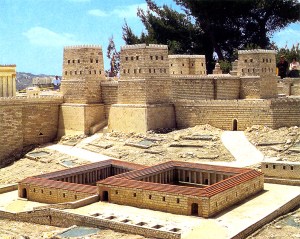
Explore a website that presents a model of Jerusalem in Jesus’ time and photographs of Jerusalem today.
Do we fully understand the depth of Jesus’ words? Do we fully open ourselves to Jesus’ transformation?
Jesus says: Don’t suppose for a minute that I have come to demolish the Scriptures—either God’s Law or the panorama. God’s Law is more real and lasting than the stars in the sky and the ground at your feet. Long after stars burn out and earth wears out, God’s Law will be alive and working.
Do we fully understand that when we mock creation we mock ourselves? Do we fully open ourselves to the wonders of God’s universe?
Jesus says: Trivialize even the smallest item in God’s Law and you will only have trivialized yourself. But take it seriously, show the way for others, and you will find honor in the kingdom. Unless you do far better than the Pharisees in the matters of right living, you won’t know the first thing about entering the kingdom.
God says: You work inordinate hours. You fret over the past and worry about the future. You wriggle through plans that you lay for yourselves. You create rules and parameters that you hope will keep you safe. The Law I speak about is simple indeed – it is the only law the actually keeps you safe. It is the Law of Love. The Law of forgiveness. The Law of generosity and kindness. The Law of healing and comfort. The Law of mercy. Rest in me. Bring your worries to me. Allow my Law of Love to reconcile, restore and rebuild. Allow yourself to step into my kingdom of love.
We continue our Lenten practice as we consider how we might bring others to God’s kingdom of love. Rather than thinking: “The dream of peace is an unreal and distant illusion,” let us think instead, “The dream of peace we hold is present in God’s kingdom. And God’s kingdom is now”.
Tomorrow, Beelzebub.
For another post on these verses, enter the words A Teaching on the Law into the blog search bar and explore.

 A Krista Tippet interview with Craig Minowa and the band Cloud Cult explores how we seek, what we seek, and how this seeking affects us. To listen to the podcast, visit the On Being site: https://onbeing.org/programs/craig-minowa-cloud-cult-music-as-medicine/