We become so occupied with news of the day and the obstacles we see in our lives that we struggle to find a half hour to be still with God. Sometimes we look for little pockets of silence in the tumult of schedules and appointments. When we arrive at the end of our day, we may sleep more easily if we set time aside to commune with the Lord. The book of Jeremiah still lies open before us. If we turn to Chapter 23 we see the gift of promise almost hidden in this prophecy of doom; we find hope in the darkest of places. Destructive pastors and restorative pastors. Which are we?
Each of us is called as “pastors over God’s sheep that they shall feed them,” and to the extent that we are able, we hope to shepherd those placed in our care with integrity, authenticity, truth, wisdom, fidelity, mercy and compassion. As much as we are able, we are likewise called to bring comfort to the troubled stranger, to offer peace to the enemy, to bring God’s presence everywhere we go and to all whom we meet.
In this way, may we all move toward forward in restoration in Christ. In this way . . . we become an integral part of the Messiah promise.
Enter the word promise into the blog search bar and explore ways in which we might bring hope to our troubled world.
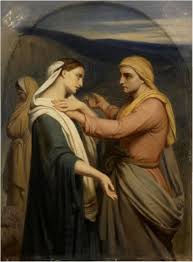
The story of Ruth is a story with characters who “are presented as models who live faithful to the spirit of the covenant even in the difficult situations of life”. (Senior RG 141) It is believed to be a true story and is best read with notes in order to understand the plight of Naomi and her daughter-in-law, the customs of land ownership, the Levirate marriage contract, the tradition of allowing widows to glean food from a harvested field, the remarkable strength of Ruth’s fidelity to her mother-in-law, and the noble loyalty of Boaz who is drawn to Ruth’s kindness and piety. As we have investigated this story, we have thought about how God moves and works through people, is ever faithful and always at hand. Today we can focus on the last verse of chapter 3 when Naomi says to Ruth, “Wait here, my daughter, for the man will not rest, but will settle the matter today”. These words describe true integrity, true honesty, true clarity, and true holiness. This man will not rest until he settles a matter of honor – and he will do this before the sun sets. This man will not let anything stand in the way of doing what he knows he is called to do. This man sets aside his own humanity to do the will of the divine. Again from the Readers’ Guide page RG 145: “The double meaning [of the word for feet or genitals in Hebrew] may be intended to rouse the interest of the audience, ‘to raise a few eyebrows,’ only to show that the unusual steps taken by Ruth [and recommended by Naomi] do not end up in an illicit sexual union, but reveal the honorable character of Boaz. He does not take advantage of Ruth, but agrees to take the necessary steps to marry her. He ensures her reputation is not ruined and sends her away with six measures of barley”.
The marriage of these two honorable people results in the birth of a child, Obed, the father of Jesse, the father of David, the ancestor of Jesus. It is the beautiful story of how people who respond to God’s call can transform tragedy into something blessed and holy. It is also the story of God’s constant presence in our lives as we accompany one another, share our grief, and move toward the light of truth. The action begins with emptiness which is reversed by the end of the tale. “The emptiness of the land (famine) causes Naomi to leave the land. The emptiness of the land gives way to the emptiness of Naomi in the loss first of husband and then sons. Naomi dismisses her daughters-in-law because her ‘emptiness’ cannot be cured . . .” And so she returns home so that she will not be a widow in a foreign place, but not alone. Ruth follows her. Back in Bethlehem, Naomi who finds herself empty of everything that previously had meaning, says the words in 3:18. She recognizes the goodness in Boaz and Ruth and she supports the young woman who waits for the man of integrity to do what he must do to claim her as his wife. Blessings and graces follow.
And so we pray . . .
Good and generous God, make us instruments of your work as were Naomi, Ruth and Boaz. Send us the words to say, the acts to perform, the prayers to raise as we enter the difficult situations of life and the pockets of emptiness around us. Send us your word that we may do your work to bring joy out of mourning. We ask this as always in Jesus’ name. Amen.
This is a beautiful story about women, a happy story about what marriage is meant to be. It is also a story about constancy, fidelity, perseverance, family, ancestry, and a deep abiding love which puts the other before self. It is an image of how we might be with, and in and through Christ. It is a metaphor for the relationship we have already been gifted by our creator.
This is not a long book and still it is saturated with imagery and peopled by characters worthy of any Jane Austen novel or Shakespearean play. “The book of Ruth . . . is one of the most beautiful pieces of literature in the Bible. The plot revolves around family relationships . . . and the role each member plays in fulfilling the needs of other members and hence the family as a whole”. (Meeks 408)
Some of us have families we might turn to; others of us do not. Some of us are born into clans that suffocate us and so we strike out on our own to build community; others find themselves in a large caring tribe that lets no one fall behind during the trek. All of us are born into the family of God and in this family there will be Naomis, and Ruths and Boazes: people who know the value of “loyalty of faithfulness arising from commitment” which in the Hebrew community is known as chesed. Naomi guides her widowed daughters-in-law (women without men were less than human in this era). Ruth abides with Naomi to share whatever destiny comes to them. Boaz preserves both the family inheritance and individual family members in a respectful and considerate way. All three understand the importance to continuity and to the fulfillment of a pledge at cost to self. (Meeks 408) All three listen for and to God. All three find a way to follow God, to preserve legacy, and to further a lineage that produces the Messiah of the human race. And all of this without accepting abuse or losing self.
We might spend some time today with this story and with our own reflection on how we embody chesedas we weave our lives. Do we respect the traditions of the clan? Do we provide for and abide with those who are marginalized? Do we do what is just and merciful even when this may be painful? Do we gather in the harvest at the expense of others? Do we leave the gleanings for those who have none and protect them as they forage? Do we listen for the voice that calls us to strange lands and yet abides? Do we intentionally commit our own acts of chesed? And if so . . . what are they?
The story of Ruth, Naomi and Boaz is a tale about family, integrity, honor, honesty and fidelity. It is also about God’s providence and love; and it is about returning to the covenant relationship we have with God that is marked by “loyalty of faithfulness arising from commitment” which in the Hebrew community is known as chesed. (Meeks 408) If there is time this weekend, read this story from beginning to end. It will warm your heart.
“The book contains a beautiful example of filial piety . . . Its aim is to demonstrate the divine reward for such piety even when practiced by a stranger . . . [Ruth] became the ancestress of David and of Christ. In this, the universality of the messianic salvation is foreshadowed”. (Senior 278)
Today we enter the drama at the point where Ruth, the stranger in this land of the one living God, goes for the first time to glean what she can so that she and her mother-in-law might survive. It is when she is in the field gathering the leftovers that she meets Boaz for the first time. Keeping in mind that a widow in ancient society was considered a burden rather than an asset, we see how well Boaz treats her. He does not take advantage of her diminished status; rather, he seeks to support and protect her from the impure, unwanted – yet legal – advances of others. He cautions her to glean only in hisfields, and he warns off the men who work for him, making certain – as much as he is able – that Ruth might gather enough to support herself and her mother-in-law. He even allows her to glean among the sheaves themselves rather than just the edges of the field. It is clear that he is taken by Ruth yet he does not take advantage of her. In subsequent chapters Boaz fulfills all honor obligations so that he might marry Ruth according to the law and tradition of the time. So we see that “Ruth’s piety . . . her spirit of self-sacrifice, and her moral integrity were favored by God with the gift of faith and an illustrious marriage”. (Senior 278) But first she was widowed, followed her widowed mother-in-law to a new land, and set about doing what she might so that they both might survive.
Ruth does what she must, given what she is given. Ruth gleans where God sends her and in so doing, she harvests more than the ephahs of barley that she takes home to Naomi; she becomes the mother of Obed, the father of Jesse, the father of David, king of the Jews. Ruth appears in Jesus’ genealogy: Boaz became the father of Obed, whose mother was Ruth. (Matthew 1:5).
In the times when we feel widowed, abandoned or alone . . .
In the times when we feel the overpowering burden of providing for self or others . . .
In the times when we feel that we have arrived in a foreign land with new traditions and customs . . .
In the times that we feel exhausted from the gleaning we have done for endless days . . .
Let us remember the goodness and wisdom of Naomi . . .
Let us remember the integrity and protection of Boaz . . .
Let us remember the piety and self-sacrifice of Ruth . . .
And let us remember the merciful justice, the guidance, and the love of the Lord. For these are the things that save.
Meeks, Wayne A., Gen. Ed. HARPERCOLLINS STUDY BIBLE (NRSV). New York, New York: HarperCollins Publishers, 1989. 404. Print.
Senior, Donald, ed. THE CATHOLIC STUDY BIBLE. New York, Oxford University Press, 1990.278. Print.
Adapted from a reflection written on May 18, 2010.
Amos delivers God’s word to the priests in Bethelfor a year and when he is rejected he returns to his shepherding work. He speaks to the Israel nation about their lack of fidelity. And he reminds us of how we can turn back to God and the covenant once we discover that we have again fallen under the spell of the pagan gods of fame, money, influence and power. Amos reminds us that there is always redemption. Restoration is always possible.
God says: In this time of Lent I call you to examine your conscience and you perform this scrutiny well. You are aware of all that you do when you allow yourself to be honest. You know where and how to return to me when you allow yourself a bit of quiet and a dose of truth. So put your worries and fears aside for your renovation already lies within you. Your recovery from all that plagues you is already in your body, mind and soul. All that needs happen is that you note what you do, that you put aside your pagan gods, and that you turn and return to me. Uprightness lives in you through me. Do what you must to nourish the integrity that dwells in you. This is the Second Word that comes from me through my prophet Amos.
In our modern society we are not much different from our ancient ancestors despite our science and technology; the very real temptation to become Cows of Bashanis as keen and alluring today as it was millennia ago; yet we know that life is more than we see before us. And so we still yearn for union. We still seek wisdom and peace. We are still vessels of the Spirit that creates us. God still dwells within . . . waiting to transform and rescue us.
Ash Wednesday and the season of Lent came to us last week and in preparation we wandered through our valleys of dry bones and we have examined both the exterior and interior law. Yesterday we reflected on social justice and how the human race strives – or does not strive – to match our words with our deeds. Today we look at a brief, but powerful, prophecy. Amos brings us words we can easily use today.
So let us take on the responsibility of living a life of integrity as we look at these verses to ask ourselves . . .
How do we resist the corruption we nearly always find in powerful and influential forces?
How do we balance our day-to-day reality with the call of the Gospel?
How do we advocate for those who have no voice?
God says: I have sent to you a prophet who has much to offer you. I have given you the courage and zeal to explore his prophecy. And I have bestowed on you the love and compassion you will need to act on his words that come from me. Do you have the determination to explore my Word that arrives through Amos? Do you love me in such a way that you will put aside a few minutes for me each day to study my word? Do you believe that you too are one of my valued prophets?
God gives us many Biblical figures with whom we might journey as we seek to know ourselves, our God, and others better during this Lenten tide.
We re-post this reflection written in 2014 in union with those who stand up for personal and communal freedom justice on every continent. The human race seems determined to create chaos rather than unity. Let us come together with all those who seek the common good. And let us pray not only for the oppressed but also for those who commit acts of oppression.
A Prayer to Nourish Us Here and Now
Matthew records the words Jesus speaks to those who gather round him when he describes the kingdom of God in the Beatitudes, the new Law of Love that supersedes the law of the Torahand Moses. We have spent much time this week reflecting on the Interior Law placed within each of us at our inception. This law flourishes in faith, grows in hope and acts in love. And so we pray, we look for strength as we build God’s kingdom.
BBC News: South Sudan in Crisis
You have heard it said, an eye for eye and a tooth for a tooth. But I say to you, offer no resistance to one who is evil.
Around the planet the peoples of the world constantly look for answers to difficult questions; they consistently yearn for security and peace; they continually hunger for the words that Jesus speaks in his Sermon on the Mount. And so we pray, we look for courage as we build God’s kingdom.
When someone strikes you on the right cheek, turn the other one as well.
In Ukrainethe people struggle to find leadership that is free of corruption. And so we pray, we look for integrity as we build God’s kingdom.
If anyone wants to go to law with you over your tunic, hand over your cloak as well.
In South Sudanthe people struggle to live a life without fear. And so we pray, we look for justice as we build God’s kingdom.
Reuters: Thai Protestors Target Ministries and Threaten Stock Exchange
Should anyone press you into service for one mile, go for two.
In Thailandthe people fight over who will bring them into the light. And so we pray, we look for truth as we build God’s kingdom.
Give to the one who asks of you, and do not turn your back on the one who wants to borrow.
In Venezuelathe people fight over how they will share the power of leadership. And so we pray, we look for peace as we build God’s kingdom.
You have heard it said, you shall love your neighbor and hate your enemy. But I say to you, love your enemies and pray for those who persecute you.
Swiss Broadcasting: Activists Injured by Gunshots
In West Virginia, USAthe people ask for answers to dark questions. And so we pray, we look for compassion as we build God’s kingdom.
If you love those who love you, what recompense will you have?
In our own home town the people ask for honesty and justice. And so we pray, we look for love as we build God’s kingdom.
We are not much different from those people who listened to Jesus two thousand years ago; we too, hunger for security, healing, truth, forgiveness and redemption.
Be perfect, just as your heavenly Father is perfect. And so we pray, we look for endurance as we build God’s kingdom.
National Geographic News: West Virginia’s Chemical Valley
The perfection God asks of us lies not in our living a life without mishap; rather, it lies in our persistence to return to the Law of Love no matter how far we stray. The kingdom Jesus describes is not in some distant future when all God’s children have suddenly seen and corrected the errors in their lives. The kingdom of God is here and it is now. God’s forgiveness and mercy are here and now. God’s healing and presence are here and now. God’s compassion and love are here and now. Let us take strength from the one who created us, take heart from the one who accompanies us, and peace from the one who dwells within us. Amen.
We ask for wisdom so that we might discern your law that lives within each of us.
Blessed the one whom you instruct, O Lord, whom by your law you teach, giving them rest from evil days. Blessed the one you instruct, O Lord.
We look for peace in our turbulent days so that we must rest with you as we move through our days.
For the Lord will not cast off God’s people, nor abandon God’s inheritance; but judgment will be with justice, and all the upright of heart will follow it. Blessed the one you instruct, O Lord.
We look for integrity and uprightness so that we might live out the Gospel as Jesus teaches us.
When I say, “My foot is slipping,” your mercy, O Lord, sustains me; when cares abound within me, your comfort gladdens my soul. Blessed the one you instruct, O Lord.
We look for compassion and forgiveness so that we might live the love the Spirit inspires in each of us.
Blessed the one you instruct, O Lord.
We tap into our interior law, knowing that it always leads us in the best direction, understanding that it flourishes at the best of God’s time, and believing that it nourishes and sustains each of us and all of us.
Blessed the one you instruct, O Lord.
Jesus says, “Do you not yet understand or comprehend? Are your hearts hardened? Do you have eyes and not see, ears and not hear? And do you not remember, when I broke the five loaves for the five thousand, how many wicker baskets full of fragments you picked up?” They answered him, “Twelve.” “When I broke the seven loaves for the four thousand, how many full baskets of fragments did you pick up?” They answered him, “Seven.” He said to them, “Do you still not understand?” (Mark 8:17-21)
God’s love is far greater than we can imagine and far more durable than we can believe. And this is God’s law of love. There is always love in abundance . . . forever. Blessed are those who see and hear. Blessed are those who allow God to soften hearts. Blessed are those who believe that God’s law lives within.
Knowingthe Law and livingthe Law are not equal. Can a man or a woman be a preacher of the Good News and still sin greatly? Yes. Can one who does not even know about the Law live a life according to that Law? Yes. The privilege of having been schooled in the Law does not bring with it an automatic membership into an exclusive club. One must demonstrate by outward actions that this knowledge has transformed one’s life; and this knowledge is available to all of us, even if we have not received it as a birthright.
Possessing the Law. Actingthe Law. Being justified inand bythe Law. Paul writes of justification often and when does he means to remind us that is our measure of holiness. We become justified – or redeemed and transformed – when we act inand throughand forGod.
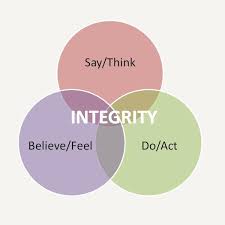
Paul is writing about integrity here. He asks us to take a look to ourselves to see if what we say matches what we do. Beyond this simple statement is the further thinking that it is not enough to carry out in our action what we say we believe, we must also be sincere in these outward signs of our inward selves; because it is the interior that has worth as opposed to the exterior. It is the interior as portrayed by the exterior that speaks to the world who we are and who we believe God to be. Body and soul ought not operate in two different worlds; for when they do our transformation and justification are impossible.
Paul calls out his fellow Jews for their hypocrisy in not recognizing the Word in the person of the Risen Christ; but he also calls out all people of all times and places to engage with the Risen Christ ourselves rather than rely on the words of an exterior, written Law that keep us safe but that do not redeem or transform us. Paul encourages each of us to see the separation between sayingand doingas our measure of self that matters most for it mirrors our separation from Christ who is our vital guide and support. And it is this separation from Christ that makes our own transformation and redemption so difficult to realize.
So how do we avoid this splitting of self and this separation from Christ? We examine both our words and actions to see that they align and that they are sincere; and we assure that the interior law we carry in our hearts . . . can be plainly seen by ourselves and others in all that we think . . . in all that we say. . . and in all that we do.
Adapted from a reflection written on January 26, 2009.
 The Messiah Promise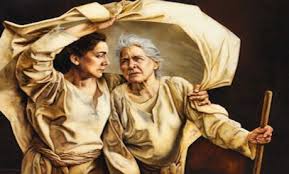


![will-religion-become-a-thing-of-the-past.jpg.crop_display[1]](https://thenoontimes.com/wp-content/uploads/2014/03/will-religion-become-a-thing-of-the-past-crop_display1.jpg?w=350&h=250)



![psalm-94-18-19[1]](https://thenoontimes.com/wp-content/uploads/2014/02/psalm-94-18-191.png?w=300)
 The Noontimes