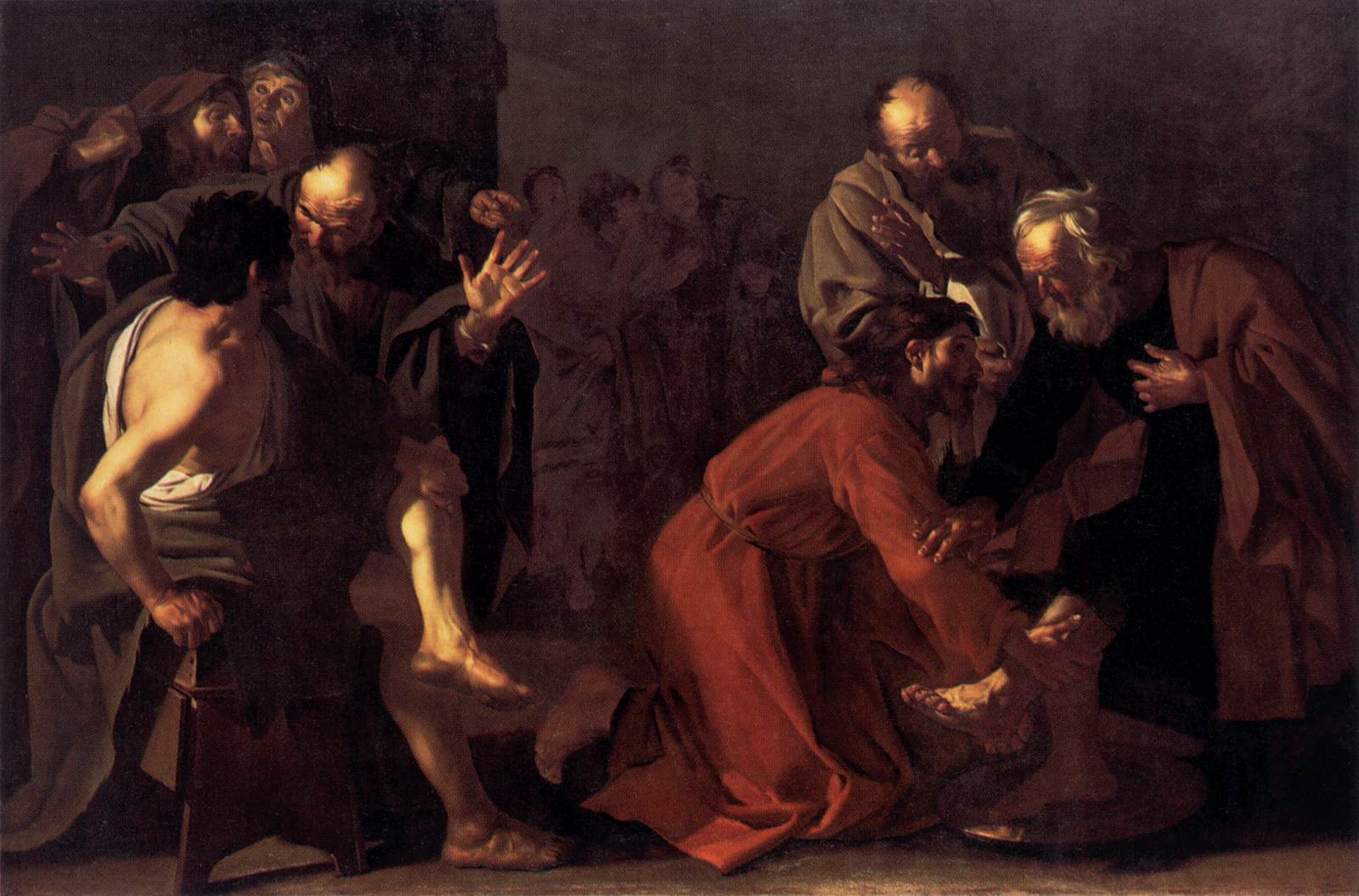
Dirck van Baburen: Christ Washing the Disciples’ Feet
Our Experience of Christ – Part II
Are you so stupid? After beginning with the spirit are you now ending with the flesh? Did you experience so many things in vain? . . . Realize then that it is those who have faith who are children of God.
Today’s lesson is a difficult one. It asks us to exercise our faith. It asks us to acknowledge and remember all of the times that we have been rescued. It asks that we tell the story of our redemption. It asks that we act in this belief that God is God, that God created us, that God loves us, and that God longs to hold us close.
O you stupid Galatians! Who has bewitched you?
Who has talked us out of believing our own story? Who has convinced us that Christ does not exist? Who has persuaded us that a false story is better than the vibrant experience of Christ that we have lived?
We so frequently doubt and when we do there is only one remedy. We must cast back through our lives to remember the many small and great ways that we have been rescued, the small and great ways that we have been loved. When we do this . . . we will find it easier and more natural to act in faith as Paul asks us to do. We will find that no one and no thing will ever bewitch us. No one and no thing will ever lure us away from Christ.
From the MAGNIFICAT Morning Prayer:
You led your people through the sea dry-shod: let us put our trust in you as you lead us through this day’s challenges. We put our trust in you!
You fed them in the desert: let us hear your word of life amid the noise of our bust lives today. We put our trust in you!
You gave them water from the rock: let us drink from the fountain of life and not from bitter and polluted waters. We put our trust in you!
Cameron, Peter John. “Prayer for the Morning.” MAGNIFICAT. 23.4 (2010). Print.
We might ask ourselves this question a thousand times during the day and the answer is always the same. It is our doubt, our lack of faith that clouds our vision. Paul reminds us that our justification, or our salvation, comes “not through the law or works of the law but by faith in Christ and in his death . . . The gift of God’s spirit to the Galatians came from the Gospel received in faith, not from doing what the law enjoins”. (Senior 297) Paul appeals to our experience of Christ both in our daily lives and as we meet him in scripture, and he reminds us that while we might come close to Christ by observing the law, it is through faith that we are blessed and redeemed. This was promised to Abraham and now – Paul reminds us – it is promised to the gentiles.
These new Christians in Galatia to whom Paul writes were former pagans and they were being encouraged by other missionaries to observe allJewish law along with Christ’s law of love. This even included circumcision. (Senior 293) Having descended from the Celts who had invaded western and central Asia Minor three hundred years prior, the Galatians had little experience in discerning and living a relationship with one true creator who loves his creatures so much that he is willing to die for them. We might find ourselves to be much like these Galatians.
Senior, Donald, ed. THE CATHOLIC STUDY BIBLE. New York, Oxford University Press, 1990.293,297. Print.
First written on April 23, 2010 and posted today as a Favorite.
We re-post this reflection written in 2014 in union with those who stand up for personal and communal freedom justice on every continent. The human race seems determined to create chaos rather than unity. Let us come together with all those who seek the common good. And let us pray not only for the oppressed but also for those who commit acts of oppression.
A Prayer to Nourish Us Here and Now
Matthew records the words Jesus speaks to those who gather round him when he describes the kingdom of God in the Beatitudes, the new Law of Love that supersedes the law of the Torahand Moses. We have spent much time this week reflecting on the Interior Law placed within each of us at our inception. This law flourishes in faith, grows in hope and acts in love. And so we pray, we look for strength as we build God’s kingdom.
BBC News: South Sudan in Crisis
You have heard it said, an eye for eye and a tooth for a tooth. But I say to you, offer no resistance to one who is evil.
Around the planet the peoples of the world constantly look for answers to difficult questions; they consistently yearn for security and peace; they continually hunger for the words that Jesus speaks in his Sermon on the Mount. And so we pray, we look for courage as we build God’s kingdom.
When someone strikes you on the right cheek, turn the other one as well.
In Ukrainethe people struggle to find leadership that is free of corruption. And so we pray, we look for integrity as we build God’s kingdom.
If anyone wants to go to law with you over your tunic, hand over your cloak as well.
In South Sudanthe people struggle to live a life without fear. And so we pray, we look for justice as we build God’s kingdom.
Reuters: Thai Protestors Target Ministries and Threaten Stock Exchange
Should anyone press you into service for one mile, go for two.
In Thailandthe people fight over who will bring them into the light. And so we pray, we look for truth as we build God’s kingdom.
Give to the one who asks of you, and do not turn your back on the one who wants to borrow.
In Venezuelathe people fight over how they will share the power of leadership. And so we pray, we look for peace as we build God’s kingdom.
You have heard it said, you shall love your neighbor and hate your enemy. But I say to you, love your enemies and pray for those who persecute you.
Swiss Broadcasting: Activists Injured by Gunshots
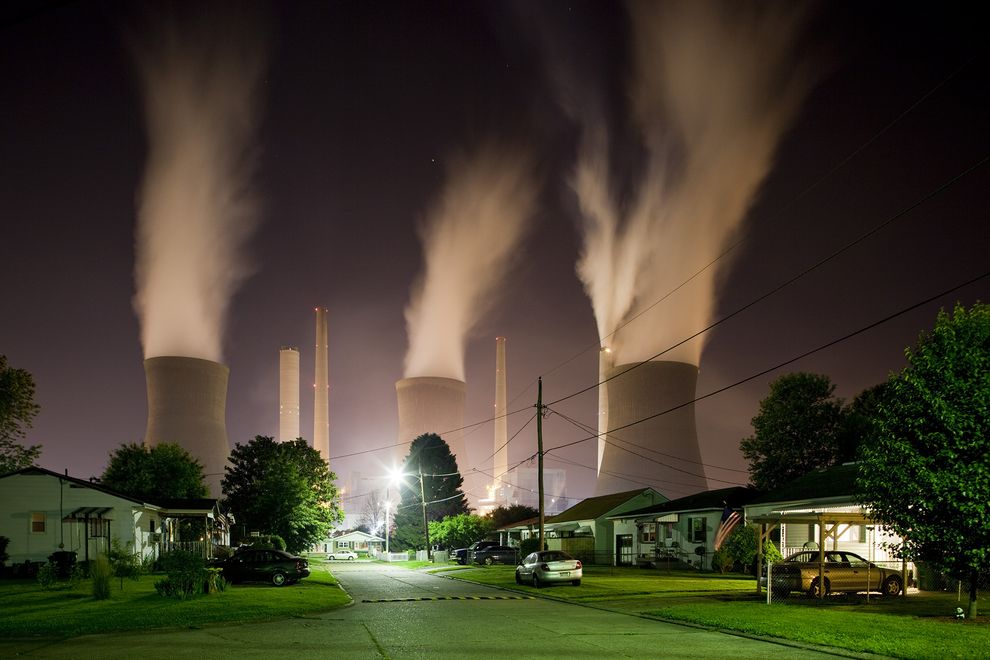
In West Virginia, USAthe people ask for answers to dark questions. And so we pray, we look for compassion as we build God’s kingdom.
If you love those who love you, what recompense will you have?
In our own home town the people ask for honesty and justice. And so we pray, we look for love as we build God’s kingdom.
We are not much different from those people who listened to Jesus two thousand years ago; we too, hunger for security, healing, truth, forgiveness and redemption.
Be perfect, just as your heavenly Father is perfect. And so we pray, we look for endurance as we build God’s kingdom.
National Geographic News: West Virginia’s Chemical Valley
The perfection God asks of us lies not in our living a life without mishap; rather, it lies in our persistence to return to the Law of Love no matter how far we stray. The kingdom Jesus describes is not in some distant future when all God’s children have suddenly seen and corrected the errors in their lives. The kingdom of God is here and it is now. God’s forgiveness and mercy are here and now. God’s healing and presence are here and now. God’s compassion and love are here and now. Let us take strength from the one who created us, take heart from the one who accompanies us, and peace from the one who dwells within us. Amen.
The second half of the “Dry Bones” chapter brings us the Oracle of the Two Sticks through which we understand that the splintered kingdoms will be re-united – an event thought totally unbelievable – and that the exilethe people suffered was not God’s rejection of them. The chapters following this one describe the battle against Gogand the end-of-time feast in the restored Jerusalem. Thus does this portion of Ezekiel’s prophecy tell the reader that what is thought impossible ispossible for God; it tells us that God never abandons us even when we abandon God. And it tells us that God loves us even when we believe ourselves to be rejected.
What does all of this mean for us? Ezekiel reminds us that the most hopeless cases have hope in them somewhere, that God acts out of great love to resuscitate what has been lost, and that we are called to do for one another what God does for each of us. All things are possible, mirages become real, and sustenance revives us in the desert of our lives when we move toward conversion rather than away from it, when we move through the brittleness of the dry bones and the desert, toward the refreshing, renewing waters of the oasis God provides for us against all human odds.
There is a line in day eight of a St. Jude novena I used to pray: When the difficult was too great to bear, Saint Jude somehow managed to see that it was lifted. It was almost as if he had set the pattern for one of the branches of the armed services:“The difficult I shall take care of immediately; the impossible (in terms of human power) may take a little longer.” Faith found that humility means power in the eyes of God.
Parry Dalea: This flower blooms in the Tucson desert in Southwestern USA from August to MayAnd so we humbly turn to God and ask that dry bones be resuscitated, that lost faith be restored, and that stifled hope be returned. When we stagger under burdens and find ourselves in trackless sands, we must petition God in the knowledge that the impossible is possible knowing that God will always answer, dry bones will always rise, the desert will always bloom and the oasis will always appear.
As we rise to step into a new morning, perhaps still worried with a burden we could not shake, as we tumble into our beds at night, perhaps still weary at the end of a dry day full of impossibility, we must remember to pray for the impossible . . . for God always finds a way.
From Psalm 63: O God, you are my God, for you I long; for you my soul is thirsting. My body pines for you, like a dry, weary, land without water . . . For your love is better than life, my lips speak your praise . . . On my bed I remember you . . . On you I muse through the night for you have been my help . . . My soul clings to you . . . your right hand holds me fast. Amen.
Tomorrow, a prayer from the valley of dry bones.
Adapted from a reflection written on February 18, 2008.
Along the old Silk Road The Crescent Oasis: Gobi Desert, China
The Valley of Dry Bones – Part II
Lifeless bones clamber together to form full figures. This dramatic imagery came to the Jewish people when they were well into their exile, well into the desert, without much hope or recourse to salvation . . . or so they thought. When the prophet is asked if he thinks it possible that the desiccated bones might rise to take on flesh and function again, he wisely replies that only God can answer that question. What follows is an interesting interplay in which Ezekiel is invited to take a part in a rebirth that occurs quite dramatically. What was thought as lost is found and restored. The people who had no temple, no visible home for Yahweh, had never been abandoned by their God as they had thought. The dry bones rise, take on flesh, and live.
What might we do to rise when we believe there is no hope? We call on God who makes all things possible. What might we do when we have stumbled into an oasis we thought was merely a mirage? We continue to follow Christ who carries our burden. How might we validate our new life in the Spirit? We give thanks to God for affirming and claiming our potential.
Ezekiel has much to teach us about the bone-strewn valleys where we see only mirages on the horizon. When we place all hope in God we are not disappointed. When we lean on faith in Christ we are always redeemed. And when we are willing to move forward in the love of the Spirit, we are renewed, restored and rewarded. Let us not shrink from dry bones or the desert wastes in our lives . . . for we may be missing a deep and eternal experience that only the desert oasis can provide.
Tomorrow, the Oracle of Two Sticks.
Adapted from a reflection written on February 17, 2008.
But the souls of the just are in the hand of God, and no torment shall touch them. They seemed, in the view of the foolish, to be dead; and their passing away was thought an affliction and their going forth from us, utter destruction. But they are in peace. For if before people, indeed, they be punished, yet is their hope full of immortality; chastised a little, they shall be greatly blessed, because God tried them and found them worthy of himself. As gold in the furnace, he proved them, and as sacrificial offerings he took them to himself. In the time of their visitation they shall shine, and shall dart about as sparks through stubble; they shall judge nations and rule over peoples, and the Lord shall be their King forever. Those who trust in God shall understand truth, and the faithful shall abide with him in love: because grace and mercy arewith his holy ones, and God’s care is with the elect.
As we near the end of Psalm 119 and drink in the message, we begin to understand the wisdom brought to us in sacred Scripture; we experience more fully God’s grace and mercy; and we begin to understand God’s deep and abiding love for even the smallest of the fallen sparks of life.
Nun: The Messiah – Jesus comes to serve as light in an unforgiving darkness and so are we called to bring that same light to a world that waits and watches. This is God’s promise: Christ will always rescue us.
Samekh: The Endless Cycle – Like this circular letter, Christ is beginning and end, Alpha and Omega, source and summit for all. We are called by the Spirit to join in all of creation’s response to God’s call.
Ayin: God’s Providence – We are always in God’s hands although we may not feel it.
Pe: Communication, Revelation of God’s Word– God is constantly revealing the Word to us although we may not comprehend it.
Sadhe: Faith – God’s fidelity saves us although we may not believe it.
Tomorrow, A Prayer for God’s grace and mercy . . . a Prayer for Fallen Sparks.
As we gather in the U.S. to give thanks for all that we are and all that we have, we remember that we are all . . .
Under the Centurion’s Roof
This story has long held our fascination – a Roman centurion approaches the very un-pagan Jesus on behalf of his servant. This story raises questions for us – who is the servant who merits so much devotion on the part of his master; and what has caused the paralysis? A fall? A disease? A battle wound? This story is repeated by many as part of the Communion Rite – Lord, I am not worthy that you should enter under my roof, say but the word and my soul shall be healed. This story invites us to step into the household of this Roman centurionto discover why he has such faith, and it invites us to examine our own sense of thanksgiving for all that we have.
My servant is lying at home paralyzed, suffering dreadfully . . .how do we ask for God’s help when those who serve us suffer?
I will come and cure him . . .countless times each day we benefit from God’s blessing and intervention. How do we thank God?
Lord, I am not worthy . . . only say the word . . .how do we respond to the signs of God’s intervention we see all around us?
As you have believed, let it be done for you . . .how do we tell the world about the goodness of God’s love for us?
A Centurion was a person of power and influence who rose through military ranks using his skills as a soldier and leader. If he paid homage to any god or creed, it would have been in keeping with the pagan beliefs held by his contemporaries; yet he comes to Jesus.
Jesus is willing to enter under any roof to heal all suffering and to bind up all wounds. If we find our ourselves hesitating to invite the master into our hearts, let us take a lesson from the powerful and compassionate soldier. Let us go to God with our needs and hopes. Let us speak plainly to the Lord about our feelings and circumstances. And let us give thanks to God for God’s great goodness and love.
Phyllis Tickle offers us a prayer of Thanksgiving that we might share with others as we gather under the Centurion’s roof.
“O Lord my God, I am not worthy to have you come under my roof; yet you have called me to stand in this house, and to serve at this work. To you and to your service I devote myself, body, soul, and spirit. Fill my memory with the record of your mighty works; enlighten my understanding with the light of your Holy Spirit; and may all the desires of my heart and will center in what you would have me do. Make me an instrument of your salvation for the people entrusted to my care, and grant that by my life and teaching I may set forth your true and living Word. Be always with me in carrying out the duties of my faith. In prayer, quicken my devotion; in praises, heighten my love and gratitude; in conversation, give me readiness of thought and expression; and grant that, by the clearness and brightness of your Holy Word, all the world may be drawn into your blessed kingdom. All this I ask for the sake of your Son our Savior Jesus Christ. Amen”. (Tickle 255)
Tickle, Phyllis. THE DIVINE HOURS: PRAYERS FOR AUTUMN AND WINTERTIME. New York: Doubleday, 2000. Print.
This one prophecy teaches us much: it tells us how to recognize God in the midst of horror, it reminds us that only God saves in an infinite way, and it exhorts us to witness without actually fighting . . . for the fighting must be left to God. If you can make time today . . . spend awhile with Daniel.
In the first two chapters we read of two important lessons: that all divine dominion comes from the God of Israel, and that false, pagan gods offer nothing. In Daniel 3 we watch as Shadrach, Meshach and Abednego are tossed into the fiery furnace. Not only do they survive, but a fourth figure appears to accompany them in song: an angel of this marvelous God. This is how much God loves each of us. God is so mindful of us that when we are in distress, God sends word to us and God even protects us from the fire of destruction.
There are many instances in our lives in which our perception is that God has let us down or has turned a deaf ear to our petitions. This thinking comes from our ego rather than from our Spirit. All that we see, touch, taste, smell, and hear is a chimera. All that we perceive, sense, know, intuit, and feel in God . . . this is reality. This is truth.
In a world where so many pagan voices call us to fame, fortune, outward perfection, celebrity, science, power, comfort and self-absorption, we find it difficult to hear the one voice of truth which speaks softly of union, dynamism, mystery, discomfort, humility, change, transformation and inner peace. What Shadrach, Meshach and Abednego know and witness to is the lesson which this prophecy drives home so well when we are able sit to read the entire story . . . the faithful do not need to fight . . . they only must refuse to do anything which separates them from God . . . they must not fear . . . they only need to rest in God . . . and they need not worry about God’s plan . . . they need only to find their place in it.
What we know is this . . . that when we begin with simple tasks such as the food test we read about in Daniel 1, we are being eased into following God in many small ways because these little ways will train our neural connections to focus on God rather than the other world that lures us by calling itself real.
What we also know is this . . . that once we set our feet upon the path of God in all of these little ways our union with God will be stronger than any fiery furnace we must endure. And thisis a reality that lasts forever.
This prophecy puts into words the mystery of our faith. This prophecy assures us that the more we let go to fall into God’s trust, the less we will fear. This prophecy reminds us that the more we lose self to let the Spirit enter our souls, the less we struggle. This prophecy promises us that the more we follow Christ rather than our own little plans, the less we stumble. This prophecy is a reality we will want to trust.
Adapted from a reflection written on April 1, 2009.
The instructions Jesus gave to the disciples he sent out into the world earlier in his ministry are simple. Take nothing with you except for the gifts God has given you. All will be provided as you do the work of God. Today’s Noontime reading is the slice of time between the prediction of Peter’s denial and Jesus’ agony in the garden of Gethsemane. We listen and watch as those closest to Jesus misunderstand the words of the instructions he has given them. They take them literally. We may likewise misunderstand today.
We are told so frequently what is important and yet we forget. We are asked: When I sent you forth without a money bag or a sack or sandals, were you in need of anything?
And we reply: No, nothing. Yet do we truly trust God in time of crisis? Or do we rely on the sack, the sandals and the sword before all else? We believe in God’s presence and we rely on God when all is going well; but what do we do when a life sours and begins to devolve? Do we succumb to the temptation to second guess ourselves and our childlike placing of ourselves in God’s care? Do we begin to think ourselves foolish for having been so trusting and innocent? Do we think that kingdom building comes without a price? Do we take the words of Jesus literally, as the disciples do in today’s reading?
It is enough,Jesus says to his followers when they do not comprehend, and then he moves into the garden to begin his final agony, knowing all the while that he will be abandoned – has already been abandoned – by many. The disciples melt away when the pressure becomes too great or the fear too overwhelming; yet the Lord kneels in prayer for all of us, for each of us. It is enough.
When I sent you forth without a money bag or a sack or sandals, were you in need of anything?
As we set out each day with Jesus on the road to Gethsemane and Calvary, let us try to remember our instructions for a time of crisis. And when calamity strikes, as it always does, we must remember that true discipleship is difficult . . . yet fulfilling. We find strength in acting in our belief that we are loved and provided for; and we find peace in hoping for the best outcome from horrific scenarios. The story of redemption and salvation begins with an all-encompassing love that is rejected, vilified, and even reviled. So when we find ourselves in crisis we do well to remember the instructions Jesus gives to all his disciples . . .
When I sent you forth without a money bag or a sack or sandals, were you in need of anything?
First written on March 17, 2010 and posted today as a Favorite.