A persistent drought burns up the land. Crops wither, ancient orchards fade. Dry wadis remain where rivulets once danced among rocks. Children perish. The remnant struggles to survive. Perhaps we need to turn to God in hope and say: Cease, O Lord God! How can we stand? We are so small!
And surely God will answer: This also shall not be.
When we focus on our weakness we forget to look for answers in our most precious resource, the indestructible strength that comes to us through our relationship with God. Again we miss the opportunity to draw goodness from harm just as God does. As part of our Lenten promise to change for the better, let us commit to turning to God when we feel weak and vulnerable; and let us share the good news of God’s saving power.
When we ask God to strengthen us, we show the creator our understanding that we are Children of God. We show Christ our willingness to lean on him when we experience trouble. And we show the Spirit our desire to find courage in the abiding, forgiving presence of the Lord. As part of our Lenten journey, let us determine to always turn to God in hope.
We re-post this reflection written in 2014 in union with those who stand up for personal and communal freedom justice on every continent. The human race seems determined to create chaos rather than unity. Let us come together with all those who seek the common good. And let us pray not only for the oppressed but also for those who commit acts of oppression.
A Prayer to Nourish Us Here and Now
Matthew records the words Jesus speaks to those who gather round him when he describes the kingdom of God in the Beatitudes, the new Law of Love that supersedes the law of the Torahand Moses. We have spent much time this week reflecting on the Interior Law placed within each of us at our inception. This law flourishes in faith, grows in hope and acts in love. And so we pray, we look for strength as we build God’s kingdom.
BBC News: South Sudan in Crisis
You have heard it said, an eye for eye and a tooth for a tooth. But I say to you, offer no resistance to one who is evil.
Around the planet the peoples of the world constantly look for answers to difficult questions; they consistently yearn for security and peace; they continually hunger for the words that Jesus speaks in his Sermon on the Mount. And so we pray, we look for courage as we build God’s kingdom.
When someone strikes you on the right cheek, turn the other one as well.
In Ukrainethe people struggle to find leadership that is free of corruption. And so we pray, we look for integrity as we build God’s kingdom.
If anyone wants to go to law with you over your tunic, hand over your cloak as well.
In South Sudanthe people struggle to live a life without fear. And so we pray, we look for justice as we build God’s kingdom.
Reuters: Thai Protestors Target Ministries and Threaten Stock Exchange
Should anyone press you into service for one mile, go for two.
In Thailandthe people fight over who will bring them into the light. And so we pray, we look for truth as we build God’s kingdom.
Give to the one who asks of you, and do not turn your back on the one who wants to borrow.
In Venezuelathe people fight over how they will share the power of leadership. And so we pray, we look for peace as we build God’s kingdom.
You have heard it said, you shall love your neighbor and hate your enemy. But I say to you, love your enemies and pray for those who persecute you.
Swiss Broadcasting: Activists Injured by Gunshots
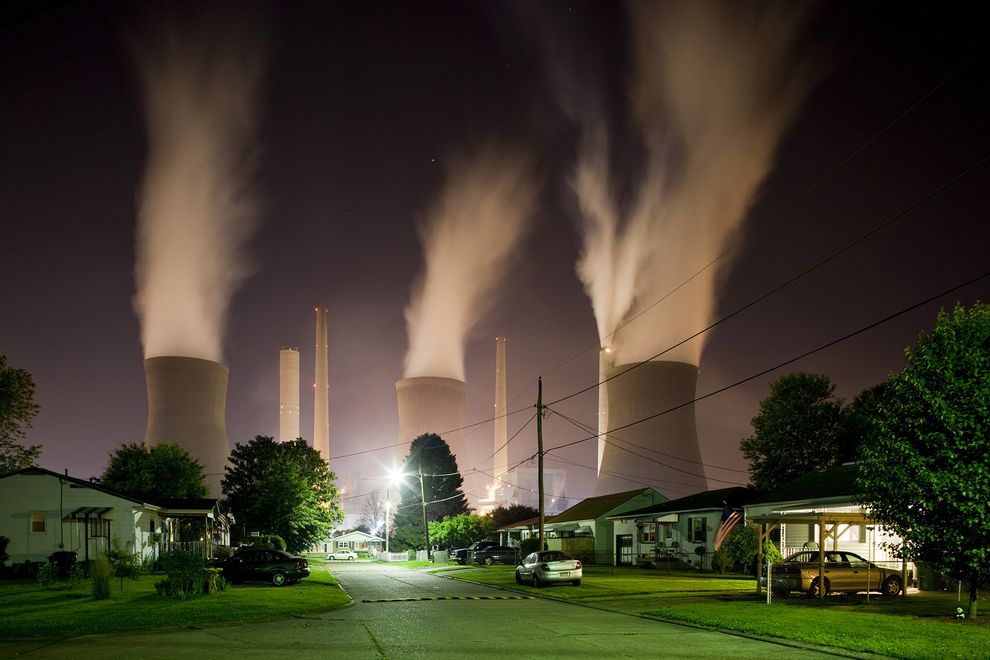
In West Virginia, USAthe people ask for answers to dark questions. And so we pray, we look for compassion as we build God’s kingdom.
If you love those who love you, what recompense will you have?
In our own home town the people ask for honesty and justice. And so we pray, we look for love as we build God’s kingdom.
We are not much different from those people who listened to Jesus two thousand years ago; we too, hunger for security, healing, truth, forgiveness and redemption.
Be perfect, just as your heavenly Father is perfect. And so we pray, we look for endurance as we build God’s kingdom.
National Geographic News: West Virginia’s Chemical Valley
The perfection God asks of us lies not in our living a life without mishap; rather, it lies in our persistence to return to the Law of Love no matter how far we stray. The kingdom Jesus describes is not in some distant future when all God’s children have suddenly seen and corrected the errors in their lives. The kingdom of God is here and it is now. God’s forgiveness and mercy are here and now. God’s healing and presence are here and now. God’s compassion and love are here and now. Let us take strength from the one who created us, take heart from the one who accompanies us, and peace from the one who dwells within us. Amen.
The second half of the “Dry Bones” chapter brings us the Oracle of the Two Sticks through which we understand that the splintered kingdoms will be re-united – an event thought totally unbelievable – and that the exilethe people suffered was not God’s rejection of them. The chapters following this one describe the battle against Gogand the end-of-time feast in the restored Jerusalem. Thus does this portion of Ezekiel’s prophecy tell the reader that what is thought impossible ispossible for God; it tells us that God never abandons us even when we abandon God. And it tells us that God loves us even when we believe ourselves to be rejected.
What does all of this mean for us? Ezekiel reminds us that the most hopeless cases have hope in them somewhere, that God acts out of great love to resuscitate what has been lost, and that we are called to do for one another what God does for each of us. All things are possible, mirages become real, and sustenance revives us in the desert of our lives when we move toward conversion rather than away from it, when we move through the brittleness of the dry bones and the desert, toward the refreshing, renewing waters of the oasis God provides for us against all human odds.
There is a line in day eight of a St. Jude novena I used to pray: When the difficult was too great to bear, Saint Jude somehow managed to see that it was lifted. It was almost as if he had set the pattern for one of the branches of the armed services:“The difficult I shall take care of immediately; the impossible (in terms of human power) may take a little longer.” Faith found that humility means power in the eyes of God.
Parry Dalea: This flower blooms in the Tucson desert in Southwestern USA from August to MayAnd so we humbly turn to God and ask that dry bones be resuscitated, that lost faith be restored, and that stifled hope be returned. When we stagger under burdens and find ourselves in trackless sands, we must petition God in the knowledge that the impossible is possible knowing that God will always answer, dry bones will always rise, the desert will always bloom and the oasis will always appear.
As we rise to step into a new morning, perhaps still worried with a burden we could not shake, as we tumble into our beds at night, perhaps still weary at the end of a dry day full of impossibility, we must remember to pray for the impossible . . . for God always finds a way.
From Psalm 63: O God, you are my God, for you I long; for you my soul is thirsting. My body pines for you, like a dry, weary, land without water . . . For your love is better than life, my lips speak your praise . . . On my bed I remember you . . . On you I muse through the night for you have been my help . . . My soul clings to you . . . your right hand holds me fast. Amen.
Tomorrow, a prayer from the valley of dry bones.
Adapted from a reflection written on February 18, 2008.
Along the old Silk Road The Crescent Oasis: Gobi Desert, China
The Valley of Dry Bones – Part II
Lifeless bones clamber together to form full figures. This dramatic imagery came to the Jewish people when they were well into their exile, well into the desert, without much hope or recourse to salvation . . . or so they thought. When the prophet is asked if he thinks it possible that the desiccated bones might rise to take on flesh and function again, he wisely replies that only God can answer that question. What follows is an interesting interplay in which Ezekiel is invited to take a part in a rebirth that occurs quite dramatically. What was thought as lost is found and restored. The people who had no temple, no visible home for Yahweh, had never been abandoned by their God as they had thought. The dry bones rise, take on flesh, and live.
What might we do to rise when we believe there is no hope? We call on God who makes all things possible. What might we do when we have stumbled into an oasis we thought was merely a mirage? We continue to follow Christ who carries our burden. How might we validate our new life in the Spirit? We give thanks to God for affirming and claiming our potential.
Ezekiel has much to teach us about the bone-strewn valleys where we see only mirages on the horizon. When we place all hope in God we are not disappointed. When we lean on faith in Christ we are always redeemed. And when we are willing to move forward in the love of the Spirit, we are renewed, restored and rewarded. Let us not shrink from dry bones or the desert wastes in our lives . . . for we may be missing a deep and eternal experience that only the desert oasis can provide.
Tomorrow, the Oracle of Two Sticks.
Adapted from a reflection written on February 17, 2008.
In your word I hope . . . strengthen me that I might be safe . . . I hold your edicts in awe . . .
Fear of the Lord does not describe terror, dread or anxiety; it does, however, express the sense of wonder, amazement and awe we feel when we think about the guiding presence and protective power of God.
God says: There is no need for you to hide from me. There is no need for you to worry about reporting to me in any way. There is no need for you to live with a sense of trepidation that I might castigate you . . . you punish yourself enough already. I know about your fears and they are groundless. I am with you always and I know all that you think, say and do. I am in awe of your persistence, love and dedication to me. I love the generosity, tenderness and care you bring to your work as you come to the aid of the marginalized. Persist in bringing me your hopes and dreams. Delight in the strength I bring to you. Revel in the safety of my arms and continue to live and work in me.
With God all things are possible. God is our rock of safety.
Jesus says: Everyone who listens to these words of mine and acts on them will be like a wise man who built his house on rock. The rain fell, the floods came, and the winds blew and buffeted the house. But it did not collapse; it had been set solidly on rock. (Matthew 7:24-25)
I write to you not because you do not know the truth but because you do . . . Let what you have heard from the beginning remain in you . . . then you will remain in the Son and in the Father.
What we have heard we know to be true. What we have seen we know to be authentic. What we have witnessed we know to be God’s gift of light and hope and peace and joy to the world.
On this ninth day of Christmas, enter the word truth into the blog search bar and consider how the truth John writes about is essential to us as Christmas people.
Notes from the NAB, page 1328: Rather than allow the slow to become content in their slowness, Paul exhorts them to even higher levels of spirituality. He is not lenient. And as for those who have fallen away completely, he does not even address these apostates. If all we need is energy to progress in our spiritual journey, we can turn to Christ for he tells us through Matthew (10:28-30), my yoke is easy, my burden light. Christ himself exhorts us Come to me, all you who are weary and burdened, and I will give you rest.
Sometimes we are not so much sluggish as afraid. We know that the task lying before us is laden with tricky passages, dark corners, deceitful paving stones that look firm and yet sink into quicksand. On these occasions we must also turn to Christ, trusting him when he says take my yoke upon you and learn from me, for I am gentle and humble in heart.Disobedience is not an option for an apostle.
Paul tells us that Christ’s promise is immutable, and he uses the long story of the covenant promise between Yahweh and Abraham as ample proof. Did not the elderly couple – Sarah and Abraham – begin a kingdom of millions? Did this new way of seeking God not travel to allpeoples of allnations? Do we not know even today the story of this Abraham, Sarah, and the high priest Melchizedek? Paul reminds us that it is impossible for God to lie; his very goodness and honesty force him to keep his covenant with his people.
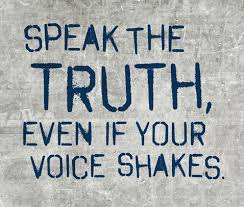
So when we feel weary or afraid, we might turn to Paul for a reminder of the words of hope we can never hear too often. This we have as an anchor of the soul, sure and firm, which reaches into the interior behind the veil [into the Holy of Holies], where Jesus has entered as forerunner . . .
In this Advent season when we anticipate the arrival of Emmanuel, God among us, let us rest in this promise. Let us acknowledge that when all is dark and appears to be lost, when all is more difficult or more terrifying than we can bear we must be still . . . so that we might hear again . . .
Come to me . . . and you will find rest for your souls . . .
She never left the temple, but worshiped night and day with fasting and prayer.
“A fourth and final [Lucan] theme is expressed in Simeon’s word to Mary (apparently this occurs in the outer court where women were allowed). Jesus will bring truth and light and will effect decision and judgment. However, in so doing he will face opposition and death. When Jesus comes to Jerusalem as an adult, the journey will be his ‘exodus’ (NRSV: ‘departure,’ 9:31).
“Simeon’s words are confirmed by Anna, a devout woman of advanced age . . . The two aged saints are Israel in miniature, poised in anticipation of the new. God is leading Israel to the Messiah, but the Messiah will weep over this city because it did not know the time of the messianic visitation (19:41-44)”. (Mays 932)
Scholars describe Anna as having insight that most of us lack and she appears in this story to affirm the Messiah’s identity. She is likely 105 years old, lives in or near the Temple, and dedicates her days and nights to a life of service to and in God; but she is no doddering ancient. Robin Gallaher Branch describes her saying that “her lifestyle evidently invigorates her, for she is mobile, articulate, alert, spiritually savvy and unselfish”. (Branch)
Elizabeth and Zechariah, Mary and Joseph, Anna and Simeon, servants, disciples, prophets, all announcing that openness and peace and joy have come to a people who yearn to be free, that light and courage and hope have come to a people who wait in darkness, that healing and consolation and union have come to a people who remain faithful despite their fear. As we approach the fourth Sunday of Advent, a time when we near the announcement of joy to the world because the Messiah is come, let us remember that we are Advent people. And let us, like Anna, be articulate, alert, spiritually savvy and unselfish as we declare to all that the one who saves is indeed come to live among us.
Not by appearance shall he judge, nor by hearsay shall he decide, but he shall judge the poor with justice, and decide aright by the land’s afflicted.
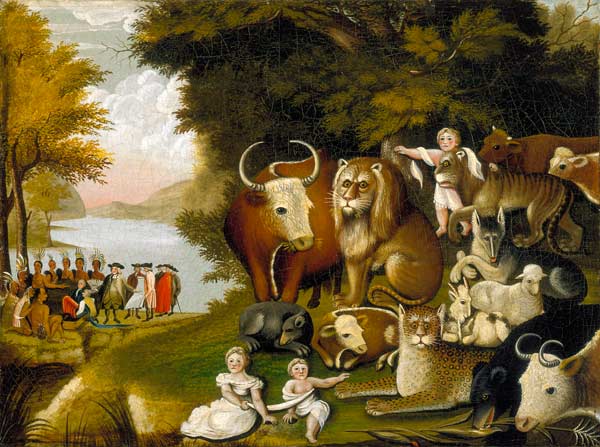
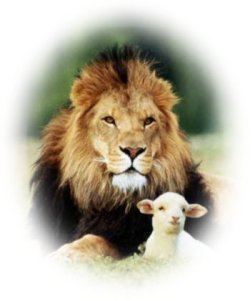
Isaiah shows us a vision of God’s Kingdom and of the world as it might be. We are welcome to paint our own images upon this enormous canvas of hope. The prophet describes a dominion the hunters live peacefully with their prey. A child plays near a venomous serpent; division, harm and ruin have come to an end. Our superficial system of judging and choosing no long functions. God’s justice sees what is in the heart and mind. Our empty gestures are seen for what they are, hollow hope, false hospitality and silly pandering. We forget that those who live on the margins are the closest to God’s heart. When we exclude the poorest among us we exclude Christ.
What might we do to welcome this vision of the kingdom in honesty? How might we welcome Christ as generously as he has welcomed us?
Edward Hicks: The Peaceable Kingdom
Welcome one another, then, as Christ welcomed you, for the glory of God.
Paul speaks to an audience in conflict; his listeners and readers have allowed petty differences to divide them and they have openly ignored the beauty and wealth of God’s offer of this peaceable Kingdom. With clear reason Paul presents his cogent argument: God’s Kingdom is not a club with rules; rather, it is a state of being in which everyone speaks the Language of Love.
How might we examine our own actions and thoughts to root out our pettiness? How might we nurture our growth in God’s Law of Love?
Produce good fruit as evidence of your repentance.
In the end there is one sure way to know if we are hearing, speaking and acting in God’s love: our personal yardstick is the fruit our labor bears. If we call on candor and patient waiting, we will quickly see how much we welcome the Christ in others and how much we exclude.
Do we invite everyoneto learn about Jesus by the way we live? Do we chase away lions and bears assuming that they do not belong in the Kingdom? Do we exclude adders and vipers because we cannot see their potential for change? Do we welcome only those who look and act and believe as we do?
On this Second Sunday of Advent we are welcomed by Christ – along with countless billions – to prepare for his arrival. Let us ready our hearts and our minds to receive the greatest gift of all time and space – the gift of an amazing Kingdom, the gift of unbelievable peace, the gift of Christ’s universal welcome.



![ww_pada01[1]](https://thenoontimes.com/wp-content/uploads/2014/02/ww_pada011.jpg?w=300)

![Samekh[1]](https://thenoontimes.com/wp-content/uploads/2014/01/samekh1.png?w=300)
![Hebrews-6-19[1]](https://thenoontimes.com/wp-content/uploads/2013/12/hebrews-6-191.png?w=300)

![jwelcom[1]](https://thenoontimes.com/wp-content/uploads/2013/12/jwelcom1.gif)
 The Noontimes