Easter is an eight day celebration beginning on Easter Sunday, running through the Easter Octave and ending on the Second Sunday of Easter. This tradition reflects the joy the early apostles felt as they experienced the new presence of the Risen Christ. Jesus offers us this same experience today. The Eastertide, or Easter Season, is the forty days from Easter Sunday until the feast of the Ascension. Today we rest in the message of the tomb that appears to be empty.
We give thanks for the miracle of the Easter resurrection. We remember that we rise with Christ in newness. We feel the presence of the Spirit within us. We have made our Lenten journey as we traveled up to Jerusalem, and we have experienced the joy of Easter resurrection. Now we move into our lives in a different way . . .
God gives each of us a talent that brings hope to the world. We are to use it.
God gifts each of us with attributes and a pathway. We are to follow them.
God calls each of us to union in the Spirit. We are to respond immediately and with passion.
God calls each of us from our emptiness to fill us with mercy and joy.
A re-post from Easter Monday 2014.
Today we visit the empty tomb Where the Body Had Been. Enter these words into the blog search bar and explore.
Jesus moved about within Galilee; but he did not wish to travel to Judea, because the Jews were trying to kill him.
We have begun our ascent to Jerusalem and so we gird ourselves for the arduous journey with its dreadful yet glorious end. We have heard the words and woes of Amos and so we understand that change must and will come upon us. We set our feet on the path we have chosen and we step forward with both dread and hope. What do we discover about ourselves and our world that we must change? We believe that we are well aware of the pitfalls we will meet. We know that there are barriers that will stymie and frustrate us. We realize that if we hope to be made new we leave the refuge we have created for ourselves if we hope to travel up to Jerusalem. We recognize the hostile nature of the world we traverse and yet somehow we feel strangely safer once we commit to moving forward. Still, for a while we determine to remain where we feel safest while we prepare for our moment of boldness when we will allow ourselves to be open to rescue from our old way of living. And so for a time we remain in Galilee . . . while we prepare for our own conversion, change and resurrection.
Aryeh Weiss: The Second Temple Jerusalem
For another reflection about resting before our journey to Jerusalem, visit the Resting in Bethany post by entering the words into the blog search bar to explore.
Along the old Silk Road The Crescent Oasis: Gobi Desert, China
The Valley of Dry Bones – Part II
Lifeless bones clamber together to form full figures. This dramatic imagery came to the Jewish people when they were well into their exile, well into the desert, without much hope or recourse to salvation . . . or so they thought. When the prophet is asked if he thinks it possible that the desiccated bones might rise to take on flesh and function again, he wisely replies that only God can answer that question. What follows is an interesting interplay in which Ezekiel is invited to take a part in a rebirth that occurs quite dramatically. What was thought as lost is found and restored. The people who had no temple, no visible home for Yahweh, had never been abandoned by their God as they had thought. The dry bones rise, take on flesh, and live.
What might we do to rise when we believe there is no hope? We call on God who makes all things possible. What might we do when we have stumbled into an oasis we thought was merely a mirage? We continue to follow Christ who carries our burden. How might we validate our new life in the Spirit? We give thanks to God for affirming and claiming our potential.
Ezekiel has much to teach us about the bone-strewn valleys where we see only mirages on the horizon. When we place all hope in God we are not disappointed. When we lean on faith in Christ we are always redeemed. And when we are willing to move forward in the love of the Spirit, we are renewed, restored and rewarded. Let us not shrink from dry bones or the desert wastes in our lives . . . for we may be missing a deep and eternal experience that only the desert oasis can provide.
Tomorrow, the Oracle of Two Sticks.
Adapted from a reflection written on February 17, 2008.
The king shall do as he pleases, exalting himself and making himself greater than any god; he shall utter dreadful blasphemies against the God of gods. He shall prosper only till divine wrath is ready, for what is determined must take place. He shall have no regard for the gods of his ancestors or for the one in whom women delight; for no god shall he have regard, because he shall make himself greater than all. (Verses 36 and 37)
This portion of Daniel’s prophecy is difficult to follow, even with a commentary, as there are varying opinions about the identity of the three kings of Persia, there are several rulers with the name of Antiochus, and kingdoms in the region are morphing and changing while dynasties rise and fall. It is sufficient to note, however, that the writer here conveys the sense of confusion that the Hellenistic Wars bring about. Syria and Egypt battle over who controls the Jewish kingdom and the little people wonder where and how all the conflict will end. The foreign ruler, King Antiochus, venerated Apollo and Zeus and he even saw himself as the king of Mount Olympus, Zeus/Jupiter. He did as he liked, including the placement of a gargantuan of a pagan god in the Jerusalem Temple. All that once was thought immutable is now changing and here the angel of the Lord tells us, through Daniel, that the Lord God will not be manipulated, controlled or mocked; the Lord is ultimately in control of all and everyone. Those who do not understand this will eventually come to see “this simple portrait of a tyrant, possibly even a mad one, willing and able to work his designs without being challenged even by the gods (v. 37) and yet unaware that his ultimate doom has been sealed in secret by the God who is the master of all of history and whose word is the last as well as the first”. The closing verses of this chapter predict the future and in the following chapter we find “the most important innovation contained in the book of Daniel, the notion of resurrection in 12:1-3”. (Mays 633)
It strikes us as odd that one who professes to lead as a servant might have so little regard for the small works of beauty and goodness that are significant to the community. These leaders appear to place little value on benchmarks or markers or significant events that a people hold in common. They believe themselves more important than a god like Adonis, the one who sways so many women (Jones 1447).
When we find ourselves in the hands of those who are able towork their designs without being challenged by any entity on earth,we will want to remember that God is the ultimate source of infinite power, and that this power brings with it the gift of new, eternal life. This power generates from profound goodness and self-sacrificing love rather that brute muscle and dispassionate control. This power determines the nature of life and even death itself. And this power brings the gift of resurrection to those who follow faithfully.
Adapted from a reflection written on July 22, 2010.
Then the Lord addressed Job out of the storm and said . . .
In this first of the Wisdom Books there is much to learn. A loyal and faithful servant is suddenly struck with misfortune and is further beset by a long series of disasters. Friends berate him; his wife suggests that he curse God and die; yet through all of the adversity Job keeps his eye on God and his heart in God’s hands. And it is out of the storm that seems to destroy Job that the Lord speaks.
God says: Despite what some may believe I do not delight in the troubles that stalk the world. Although you may not fully recognize my presence I am with you always. Regardless of what others tell you, I will not abandon even one of you or take my watchful eye from you. I accompany you through the heavy times as well as the joyful ones. Even as the storm of life rages around you I am in the tempest, and it is out of this tempest that I speak to you as I speak to my servant Job to ask: Were you present when the land and her creatures were created . . . were you there when I placed the stars in the heavens . . . have you ever made the sun rise or the tides ebb? You do not know the intimate details of my plan but know that I hold you in the palm of my hand. The calamity that appears so enormous to you is as a grain of sand to me and yet from that grain of sand will come a pearl of great price. Abide with me as Job does . . . and see what plans I have in mind for you. Plans for you joy and not your woe.
As Paul tells the Romans, and us: Oh, the depth of the riches and wisdom and knowledge of God! How inscrutable are God’s judgments and how unsearchable are God’s ways! For who has known the mind of the Lord or who has been God’s counselor? Or who has given God anything that he may be repaid. For from God and through God and for God are all things. To God be glory forever. Amen. (Romans 11:30-36)
Although we cannot hope to comprehend God’s economy, we have hope in the resurrection. Although we cannot hope to feel God’s immediate presence in the storms that enter our lives, we have hope in God’s love.
Spend time with the Book of Job today, or enter the word Job into the blog search bar and reflect on Job’s story.
“By a barrage of questions, by challenges both serious and ironic, by paradox heaped upon paradox, even by insults hurled at his opponents, [Paul] strives to awaken in his hearers a true sense of values and an appropriate response.” (Senior 275). Sometimes in community we need to do the same. We need to challenge, and we also need to use uncomfortable means to save souls. Yet we do this from a stance of weakness, as Paul says, and not from a position which overpowers. We call, we do not force. Examine yourselves to see whether you are living in faith. Test yourselves. . . For we cannot do anything against the truth, but only for the truth. For we rejoice when we are weak but you are strong.
Paul and the Jesus community of Corinth struggled within a long, faithful, combative covenant, the one never giving up on the other. Scholars believe that this letter may be a cobbling together of several smaller letters and for that reason may seem disjointed; but it is evident that the people in the community of Corinth kept these missives and read them aloud at their gatherings, even though there are passages that are critical of the Corinthians themselves. These people are a solid example of those who are willing to remain in relationship with one another through trial, beyond criticism, straining toward unity and the formation of community. Paul says in these verses that his own amazing strength comes from his weakness, and that he relies on this mystery of strength through weakness as it was taught by the risen Jesus. And it is Jesus who continues to teach this lesson to us each day.
We have been celebrating Eastertide and we have examined the gifts we receive through discipleship. We move toward the Pentecost event when the Spirit comes to live in intimacy with us. As we witness the mystery of Christ’s passion and resurrection, and our own redemption and restoration, it is good to look at the closing words of this letter. We recognize some of them as the prayer we hear at Mass just before the kiss of peace.
Rejoice. Mend your ways, encourage one another, live in peace, and the God of love and peace will be with you. Greet one another with a holy kiss. All the holy ones greet you. The grace of the Lord Jesus Christ and the love of God and the fellowship of the Holy Spirit be with all of you.
And may the peace of Christ be with each of you. Amen.
We read and hear much these beginning days of the Advent season that reminds us of the importance of the rejected cornerstone. It is a perfect time of year to allow ourselves to reflect on and in the Spirit; it is a hallowed season in which we might take the opportunity to step aside, to stand down, to relax into a sacred place where we might hear the Word of God fully. Let us give ourselves this gift of time and grace and peace. Let us allow ourselves to be free from the old laws that bind us.
In today’s Noontime, Paul explains that Christ followers have a different understanding of the law than their brethren the Jewish people because of the presence of Christ in their lives. “Law binds the living, not the dead, as exemplified in marriage, which binds in life but is dissolved through death. Similarly, Christians who through baptism have died with Christ to sin [see Chapter 6 Romans] are freed from the law that occasioned transgressions, which in turn were productive of death. Now that Christians are joined in Christ, the power of Christ’s resurrection makes it possible for them to bear the fruit of newness of life for God”. (Senior 238)
It is easy to become lost in Paul’s logic but the essence of his message today is this: When we no longer cling to the limiting oldness in which we may find ourselves, we not only gain freedom . . . we also find resurrection. When we move into Christ, as the widow does in Paul’s example, we are offered more than a new liberation; we are given the very gift of transformation itself. When we dare to open the closed gates in our lives we discover an invitation to conversion. Let us step forward in acceptance of Christ’s gift.
We might take on a spiritual project this Advent. We might challenge ourselves to see and hear some new layer in the old, precious stories that present themselves to us each year. Let us invite God to plumb our depths and challenge our resting in a place for too long. Let us put on our pilgrim garb to set out for a well-known destination but in hopes that the journey will bring a new invitation for transformation. And so let us pray . . .
Grace us this week with your presence, O Lord, that we may focus our hopes and our work in you.
May these opening days of the Advent season bring us a renewed hope in Christ.
May our journey bring us a newly found freedom in the Spirit.
May we learn from the rejected cornerstone, Jesus, that our new liberation is also an invitation to transformation.
And may we await in joy the Christ’s coming as we await the fulfillment of the promises whispered to us by our maker.
Amen.
Senior, Donald, ed. THE CATHOLIC STUDY BIBLE. New York, Oxford University Press, 1990.238. Print.
Mother Frances Xavier CabriniAmid the war and intrigue of the Old Testament, we may easily overlook the moments when sanity conquers depravity, when diplomacy takes the place of bloodshed. This is something we may forget once we read it . . . as it seems to happen so seldom.
So often when we are about to embark on a dangerous mission, we search for a letter of introduction, an entrée, an hospitable opening, envoys of safe conduct, forgetting that all the while we already possess these securities . . . in the person of Christ Jesus. We are never alone when we receive word that we have been assigned to a dangerous mission; we always are accompanied by the one who undertook the most dangerous mission of all . . . confronting Lucifer on his own turf . . . in order to save all of humanity. Jesus daily takes on an awesome foe . . . that we might be saved from the darkness.
In today’s citation we read about how Jonathon Maccabeus tries to establish diplomatic links with two pagan, strong states. We notice that he waits until the times favored him. He does not blunder ahead following his own senses or agenda. We also notice that he sends selected men. They are to conform and renew old friendships, old links . . . but not old habits. Jonathan hopes to find a newness in this resurrected union, just as Jesus finds with us in his New Kingdom.
What are the old relationships we need to resurrect? Who are our selected emissaries? Are we overly preoccupied with first finding envoys ofsafe conduct?Do we hesitate to begin the trip for fear of failing?
Once we have heard the call to resurrection, an overture must be made; and once made, the outcome of this overture must be left in God’s hands. If instead of openness and acceptance we receive deceit and rejection, then we know that we must step back to re-evaluate. Perhaps people and situations have not yet evolved to their harvest time. Perhaps we ourselves need a bit of repair before stepping again into our mission shoes.
But beyond all of the worry and anxiety about what to do when we feel called to renew an old, and perhaps shaky, friendship . . . we must know that this is the kingdom call. And we must know . . . that we are never alone. Christ himself accompanies us as the most seasoned warrior of all time and all creation.
From today’s MAGNIFICAT, page 179: Do not be dismayed by rejection and mockery. Go forward always, with serenity and fortitude of angels, because you are the angels of the earth and so must continue on your way in the midst of so many contrary influences. Everyone can be serene when things run smoothly; it is in difficult situations that fidelity and constancy are proven. St. Francis Xavier Cabrini
Fidelity and Constancy . . . the characteristics of a true envoy of safe conduct. There is no better companion than Christ.
Cameron, Peter John, Rev., ed. “Meditation for the Day.”MAGNIFICAT. 13 November 2008: 179. Print.
Reubens: The Meeting of Abraham and MelchizedekThe writer of this letter tells us today that with the arrival of one such as Jesus the old way of living in doubt and fear is ended. From the resurrection forward we live by a new order, a new covenant, a new intercession. Jesus has arrived to liberate all – no matter creed or race or origin. Jesus supersedes all – no matter nationality or ethnicity or orientation. Jesus fulfills all – no matter doubt or rejection or fear. This is wonderful news for us for it means that all that is good that we might possibly hope for is now guaranteed to each of us – and this promise is foreshadowed in humanity’s earliest stories.
From the CATHOLIC STUDY BIBLE: “Why is so much attention paid to a figure who appears only twice in Scripture? Because both appearances point toward Christ. In Genesis 14,7-20, Melchizedek is named a priest of God [although he was a Gentile!], whom even Abraham acknowledged. Logically, then, a priest descended from him would be superior to one descended from Abraham! And Melchizedek’s second scriptural appearance is in verse 4 of that very Psalm 110 which Christians regarded as a literal prophecy of Jesus’ resurrection. Melchizedek’s being ‘without beginning or end’ (because Scripture records neither his birth nor his death) is therefore an anticipation of the Son of God whose priesthood is eternally valid; conversely, Jesus is a priest ‘according to the order (rank) of Melchizedek’ (Ps 110,4). In his resurrection, Jesus became priest “by the power of a life that cannot be destroyed” (7,16). He ‘remains forever’ (7,24). His sacrifice is ‘once for all’ (7,27). He ‘lives forever to make intercession’ (7,25). The Jewish priesthood descended from Abraham cannot compete. God’s revelation in Jesus does not merely continue the former story, it raises it to a new plane. Jesus’ death and resurrection mark an absolute beginning”. (Senior RG 545)
Melchizedekcomes to us as a unique figure; we know so little about him and yet he holds so much importance. In a way, he mirrors many of us. History will record little about us and yet we each make an important contribution to the collective human story. Many will argue that we are far different from Melchizedek in that he was a priest and we are not. Yet others will reply that each of us – as followers of Christ – has the potential to sanctify, to bless and anoint.
This reflection does not present a theological argument but rather it posits a thought for us to mull and turn over. What do we know about Melchizedek? What does his relationship with Abraham and Jesus have to say to us today? How will our lives – and the lives of those we touch each day – improve as a result of our reflection on this mysterious man from the distant past? What and whom do we sanctify with our belief in the Living God? Why and when do we make our relationships holy – even with our enemies? How and why do we bless and anoint others with our words and actions?
What does the man Melchizedek mean to us today? And how do we show the world what we have learned from him?
Senior, Donald, ed. THE CATHOLIC STUDY BIBLE. New York, Oxford University Press, 1990. RG 545. Print.
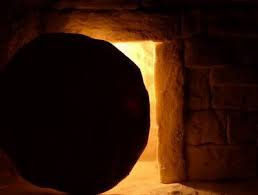 Easter is an eight day celebration beginning on Easter Sunday, running through the Easter Octave and ending on the Second Sunday of Easter. This tradition reflects the joy the early apostles felt as they experienced the new presence of the Risen Christ. Jesus offers us this same experience today. The Eastertide, or Easter Season, is the forty days from Easter Sunday until the feast of the Ascension. Today we rest in the message of the tomb that appears to be empty.


![091212-impossible[1]](https://thenoontimes.com/wp-content/uploads/2013/11/091212-impossible1.jpg?w=300)
![jobww[1]](https://thenoontimes.com/wp-content/uploads/2013/08/jobww1.jpg)
![storm-sunshine[1]](https://thenoontimes.com/wp-content/uploads/2013/08/storm-sunshine1.jpg?w=300)
![file[1]](https://thenoontimes.com/wp-content/uploads/2013/05/file1.jpg)
![Garden-Gate21[1]](https://thenoontimes.com/wp-content/uploads/2012/12/garden-gate211.jpg?w=100)


 The Noontimes