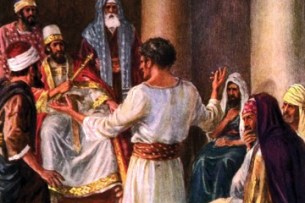
Daniel before NebuchadnezzarI am thinking of all the negative things that happen to Daniel which he calmly allows God to transform into good – his exile, his imprisonment, his gift as an interpreter of dreams which may be used against him because of envy on the part of the king’s magicians. He knows that the very prediction he is called to announce may bring about his execution. Daniel withstands all of this – and even more when we read the entire story – by placing his trust, hope, faith and love in God. and by allowing God to work his wonderful will with those who are opposed to him, to the Jewish people and to their God. I am reminded of Psalm 37: Commit your life to the Lord, trust in him and he will act, so that your justice break forth like the light, your cause like the noon-day sun.
Daniel does not let fear of failure or a reluctance to commit to God or to obey God to deter him from his path of fidelity.
Be still before the Lord and wait in patience; do not fret at the man who prospers; a man who makes evil plots to bring down the needy and the poor.
Daniel does not abandon God or allow the world and its worries to lure him away from following God.
Calm your anger and forget your rage; do not fret, it only leads to evil. For those who do evil perish; the patient shall inherit the land.
Daniel abides with God just as God abides with him. Daniel waits upon the wisdom of the Lord, knowing that for God time is eternal.
A little longer – and the wicked shall have gone.
Daniel knows that the only true emotion, the only lasting force is God’s love for us. It is greater than anything we can imagine. It is bolder, more persistent and persevering than anyone we know. It is the only energy that matters, this love and peace of God that comes to us in the form of the man, Christ.
Look at his place, he is not there. But the humble shall own the land and enjoy the fullness of peace.
Daniel makes a public statement when he expresses his love of God; and as we read his story we may join him to enter into our own public statement about our intensely personal relationship with God.
And so we might ask ourselves: Do we love God enough to make a public statement about our fidelity to him?
For the humble shall own the land . . . and enjoy the fullness of peace. Amen.
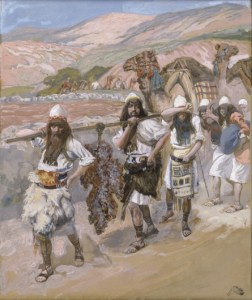
James Tissot: The Grapes of Canaan [The Twelve Spies in the Book of Numbers)Written on April 22, 2010 and posted today as a Favorite . . .
In the Old Testament God measures out rewards and punishments and today’s reading is an example of this kind of relationship that humans have with the creator. This is a story about trust, fidelity and awe (or fear) of the Lord. Jesus and the New Testament tell us a broader story, one of forgiveness, compassion and love.
I do not believe that God really means to strike down his own people in this episode; rather, I believe that he gives his creatures the opportunity to enter into dialog with him and to speak on their own behalf. What I like most about this story is first, the way that Moses steps up and speaks frankly with God and second, the way God responds in fairness. It is easy to see that fidelity and trust are paramount in God’s kingdom. These are qualities that bring Caleband Joshuato the Promised Land. They are also qualities that bring serenity to us today if we can only believe that God provides all that we will need in life. And this is the sentence he delivers to each of us. God always gives us guarantee of mercy, forgiveness and love.
A re-post from March 13, 2012.
For more on the Book of Numbers, visit the Numbers – Arrangement of the Tribespage on The Book of Our Lifetab on this blog. Tomorrow we will reflect on the Israelite’s’ Unsuccessful Invasion.
John Singleton Copley: Samuel relating to Eli the Judgments of God upon Eli’s HouseThis is such a frequently heard story that we might be tempted to read it quickly and assume that we know what it means. It may be valuable to spend more time with these words to let their full weight and measure sink into us and speak. God calls us just as surely as God called the innocent boy Samuel. God has work in mind for us, just as surely as God did for the earnest young man Samuel. God loves us fully and always, just as God does the constant prophet Samuel.
Samuel is dedicated to the Lord by his mother Hannah – and we can read this story in the opening chapters. So that we are not tempted to believe that Samuel has some sort of advantage over us by his living in the Temple, we will want to look closely at verse 7: At that time Samuel was not familiar with the Lord.
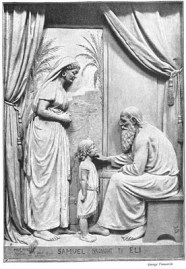
George Tinswell: Hannah bringing Samuel to EliWhen we seek God’s wisdom by reading scripture, searching for spiritual reflections that open the word to us, we too seek as the young Samuel sought. One detail of this story which we may overlook is the corruption of Eli’s sons about which we can read in Chapter 2. When we consider this carefully, we will no longer have excuses to offer for the reasons we are not always faithful to God. Our defense of a complicated childhood, a difficult workplace, or a prickly family or neighbors will no longer hold water. When we see Samuel grow to his potential despite the weeds among which he grew, we come to understand that there is no reason we cannot begin to grow in God in order that we become familiar with the Lord.
When we turn to others to share the good news we have heard about God’s revealed word to us, we too prophesy as Samuel did. Samuel grew up and the Lord was with him, not permitting any word of his to be without effect. We may frown at this simple statement and wonder why some of our words fall on deaf ears and some of our actions are scoffed. Rather than preoccupy ourselves with these anxieties, we might better want to place all of these worries at God’s feet and remember that only God can cure impossible people and mend impossible situations. As we read the Story of Samuel as a grown man in later chapters we will see the struggles he encounters with the stiff necked people who clamor for a king. Samuel will confess to God that he has been a poor messenger and God will reply: It is not you they reject, they are rejecting me as their king. As they have treated me constantly from the day I brought them up from Egypt to this day, deserting me and worshiping strange gods, so do they treat you too.(1 Samuel 8:7-8) We ought not be surprised when others reject the words we speak in God’s name, we are told. These people reject God as Lord. Like Samuel, all we need do is remain faithful to God and continue to walk in God’s way, knowing that we are learning to become familiar with the Lord.
Georges de la Tour: Awakening Eli
When we stand firm in God at the expense of our comfort, when we witness faithfully and run the risk of losing some of what we are in the world, we too will be familiar with Lord just as Samuel grew to be. The Lord continued to appear at Shiloh: he manifested himself to Samuel at Shiloh through his word, and Samuel spoke to all Israel.We may wish to hear God’s voice more distinctly. We may want God to touch us more obviously. We may long for stark clarity from our God. Yet let us consider these facts. We are created in God’s image. We are dearly loved. We are accompanied by angels, saints and even God as Lord. We are sustained, harbored, cajoled, wooed, healed, restored and saved by God. We are even given the freedom to return this love or to reject it. We are given the opportunity to deeply, intensely and even passionately become so familiar with our God that we are able to wake in the night and respond to that quiet call of our name: Here I am!
When we begin to doubt, when we begin to frown at what we believe we do nothave from God, let us consider what it is we dohave. And let us grow as Samuel grew, to become ever more familiar with the Lord.
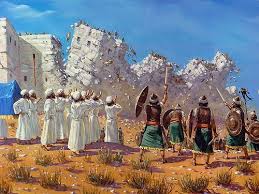
It is clear that Joshua understands his people when we read today’s Noontime scripture. He has brought them from the edge of the wilderness into the fertile land that God has promised them. He has led their troops, solved their squabbles, and he has kept them faithful to God as they live side by side with pagan peoples. He has one final plea.
We are moving through the opening weeks of the season of Lent, a time for reflection and introspection. Today we have an opportunity to consider that we stand before Joshua, a man who knows our story. Let us listen well.
Strive hard to observe and carry out all that is written in the book of the law of Moses, not straying from it in any way or mingling with these nations while they survive among you. We might recall here the parable of the weeds growing among the wheat in Matthew 13:24-30 that we considered in our Continued ProgressNoontime. God does not call us to wipe out all who oppose or stifle us; rather, God asks that we learn to grow amid those who would pull us from our steady progress toward God. Joshua calls likewise to us today, encouraging us to follow the voice of God, to grow in wisdom. When we allow God’s wisdom to counsel us rather than succumb to our own petty fears and whims, we will have responded to this final plea.
At your approach you have driven our large and small nations, and to this day no one has withstood you. One of you puts to flight a thousand because it is the Lord, your God, himself who fights for you, as he promised you. We so quickly take credit for our successes and blame God for our failures. It seems we cannot withstand the truth of our own existence. When we remember the so many big and little triumphs of our lives in the light of God’s goodness instead of the brightness of our own effort, all anxiety, resentment and envy melt away. We cease to compare our circumstances to those of others; we see our lives for what they are: a continuing response to – or a willful turning away from – God’s call. Joshua asks us today to consider the origin of our security and achievement; and he reminds us that God alone governs all. When we admit that God’s strength and fidelity are gifts we receive without even asking, we will have demonstrated our own willingness to respond to this final plea.
If you ever abandon God and ally yourselves with the remnant of these [pagan] nations while they survive among you, by intermarrying and intermingling with them, know for certain that . . . they will be a snare and a trap for you, a scourge for your sides and thorns for your eyes. Joshua worries, of course, that his people will disappear into the societies that surround and live side by side with them. He knows how easily we can be convinced that daily prayer and faithful worship have little effect upon us. He understands our weaknesses because he has managed the in-fighting and back-stabbing that happens when people come together in a common cause. He also understands our strengths because he has led a stiff-necked and cantankerous people successfully by following God’s counsel rather than the shallow wisdom of oracles; he has deferred to God’s plans and put away his own. Joshua recalls the covenant they have agreed upon with God and that it invokes reward or doom; he reminds his people that God always keeps his promises. When we willingly turn away from the siren call of the idols that clutter our lives, we will give witness to our own commitment to God, and we will have answered this final plea.
This chapter closes with a description of God’s Wrathand before we become frightened by these images let us remember that Christ comes to fulfill the Old Testament Covenant and to replace it with a new Law of Love. When we remember that the God of wrath we see described here is actually the God of Love that Christ shows us. We will have little trouble – and much reward – when we respond to Joshua’s final plea.
Adapted from a reflection posted on December 11, 2011.
Today we return to the Gospel of Mark and when we study these opening Chapters we discover that they provide the perfect resource for us when we have had a bad day, an awful week, a cataclysmic month, or a horrendous span in our lives. In these simple stories we will find the courage to continue an arduous journey; we will find hope that will impel us forward through tragedy. We will even find the strength to help others who journey alongside us. Mark shows us a typical series of days in the life of Jesus in such a way that we might see ourselves putting aside our worldly worries to follow him. Mark, with his quick-moving, thriller Gospel, gives us a reason to believe.
John the Baptist serves as a precursor or herald for the Messiah who follows him. Our troubles and woes often announce themselves as well. We feel a frisson of fear, a foreshadowing of something not fully revealed. When we follow Jesus we will know that these forebodings are not our ultimate end. Our end is rescue and redemption. John baptizes the one who saves us all and Jesus unites with us in our own baptism.
The Spirit drives Jesus into the desert for forty days where he lives among wild beasts, is tempted by Satan and is ministered to by angels. We too are driven into the barren wastes where we also met with devils and angels. When we follow Jesus we will know that these dead places are not our last stop – even though they may seem to be at the time. Jesus relies on the Father and unites with us in our own sufferings and temptations.
Jesus begins his ministry. He cures many. He gathers a following. He chooses steadfast friends from the countless who follow him. He is hounded by those who envy his relationship with God and the people. We too step into the world to reveal our gifts and to allow God to act through us. We too encounter obstacles to the Call we feel. We too are harassed by those who cannot abide our closeness with God. When we follow Jesus we know that there is no one, no idea, no thought, no thingthat can separate us from God. God never strays; it is we who have the choice to abandon or to abide. Just as Jesus turns always to the Father so do we. Jesus unites with us in the struggle.
Jesus steps into dangerous territory and his family and friends caution him, they even question his work. We have seen the look of disappointment on the faces of others who misunderstand our steadfastness, who feel betrayed by our fidelity to the Gospel. We know the sensation of rejection when those we love can no longer abide with us in the Spirit. Jesus invites us to be one with him in the sacrifice we make in our own Gospel journey. Jesus bonds with us as his sisters and brothers; he holds us close. Jesus becomes one with us and takes up our too-heavy cross.
These opening stories in the Gospel of Mark draw us into Jesus’ story just as a good cinematographer hooks us in the opening shots of a film. Jesus moves from friend to foe, from those who love him to those to hate him; and he always keeps his eye on the Father. Jesus accompanies us in our own story; and he helps us to be mindful of the Spirit.
As we prepare to enter the Lenten season, we do well to read these opening Chapters of the Gospel of Mark for he tells us all and he tells us quickly. Mark celebrates Jesus even as he foretells his awful end. Mark holds no punches, sweetens no madness, and obscures no ugliness. Mark shows us all. Mark’s story gives us hope when tragedy strikes. Mark’s story gives us courage when cataclysm hits. Mark’s story helps us to prepare for the journey. Mark’s story gives us a reason to believe this amazing Christ.
Jean Beraud: Windy Day, Place de la ConcordThe world in which we live is alluring; it is also adept at finding our weaknesses in order to draw us in to the illusion that we are living full and productive lives. We busy ourselves with incessant chores and with possessions that demand our time. We fill up datebooks and calendars; we make certain that our days are chock-a-block filled with people to see and events to attend. But have we tended to our soul; have we allowed time and space for God to move and speak within? Do we toil for the wind?
The world with which we are occupied has strict and narrow expectations. We ought not speak out or speak up. We ought not rock the boat or tread on toes. We ought not mention that the emperor has no clothes or that the elephant is sitting in the middle of the room. What do we fear so much that we prefer to bend to the will of our companions yet we refuse to obey the voice of God? Do we chase after the wind?
The world in which we play assures us that with enough money, enough power, and enough good looks we will want for nothing and will be eternally happy. It tells us that pleasure comes from having our way, from controlling our destiny, and from living in the right neighborhood and driving the right vehicle. It tells us to take pain pills, to do whatever makes us happy for the moment, and to not allow ourselves to be too committed to anything or anyone other than our status. Do we believe that the wind can bring us deep and lasting serenity?
When you make a vow to God, delay not its fulfillment. For God has no pleasure in fools; fulfill what you have vowed. You had better not make a vow than make it and not fulfill it.
Yet God has the infinite patience to wait for his foolish creatures to come to him when they find they have been chasing the wind. This is something to work for.
If you see oppression of the poor, and violation of rights and justice in the realm, do not be shocked by the fact, for the high official has another higher than he watching him and above these there are others higher . . . What then does it profit him to toil for wind?
God has the ultimate word and the last move. God knows that we are lured away from the Spirit by the siren call of the world’s glamour. God understands that we do not realize that often we run after the wind. Returning to fidelity to God alone is something to strive for.
Here is what I recognize as good . . . any man to whom God gives riches and property, and grants power to partake of them, so that he receives his lot and finds joy in the fruits of his toil, has a gift from God.
God’s expectations are so simple that perhaps this is why we miss them. Since God is so grand and so great – we think to ourselves – we must make ourselves important and powerful so that God might see us. Yet God loves the least of us even as God loves the greatest. We need not struggle to be noticed. This is something to hope for.
We have all of God’s love; and this ought to be gift enough. Yet, does this satisfy us?
We have all of God’s attention; and this ought to be reward enough. Why is it not?
We have all of God’s best wishes and hopes; and this ought to be incentive enough. Do we see this?
God’s enduring fidelity cannot be matched. God’s all-powerful presence cannot be negated. God’s compassion and justice are enduring. God cannot be moved by the wind. So why, then, do we give it so much importance? And why do we toil for the wind that cares not who or what we are?
We spent time reflecting with Hezekiah earlier this week. Today we look at another part of his story with a NoontimeFavorite.
Rubens: The Downfall of SennacheribAs we read today’s citation, we have the opportunity to think about where we stand in human history. The Assyrians with their leader Sennacherib have conquered the northern tribes that had broken away after Solomon’s death and now they stand ready to take Jerusalem. Hezekiah, working closely with the prophet Isaiah, listens to Yahweh’s advice, and Jerusalem is spared the impending invasion. In addition, we know from contemporary documents that two factors cause Sennacherib to turn away from Jerusalem: a plague came upon his troop encampment killing 185,000 soldiers, and word reached the Assyrians that Tirhakah of Egypt was marching out against them. Sennacherib was later killed by his two sons (Adrammalech and Sharezer) while worshiping in the temple of Nisroch. (ARCHEOLOGICAL STUDY BIBLE 562.)
The themes we have seen in this portion of 2 Kings are the healing of Hezekiah, Yahweh’s intervention in human events, the importance of spiritual reform and preparation, and the high value placed on fidelity by Yahweh.
Several verses call us to deeper reflection.
Verse 4: So send up a prayer for the remnant that is here. Hezekiah and Isaiah know that the north has been lost, but they do not give up hope or faith. They petition on behalf of the faithful who remain.
Verse 6: Do not be frightened by the words you have heard, with which the servants of the King of Assyria have blasphemed me.The Lord replies with words of comfort for these faithful servants. The Lord reminds them that he will not only take care of his faithful remnant, but he will also address the wrongs done to them by their enemies.
Verses 15 to 19: You alone are God over all the kingdoms of the earth. You have made the heavens and the earth. Incline your ear, O Lord and listen! Open your eyes, O Lord, and see! Hezekiah prays to Yahweh in the temple.
Verse 34: I will shield and save this city for my own sake, and for the sake of my servant David. The Lord replies.
Verse 35: That night the angel of the Lord went forth . . .
What do we know about ourselves? We live in a tumultuous world which is ever ready to dismiss or overrun the faithful servants of Yahweh. We will be challenged as New Testament apostles of this one true God. Our ideas, our families will be invaded by forces which seek to diminish the voice we carry in solidarity.
What must we do when we are under attack? We have need of only one place of supplication, the temple of our inner heart where the Holy Spirit dwells. We have need of only one name, Jesus Christ. We have need of only one God, the one who is supreme above all others. And this God alone is enough. Remaining faithful to God brings salvation. Fidelity brings lasting justice. Fidelity beings eventual peace. Fidelity to God is always accompanied by its own reward.
Hezekiah’sTunnelThis chapter brings to a close the first portion of Isaiah’s prophecy and prepares us to hear what the prophet has to say in the rest of his prophecy. We witness Hezekiah’s hospitality and hear the conversation he has with the prophet, Isaiah; and we want to know more about this man who becomes king at age 25, and who reforms his government and his people while reigning successfully for 29 years. Today we also witness a harbinger of events to come, the invasion of Judah and the deportation of her people. Hezekiah does not allow ominous omens to diminish his faith. He does not waver from his belief that Yahweh saves. And he makes certain to foster peace and truth in all that he proclaims and does. To examine the story of Hezekiah more closely, we return to a reflection we shared entitled Desperation.
We have taken a look at Hezekiah, son of idolatrous Ahaz, a half-dozen times since we began our Noontimereflections; and each time we pause with him, I am always impressed by his fidelity and perseverance. Having Ahaz as a father, Isaiah as a prophet, and Sennacherib as an adversary, Hezekiah seems doomed to a story of failure. Yet he is not. To read more about him, turn to Chronicles or go to these sites http://www.varchive.org/tac/hezekiah.htmhttp://www.aboutbibleprophecy.com/p82.htm and http://www.biblicalstudies.org.uk/article_hezekiah.html. Discover how the people build an amazing tunnel under his guidance to bring water to the besieged city. Read about how he consults with the prophet Isaiah who speaks plainly about their dire straits. Read about the odds that confront this man and this nation. And be amazed. Through many trials Hezekiah is accompanied by the God who accompanies us.
We may want to review Chapter 18 of 2 Kings to understand where we are in the story.
Verse 3: Thus says Hezekiah: “This is a day of distress, of rebuke and of disgrace”.
Verse 4: So send up a prayer for the remnant that is here.
Verse 5: Thus says the Lord: “Do not be frightened by the words you have heard”.
Verses 15 – 19: Hezekiah prays in the Lord’s presence: “O Lord . . . incline your ear . . . and listen! Open your eyes, O Lord and see! . . . Save us . . . that all the kingdoms of the earth may know that you alone, O Lord, are God”. Pool of Siloam and the end of Hezekiah’s Tunnel
God hears the prayer and answers Hezekiah. In Chapter 20, Hezekiah falls ill and God rescues him. This ruler is destined to serve God and through perseverance he does so, and he does so quite well. We can reflect on the life of this servant to compare it to our own. When the Assyrians in our lives are at the gates, will we go immediately to the Lord God to ask God for help or will we rely on our own resources? And when the Lord God has answered our prayers – no matter the response – do we give thanks and continue to trust in God?
We find ourselves in distress and disgrace . . . God hears our prayer and answers us. Do not be frightened by the words you have heard.
We send up our prayer to God who accompanies Hezekiah and all the faithful . . . God hears our prayer and answers us. Do not be frightened by the words you have heard.
We are desperate and tempted to turn to our own resources . . . but let us instead go up to the Temple of the Lord and enter the Holy of Holies . . . to lay our petition on the altar of the Lord our God . . . and let us say. . .
Save us . . . that all the kingdoms of the earth may know that you alone, O Lord, are God. Amen.
A re-post from January 16, 2012.
Images from: http://www.hellotravel.com/israel/walking-through-hezekiahs-tunnel and http://www.wildolive.co.uk/baptism.htm
I love this story and I can never read it enough for it is the tale of healing, fidelity, and joy. It is a story with an ending we all wish for ourselves and our loved ones. It is even a story we might wish for our enemies.
Commentary tells us that this story harbingers the miracles of the New Testament and even prepares us for miracles in our own lives. In this homeward journey, everyone is happy with their new in-laws, cataracts are removed, a family rejoices. The reader senses that all the characters will live happily ever after, and so pushes on toward the end of the tale in delicious anticipation of the revelation of the angel Raphael’s identity. This is the ideal ending to a perfect bed-time story. The loyal but harried young couple meets, overcomes odds, weds and returns home. Goodness comes out of evil and illness – even in exile. Our journey home has its reward.
Today’s first reading at Mass is from Hebrews 13:1-8 and it reminds us that we never know when the stranger beside us may be an angel: Let brotherly love continue. Do not neglect hospitality, for through it some have unknowingly entertained angels. Be mindful of prisoners as if sharing their imprisonment, and of the ill-treated as of yourselves, for you are also in the body. Let marriage be honored among all and the marriage bed be kept undefiled . . . Let your life be free from love of money but be content with what you have, for he has said, ‘I will never forsake or abandon you’. Thus we may say with confidence: ‘The Lord is my helper, and I will not be afraid. What can anyone do to me?’ Remember your leaders who spoke the word of God to you. Consider the outcome of their way of life and imitate their faith. Jesus Christ is the same yesterday, today, and forever.
When we feel as though the journey behind us has been too arduous, or the journey before us will be too difficult, let us remember how Tobias and Sarah overcame fear to journey home.
When it seems that the present leg of our journey offers no hope and little comfort, let us remember that healing angels accompany us in the guise of fellow travelers.
When we find ourselves distracted in our journey by the many tempting way stations, let us remember that Holy Spirit accompanies us, the Father calls us, and Jesus Christ heals us.
Let us remember, and let us rejoice as we join one another in the journey homeward.








 The Noontimes