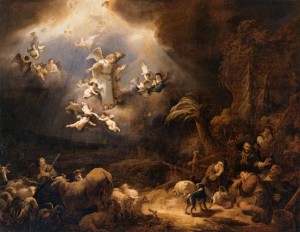
Mikołaj Haberschrack: The Three Marys, Mary Magdalene, Mary mother of Clopas, Mary mother of James
There were many women there, looking on from a distance, who had followed Jesus from Galilee and helped him. (Matthew 27:55 GNT)
For all the women who work in the margins of society to bring goodness out of darkness, we pray.
And many women were there beholding afar off, which followed Jesus from Galilee, ministering unto him. (Matthew 27:55 KJV)
For all the women who work for justice to bring change to corrupt systems, we pray.
Many women were also there, looking on from a distance; they had followed Jesus from Galilee and had provided for him. (Matthew 27:55 NRSV)
For all the women who keep quiet counsel as they nurture others through bright days and long nights, we pray.
And there were there many women afar off, who had followed Jesus from Galilee, ministering unto him. (Matthew 27:55 DRA)
For all the women who step forward to lead in spite of blatant barriers and the quiet whispering campaigns, we pray.
There were also quite a few women watching from a distance, women who had followed Jesus from Galilee in order to serve him. Among them were Mary Magdalene, Mary the mother of James and Joseph, and the mother of the Zebedee brothers. (Matthew 27:55 MSG)
For all the women in the world who follow Christ in deep fidelity, who hold hope against outrageous odds, and who love in the face of anger and abuse, we pray.
For all the women in the world, we pray. Amen.
To compare other translations of this verse, use the scripture link and the drop down menus, and give thanks for the sacred hands of many ministering women.
How much longer will you put off taking steps to possess the land which the Lord, the God of your fathers, has given you?
When the Hebrew people make their exodus from Egypt they are going back to the land that has been promised them by Yahweh. In today’s reading we arrive at the part in that story where several tribes have yet to realize their inheritance. Archaeologists have not found traces of the enormous migration described in scripture but what they dosee is evidence of cultures merging and reshaping as the peoples in the region struggle to survive through periods of famine and drought. The peoples sometimes unite against invaders. They sometimes strike out on their own to take over city-states and their surrounding territory.
Today we read about the precision and care the Israelites take in acquiring the land promised to them through the covenant established between Abraham and Yahweh. We also read about the care they take to include God’s influence and authority in their own plans. We might learn a good deal from this as we practice how to notput off taking steps to possess that which the Lord God has already given us.
We are given the gift of freedom; yet we sometimes allow ourselves to become trapped by the shackles we insist on acquiring.
We are given the gift of faith; yet we sometimes respond more to fear than reliance on God.
We are given the gift of hope; yet we sometimes sabotage our own possibilities of realizing potential.
We are given the gift of love; yet we sometimes hide this gift for fear of losing it.
We are given the gift of life everlasting; yet we sometimes cling more to life temporal in this world.
How much longer will you put off taking steps to possess the land which the Lord, the God of your fathers, has given you?
The Lord has promised us God’s care, God has assured us that we are the Lord’s, and God has already given us our inheritance. Do we abide with God in confident expectation? Do we take steps to explore and inhabit the land which God has promised? How much longer will we put off the taking of these steps?
These words are so simple. These words ask so little. These words bring us so much.
Be humble in everything you do, and people will appreciate it more than gifts.
God says:Listen to the words of my servant Sirach. Watch the actions of my incarnate self. Ease into the hands of my always-present Spirit. Be humble, as I am humble. You will receive more than you can imagine.
Don’t try to understand things that are too hard for you, or investigate matters that are beyond your power to know. Concentrate on the Law, which has been given to you. You do not need to know about things which the Lord has not revealed, so don’t concern yourself with them.
God says:When I ask you to focus on the Law, I am speaking of the Law of Love that I show you in the life of Christ. Love your enemies. Gather those on the margins and tend to them. Your reward in this life and in the next is waiting for you.
Many people have been misled by their own opinions; their wrong ideas have warped their judgment.
God says:It is tempting to listen to yourself alone. While it is true that you need to test the teachers, prophets and spirits to see if they come from me, remember that listening to yourself alone is dangerous for it narrows your world. Open your ears to my voice and attend my wisdom.
Stubbornness will get you into trouble at the end. If you live dangerously, it will kill you. A stubborn person will be burdened down with troubles.
God says:The attentive ear is always open and discerning because it spends more time listening to me than any other voice that clamors for your attention. When you listen to me, your hear good news that overwhelms the chaos of the world.
There is no cure for the troubles that arrogant people have; wickedness has taken deep root in them. Intelligent people will learn from proverbs and parables. They listen well because they want to learn.
God says:When you think more of yourself than you do of others, you cannot hear my voice. Your ear cannot attend. Your eye no longer sees the beauty that surrounds you. Put your pride behind you and follow me. Open your eyes. Open your ears. Open your heart. The peace and joy I have already planted in you will begin to grow and flourish. Hope and fidelity and love will mark you as my own.
Patience and perseverance. These are the qualities we know will open us to God’s nourishing goodness as we wade into daily spiritual warfare. Prayer and thanksgiving. These are the actions we need take as we look to Paul’s words in his letter to the Ephesians.
Be prepared. You’re up against far more than you can handle on your own. Take all the help you can get, every weapon God has issued, so that when it’s all over but the shouting you’ll still be on your feet. Truth, righteousness, peace, faith, and salvation are more than words. Learn how to apply them. You’ll need them throughout your life. God’s Word is an indispensable weapon. In the same way, prayer is essential in this ongoing warfare. Pray hard and long. Pray for your brothers and sisters. Keep your eyes open. Keep each other’s spirits up so that no one falls behind or drops out. (THE MESSAGE)
When we compare another version of these verses, we open ourselves to the strength that only God can provide.
So stand ready, with truth as a belt tight around your waist, with righteousness as your breastplate,and as your shoes the readiness to announce the Good News of peace.At all times carry faith as a shield; for with it you will be able to put out all the burning arrows shot by the Evil One.And accept salvation as a helmet, and the word of God as the sword which the Spirit gives you.Do all this in prayer, asking for God’s help. Pray on every occasion, as the Spirit leads. For this reason keep alert and never give up; pray always for all God’s people.And pray also for me, that God will give me a message when I am ready to speak, so that I may speak boldly and make known the gospel’s secret.For the sake of this gospel I am an ambassador, though now I am in prison. Pray that I may be bold in speaking about the gospel as I should. (THE GOOD NEWS TRANSLATION)
And so we pray.
When we meet circumstances that overwhelm us, we remember that our fidelity to The Word and our readiness to share God’s promise and hope are the strongest armor we might employ. Resilient God, lend us your strength.
When we stumble over obstacles that threaten our peace and security, we remember that our joy in The Word and our delight in Jesus’ story are the enduring armor we might put on. Confident God, lend us your hope.
When we falter with doubt and anxiety crushes us, we remember that our prayers always rise directly to you. Authentic God, lend us your love.
In Jesus’ name we wait patiently in you. In the Spirit’s power we persist always in you. In God’s name we give thanks always for you. Amen.
Then Jesus said to him, “See that you say nothing to anyone; but go, show yourself to the priest, and offer the gift that Moses commanded, as a testimony to them.”
Scholars speculate about Jesus’ request that those he cures tell no one about their healing. We find this request in a number of places in Matthew: 12:15-16, 16:20, 17:9 and we notice that neither Jesus nor Matthew rebuke the exuberance of those who receive Jesus’ gift. In the HARPERCOLLINS BIBLE COMMENTARY we find this statement: “[T]hough Jesus did not seek to attain ‘celebrity status’ for his miraculous powers, the effects of his works were simply too marvelous to be kept a secret”. (Meeks 881)
Perhaps we need to point this out to those who are our sports and entertainment icons. Celebrity is a gift to be treasured and used well.
Catholic monk welcomes Muslim worshipers in a church in Nice
Many crowds followed him, and he cured all of them, and he ordered them not to make him known. (Matthew 12:15-16) Then he sternly ordered the disciples not to tell anyone that he was the Messiah. (Matthew 16:20)
In the CATHOLIC STUDY BIBLE commentary tells us that, “To this [Matthew] adds a full citation from the First Servant Song (Is 42, 1-4) . . . emphasizing the meekness of Jesus, the Servant of the Lord, and foretelling the extension of his mission to the Gentiles”. (Senior 26)
Perhaps we need to point this out to those who would be our social or political leaders. Power is strongest when used in service to the poor and broken.
As they were coming down the mountain, Jesus ordered them, “Tell no one about the vision until after the Son of Man has been raised from the dead.” (Matthew 17:9)
Others speculate that Jesus was waiting until a particular moment to reveal his true nature to the world. Again from the CATHOLIC STUDY BIBLE commentary: “[O]nly in the light if Jesus’ resurrection can the meaning of his life and mission be truly understood; until then no testimony to the vision will lead people to faith”. (Senior 37)
Perhaps we need to point this out to our religious leaders. Influence is purest when used in the Spirit of the Living God.
And he sternly ordered them not to tell anyone about him. (Mark 8:27-30)
Muslim faithful walk behind a religious man as they attend Mass in tribute to slain priest
Jesus asks his closest followers to refrain from announcing his presence to the world. From the CATHOLIC STUDY BIBLE commentary: “Jesus acknowledges this identification [as messiah] but prohibits [the disciples] from making his messianic office known to avoid confusing it with ambiguous contemporary ideas on the nature of that office”. (Senior 81)
Perhaps we need to point this out to ourselves. Humility, sacrifice, and an authentic reverence for the Way that the Living God asks us to live. These are the marks of authentic leaders and followers.
Our modern society and instant global communication have brought a new tension to our lives; but they have also brought a rapid means of connecting with others in a positive and healing way. We must look for constructive strategies to form solidarity with those who carry the good fruits of Christ’s story into the world. “Tell no one,” Jesus said in the beginning of the ministry. Now that his resurrection has begun the transformation of the world, we must not lose heart. Now we must tell everyone we know the Good News that Jesus is among us, calling each of us to a life of faith, hope, peace and love.
Representatives of the Muslim community go to Catholic Mass at Milan’s Santa Maria
Today, let us consider an act of solidarity we might make with others as we speak to our own entertainment, sports, political, social, and spiritual leaders and ask for lasting peace that transforms society.
From Richard Rohr’s Daily Reflection on July 26, 2016 which is taken from his book Falling Upward: A Spirituality of the Two Halves of Life. (Rohr 60-61) Rohr, like Christ, calls us to fall upward in faith.
In the divine economy of grace, it is imperfection, sin, and failure that become the base metal and raw material for the redemption experience itself. Much of organized religion, however, tends to be peopled by folks who have a mania for some ideal order, which is never true, so they seldom are happy or content. This focus on perfection makes you anal retentive, to use Freud’s rude phrase, because you can never be happy with life as it is.
Rohr, like Christ, calls us to fall upward in compassion.
Real life is filled with people who are disabled (if you live long enough, you too will inevitably be “disabled” in some way), people with mental illness, people who practice other customs or religions, and people who experience their sexuality differently than you do. Organized religion has not been known for its inclusiveness or for being very comfortable with diversity. Yet pluriformity, multiplicity, and diversity is the only world there is! It is rather amazing that we can miss, deny, or ignore what is in plain sight everywhere. Even in nature, we are confounded by wildness and seek to bring the “frontier,” farms, and gardens into uniformity.
Rohr, like Christ, calls us to fall upward in transformation.
Sin and salvation are correlative terms. Salvation is not sin perfectly avoided, as the ego would prefer; but in fact, salvation is sin turned on its head and used in our favor. This is how divine love transforms us. If this is not true, what hope is there for any of us? We eventually discover that the same passion which leads us away from God can also lead us back to God and to our true selves. That is one reason I have valued andtaughtthe Enneagram [1]. Like few other spiritual tools, it illustrates this transformative truth. Once you see that your “sin” and your gift are two sides of the same coin, you can never forget it.
Rohr, like Christ, calls us to fall upward in hope.
God seems to be about “turning” our loves around (in Greek,meta-noia), and using them toward the Great Love that is their true object. All lesser loves are training wheels, which are good in themselves, but still training wheels. Many of the healing stories in the New Testament are rather clear illustrations of this message and pattern. Jesus says this specifically of “the woman who was a sinner”: “Her sins, her many sins, must have been forgiven her, or she could not have shown such great love” (Luke 7:47). It seems that her false attempts at love became the school and stepping-stones to “such great love.”
Rohr, like Christ, calls us to fall upward in love.
Rohr, like Christ, calls us to see that our throwing stones have become stepping stones along The Way.
When we read this familiar story with new eyes, we see Jesus once again teach the Pharisees about how to handle the anger they feel when they want to throw stones. His capacity to forgive amazed those who saw him at work and made the Pharisees uneasy.
The others sitting at the table began to say to themselves, “Who is this, who even forgives sins?”
Jesus continues in his compassionate Way, calling others to follow.
But Jesus said to the woman, “Your faith has saved you; go in peace.”
And so today we pray for ourselves and others in the moment when we want to throw stones in anger or fear.
Merciful and forgiving God, we need the strength of your faith to sustain us through our anxiety and alarm. Abide with us in the journey of Jesus’ Way.
Compassionate and guiding God, we need the joy of your hope to nourish us through our pain and suffering. Abide with us in the pilgrimage of our lives.
Healing and transforming God, we need theconsolation of your love to carry us beyond all distrust and doubt.Abide with us in the mystery of your Spirit.
We ask this in your name. Amen.
Eleanor Roosevelt in her youth
As we consider the fear that has a way of settling into our lives with or without our noticing, we might find this interview with historian and political scientist Matthew Dallek interesting. He is interviewed by guest host Derek McGinty on a July2016 Diane Rehm show. Dallek’s book Defenseless under the Night: The Roosevelt Years and the Origins of Homeland Security explores the evolution of the response to fear that we see in the U.S. public today. Listening to this interview may give us a new perspective on our desire to throw stones.
God’s trust in humanity is so enduring that the Creator takes the dare from Satan. How might we return this amazing trust? God the parent guides and protects us every waking moment and every sleeping hour. We need not eradicate all of the evil in the world; we need only keep our eyes on Christ and do as he asks; we need only open ourselves to the miracles of the Spirit and follow.
God’s hope in us is so strong that Christ returns for us. How might we learn from this strength? Christ reconciles and guides us. And so must we heal and shepherd others. We need only bloom where we are planted, reap the harvest that God has sown.
God’s love for us is so infinite that the Spirit resides eternally in us. How might we return this love? By tending to the marginalized, the broken-hearted and the bereft, by entering into transformation, and inviting others to join us.
In the marvelous story of Job, his friend Bildad cannot believe that Job suffers innocently. He cannot fathom why God allows misfortune to befall one of the ardent faithful. “Does God mess up?” he asks. “Does God Almighty ever get things backward?” He encourages Job not to hang his life from one thin thread, not to hitch his fate to a spider web. Bildad sees Job’s misfortune as punishment, and so might we if we do not read closely. After consideration we understand that Job suffers precisely because God trusts him, believes in him, and loves him. God restores all that Job loses and more, and this is a gesture that Satan cannot understand in his narrow, stingy world. God trusts that Job will not turn away in desperation or fatigue, and this is an attitude that Satan cannot countenance from his pathetic, narrow perspective. God allows Job to choose between hope and desperation, and this is a love that Satan cannot comprehend with his tragic, empty heart.
If God is so willing to take Satan’s dare, so willing to trust humanity with the enormity of God’s infinite goodness and mercy, might we then be willing to follow Jesus? Might we be willing to open ourselves fully to the Spirit?